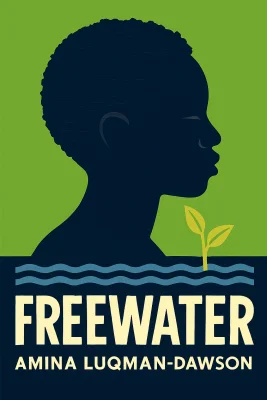
Freewater
Categories
Fiction, Audiobook, Historical Fiction, Young Adult, Historical, African American, Adventure, Childrens, Middle Grade, Juvenile
Content Type
Book
Binding
Hardcover
Year
2022
Publisher
Little, Brown Books for Young Readers
Language
English
ASIN
0316056618
ISBN
0316056618
ISBN13
9780316056618
File Download
PDF | EPUB
Freewater Plot Summary
Introduction
In the suffocating darkness of a slave cabin on Southerland Plantation, twelve-year-old Homer jolts awake to his mother's urgent whisper: "Tonight we run." The air tastes of fear and desperate hope as Rose gathers her children—Homer and seven-year-old Ada—for an escape that will tear their world apart. But when Homer insists on saving his friend Anna, their carefully laid plans crumble. Rose vanishes back into the night, leaving her children to face bloodhounds, rushing rivers, and the merciless swamp alone. What Homer and Ada discover in that treacherous wilderness defies everything they know about freedom and captivity. Deep in the Great Dismal Swamp lies Freewater—a hidden community where escaped slaves have carved out an impossible sanctuary. Here, children born free have never seen a white face, and former slaves like the mysterious Suleman raid plantations with fire arrows and stolen courage. But as plantation militias close in and Homer's guilt over abandoning his mother festers, the siblings must choose between the safety of their new home and a dangerous return to the world that once owned them. In this place where Spanish moss hangs like prison bars and every shadow could hide salvation or death, freedom comes with a price that even children must be willing to pay.
Chapter 1: The Desperate Flight from Bondage
The dog's teeth sink deep into Homer's ankle as Spanish moss whips his face like grasping fingers. Behind them, Stokes's voice cuts through the forest darkness, promising violence with every bellowed threat. Ada's small hand grips his shirt as they stumble through undergrowth that tears at their clothes, leaving trails any fool could follow. "Homer, they're coming," Ada whispers, her voice barely audible over their ragged breathing. The seven-year-old's spotted face—those freckles that had sealed their fate with the jealous mistress—catches moonlight like scattered coins. Homer knows they have minutes before the pack finds them. The river appears suddenly, a black throat swallowing starlight. Its voice speaks of drowning and broken bones, but behind them comes something worse. Stokes has taught those dogs to hunt children, and they're getting closer. Homer feels Ada's trembling through his sleeve as she stares at the churning water. "You remember that dream about flying?" he asks, surprised by the steadiness in his own voice. Ada nods, eyes bright with impossible trust. They've never been swimmers, these plantation children. The only water they've known came from wells and washbasins. But freedom lies on the other side of that liquid darkness, and slavery grows louder behind them with every passing heartbeat. They jump together, brother and sister, into water that receives them like a hungry mouth. The current grabs Homer's legs and spins him downstream, Ada's dress floating past like a ghost. His head strikes rocks that ring like church bells, and consciousness flickers like a dying candle. When he surfaces, spitting river mud and prayers, Ada is pinned against the bank by debris and fear. The water has carried them far from Stokes's dogs, but it has also carried them into something neither child could have imagined—a wilderness so vast and strange that plantation boundaries mean nothing, and the rules they've lived by since birth simply disappear like smoke in the wind.
Chapter 2: Navigating the Perilous Swamp
Dawn finds them shivering on a muddy bank, clothes plastered to their skin and Homer's head wrapped in torn fabric that blooms red with each pulse. The swamp stretches before them like another world entirely—a place where trees grow from water and Spanish moss hangs so thick it blocks the sun. Every sound speaks of danger: the splash of something large moving through reeds, the crack of branches under unseen weight. Ada touches everything with fingers that still remember her mother's kitchen, cataloging this new world with seven-year-old wonder. But wonder won't fill their stomachs or heal Homer's wounds, and the boy knows they're dying slowly with each step deeper into the wilderness. Then the snake appears, thick as Homer's arm and coiled around his leg like a living rope. Ada screams as the serpent's head rears back, fangs gleaming white as bone china. Homer opens his mouth but finds no voice, only the taste of copper and fear. The snake tightens its grip, preparing to strike, when the arrow appears—materializing from nothing with a sound like ripping silk. The shaft pins the creature's head to earth, and suddenly the trees birth a man. He drops from the canopy with the fluid grace of something never meant for ground, his skin dark as creek bottom and hair locked into ropes that catch morning light. Two fingers are missing from his left hand, and burns scar his arms like badges of some terrible honor. "Suleman," Ada breathes, as if she's always known this name would matter. The man studies them with eyes that have seen the worst humans can do to each other, then nods once. "Can you spot bear tracks in mud?" he asks Homer. "Do you know how to keep snakes off you at night?" When the boy shakes his head, Suleman's scarred mouth almost smiles. "Then you best follow me." They travel deeper into swamp that swallows their footprints and muffles their voices, following a man who moves like smoke through undergrowth that tears at their skin. Homer tries to memorize each landmark, each turn, believing his mother will somehow track them through this maze. But with every mile, that hope grows thinner than morning mist.
Chapter 3: Discovery of a Hidden World
The sky bridge appears through fog like a vision from fever dreams. Rope and wood suspended between treetops, swaying gently in air that tastes of freedom and impossibility. Homer's stomach clenches as Suleman gestures upward, toward a crossing that would mean death for anyone who slips. But David and Ibra, the tree-people who found them, move across those ropes like they were born to dance in empty air. "Don't look down," David calls, his voice gentle despite the camouflage of leaves and mud that makes him seem more forest spirit than man. Homer grips the guide ropes until his knuckles crack, feeling the bridge sway with each careful step. Below, green water stretches like a mirror that could swallow children without a sound. Ada laughs as they cross, arms spread wide in mockery of gravity. "I'm flying, Homer! Look at me fly!" Her joy cuts through his terror like sunlight through storm clouds, and for a moment he almost believes they really could soar above the troubles that chase them. The bridge holds, rope strong as faith, and soon they descend into something that shouldn't exist. Freewater spreads before them like a village from stories told in whispers. Cabins built from swamp mud and bark rise on stilts above ground that floods with each rain. Gardens grow wild vegetables between the houses, tended by hands that answer to no master's bell. Children play games that plantation children never learn, their laughter carrying no echo of the whip. Mrs. Light approaches with silver hair that catches evening light like spun metal. Her brown hands hold herbs that smell of healing, and her voice carries the authority of someone who has chosen her own name, claimed her own power. "Welcome to Freewater," she says, and the words taste like honey in Homer's mouth. But as celebration swirls around them—as former slaves mark their survival with one more day carved into Big Tree's scarred bark—Homer's heart remains heavy. Somewhere beyond the swamp's protection, his mother waits in chains that grow heavier with each passing hour. Freedom tastes bitter when it comes at such a price.
Chapter 4: Learning to Live in Freedom
Weeks pass like pages turning in a book written in languages Homer never learned to read. His wounds heal under Mrs. Light's careful attention, and Ada grows brown as a berry from days spent chasing dragonflies through reed-choked channels. But healing bodies prove easier than healing hearts, and guilt gnaws at Homer's spirit like hunger that no amount of food can satisfy. Billy becomes his unlikely friend—a tall boy whose stutter comes from memories of brands and beatings, whose father Ibra carved the very mark that decorates his son's shoulder. They work the cornfields together, these children learning what it means to sweat for themselves rather than another's profit. The corn grows tall and sweet, unmarked by the bitterness that seasons crops watered with slaves' tears. "It feels different, don't it?" Billy asks one afternoon as they rest in whatever shade the stalks provide. "The work." Homer nods, understanding without needing explanation. Here, tired muscles mean a good day's labor toward their own survival. No overseer's whip hangs over their efforts, no master counts their output like coins in a purse. Sanzi prowls the village like a caged wildcat, all restless energy and questions that have no safe answers. She dreams of adventure beyond Freewater's borders, of joining Suleman on raids that bring back tools and tales of plantation masters cowering before righteous fire. Her bow stays strung, ready for conflicts that may never come, while her mother grinds roots into medicines that heal everything except the hunger for a larger world. Turner—Two Shoes from the old plantation—moves through the village like a ghost haunted by choices not yet made. Homer watches him with growing unease, noting how the man's eyes turn always toward the edges of their sanctuary, toward paths that lead back to the world they all fled. Some wounds, Homer realizes, cut too deep for even Freewater's peace to heal. As summer deepens and the community prepares for Daria and Ibra's wedding celebration, Homer faces a truth that sits in his chest like swallowed glass: freedom means nothing while his mother remains in chains, and some debts can only be paid in blood.
Chapter 5: Threat to a Fragile Paradise
Fire screams across Freewater's cornfields like judgment come early, consuming months of careful labor in minutes that stretch like hours. The flames birth themselves from Sanzi's arrow—a wayward shot meant to prove her worth but proving instead how quickly paradise can burn. Smoke chokes the air as the community battles an inferno that threatens to devour everything they've built. But fire proves the least of their troubles. Through smoke and chaos, Turner vanishes like morning mist, carrying secrets that could destroy them all. Homer finds the map hidden in the man's shoe—a careful diagram showing every path from Southerland Plantation to Freewater's heart. The betrayal cuts deeper than any blade, sharp with the knowledge that desperation makes traitors of even decent men. "Militiamen are coming," Suleman warns when he appears like smoke among the bridge-builders, his scarred hands steady on weapons that have tasted plantation blood. "They've found someone to guide them." The words settle over the work crew like winter frost, freezing hope in their chests. Homer knows, with sick certainty, that Turner will lead them home—not to freedom, but to the auction block that waits for runaway children. The new sky bridge takes shape with desperate urgency, rope and timber fashioned into salvation suspended over swamp water that might swallow them all. Billy conquers his terror to help, his long fingers steady on knots that must hold against wind and weather and the weight of a fleeing community. Each plank represents another chance, another breath of freedom purchased with sweat and faith. As they work, smoke still rising from Freewater's wounded fields, Homer makes a choice that tastes like copper and courage. His mother waits in chains at Southerland, probably preparing food for the grand wedding that will celebrate his absence. Turner may have sold them all for the promise of his own child's freedom, but Homer won't let slavery claim another generation. Some bridges lead backward as well as forward, and sometimes the only way to save home is to risk everything in the attempt. The decision forms in his chest like a coal burning slow and steady, waiting for the right wind to fan it into flame.
Chapter 6: The Dangerous Return to Southerland
Six children and one desperate plan slip through darkness toward the plantation that once owned them all. Sanzi's crude boat carries them downriver like a coffin built for drowning, but her dreams of heroism have curdled into guilt that drives her forward despite every instinct screaming retreat. The fire was her fault—let the tools she steals from Southerland be her redemption. Homer moves through familiar shadows wearing the stiff clothes of a wedding servant, his heart hammering rhythm against ribs that remember the overseer's whip. The great white tent blazes with lamplight and laughter, plantation owners celebrating while their human property serves wine that tastes of broken dreams. He finds Rose there among the gifts—a woman presented like china or silver, her eyes empty as winter wells. "Tonight we're giving you our cook to take to your new home," Master Crumb announces to his daughter, the bride. The words hit Homer like thrown stones, each syllable spelling out his mother's future: separation, servitude, a kind of death that leaves the body walking but kills everything inside. Rose sits still as carved wood, trying to disappear even as she becomes the evening's entertainment. Sanzi and Ferdinand blunder into the militiamen's quarters like moths drawn to deadly flame. The shed holds men who hunt humans for profit, their weapons gleaming in lamplight that makes shadows dance like demons on the walls. When discovery comes, it arrives with fists and curses and the bright steel of a blade that opens Ferdinand's scalp to moonlight. Violence blooms between them—Sanzi's knife cutting cloth and flesh while Billy's stones sing through air to strike skull and sternum. They bind their attackers with vine rope and run like rabbits from hounds, but somewhere in the chaos Homer understands that childhood has ended tonight. They are children no more, these fugitive warriors, but something harder and more dangerous than slavery ever imagined. Behind them, Suleman's fire arrows rain from heaven like falling stars, each one carrying a promise that some masters will learn to fear the darkness and the fury it might birth from desperation and justified rage.
Chapter 7: Liberation and Homecoming
The wedding tent burns like a vision of righteous judgment while guests stumble through smoke and flame, their fine clothes singed and their certainties reduced to ash. Anna seizes her moment amid the chaos, a forged freedom paper clutched in hands that shake with possibility. She runs toward tobacco fields and the North Star beyond, carrying nothing but hope and a wound on her arm that points the way to reunion with a mother she barely remembers. Homer fights through panicked crowds to reach his mother, pinned beneath tables heavy as tombstones while fire rains from the torn tent ceiling. Together they claw their way toward Suleman's axe-blade cutting through fabric, toward air that doesn't burn their lungs with each breath. Rose moves like someone waking from a long nightmare, her eyes finding focus as freedom's possibility blazes brighter than the flames consuming her former master's celebration. "Your work is done," Suleman tells Homer as they stumble into clean night air, the boy's face streaked with soot and tears. Behind them, the tent collapses in on itself, taking with it the world that once claimed them as property. Some resurrections require fire, and tonight the old order burns while something new struggles to be born from its ashes. They flee through darkness toward the boat where Ada waits with patience learned from too many nights wondering if morning would bring separation or reunion. The little girl launches herself into her mother's arms like a bird finding its nest, and for a moment the swamp seems to exhale with satisfaction. Some stories demand such reunions, as if the universe itself conspires to mend what cruelty has torn apart. The journey home becomes a different kind of crossing, no longer flight from bondage but return to chosen sanctuary. Rose marvels at the sky bridge that carries them above treetops, at the village built from mud and dreams where her children learned to breathe freely. Freewater receives its wanderers with celebration that echoes through Spanish moss and around cooking fires, with embraces that taste of salt and survival. But even as they mark their return with scratches in Big Tree's scarred bark, Homer understands that some journeys never truly end, only pause between one departure and the next.
Summary
The swamp holds its secrets close, protecting those brave enough to claim freedom in places where masters fear to tread. Homer and Ada have learned that liberty comes in many forms—sometimes as simple as a mother's arms around children who thought they were lost forever, sometimes as complex as choosing between safety and the call to liberate others still trapped in bondage's grip. Rose finds herself in a world she never imagined, where her skills feed free mouths rather than masters' tables, where her children grow strong on food seasoned with hope rather than fear. The community that welcomed them has grown larger by their rescue of plantation neighbors, each new arrival adding strength to walls built from determination and faith in tomorrow's possibility. Yet beyond Freewater's borders, the old world continues its brutal commerce in human flesh, and young hearts like Sanzi's burn with knowledge that safety purchased through others' suffering comes dear. The sky bridges stretch in all directions now, carrying whispers of liberation to those who dream of flight. Some freedoms must be fought for one soul at a time, with fire arrows and fierce courage and the terrible grace that turns children into warriors for justice. In the great swamp where cypress roots drink deeply of waters that remember everything, new stories begin with each sunrise, and the word freedom echoes like bird song through air that belongs to no master but the wind itself.
Best Quote
“Lord only knows how many of us they keep from running. How many of us stay in these hateful places out of love. I used to think it was from scaring us - beating, cutting, or whipping us that did it. No, they get us best when we love anybody or anything. That's how they keep us.” ― Amina Luqman-Dawson, Freewater
Review Summary
Strengths: The book brings attention to a lesser-known historical setting, the Great Big Swamp, which served as a refuge for runaway slaves. The reviewer appreciates the author's effort in highlighting this part of history. Weaknesses: The portrayal of characters' mannerisms, dialogue, and behaviors lacks authenticity, making it difficult for the reader to believe in the historical setting. The book's magical realism elements are not well-received, and the narrative feels disconnected from the pre-Civil War era. Additionally, the inconsistent perspectives and alternating chapters contribute to the reader's dissatisfaction. Overall: The reviewer expresses disappointment with the book, citing a lack of believable historical portrayal and narrative inconsistencies. Despite its intriguing premise, the book fails to deliver an engaging and authentic experience. The recommendation level is low.
About Author

Amina Luqman-Dawson
Luqman-Dawson explores the transformative power of storytelling by addressing themes of race, culture, and historical memory in her writing. She delves into the complexities of American history, particularly the legacy of enslavement, while fostering hope and resilience among young readers. Her work seeks to empower children by placing agency and strength at the forefront, as seen in her celebrated book "Freewater", where two enslaved children find a maroon community in the Great Dismal Swamp. This narrative exemplifies her commitment to countering narratives of victimization with stories of resistance and freedom.\n\nHer approach to writing combines lyrical and accessible prose, making historical subjects approachable for middle-grade audiences. Luqman-Dawson’s emphasis on the strength and ingenuity of marginalized communities is evident in her storytelling methods, which aim to inspire engagement with the past. Her debut novel, "Freewater", has earned widespread acclaim, including the 2023 Newbery Medal and the Coretta Scott King Author Award. This dual recognition not only highlights her exceptional talent but also her role in diversifying children's literature.\n\nReaders of Luqman-Dawson's work, particularly young audiences, benefit from her dedication to historical truth and underrepresented stories. By weaving empowering narratives that emphasize resilience and agency, she encourages a deeper understanding of history and its impact on contemporary society. Her ability to inspire through stories that challenge and uplift ensures her place as a significant voice in literature for young readers.
Read moreDownload PDF & EPUB
To save this Black List summary for later, download the free PDF and EPUB. You can print it out, or read offline at your convenience.
Freewater
by Amina Luqman-Dawson
