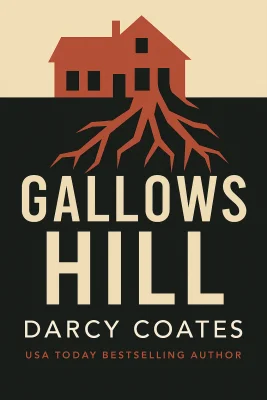
Gallows Hill
Categories
Fiction, Audiobook, Horror, Mystery, Thriller, Adult, Ghosts, Paranormal, Gothic, Supernatural
Content Type
Book
Binding
Paperback
Year
2022
Publisher
Poisoned Pen Press
Language
English
File Download
PDF | EPUB
Gallows Hill Plot Summary
Introduction
# Echoes from the Gallows: Where the Dead Keep Vigil The funeral director's hands trembled as he lifted the casket lids. Margot Hull stared into faces she couldn't remember—parents who'd sent her away at eight and never called again. Their eyes were wide open, clouded gray, mouths frozen in silent screams. Black veins threaded beneath their skin like poisonous rivers. These weren't the peaceful deaths the mortician had promised over the phone. Two days earlier, Margot had been living her ordinary city life, working retail and sharing an apartment. Then came the call that changed everything. Hugh and Maria Hull had died suddenly at Gallows Hill Winery. Heart attacks, the lawyer said, though doubt colored his voice. She was their sole heir, inheriting not just a house but an entire wine operation she knew nothing about. The funeral was already arranged by a family friend named Kant, leaving her just enough time to drive across the country and bury strangers who happened to share her blood.
Chapter 1: The Inheritance of Shadows
Kant waited outside the church, a weathered man with gray eyes that held decades of secrets. He drove her up the winding hill to a sprawling wooden house that should have felt like home but remained stubbornly foreign. The building had grown over generations, rooms and wings added haphazardly as the Hull family prospered, then slowly emptied as descendants dwindled. Inside, dust-covered furniture filled rooms that hadn't been used in years. The kitchen held the only signs of recent life, its refrigerator covered with photographs. Margot's heart clenched as she recognized her parents' faces, but relief turned to anguish when she noticed the torn edges. Every photo had been carefully ripped to remove a third figure. Traces of dark curly hair and small hands remained at the edges—evidence that she had once been part of this family before being systematically erased. Kant explained the business with characteristic brevity. Twelve full-time employees depended on the winery for their livelihood. The operation was profitable, built around regular wine production and their premium line aged in barrels made from a centuries-old oak tree. The tree had once been used for public executions, giving Gallows Hill its name and reputation. Many locals still considered the land cursed, but wine made from those ancient barrels commanded astronomical prices from collectors worldwide. That first night, violent ringing of bronze bells throughout the house awakened Margot. They were connected to a wire fence system, alerting residents when someone crossed the property boundary. By dawn, six nooses hung from the porch beams—weathered ropes that looked like they'd been dragged from a forest floor. Kant arrived to find her shivering on the front steps, explaining that the nooses had appeared periodically for thirty years, a grim reminder of the hill's bloody history.
Chapter 2: Whispers of a Bloody Past
The winery's public face was managed by Nora and Ray Palmer, a cheerful couple who ran the tasting room near the main road. But when Margot visited their shop, she sensed fear beneath their hospitality. The walls displayed the property's history in faded photographs and illustrations, telling the story of two brothers whose rivalry had ended in blood. Ezra Hull had bought Gallows Hill in 1761 with his inheritance, building the first house and establishing the winery. His younger brother Ephraim, bitter about being excluded from their father's will, had watched his sibling prosper while his own family of ten children struggled in poverty. One day, Ezra, his wife Louisa, and their four children simply vanished. No bodies were ever found, but Ephraim moved into the house immediately, claiming his brother had left to seek fortune in the cities. The law found no evidence of murder, but the town whispered that Ephraim had killed his brother's family and buried them somewhere on the cursed hill. Ephraim's victory proved hollow. His children began dying one by one, victims of accidents and diseases that seemed to hunt the Hull bloodline. He himself drowned in a fermentation vat, found floating face-down in the wine that had cost him his soul. Each subsequent generation faced similar tragedies, as if the land itself demanded payment for the blood that had soaked into its soil. Margot was the twelfth generation to inherit this legacy of death, and the first to arrive knowing nothing of the price her family had paid to keep the wine flowing. The revelation explained the town's hostility—strangers stared at her with fear and pity, warning her to keep driving, asking about ghosts before terrified mothers dragged children away.
Chapter 3: Creatures in the Darkness
Margot's exploration led her to discover the extensive tunnel system beneath Gallows Hill. The original Hulls had carved cellars and passageways through the hill, creating a wine-aging network that had expanded over generations. Many tunnels had collapsed or been abandoned, their entrances marked by rotting posts easy to miss in tall grass. When Margot accidentally fell through a concealed opening, she found herself trapped in a maze of crumbling stone and earth, pursued by echoing footsteps that might have been her own terror or something far worse. The tunnels led her to the heart of the operation, where Andrew, the winery's accountant, showed her the most valuable barrels. Six casks made from the original hanging tree aged wine for five years, producing bottles that sold for hundreds of thousands of dollars. The wood was irreplaceable, soaked with the essence of centuries-old death, and wine aged within it developed a complexity critics called supernatural. The barrels sat in the oldest chamber, lit only by lantern flame, surrounded by the weight of earth and history. But the tunnels held more than wine. In the darkness, Margot glimpsed shapes that shouldn't exist, heard whispers that might have been wind through stone cracks or voices of the long dead. The underground passages felt alive with malevolent presence, as if the murdered family had never truly left their burial ground. When she finally escaped through another entrance, gasping in sunlight, she found nooses hanging from the trees above her, swaying gently in the breeze like a warning. That evening, she discovered a VHS tape labeled "Margot's Tape" in the old television. The homemade puppet show told the story of a little girl who left her room at night and was attacked by a gray family that lived in darkness, dragged underground and never seen again. Her mother's distorted voice narrated the tale—a warning disguised as entertainment, trying to keep her daughter safe from the things that emerged after sunset.
Chapter 4: Night of the Restless Dead
Determined to understand the stains seeping through her parents' bedroom ceiling, Margot climbed into the house's attic. The space reeked of age and decay, its wooden beams sagging under centuries of weight. She found a massive dark stain in the floorboards, still damp despite layers of dust. When she pressed her finger into the rotting wood, thick red liquid bubbled up like blood from a wound. The stain led in a trail across the attic floor, as if something had been dragged toward a sealed hatch. Hidden behind a support beam, she discovered a leather-bound journal, its pages fused with moisture and age. But she wasn't alone in the darkness. Pinpricks of cold light watched her from the shadows, and when she tried to approach, pale fingers reached out of the gloom. She fled through the hatch, slamming it shut and throwing the bolt lock her parents had installed to keep something contained above their heads. The journal proved to be the diary of a young Hull daughter from the 1700s, written in archaic script. The girl wrote of normal teenage concerns, family dinners, and seasonal wine-making, but her entries grew darker as months progressed. She mentioned strange sounds in the walls, cold spots in certain rooms, and the way her parents had begun locking doors that had never needed locks before. The final entries spoke of nightmares where gray figures called her name, trying to lure her from her bed to join them in the earth below. As night fell, the bronze bells began their warning chime once again. This time, Margot barricaded herself in her childhood bedroom—the room her parents had prepared for a daughter they would eventually send away. She locked the window with the heavy padlock that had been installed there, a child's bedroom secured like a prison cell. The house groaned around her as something tested the doors and windows, searching for entry with patient persistence.
Chapter 5: Sins of the Ancestors Revealed
The dog door in the kitchen provided the breach the watchers needed. Margot heard the scrape of the flap, then the wet slap of hands on tile as something dragged itself through the narrow opening. Heavy footsteps climbed the stairs with deliberate purpose, each creak marking another step closer to her hiding place. The presence knew exactly where to find her, drawn by some connection that transcended physical senses. When her bedroom door began to open despite the furniture barricade, Margot grabbed the axe she'd found in the woodpile, but her exhausted body could barely lift the heavy blade. The weapon that had seemed formidable in daylight became a burden in her shaking hands. As the door ground inward, she abandoned the axe and tried calling for help, but couldn't remember her own address. Her call to Kant went to voicemail, leaving her truly alone. The figure that squeezed through the doorway was unmistakably human in shape but wrong in every detail. Tall and gaunt, its ashen skin was mottled with grave dirt and old blood. Matted hair clung to its scalp, and remnants of rotted clothing hung from its skeletal frame. Its fingernails were black with earth, as if it had clawed its way up from deep burial. This was no ghost or hallucination, but something that had once been alive and now existed in the gray space between death and decay. The thing moved with horrible purpose, its clouded eyes fixed on her face with recognition that chilled her more than its appearance. It knew her, had been waiting for her return to the hill where her bloodline had first spilled innocent blood. The sins of Ephraim Hull had finally come home to collect their due, and his descendant would pay the price her ancestor had escaped. The confrontation shattered as dawn light crept through the window, causing the revenant to retreat into shadows like smoke dissipating in sunlight.
Chapter 6: Descent into the Wine Crypts
Kant returned that morning to find Margot packing frantically, throwing clothes into suitcases with shaking hands. His weathered face showed no surprise at her decision to leave, only weary sadness that suggested he'd seen other Hull descendants reach the same conclusion. But something had changed in Margot during that terrible night—a resolve born from terror and guilt in equal measure. She had glimpsed something crucial in those final moments before dawn. Among the retreating shadows, she had seen two figures that were different from the others—her parents, Maria and Hugh Hull. They had been exhumed from their graves by the curse, their bodies preserved but transformed. Unlike the others, her parents showed no hostility. They approached with gentle, sorrowful movements, their eyes full of love and regret. They had not come to harm her—they had come to guide her. The encounter lasted only minutes, but it gave Margot the insight she needed. The curse wasn't just about punishment—it was about justice. The dead weren't mindless monsters; they were victims seeking resolution for crimes that had never been answered. Her parents had known the truth all along, lived with the knowledge of what Ephraim had done, and passed that burden down through eleven generations. Instead of fleeing, Margot made a different choice. She would descend into the underground tunnels that honeycombed the hill—the same passages where she suspected Ephraim had hidden his victims' bodies over two centuries ago. The spirits of the hanged dead no longer seemed threatening when treated with respect and acknowledgment of their suffering. They had been executed for petty crimes—stealing food, minor debts, the desperate acts of people trying to survive. They deserved dignity, not the mockery they had received in death.
Chapter 7: Justice Unearthed, Souls Released
The truth lay in the deepest chamber of the wine cellar, behind a passage that had been sealed for generations. Margot made her way through the underground maze, guided by spirits who had waited centuries for someone brave enough to face the truth. The chamber contained six ancient oak barrels, carved from the wood of the original gallows tree—the most prized containers in the winery, used to age the vintage wines that had made the Hull family fortune. When Margot took Ephraim's own axe and split open the first barrel, she discovered the horrific truth. Inside, preserved in wine like some grotesque specimen, was the body of Esther Hull, the thirteen-year-old girl whose journal she had found. One by one, she broke open all six barrels, revealing the remains of the entire murdered family. Ezra and Louisa, their children Jeremiah, Giles, and Constance, and finally little Esther—all had been hidden in plain sight for 250 years. The wine that had made the Hull family wealthy, that had won awards and sold for astronomical prices, had been aged with the dead. Every generation had known, and every generation had chosen to keep the secret rather than lose their prosperity. They had literally built their fortune on the bones of the innocent, and the curse had been their punishment. As the last barrel split open and the preserved bodies were finally exposed to air and light, Margot felt the oppressive weight that had hung over the hill begin to lift. The spirits of the murdered family appeared one final time, standing behind their desecrated remains, and she saw something in their eyes that hadn't been there before—peace. The curse was broken, but Margot's work was just beginning. She called the police, knowing the revelation would destroy everything—the business, the family reputation, the wealth built on murder. But some prices were worth paying for justice, even if it came 250 years too late.
Summary
The morning sun rose over Gallows Hill for the first time in generations without the shadow of the curse darkening its light. Margot sat outside the fermentation room, her clothes stained with wine the color of blood, watching police cars wind up the drive. The scandal would be enormous—six murder victims hidden in wine barrels would destroy the Hull family name forever. The business would collapse, awards would be revoked, and every bottle of Hull wine would become evidence of a crime spanning centuries. Yet as she watched the sun climb higher, burning away the last shadows of the night, Margot felt something she had never experienced before—a sense of purpose. She had broken a curse that had claimed lives for eleven generations, given voice to victims who had been silenced for centuries. In doing so, she had proven that the sins of the past need not define the future, that justice delayed is not always justice denied, and that sometimes the only way to escape the darkness is to drag its secrets into the light. The dead could finally rest, and the living could finally be free.
Best Quote
“For the first time in her life, she’d seen a corpse, and it had been her own.” ― Darcy Coates, Gallows Hill
Review Summary
Strengths: The book effectively builds tension and chills, particularly in the latter half, with a foreboding and tense atmosphere. The storyline is engaging, with quick-to-know characters and a compelling ending. The presence of a golden retriever adds charm, and the book is recommended for Halloween reads due to its creepy elements. Weaknesses: The beginning of the book is described as a slow burn, which may not appeal to all readers. There is a desire for more action and tension in the initial chapters. Additionally, the absence of an epilogue was noted as a minor drawback. Overall: The review reflects a generally positive sentiment towards the book, especially for fans of slow-burn horror. While the start may be slow, the latter half compensates with increased suspense and an impactful conclusion. Recommended for those who enjoy atmospheric and unsettling reads.
About Author

Darcy Coates
Coates reframes horror with a focus on psychological tension and atmospheric dread, creating a niche distinct from gore-centric narratives. Her works often explore themes of supernatural hauntings and gothic horror, set in eerie and isolated environments that become a "personality" within the story. By prioritizing the slow-building sense of dread, her novels evoke an intangible fear reminiscent of campfire ghost stories. Therefore, readers can expect an immersive experience that prioritizes mood and suspense over graphic content.\n\nFor those seeking an engaging read that delves into the unsettling aspects of horror, Coates offers a rich collection of stories. Beginning her career by self-publishing with "Once Returned", she gained significant traction with "The Haunting of Gillespie House". Her style, characterized by using large, aging houses as significant elements within the narrative, has led to numerous USA Today bestselling titles. Readers interested in the slow burn of gothic atmospheres will find her books particularly compelling. \n\nCoates's journey from self-publishing to securing a traditional publishing deal exemplifies her ability to connect with a wide audience. Her collaboration with Sourcebooks' Poisoned Pen Press, which acquired rights to 25 of her previously self-published novels, marks a significant milestone in her career. This trajectory not only underscores her popularity but also reinforces her reputation as a prolific author within the genre. Through her work, Coates continues to engage a community of readers who appreciate suspenseful and atmospheric horror.
Read moreDownload PDF & EPUB
To save this Black List summary for later, download the free PDF and EPUB. You can print it out, or read offline at your convenience.
Gallows Hill
by Darcy Coates
