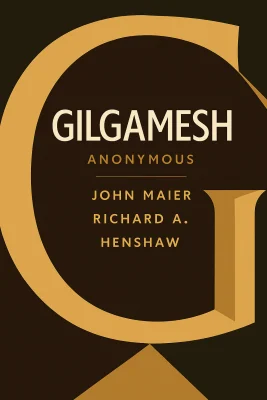
Gilgamesh
Categories
Fiction, Religion, Classics, Poetry, Fantasy, Literature, Mythology, School, Ancient, Epic
Content Type
Book
Binding
Paperback
Year
1985
Publisher
Knopf Doubleday Publishing Group
Language
English
ASIN
0394740890
ISBN
0394740890
ISBN13
9780394740898
File Download
PDF | EPUB
Gilgamesh Plot Summary
Introduction
# The Gilgamesh Epic: A Journey Beyond Death's Veil In ancient Uruk, where bronze walls stretch six miles around sacred temples, a king walks among his people like a predator among prey. Gilgamesh—two-thirds divine, one-third human—takes what he desires without question or consequence. No bride escapes his claim on her wedding night. No young man survives his brutal contests. The people's cries rise to heaven like smoke from funeral pyres, and the gods grow weary of their lamentations. From clay and wilderness wind, they craft an answer. Deep in the forests beyond civilization's reach, a wild man runs with gazelles and drinks alongside lions. Enkidu knows neither speech nor shame, neither bread nor the weight of mortality. His body bears the hair of beasts, yet his eyes hold something more dangerous than animal cunning. When these two forces collide—the king who has forgotten his humanity and the beast who has never known it—their meeting will crack the foundations of heaven and earth, setting one of them on a journey that leads beyond the waters of death itself.
Chapter 1: The Wild Man and the King: Collision of Two Worlds
The hunter's hands shake as he watches the impossible sight before him. A man moves among wild herds like their brother, his massive frame rippling with muscle beneath a coat of hair. Enkidu fills the hunter's pits with earth, tears apart his snares with casual strength, and leads the animals away from every trap. The beasts follow him like a shepherd of the wilderness. In Uruk's great palace, Gilgamesh listens to the hunter's tale with growing fascination. Dreams have been troubling his sleep—visions of a star falling from heaven, of an axe that draws crowds in wonder. His mother Ninsun, wise in prophecy's ways, interprets these signs with knowing eyes. A companion comes to him, she says. One who will be his equal. The temple woman journeys into the wilderness, her robes bright against the savage landscape. For three days she waits by the watering hole where animals come to drink. When Enkidu finally appears, leading his herd like a king of beasts, she rises to meet him. What follows transforms the wild man forever—six days and seven nights of human desire awakening something that has slept since the gods first shaped him from clay. When Enkidu tries to return to his animal brothers, they flee in terror. The scent of humanity clings to his skin like smoke. The woman clothes him in fine garments and teaches him the taste of bread, the warmth of wine. She speaks of Gilgamesh, who rules in Uruk like a wild bull over his herd, taking brides before their husbands can know their touch. In the city, Gilgamesh approaches the marriage house for his nightly ritual. But a figure steps from the shadows to block his path. Enkidu stands in the doorway, no longer wild but not yet tamed, his eyes blazing with newfound purpose. They crash together like colliding mountains. Doorposts shatter, walls crack, and the foundations of Uruk tremble as the two mightiest men in the world grapple in the street. When the dust settles and their rage cools, they see not enemies but mirrors—the completion each had unknowingly sought.
Chapter 2: Brotherhood Forged: Heroes United in Purpose
The morning sun reveals two warriors sitting in the dust, no longer enemies but something deeper than friends. Gilgamesh looks upon this wild man who bested him and sees his own divine loneliness reflected. For the first time, someone has matched his strength, understood his isolation, shared his burden of being more than human yet less than god. Enkidu weeps—not from pain, but from joy he has no words to express. Gilgamesh speaks first, his voice carrying none of its usual arrogance. He praises Enkidu's strength, acknowledges his courage, and in doing so admits something he has never acknowledged—that power without companionship is merely another form of prison. The people of Uruk watch in amazement as their tyrant king embraces the wild man. Where they expected continued violence, they witness transformation. Gilgamesh leads Enkidu to his palace, not as conqueror leading captive, but as brother welcoming brother. They share food and drink, stories and dreams, discovering in each other the missing half of their souls. In the days that follow, the city changes. Gilgamesh's cruelties cease, his attention turned from domination to companionship. He shows Enkidu the arts of civilization—crafted weapons, fine wine, soft beds. In return, Enkidu shares memories of the wilderness—the freedom of running with herds, the honesty of animal instinct, the peace of sleeping under stars. But peace is not their destiny. Both men carry the restless blood of heroes, and heroes are made for great deeds, not quiet contentment. As they grow closer, their shared strength begins to seek outlet. Gilgamesh's eyes turn westward, toward distant mountains where ancient cedar forests grow, guarded by terrors that have kept mortals at bay since the world's youth. The king burns with need for immortal fame, and Enkidu, despite his fears, will follow his friend into whatever darkness awaits.
Chapter 3: Guardians of the Sacred: Conquering Ancient Powers
Restlessness gnaws at Gilgamesh like fever. The comforts of Uruk now feel like chains binding him to mediocrity. His eyes turn toward the distant mountains where ancient cedar forests grow, guarded by Humbaba the Terrible—appointed by Enlil himself to keep mortals from the sacred groves. The creature's voice is the storm-flood, his mouth breathes fire, his very glance means death. Enkidu knows those forests. In his wild days, he roamed their edges, sensing the malevolent presence within. No mortal has ever challenged Humbaba and lived. But Gilgamesh burns with the need for deeds worthy of song. Death holds no terror for him—only the prospect of dying without achieving glory that will echo through eternity. The elders of Uruk plead against the venture, but Gilgamesh's mother Ninsun understands her son's nature. She performs rituals to the sun god Shamash, seeking divine protection for the journey. She adopts Enkidu as her own son, binding the two friends with bonds stronger than blood. Weapons are forged—mighty axes of bronze, swords that gleam like captured lightning. The cedar forest looms before them like a green wall reaching toward heaven. Ancient trees cast shadows that have never known sunlight. The very air thrums with supernatural menace as the heroes approach the sacred grove. This is the dwelling place of gods, where mortal feet have never trod. For days they travel deeper into the forest's heart, following paths that Humbaba's massive feet have carved through undergrowth. The guardian's presence grows stronger with each step. When they finally come upon the monster's lair, both heroes feel their courage waver. Humbaba is vaster than their worst imaginings—a creature of primordial chaos with the face of a lion and talons of an eagle, whose roar shakes the mountains. Battle erupts like a force of nature. Humbaba's voice is thunder, his breath is flame, his strength is the earthquake that topples cities. But the heroes fight as one being with two bodies, Gilgamesh's royal skill complementing Enkidu's wild cunning. The sun god Shamash sends winds to aid them—eight mighty gales that blind the guardian and leave him helpless before their bronze weapons. With heavy hearts but steady hands, they strike the killing blow, and the ancient guardian's roar fades to silence among the cedars.
Chapter 4: Divine Wrath and Mortal Loss: The Price of Defiance
Victory over Humbaba brings not glory but the attention of forces beyond mortal comprehension. As Gilgamesh cleanses himself of battle-grime and dons his royal crown, the great goddess Ishtar gazes down from heaven and feels desire kindle in her immortal heart. She descends in splendor, offering herself as lover and consort. Her gifts would be magnificent—chariots of gold and lapis lazuli, power over kings and nations. But Gilgamesh has heard tales of Ishtar's previous lovers. Tammuz wails in the underworld for half of every year. The shepherd bird flies with broken wing. Every creature that has known her embrace has paid with transformation or death. With words sharp as bronze blades, Gilgamesh rejects her offer. He catalogues her cruelties, names her victims, strips away her divine glamour to reveal the destroyer beneath. Ishtar's rage shakes the pillars of the sky as she flees to her father Anu, demanding vengeance for this unprecedented humiliation. The Bull of Heaven descends like a living earthquake. With each snort of its cosmic nostrils, the earth splits open, swallowing hundreds of Uruk's citizens. The creature's hooves crush buildings to powder, its breath withers crops in the fields. The two friends face the Bull as they faced Humbaba—together, unafraid, their brotherhood stronger than divine fury. Enkidu seizes the monster by its horns while Gilgamesh drives his sword deep into its neck. As the Bull's life ebbs away, they offer its heart to Shamash in gratitude. But even in victory, they cannot know that their greatest triumph has sealed their doom. The gods convene in their celestial assembly, and their judgment falls like shadow across the heroes' triumph. For slaying Humbaba and destroying the Bull of Heaven, one of the two friends must die. Enlil decrees that Enkidu should pay the price. Enkidu's doom comes not as a warrior's death in glorious battle, but as a wasting sickness that creeps through his body like slow poison. For twelve days Enkidu lies dying while Gilgamesh watches in helpless anguish. The king who has never known defeat is powerless against this enemy. When death finally claims Enkidu, something dies in Gilgamesh as well—the part of him that believed in justice, in meaning, in the possibility of lasting joy. As he looks upon his friend's corpse, one terrible truth crystallizes: if death could claim his beloved companion, it can claim him as well.
Chapter 5: Beyond the Waters of Death: The Quest for Immortality
Grief transforms Gilgamesh into something beyond human recognition. He tears off his royal robes and dresses in lion skins, letting his hair grow wild and his beard become matted with dirt. The civilized king disappears, replaced by something primal and broken. He will not accept Enkidu's fate, nor his own mortality that it represents. Somewhere beyond the edge of the world lives Utnapishtim the Faraway, survivor of the great flood, the one man who has escaped death's dominion. If anyone possesses the secret of immortality, it would be this ancient sage who was granted life like the gods. But the journey to reach him will test the limits of mortal endurance. At the world's edge, twin mountains rise like heaven's pillars, their peaks lost in eternal darkness. The passage between them is guarded by scorpion-beings whose very gaze can kill. The male scorpion-man watches Gilgamesh approach with eyes like burning coals. No mortal has ever passed this way, the guardian rumbles. The tunnel leads through twelve leagues of absolute darkness that even the sun god cannot illuminate. Perhaps it is pity that moves the scorpion-man, or recognition of grief too vast for mortal hearts to bear. He opens the gate to the tunnel of night, and Gilgamesh plunges into darkness deeper than the bottom of the sea. For twelve leagues he walks in blackness so complete it seems solid as stone, guided only by rough walls beneath his hands and desperate hope that somewhere ahead lie answers to mortality's riddle. When light finally breaks around him, it is like being born anew. Gilgamesh emerges into a garden belonging to the gods themselves—trees of precious stones bearing fruit of carnelian and lapis lazuli. At the garden's edge, beside an impossible sea, stands a tavern where dwells Siduri the barmaid, wise in the ways of both gods and men. She sees the wild figure approaching and bars her door in fear. When he identifies himself as Gilgamesh, king of Uruk, seeking Utnapishtim the Faraway, her laughter holds infinite sadness. When the gods created mankind, she tells him, they kept eternal life for themselves and gave death to mortals. Fill your belly with good food, dance and be merry, cherish the living while you can. But Gilgamesh will not be turned from his path, and at last she directs him to Urshanabi the boatman, who alone can navigate the waters of death.
Chapter 6: The Plant of Youth: Wisdom in Loss and Return
On a distant shore where time itself holds its breath, Utnapishtim the Faraway waits. Ancient beyond measure, he possesses the stillness of one who has witnessed the world's ending and beginning anew. When Gilgamesh's boat touches the strand, the old man studies the wild figure with eyes that have seen eternity's face. Gilgamesh's story pours out like water from a broken dam—the friendship with Enkidu, their great deeds together, the crushing weight of loss that drove him beyond the world's edge. Utnapishtim's laugh is dry as autumn leaves. He gained immortality not through heroic deed, but through divine whim when the gods flooded the world and chose him alone to survive. The ancient man tells his tale—how Ea warned him to build an ark, how he saved the seed of all living things while the world drowned, how the gods granted him eternal life but set him apart from mortal realm. From the beginning, he says, there is no permanence. The sleeping and the dead are alike in their stillness. The gods decide our fates but do not reveal the day of death. Yet seeing Gilgamesh's anguish, Utnapishtim offers one test. If he would have eternal life, let him first conquer sleep, death's younger brother. Stay awake for six days and seven nights, and perhaps the gods will grant his wish. But even as the words are spoken, sleep falls upon Gilgamesh like mist. For six days and seven nights he slumbers while the old man's wife bakes bread to mark each passing day. When Gilgamesh finally wakes, he sees the bread in all stages—fresh, stale, moldy, crumbling to dust—and knows he has failed even this simple test. But Utnapishtim's wife takes pity on the broken king. There is a plant that grows in the depths of the sweet water sea, she tells her husband. Its name is "The Old Man Becomes Young Again." If he can retrieve it, it will restore lost youth, though not grant true immortality. Hope flickers in Gilgamesh's heart like candle flame. He ties stones to his feet and dives deep into primordial waters, down to where the plant grows among coral gardens that have never known sunlight. The thorns cut his hands as he grasps it, but he holds fast to this final chance at defeating death. The journey home begins with fragile hope, precious beyond measure.
Chapter 7: Return to Uruk: Acceptance and the Legacy of Friendship
The plant pulses in Gilgamesh's hands like a second heartbeat as he begins the journey home. He will not consume it himself, he decides, but bring it to the elders of Uruk, sharing this gift with his people as a true king should. But the gods have not finished testing him. At a pool of sweet water where he stops to bathe, a serpent catches the plant's scent. While Gilgamesh cleanses himself, the creature slithers from the depths and swallows his prize whole. Before his eyes, the snake sheds its old skin and emerges renewed, leaving behind only the empty husk of what it had been. Gilgamesh sits by the water's edge and weeps—not the wild grief that drove him from Uruk, but the quiet tears of a man who finally understands mortality's weight. The plant is gone, his quest has failed, and death remains unconquered. Yet something has changed in the depths of his despair. The frantic desperation that consumed him since Enkidu's death begins to ebb like fever breaking. He will return to Uruk, he tells Urshanabi. He will take up again the crown he cast aside, the duties he abandoned. If he cannot live forever, at least he can live well for whatever time remains. The walls of Uruk rise before them like a promise kept, their bronze-bright stones catching the setting sun's light. Gilgamesh looks upon his city with new eyes—not as a prison from which to escape, but as a monument to human achievement in the face of inevitable ending. In the temple of Ishtar, Gilgamesh kneels before the altar where he once raged against divine authority. Now he comes not as supplicant begging for immortality, but as king acknowledging the proper order of things. The goddess's anger has cooled in the years of his absence, and she looks upon him with something approaching compassion. The crown awaits him, she says, if he will take it up again. Gilgamesh rises and places the circlet of kingship upon his brow. It feels heavier than before, weighted with understanding of what it means to rule mortals in a world where death is the final law. He will govern with justice, build works to outlast his lifetime, and when his time comes, face the darkness without flinching. The people of Uruk welcome their king's return with joy tempered by wonder. The wild man who fled the city in grief and madness has returned as something greater—not a god, but a man who has touched the divine and chosen humanity.
Summary
The tale of Gilgamesh stands as humanity's first great meditation on friendship, loss, and the search for meaning in mortality's shadow. Through the king's journey from tyrannical ruler to broken wanderer to wise sovereign, we witness the fundamental transformation that defines human experience—the movement from the illusion of permanence to the acceptance of transience, from the desire to escape our nature to the wisdom of embracing it fully. In the end, Gilgamesh discovers that true immortality lies not in the desperate pursuit of endless life, but in the legacy we leave behind—in the walls we build, the stories we tell, and the love we share with those who walk beside us for whatever brief time we are given. His friendship with Enkidu, though cut short by death, achieves a permanence that no magic plant could provide, echoing through millennia as testament to the bonds that make our mortality bearable and our brief lives meaningful. The king who once raged against the gods' decree of death becomes the man who teaches us that acceptance, not defiance, is the highest form of heroism.
Best Quote
“Gilgamesh, where are you hurrying to? You will never find that life for which you are looking. When the gods created man they allotted to him death, but life they retained in their own keeping. As for you, Gilgamesh, fill your belly with good things; day and night, night and day, dance and be merry, feast and rejoice. Let your clothes be fresh, bathe yourself in water, cherish the little child that holds your hand, and make your wife happy in your embrace; for this too is the lot of man.” ― Anonymous, The Epic of Gilgamesh
Review Summary
Strengths: The review highlights the historical significance and influence of "The Epic of Gilgamesh" on later works, such as those by Homer and in Judeo-Christian-Islamic mythology. The relationship between Gilgamesh and Enkidu is noted as a compelling aspect, with potential homoerotic interpretations adding depth to the narrative. The universal theme of the fear of death is emphasized as a central element of the epic. Weaknesses: The translation is described as somewhat "wooden" and "dry," which may detract from the dramatic nature of the story. This suggests that the translation might not fully capture the original text's richness. Overall: The review conveys a deep appreciation for the epic's historical and thematic significance, despite some translation issues. It is recommended for those interested in ancient literature and its enduring impact.
About Author

Anonymous
Anonymous authorship reframes our understanding of literary creation by detaching the work from the individual creator, thereby focusing on the communal and historical context of the book itself. The term Anonymous refers to works whose authorship is unknown or purposely undisclosed, a concept that spans diverse historical and cultural settings. In medieval times, the communal nature of storytelling and the sacred aspects of some texts often led to the loss or omission of individual names, as seen in classic works like "Beowulf" and "The Arabian Nights". This practice is not limited to ancient times, for in the 18th century, some English writers published political and cultural essays anonymously to avoid persecution, highlighting how anonymity serves as both a shield and a lens through which to explore societal norms and constraints.\n\nGiven this wide application, anonymous authorship lacks a singular thematic or stylistic identity, thus providing a unique reader experience that transcends personal biases and highlights broader cultural narratives. For instance, anonymous authors have used their works to blend historical fact with myth, as in the "Gesta Hungarorum", or to challenge political structures through pamphlets. The resulting literature invites readers to focus more on the content and context rather than the biography of the author. This detachment can deepen the reader's engagement with the themes and ideas presented, promoting a broader understanding of different time periods and cultures.\n\nTherefore, those interested in literature as a reflection of collective societal values and historical contexts find particular benefit in works attributed to "Anonymous." These works, while lacking personal accolades or identified creators, offer profound insights and narratives that have been critically acclaimed and culturally revered across time. By embracing the anonymity of these texts, readers engage with the timeless aspects of human thought and creativity, unbounded by the constraints of personal identity.
Read moreDownload PDF & EPUB
To save this Black List summary for later, download the free PDF and EPUB. You can print it out, or read offline at your convenience.
Gilgamesh
by Anonymous
