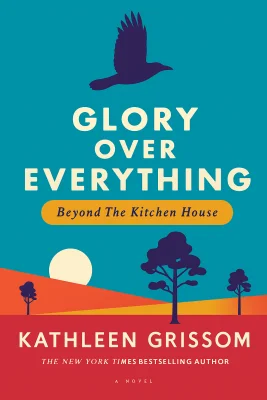
Glory Over Everything
Beyond The Kitchen House
Categories
Fiction, Audiobook, Historical Fiction, Adult, Book Club, Historical, African American, Race, Adult Fiction, Southern
Content Type
Book
Binding
Hardcover
Year
2016
Publisher
Simon & Schuster
Language
English
ISBN13
9781476748443
File Download
PDF | EPUB
Glory Over Everything Plot Summary
Introduction
# The Whispered Truth: A Journey Through Shadow and Light The silver shop bell chimed as James Burton adjusted his black eye patch, studying the miniature portrait in his trembling hands. Outside, Philadelphia's respectable society moved through their ordered lives, unaware that the man they knew as a distinguished silversmith harbored a secret that could destroy everything. Born Jamie Pyke on a Virginia plantation, the son of a white master and his mulatto slave, James had spent twenty years crafting his identity as carefully as he shaped precious metals. Now that carefully constructed world was crumbling. Henry burst through the back door, desperation etched in every line of his weathered face. His twelve-year-old son Pan had vanished from the Philadelphia docks, almost certainly taken by slave catchers bound for the South. The old man fell to his knees, begging James to rescue the boy. James knew he owed Henry his life—the former slave had sheltered him during his desperate flight from Virginia decades ago. But returning to slave country meant risking exposure as a runaway who had killed his own father. As the shadows of his past closed in and his pregnant lover Caroline awaited answers he couldn't give, James faced an impossible choice between safety and honor, between the mask he wore and the truth that could set him free—or destroy him utterly.
Chapter 1: The Silversmith's Secret: James Burton's Dual Life
The morning light filtered through James Burton's workshop as he examined the delicate silver vinaigrette, its tiny parakeet design catching the sun. His single good eye traced the intricate details while his fingers, steady from years of craftsmanship, made final adjustments to the ruby-eyed bird. The piece was meant for Caroline Preston, though he dared not tell her it was a farewell gift. Robert appeared in the doorway, his dark face creased with concern. "Sir, there's a gentleman to see you. Says his name is Henry, and that he's Pan's father." James's blood chilled. Henry—the man who had saved his life when he was thirteen and fleeing Virginia with his father's blood on his hands. The man who knew Jamie Pyke before he became James Burton. In the study, Henry waited with his hat clutched against his chest, gray-haired now but unmistakable. "My boy gone! My Pan gone! They take him. I know they do. You got to help me!" The words tumbled out in desperate gasps. Pan had disappeared three days ago from the docks, almost certainly taken by slave catchers. "You know what I's talkin' 'bout!" Henry whispered fiercely, his eyes boring into James's. James did know. He knew the terror of being hunted, of living each day as a lie. Beneath his respectable exterior, he carried the weight of his true identity—Jamie Pyke, the mixed-race son who had killed his plantation master father and fled north. Henry had sheltered that terrified boy, fed him, protected him when no one else would. "I gets you the money, you go down, get him back," Henry pleaded, falling to his knee. "I know what they do to him. I's been a slave. I'd soon see him dead before I see him sol' for a slave." The request hit James like a physical blow. To travel south meant exposing himself to the very people who bought and sold human flesh. It meant risking recognition, capture, death. Yet Pan—quick-witted, gentle Pan who had brought such joy to his household—was somewhere in chains, probably already being transported to a plantation where his spirit would be broken. That evening, as James dressed for the Cardons' social gathering, his mind raced between impossible choices. Caroline would be there, expecting answers about their future, about the child she carried. How could he tell her he might never return from the South? How could he explain that their child might be born with the telltale signs of Negro blood? The carriage wheels clattered against cobblestones as he rode toward his fate, carrying secrets that could destroy not just himself, but everyone he loved.
Chapter 2: Flight from Tall Oaks: Escaping a Violent Past
Twenty years earlier, thirteen-year-old Jamie Pyke had stumbled through the Virginia wilderness, fever burning through his small frame, his father's blood still staining his hands. The boy who had been raised as white, privileged, and protected at Tall Oaks plantation now faced a truth that shattered everything he believed about himself. His grandmother Lavinia lay dead in her coffin, taking with her the lie that had shaped his childhood. The woman he'd called mother was actually his grandmother, and his real mother was Belle—the beautiful mulatto slave he'd been taught to see as property. When his father Marshall Pyke discovered the deception and announced his intention to sell Jamie as a slave, the boy had grabbed a pistol and pulled the trigger. Now patrollers scoured the countryside for the murderous runaway, and Jamie had nowhere to turn. At a tavern outside Philadelphia, exhausted and delirious, he was robbed and beaten. When consciousness returned, he found himself looking into Henry's weathered face. "I find you out by the stables," Henry said gently. "Somebody work you over, but look to me like you sick before he got to you." "I'm no slave!" Jamie protested when Henry suggested they were alike. "What makes you say that? I'm white!" "Maybe you is," Henry replied quietly, "but that not what you say when you outta your head." In Henry's woodland shelter, Jamie slowly recovered his strength while learning harsh lessons about survival. Henry had lost his thumbs as punishment for planning a slave revolt, had watched his mother die from a flogging, had seen his brother shot during their escape. Yet he showed kindness to a terrified boy who had nowhere else to go. When autumn approached, Henry insisted Jamie find work in Philadelphia. "You got to get into town, find some work an' someplace to stay. Snow comin'. Hard livin' out here." The silversmith shop's "Help Wanted" sign seemed like providence. Inside, Mr. Burton examined Jamie's whittled animals and sketches with growing interest. "You have quite a talent, young man," he said, despite Jamie's disheveled appearance. "Cleanliness is what I am after. If you are interested, do as I suggest, then come back to see me before the week is up." Jamie returned clean and properly dressed, giving his name as James Smith. Mr. Burton offered him an apprenticeship with room and board. In the Burton household, Jamie found not just shelter but family—Mrs. Burton's gentle kindness, Robert's sophisticated guidance, even Malcolm the temperamental cockatoo who took an immediate liking to the boy. Years passed in this sanctuary. Jamie's artistic talents flourished under Mr. Burton's tutelage, and his new parents grew to love him as their own son. Then came the formal dinner, the raised glass, the life-changing words: "Mrs. Burton and I are asking you to join our family. We would like you to legally become known as our son, James Burton." As Jamie signed the adoption papers with trembling hands, he felt both overwhelming joy and crushing terror. He had found a family, but his secret remained—a shadow that could destroy everything if the truth ever came to light.
Chapter 3: Finding Sanctuary: The Burton Legacy
The silver business flourished under James's skilled hands as he grew into manhood. His miniature paintings, executed with woodcock pinfeathers, became highly sought after by Philadelphia's elite. The shy boy who had fled Virginia transformed into a respected artisan, his past buried beneath layers of carefully constructed respectability. When the Burtons died in a carriage accident, James inherited everything—the house, the business, a place in society. Yet grief nearly destroyed him. For months he lay in bed, unable to work, haunted by the fear that he was truly alone again. Mrs. Burton's dying words echoed in his memory: "Take care of your mother." But which mother? The grandmother who had raised him as white, or the slave woman who had given him life? Art classes revived his spirits. Teaching wealthy ladies to paint gave him purpose and income, but it also brought danger in the form of Caroline Preston. The moment she entered his studio, her blue eyes meeting his single good one, James felt the foundations of his careful world begin to shift. Caroline was everything he could never have—beautiful, cultured, married to Philadelphia aristocracy. Yet the attraction between them crackled like lightning. During private lessons, their hands would brush over paintbrushes, their eyes would lock across canvases, and James would feel himself drowning in possibilities he dared not voice. The affair began on a Saturday afternoon when the other students had departed. Caroline lingered, asking about technique, her voice soft with invitation. In his library, bathed in golden sunlight, she seemed like a vision from a dream. "I am desperate for you," he whispered, his resolve crumbling. "And I for you," she breathed, offering her mouth. Their passion consumed them through stolen afternoons and whispered promises. Caroline lied to her mother, invented excuses, risked her reputation for moments in James's arms. He knew it was madness, knew it could only end in disaster, yet he was powerless to resist. She spoke of her lonely childhood, her loveless marriage, her dreams of escape. He encouraged her confidences while guarding his own secrets, knowing that the truth would destroy not just their love but her very life. In Philadelphia society, a white woman who bore a Negro's child faced exile or worse. When Caroline announced her pregnancy, James felt the walls of his carefully constructed world begin to collapse. Their child might be born with telltale signs of color, exposing not just his deception but condemning Caroline to social death. The weight of his secret pressed down like a stone, threatening to crush everything he held dear. Yet in Caroline's arms, feeling their child move beneath her skin, James dared to dream of a different future—one where love might triumph over the lies that had shaped his life.
Chapter 4: Pan's Disappearance: A Desperate Call for Action
Pan had always been curious about the world beyond James Burton's elegant home. At twelve, he possessed a quick mind and gentle spirit that reminded James painfully of his own childhood innocence. The boy had come to them five years earlier when his father Henry, growing old and frail, begged James to take him in. "I never ask you for nothin'," Henry had pleaded, "but now I's askin' you to take in my boy." Under Robert's strict guidance, Pan learned to polish silver and tend to household duties. Molly, the cook, made sure he ate well and grew strong. But it was James who truly shaped the boy's world, teaching him to read and write, sharing stories of art and literature, watching Pan's face light up with understanding. The boy's favorite companion was Malcolm, the ancient cockatoo who had belonged to the Burtons. Pan would spend hours talking to the bird, teaching him new phrases, laughing at his antics. When Malcolm grew ill and died, Pan wept as if he'd lost a brother. "Why you cryin' over some old bird?" Molly had asked, but James understood. Pan's tender heart felt every loss deeply, just as James's own had as a child. Now that tender heart had led Pan into terrible danger. Molly revealed that the boy had asked for money, saying he wanted to buy James a new bird to replace Malcolm. "He told me he wanted to see you happy again," she explained, her voice thick with worry. James's chest tightened with dread. Pan had gone to the docks—the very place Henry and Robert had warned him to avoid. Slave catchers prowled those waters, looking for any Negro child they could snatch and sell south. Pan's education and gentle manners would make him valuable as a house servant on some distant plantation. The thought of Pan in chains, his spirit broken by whips and degradation, filled James with rage and desperation. The boy who had brought such joy to their household, who had never known anything but kindness, was now experiencing horrors that would scar him forever—if he survived at all. Henry's desperate plea echoed in James's memory: "I'd soon see him dead before I see him sol' for a slave." The old man understood what awaited his son in the cotton fields of Georgia or the rice plantations of South Carolina. Death would indeed be kinder than the living hell of slavery. As James prepared for the Cardons' social gathering, knowing Caroline would demand answers he couldn't give, his mind was already racing south. Pan needed him. Henry's dying wish demanded fulfillment. The debt of gratitude that had shaped James's entire adult life was finally being called in. The boy who had once fled Virginia in terror would have to return as a man, risking everything to save the child who had become like a son to him.
Chapter 5: Forbidden Passion: The Affair with Caroline
The Cardons' ballroom gleamed with white roses and crystal chandeliers as Philadelphia's elite swirled through their elaborate social dance. James stood at the edge of the crowd, his eye patch drawing curious glances, his mind consumed with thoughts of Pan's fate. Then he saw Caroline approaching, her pale pink gown emphasizing the flush in her cheeks, her swollen décolleté betraying the secret they shared. "Why, James?" she whispered urgently when they found a moment alone. "Why haven't you seen me? Is it because of the child?" Her blue eyes searched his face desperately, and James felt his resolve crumble. He pulled her close, breathing in her familiar scent, feeling the warmth of her body against his. "I have not abandoned you," he whispered. "I have been a coward, but I promise that I have not abandoned you." Their affair had begun months earlier with stolen glances during art lessons. Caroline's marriage to a dissolute European count had left her lonely and desperate for genuine affection. In James's studio, surrounded by paintings of birds in flight, she had found something her privileged world couldn't provide—a man who saw her as more than ornament or breeding stock. "I am desperate for you," he had confessed that first afternoon when they were finally alone. "And I for you," she had breathed, offering her mouth. Their passion had consumed them through the long Philadelphia summer. Caroline would arrive for her lessons with elaborate excuses for her mother, her hands trembling with anticipation. In James's library, with afternoon light streaming through tall windows, they would lose themselves in each other's arms, speaking in whispers of love and dreams. James encouraged her to talk about her childhood, her fears, her hopes for the future. She spoke willingly of her loneliness, shedding tears he kissed away with infinite tenderness. Yet he never shared his own past, never spoke of Tall Oaks or Belle or the violence that had shaped his life. How could he tell her that their love was built on a lie that could destroy them both? Now, with their child growing in her womb and Pan's disappearance demanding action, James faced the moment he had dreaded. Tonight he would have to choose between the woman he loved and the boy who needed him. Caroline deserved the truth, but the truth would shatter her world as completely as it would his. "Your mother is right," he told her as they swayed to the distant music. "It will be safer for you in the country. But she has invited me to Stonehill, and I will come." "You will? Truly, you will? Give me your word, James," she pleaded, her fingers digging into his arm. "You have my word. As soon as the invitation arrives, I will come." It was a promise he might not live to keep, but he owed her that much hope before he rode south into the darkness that awaited him.
Chapter 6: Shadows of Truth: Identity Revealed and Concealed
The ship's hold reeked of human misery as Pan huddled against the wooden planks, his wrists raw from rope burns. Beside him, five-year-old Randall whimpered in the darkness, his small body shaking with fever and fear. Pan put his arm around the younger boy, whispering the stories James had told him about birds and freedom, trying to keep hope alive in the suffocating darkness. "What gon' happen to us?" Randall asked, his voice barely audible above the creaking timbers. "Mr. Burton will come for us," Pan said with more confidence than he felt. "He promised my daddy he'd always take care of me." The slave ship *Integrity* cut through dark waters toward the Carolina coast, its human cargo packed like livestock in the airless hold. Pan had been lured aboard by men claiming to have parrots for sale—the perfect gift for his grieving master. Instead, he'd awakened in chains, his childhood innocence stripped away by the brutal reality of the slave trade. Days passed in a blur of sickness and despair. When they finally docked in Wilmington, Pan and Randall were herded onto a wagon with other captives, their destination a plantation called Southwood. The overseer, Bill Thomas, examined them like livestock, his cold blue eyes calculating their worth. "This one's got some learning," Thomas observed, noting Pan's educated speech. "House work, maybe. The little one's too small for field labor, but he'll grow." At Southwood, Pan was assigned to the hospital building under the supervision of Sukey, a mute woman whose tongue had been cut out years earlier for some forgotten transgression. She communicated through a small slate, her dark eyes holding depths of suffering that made Pan's own ordeal seem small by comparison. In the fields, Pan learned the rhythm of plantation life—the crack of whips at dawn, the endless rows of cotton stretching to the horizon, the quarters where exhausted slaves collapsed each night. He watched children younger than himself bent over plants, their small fingers bleeding from cotton bolls, their spirits already broken by the system that owned their bodies and souls. Yet Pan refused to surrender hope. Each night, he whispered to Randall about James Burton's house in Philadelphia—the warm kitchen where Molly cooked wonderful meals, the library filled with books, the gentle master who had taught him to read and write. These memories became their lifeline, proof that somewhere beyond the cotton fields, a different world existed. When Sukey scrawled on her slate that a visitor was coming—a one-eyed man asking about birds—Pan's heart leaped with desperate joy. James had come for him, just as he'd promised. But the reunion would have to wait. In the dangerous game of plantation politics, one wrong word could mean death for them all. The boy who had once polished silver in a Philadelphia mansion now faced the brutal reality of slavery, his faith in rescue the only thing standing between him and complete despair.
Chapter 7: The Perilous Journey South: Confronting the Past
The Spencer plantation house rose from the Carolina landscape like a white monument to genteel prosperity, its columns gleaming in the afternoon sun. James Burton adjusted his artist's satchel and checked his letter of introduction, playing the role of traveling naturalist with practiced ease. Inside the satchel, hidden beneath brushes and paints, lay a loaded pistol—his last resort if his carefully constructed cover failed. Adelaide Spencer, fifteen and boldly curious, immediately attached herself to the visiting artist. "Are you truly here to paint birds, Mr. Burton?" she asked, her eyes bright with interest as she followed him across the manicured lawn. "The Carolina parakeet is of particular scientific value," James replied, maintaining his professional demeanor while his mind raced with plans to locate Pan. Mr. Spencer proved more cautious when James inquired about neighboring plantations. "Bill Thomas at Southwood is not a man to trifle with," Spencer warned. "He runs that place by his own rules, and those rules don't include entertaining visitors." The name Southwood sent ice through James's veins. According to his sources in Philadelphia, that was where Pan had been sold. The boy was less than five miles away, probably working in the fields under Thomas's brutal supervision. Opportunity came when Adelaide suffered a riding accident at Southwood, breaking her arm in a fall. James accompanied Spencer to retrieve her, using the visit to search for Pan. In the plantation's hospital building, he found the boy—thin, scarred, but alive. "Mr. Burton!" Pan cried out, rushing toward him before catching himself. "I knew you'd come for me!" James gripped the boy's shoulders, his heart breaking at the sight of Pan's condition. "Listen to me! You must not address me so familiarly. Your leaving here depends on it." The woman supervising the hospital watched them with suspicious eyes. When she approached with her slate, James's blood ran cold at her message: "You Jamie Pyke?" Then: "I am Sukey. Tall Oaks." This mute woman knew his secret, recognized the boy who had fled Virginia twenty years ago. Her next message was even more chilling: "Get Pan out. Trader coming for him." When James approached Bill Thomas about purchasing Pan, the overseer's eyes narrowed with predatory interest. Thomas was a tall, handsome man who wore his authority like a weapon, his gun and knife always within reach. "Why you wanting him so bad?" Thomas asked, his voice silky with menace. "You get yourself with a nigra? He your boy?" "He was stolen from me," James insisted, desperation making him reckless. "He was free!" Thomas laughed, a sound like breaking glass. "The boy is already sold. Trader's coming to pick him up tomorrow." That night, James returned to the Spencer plantation in despair. Pan was beyond his reach, and Thomas's suspicions had been aroused. How long before word reached the wrong ears, before someone recognized the one-eyed man asking about Negro children? The shadows of his past were closing in, and James faced the terrible possibility that he had come so far only to fail when success was within his grasp.
Chapter 8: The Price of Freedom
The wagon lurched through rutted roads as Adelaide Spencer lay beneath quilts, her broken arm cradled against her chest. But her cries of pain were theater—hidden beneath the blankets, Pan pressed against the wagon bed, his eyes wide with terror and hope. The Spencers had rescued him from Southwood in a desperate gambit that could cost them everything. "When Thomas comes looking, you must scream," Adelaide had instructed Pan. "Make him think he's hurting me so badly that he'll back away." The plan worked. When Bill Thomas and his men arrived at the Spencer plantation demanding to search for the missing slave, Adelaide's agonized cries drove them back from the wagon. But Thomas's cold blue eyes promised that this wasn't over. "I'll find out who you really are," he told James before riding away. That night brought worse news. Sukey appeared at James's door, rain streaming from her clothes, her slate bearing a message that turned his blood to ice: "Rankin coming. Jake saw you in Norfolk." Rankin—the slave catcher who had terrorized James's childhood at Tall Oaks. The man who had torn him from his mother's arms, who had sworn to hunt him down if he ever escaped. Now Jake, Rankin's son, had recognized the one-eyed man in Norfolk and sent word to his father. "When?" James asked, his voice barely a whisper. "Tomorrow," Sukey wrote. "You must leave tonight." The escape through the Great Dismal Swamp became a nightmare of mud, mosquitoes, and mortal terror. James, Pan, and Sukey—heavily pregnant and mute from her severed tongue—fled through darkness toward the vast wilderness that stretched across the Virginia-North Carolina border. Behind them, the baying of hounds grew closer with each passing hour. In the swamp's heart, surrounded by cypress trees draped in Spanish moss, Sukey's labor began. Her face contorted in silent agony as contractions wracked her body. When her water broke, James panicked and fled into the darkness, leaving Pan alone with the laboring woman. He ran blindly through the swamp until exhaustion and shame brought him to his knees. What kind of man abandoned a child and a woman in labor? When he finally found his way back, Pan was cradling a tiny infant while Sukey lay motionless, her life ebbing away. "She had the baby by herself," Pan said accusingly. "I helped clean it." For three days, James tended to Sukey as she grew weaker, her blood seeping into the swamp water. The baby—whom Pan named Kitty because her cries sounded like a mewling kitten—survived on what little milk Sukey could produce. When Sukey died, they covered her with moss and vines, unable to bury her in the soggy ground. The journey north became a test of endurance and will. James carried Kitty in a makeshift sling while Pan trudged beside him, both of them hollow with hunger. They survived on berries and grubs, forcing themselves to eat bitter larvae to stay alive. When they finally reached the canal that would carry them to freedom, James looked back one last time at the swamp that had claimed so much. At the Norfolk docks, Robert waited with news that shattered James's world. Caroline had died in childbirth, though their daughter survived. The woman he loved was gone, but their child lived—a blue-eyed infant who would never know her mother's touch. As their ship pulled away from the Virginia coast, James held his newborn daughter while Pan slept against his shoulder and Kitty dozed in her basket. Three children now depended on him, each carrying scars from their journey through the shadows of slavery and loss. The man who had once hidden his identity behind an eye patch and a silversmith's reputation now faced an uncertain future. He could return to Philadelphia and resume his masquerade, raising his white daughter while finding homes for the Negro children. Or he could embrace the truth that had been forged in swamp mud and blood—that freedom meant more than safety, that love transcended the color of skin, that some promises were worth any price.
Summary
As the ship carried them north toward Philadelphia, James Burton—once Jamie Pyke—contemplated the ruins and possibilities that lay ahead. The carefully constructed life he had built was gone, swept away by the brutal realities of slavery and the demands of conscience. Caroline was dead, her love a memory that would haunt him forever. Yet in her daughter's blue eyes, he saw hope for a future built on truth rather than deception. Pan had survived his ordeal scarred but unbroken, his faith in James's promise vindicated by rescue. Baby Kitty, born in the swamp's heart to a mother who died for her freedom, represented the next generation—children who might grow up in a world where the color of their skin didn't determine their worth. The price of their freedom had been paid in blood and sacrifice, in the courage of people like Sukey and Henry who gave everything so others might live free. Now James faced the greatest challenge of all: learning to live without the masks that had protected him for so long, embracing the whispered truth that had finally found its voice in the darkness of the Great Dismal Swamp.
Best Quote
“There is no shame in who I am,” he said. “There is only shame in how I came to be, and that is not my burden to carry.” ― Kathleen Grissom, Glory over Everything: Beyond The Kitchen House
Review Summary
Strengths: The review highlights the book's gripping and luminous storytelling, with a focus on deep character development. It praises the novel as a standalone work that continues the story from "The Kitchen House," offering a rich exploration of sensitive themes such as slavery, class, and morality. The standout characters and the author's ability to create an engaging narrative are also commended. Weaknesses: The review notes the challenge of following the story due to its non-linear timeline and multiple points of view, which required the reader to revisit previous pages. Overall: The reader expresses high enthusiasm and strongly recommends the book, particularly appreciating its thematic depth and character portrayal. The novel is described as a compelling and rewarding read, especially for fans of the previous work.
About Author

Kathleen Grissom
Doepker investigates the transformative power of literature through her own journey from a small Roman Catholic community in Annaheim, Saskatchewan, to becoming a writer and literary enthusiast. Raised in a household where television was absent, she found solace and adventure in books, which expanded her worldview and inspired her creative spirit. Her early engagement with stories such as "Anne of Green Gables" and "The Famous Five" series fueled her imagination and desire for adventure, setting the foundation for her future pursuits in writing. This passion was further nurtured by her high school principal, Simon Lizee, who encouraged her literary aspirations.\n\nDoepker's narrative emphasizes the intersection of personal experiences and the literary world, where books serve as a catalyst for personal growth and exploration. Her career journey took her from nursing in Montreal to the bustling life of an ad executive in Manhattan, yet she consistently remained committed to writing. The author's move to a farm in Virginia marked a significant transition, offering her both solitude and the inspiration to chronicle her experiences. Joining a writers' group and connecting with a mentor like Eleanor Dolan further honed her skills, highlighting her dedication to improving her craft and contributing to the literary community.\n\nReaders interested in the impact of literature on personal development will find Doepker's story compelling. Her experiences underscore the importance of literary engagement in shaping one's identity and worldview, providing a relatable narrative for those who see books as transformative tools. This bio captures her evolution as a writer and her ongoing commitment to exploring new horizons, reflecting the enduring influence of literature in her life.
Read moreDownload PDF & EPUB
To save this Black List summary for later, download the free PDF and EPUB. You can print it out, or read offline at your convenience.
Glory Over Everything
by Kathleen Grissom
