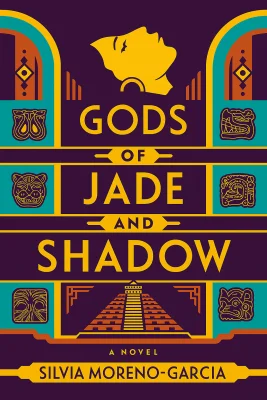
Gods of Jade and Shadow
Categories
Fiction, Audiobook, Historical Fiction, Romance, Fantasy, Mythology, Adult, Book Club, Historical, Magical Realism
Content Type
Book
Binding
Hardcover
Year
2019
Publisher
Del Rey
Language
English
File Download
PDF | EPUB
Gods of Jade and Shadow Plot Summary
Introduction
# Gods of Bone and Shadow: A Journey Between Worlds The yellow house in Uukumil suffocated under the Yucatecan sun, its limestone walls trapping heat and resentment in equal measure. Eighteen-year-old Casiopea Tun knelt on the floor, scrubbing away the stains of another day's servitude while her cousin Martín lounged in the shade, his pale skin marking him as the favored grandson. The carved chest at the foot of her grandfather's bed had always drawn her eye, its obsidian surface depicting a decapitated man holding a double-headed serpent. When fury finally drove her to steal the key and lift that heavy lid, she expected gold or silver, some compensation for years of cruelty. Instead, she found bones that gleamed like moonlight and a shard that pierced her thumb with surgical precision. The skeleton assembled itself with violent grace, clicking and groaning as sinew wrapped around ancient calcium and bronze skin stretched over impossible beauty. Hun-Kamé, Lord of Xibalba, rose from his fifty-year prison with eyes like flint and a voice that carried winter's bite. His brother Vucub-Kamé had scattered his divine essence across Mexico, leaving him incomplete and powerless. Now the bone shard binding them together would drain Casiopea's life to fuel his resurrection, killing her unless he could reclaim his missing eye, ear, finger, and jade necklace. Their quest would drag them from the shadow roads of the underworld to the neon-lit streets of a changing Mexico, where gods still walked among mortals and ancient grudges demanded blood payment.
Chapter 1: The Chest of Bones: Awakening the Lord of Death
The transformation began with clicking. Bone fragments leaped from the chest like eager dancers, assembling themselves into a human skeleton while Casiopea stumbled backward, her thumb bleeding from the embedded shard. Muscle wrapped around the frame in crimson ribbons, skin flowing like liquid bronze until a man stood before her, naked and magnificent and utterly alien. Hun-Kamé surveyed his prison with the cold assessment of a general studying a battlefield. His left eye was missing, replaced by shadows that moved with their own malevolent life. His ear was gone, leaving only smooth skin. His index finger ended at the first knuckle. These were not wounds but absences, pieces of his divine essence stolen and scattered by his treacherous twin. He dressed in her grandfather's clothes with mechanical precision, transforming from otherworldly apparition to gentleman caller. The familiar routine of laying out garments steadied Casiopea's nerves even as her world tilted toward madness. When he explained their bond, his voice carried the finality of a death sentence. The shard would feed on her life force until he became whole again, or until she died. There was no third option. They fled Uukumil on the mule-drawn railcar, leaving behind everything she had ever known. As the town shrank into heat shimmer, Hun-Kamé spoke of his brother's ambitions. Vucub-Kamé dreamed of connecting the ancient power sources of Yucatán and Baja California, creating an empire where blood sacrifice would flow like rivers and mortals would worship the Lords of Xibalba in terror once more. The weight of cosmic responsibility settled on Casiopea's shoulders, but beneath it lay something intoxicating: for the first time in her life, she was essential to someone's plans.
Chapter 2: Bound by Blood: The Divine Bargain and Mortal Price
In Mérida's white-washed streets, they sought out Loray, a demon bound to the city by contracts older than Christianity. His house was a temple to modern luxury, all clean lines and expensive furniture, where a green-eyed immortal in a tailored suit offered assistance for a price. He would reveal the location of Hun-Kamé's missing ear, but in return, he wanted access to Xibalba's shadow roads when the god reclaimed his throne. Loray's true gift was information wrapped in silk and poison. He explained how Hun-Kamé's mortality was growing with each passing day, how the god was becoming more human as he fed on Casiopea's life force. The demon's suggestion hung in the air like incense: cut off her hand, sever the connection, and perhaps curry favor with whichever brother emerged victorious. It was insurance, he claimed, nothing more. The port of Veracruz pulsed with Carnival fever when they arrived, its streets alive with masked revelers and the salt tang of revolution. Hun-Kamé had come to reclaim his ear from Juan, youngest of the Mamlab weather gods, who delighted in seducing mortal women during festivals. Casiopea found herself cast as bait, her role to lure the god into Hun-Kamé's trap. She played her part with growing confidence, allowing the pirate-costumed Juan to lead her into a dark alley with promises of kisses and sweet words. But when the moment came to bind his hands with rope, she discovered her own strength. The knots held fast despite his divine nature, his fury transforming the narrow space into a tempest of wind and rage. Hun-Kamé emerged from the shadows like death incarnate, his presence bringing cold that turned Juan's breath to frost. The weather god's bluster crumbled before quiet menace, and he surrendered the ear with theatrical reluctance, watching as Hun-Kamé pressed it to his head and made himself whole once more.
Chapter 3: Gathering the Scattered God: Guardians and Ancient Powers
At a lonely crossroads outside Veracruz, Hun-Kamé summoned a psychopomp, a creature of smoke and shadow that spoke in riddles and flames. The apparition revealed the locations of his remaining missing parts: Mexico City held one piece, El Paso another, and in Baja California's Tierra Blanca waited his destiny and his doom. The creature's warning echoed in the night air like a funeral bell before dissolving into starlight. Their train journey to the capital became a revelation. Casiopea watched the god sleep for the first time, his immortal features softened by dreams he claimed were impossible for his kind. When she woke him, concerned by his stillness, he admitted his growing humanity with something approaching fear. The mortal blood in his veins was changing him, making him vulnerable in ways he had never experienced. In Mexico City's Hotel Mancera, Hun-Kamé's quest demanded another sacrifice. To summon the ghosts who could guide them to his missing finger, he needed Casiopea's hair. She watched her long black mane fall to the bathroom floor, tears streaming down her face as she butchered the one thing anyone had ever called beautiful about her. The summoning brought shadows to life, hungry spirits with glowing eyes and gray tongues that writhed across the floor like serpents. The ghosts devoured her hair like starving beasts, their whispers revealing the location of Xtabay, the seductive spirit who held Hun-Kamé's finger. But when Casiopea looked into their eyes, she became lost in their thrall, nearly consumed by their endless hunger until Hun-Kamé's voice called her back from the brink. His concern was evident despite his attempts at divine detachment, the god who claimed to feel nothing learning the weight of mortal emotions with each passing hour.
Chapter 4: The Usurper's Shadow: Vucub-Kamé's Growing Threat
Xtabay dwelt in the modern Condesa district, her apartment a jungle of potted plants and Art Deco luxury. Beautiful beyond mortal comprehension, she had been promised godhood by Vucub-Kamé in exchange for her loyalty. Her magic wrapped around Hun-Kamé like silk threads, seeking to ensnare him with promises of power and pleasure that had tempted gods and mortals for millennia. The plants responded to her will, their vines reaching for Casiopea's throat while flowers bloomed with narcotic perfume. But Casiopea's voice shattered the spell, her mortal will proving stronger than divine enchantment. The vegetation withered at Hun-Kamé's approach, and Xtabay, defeated, surrendered the finger with bitter grace. Her parting words carried the weight of prophecy: the god was becoming more human with each passing day, his immortal nature bleeding away like water through sand. Meanwhile, in the shadow realm of Xibalba, Vucub-Kamé felt the tremors of his brother's progress. His powers of foresight, once crystal clear, now showed only branching possibilities obscured by Casiopea's mortal essence. The usurper god's frustration manifested in violent storms across the underworld, his rage shaking the foundations of death's kingdom. In his fury, he dispatched his nephew Martín to intercept them, sending the young man on the wings of a giant owl through Xibalba's shadow roads. The journey transformed Martín, marking his mortal flesh with the underworld's touch and filling his mind with visions of power and terror. When he arrived in Mexico City, he was no longer the cruel but ultimately harmless boy who had tormented his cousin. He had become something harder, more desperate, carrying his uncle's ultimatum like a plague.
Chapter 5: Hearts Between Worlds: Love in the Face of Mortality
The train to El Paso carried them through landscapes that shifted from jungle to desert, each mile taking Hun-Kamé further from the source of his power. In their shared compartment, Casiopea discovered him sleeping again, his face peaceful in dreams he claimed gods could not have. When she woke him, he spoke of dreaming about her, his confusion evident as mortality crept deeper into his divine essence. Their conversation revealed the true scope of Vucub-Kamé's ambition. The usurper brother sought not just power but transformation, a return to the blood-soaked days when gods demanded human sacrifice and mortals trembled before their altars. He would connect the mystical power sources of Yucatán and Baja California, creating an empire of terror that would consume cities from Mérida to Mexico City. Hun-Kamé's own plans for revenge were equally dark. He spoke of imprisoning his brother for millennia, of torments that would make his own fifty-year captivity seem merciful. But when Casiopea challenged him, asking why he would inflict such suffering knowing its true cost, something shifted in his expression. For a moment, the ageless god became a young man, uncertain and achingly human. In El Paso's desert heat, they sought out Candida, a witch who ran a flower shop and dealt in dreams and blood. Seven drops from Casiopea's finger bought them the location of the Uay Chivo, the goat-sorcerer who held Hun-Kamé's missing eye. But the price was higher than blood: seven hours of dreams that left Casiopea walking the Black Road of Xibalba in her sleep, tasting copper and fear as the underworld's shadows closed around her like hungry mouths.
Chapter 6: Tierra Blanca: The Final Convergence of Brothers
The Uay Chivo's lair lay hidden in El Paso's industrial district, a warehouse where the sorcerer practiced his dark arts. Half-man, half-goat, with eyes like burning coals, he was a creature of pure malevolence who had served Vucub-Kamé for decades. His workshop reeked of sulfur and burnt offerings, the walls lined with artifacts of power and pain. The confrontation was swift and brutal. The Uay Chivo's magic turned the warehouse into a maze of shadows and flame, but Hun-Kamé's growing humanity had not diminished his power over death. The sorcerer's defiance crumbled before the Lord of Xibalba's wrath, and he surrendered the missing eye with a curse on his lips, his body crumbling to ash as Hun-Kamé pressed the organ to his socket. As his vision cleared, Hun-Kamé saw the full scope of their peril. Vucub-Kamé had been manipulating events from the beginning, using their quest to drive them toward Tierra Blanca and the final confrontation he had prepared. The usurper brother waited in a hotel built on a convergence of mystical power, where he would attempt to complete his grand design. Martín's appearance confirmed their fears. Casiopea's cousin had been transformed by his journey through Xibalba's shadow roads, his mortal flesh marked by the underworld's touch, his eyes holding depths that spoke of terrible knowledge. He carried Vucub-Kamé's challenge: meet the true Lord of Xibalba at Tierra Blanca, or watch the world burn in an empire of blood and sacrifice. The final piece of Hun-Kamé's essence, his jade necklace, lay waiting in Baja California like bait in a trap that had been fifty years in the making.
Chapter 7: The Black Road: Trial by Death and Sacrifice
The Hotel Tierra Blanca rose from the Baja California desert like a monument to hubris, its white walls gleaming under the merciless sun. Built on a convergence of ancient power, it served as Vucub-Kamé's fortress and the focal point of his grand design. Here, the usurper brother waited with his jade necklace and his dreams of empire, confident that his transformed sibling would arrive weakened and ready for defeat. But Hun-Kamé had changed in ways Vucub-Kamé could not foresee. His growing humanity had not diminished his power but transformed it, tempering divine wrath with mortal compassion. When the brothers finally faced each other in the hotel's shadow-haunted halls, it was not the broken god Vucub-Kamé expected but something far more dangerous: a being who had learned to love. The confrontation spilled into Xibalba itself, where Casiopea found herself walking the Black Road in a contest that would determine the fate of both brothers. The road was not merely a path but a living thing, hungry and malevolent, feeding on the fears and failures of those who dared traverse it. Against her walked Martín, chosen as Vucub-Kamé's champion, racing toward the World Tree at Xibalba's heart. The road tested her with monsters from nightmare and walls of bone that tried to crush her between their grinding teeth. Each obstacle demanded not just courage but cunning, as Casiopea learned to command the road itself, to find the shadow-gaps that allowed her to leap forward through space and time. But when she lost the road entirely, wandering into Xibalba's wasteland where lost souls forgot themselves, only poetry saved her, words remembered from her father's books anchoring her to her true self and purpose.
Chapter 8: Beyond the Veil: Transformation and Farewell
At the lake at Xibalba's heart, defeat seemed certain as Martín approached the World Tree first. But Casiopea had learned something during her journey through the underworld: sometimes victory requires the ultimate sacrifice. With an obsidian knife, she cut her own throat, offering her life not to Vucub-Kamé but to Hun-Kamé, her blood awakening powers that had slept since the world's creation. The Great Caiman rose from the lake's depths, ancient beyond measure, its scales holding the light of dead stars. This primordial being had witnessed the world's birth, and it recognized the power of Casiopea's sacrifice. From its jaws, it delivered her body wrapped in crimson cloth, dead but not destroyed, her spirit having reached the World Tree first through the ultimate act of love and loyalty. Hun-Kamé's restoration was complete as he healed her wounds and returned her to life. His brother knelt in defeat, the usurper's dreams of empire crumbling like sand. But in his moment of triumph, Hun-Kamé chose mercy over vengeance, the cycle of hatred that had driven the brothers apart broken by an act of forgiveness that surprised even the gods themselves. Yet love between mortal and immortal cannot last unchanged. As Hun-Kamé reclaimed his full divinity, the man who had learned to dream and laugh began to fade. In the gray desert at Xibalba's edge, they shared their final goodbye, a kiss that held all the words they had never spoken, all the futures they would never share. When he removed the bone splinter from her hand, severing their connection forever, tiny red flowers bloomed across the wasteland, spelling out in petals what his lips could no longer say.
Summary
Casiopea emerged from the underworld forever changed, carrying gifts that would serve her well in the world above: the ability to speak any language, to commune with the dead, and most precious of all, the memory of a god who had chosen to love her. The black pearls Hun-Kamé had promised were real, but they were nothing compared to the knowledge that she had been loved completely, if briefly, by someone who had remade himself for her sake. The gods returned to Xibalba transformed by their journey through mortality and love. Hun-Kamé reclaimed his throne not through conquest but through understanding, his rule tempered by the humanity he had gained. Vucub-Kamé's punishment was not eternal torment but the chance to learn what his brother had discovered: that true power comes not from fear but from connection, not from taking but from giving. As Casiopea drove away from Tierra Blanca with Loray, the road stretched ahead full of possibilities. She had tasted freedom and found it sweet, had loved a god and survived the loss, had walked through death itself and emerged stronger. The world was wide and full of wonders, and for the first time in her life, she was free to explore them all.
Best Quote
“Words are seeds, Casiopea. With words you embroider narratives, and the narratives breed myths, and there's power in the myth. Yes, the things you name have power.” ― Silvia Moreno-Garcia, Gods of Jade and Shadow
Review Summary
Strengths: The review highlights the book's ability to evoke a sense of nostalgia and familiarity, akin to the captivating storytelling of the reviewer's mother. The narrative is described as engaging and immersive, with life-and-death stakes that command attention. The story's blend of mythological elements and personal growth is praised, particularly the character development of Casiopea and her journey with the Mayan god of death, Hun-Kamé. Overall: The reader expresses a deep connection to "Gods of Jade and Shadow," appreciating its ability to transport them into a richly woven tale reminiscent of childhood stories. The book is recommended for its compelling narrative and mythological depth, suggesting a high level of enjoyment and engagement.
About Author

Silvia Moreno-Garcia
Moreno-Garcia maps a captivating landscape where Mexican culture and speculative genres intersect, creating narratives that resonate with cultural richness and social depth. Her work often interrogates themes of identity, power, and social unrest while weaving elements of folklore and historical context into her storytelling. This thematic exploration is evident in books like "Gods of Jade and Shadow," which delves into Mexican folklore, and "Mexican Gothic," which combines gothic horror with a Mexican backdrop. Her bio reflects a commitment to exploring complex characters and supernatural settings, offering readers a multifaceted view of Mexican identity and myth.\n\nHer method of intertwining genre storytelling with a strong sense of place and cultural heritage allows readers to immerse themselves in richly textured worlds. For example, "Signal to Noise" blends coming-of-age fantasy with 1980s Mexico City, while "Velvet Was the Night" captures the noir atmosphere of 1970s Mexico City. Moreover, Moreno-Garcia’s editorial work, such as the World Fantasy Award-winning anthology "She Walks in Shadows," showcases her dedication to amplifying diverse voices and narratives.\n\nReaders benefit from Moreno-Garcia's ability to craft engaging, thought-provoking stories that transcend traditional genre boundaries. Her books not only entertain but also provide insightful commentary on cultural and societal issues, appealing to those interested in a deeper understanding of Mexican culture through a speculative lens. Her recognition with awards like the Locus Award for "Mexican Gothic" underscores her impact on the literary world, making her a pivotal figure in contemporary speculative fiction.
Read moreDownload PDF & EPUB
To save this Black List summary for later, download the free PDF and EPUB. You can print it out, or read offline at your convenience.
Gods of Jade and Shadow
by Silvia Moreno-Garcia
