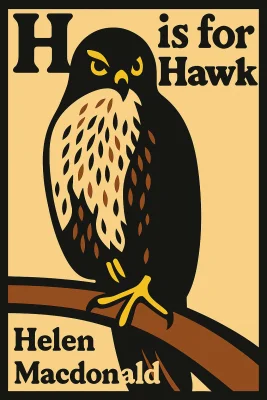
H is for Hawk
Categories
Nonfiction, Biography, Memoir, Animals, Nature, Audiobook, Grief, Biography Memoir, Book Club, Birds
Content Type
Book
Binding
Hardcover
Year
2013
Publisher
Grove Press
Language
English
ASIN
0224097008
ISBN
0224097008
ISBN13
9780224097000
File Download
PDF | EPUB
H is for Hawk Plot Summary
Introduction
# When Grief Meets Wild: Healing Through the Ancient Bond of Falconry The morning after her father's sudden death, Helen Macdonald found herself standing in a Scottish harbor, clutching an envelope filled with £800 in cash, waiting for a stranger to arrive with a cardboard box. Inside that box was a ten-week-old goshawk—one of nature's most formidable predators, a bird that had terrified falconers for centuries with its wild, untamable spirit. Most people would have called her mad. She was a Cambridge academic, a respected historian of science, someone who should have been processing grief through therapy or support groups. Instead, she was about to embark on the most dangerous and transformative relationship of her life. What follows is not just the story of training a hawk, but a profound meditation on loss, wildness, and what it means to be human when everything familiar falls away. Through her intense bond with Mabel, the goshawk, Macdonald discovers that sometimes the path back to ourselves leads not through civilization, but into the heart of something utterly wild. This is a book about the strange alchemy that occurs when grief meets wildness, when a broken heart encounters a creature that knows nothing of human sorrow but everything about survival, presence, and the fierce beauty of living completely in the moment.
Chapter 1: The Desperate Choice: Finding a Goshawk in Grief's Shadow
The phone call came on a Tuesday morning, ordinary as any other until the world tilted off its axis. Helen's father, a photographer who had spent his life capturing moments of beauty and truth, had collapsed suddenly at work. By the time she reached the hospital, he was gone, leaving behind only the echo of his last words to a colleague about the light being perfect for an afternoon shoot. The woman who had always been his daughter, his companion in watching birds and waiting patiently for the perfect shot, suddenly found herself unmoored in a world that no longer made sense. In the days that followed, she moved through the rituals of death like a sleepwalker. There were forms to fill, arrangements to make, a memorial service to plan. But beneath the surface of these necessary tasks, something was breaking apart. The careful architecture of her academic life—her fellowship at Cambridge, her research, her orderly existence—began to crumble. She found herself unable to concentrate, unable to care about the things that had once mattered. The future, which had seemed so certain, became as insubstantial as morning mist. It was then that she remembered the goshawks. As a child, she had been obsessed with stories of these fierce birds of prey, dreaming of having such a hawk, of disappearing into the wild world it represented. Now, in her grief, that childhood dream returned with the force of necessity. If she could train a goshawk, she reasoned, she could escape the unbearable weight of human sorrow and find refuge in something pure and wild. The hawk arrived in a cardboard box on a gray morning, and when she lifted the lid, she found herself looking into eyes that seemed to hold all the wildness of ancient forests. Mabel was a young female goshawk, barely three months old, with feathers the color of autumn leaves and talons that could pierce leather. She was magnificent and terrifying, a creature so utterly alien that looking at her was like glimpsing another world entirely. The decision to acquire a hawk was not rational—it was the desperate act of someone drowning who reaches for anything that might keep her afloat. But sometimes our most irrational choices lead us exactly where we need to go, even if the journey takes us through territories we never imagined we would have to cross. In that moment of first contact with Mabel, Helen began a journey that would strip away everything she thought she knew about herself and rebuild her from the ground up.
Chapter 2: Learning the Language of Wildness: First Lessons with Mabel
Those first days were a revelation of just how unprepared Helen was for what she had undertaken. Goshawks are not pets or companions in any human sense—they are predators evolved to kill, with reflexes faster than thought and an intelligence entirely focused on survival. Mabel would sit on her perch with the stillness of a coiled spring, her yellow eyes tracking every movement, calculating distances and escape routes. When she bated—threw herself off the perch in panic—her wings would beat with such violence that Helen feared she would injure herself against the furniture. The ancient art of falconry demanded a complete transformation of Helen's daily life. She had to learn to read the subtle signs of the hawk's condition, to understand the precise balance of hunger and contentment that would make training possible. She spent hours each day carrying Mabel on her gloved fist, walking through the house and garden, trying to accustom the wild bird to human presence. The hawk's weight on her arm became as familiar as her own heartbeat, a constant reminder of the responsibility she had taken on. The process of "manning" a hawk—teaching it to accept human presence—requires a peculiar form of patience that borders on meditation. Helen would sit for hours with Mabel on her fist, learning to read the subtle language of feathers. When the hawk was calm, her plumage lay smooth and sleek; when frightened, every feather stood on end, transforming her into a bristling ball of fury. The slightest movement could send her into a panic that would leave her hanging upside down from her jesses until Helen gently lifted her back onto the glove. Each day brought tiny victories and crushing setbacks. One morning Mabel would eat from Helen's hand with apparent trust; the next, she would regard her with wild suspicion, as if seeing her for the first time. The hawk's moods seemed to follow no human logic, shifting with changes in barometric pressure, the phase of the moon, or mysteries that Helen could only guess at. But in those early weeks, something unexpected began to happen. As Helen focused all her attention on the hawk's needs, her own grief began to recede into the background. The sharp immediacy of Mabel's presence demanded complete attention—there was no room for the past or future, only the eternal now of predator and prey. In learning to work with Mabel's wildness rather than against it, Helen was also learning to work with her own grief—not to overcome it or defeat it, but to find a way to live alongside it with grace and presence.
Chapter 3: T.H. White's Ghost: When Training Becomes a Battle for Control
As Helen struggled with her own hawk, she found herself returning again and again to T.H. White's account of his attempt to train a goshawk in the 1930s. White had been a tormented man, fleeing his own demons when he acquired his hawk, Gos, and his story was one of spectacular failure—a brilliant man who had turned hawk training into a battle of wills, a contest between civilization and wildness that could only end in tragedy. His hawk had eventually escaped, leaving White devastated and alone. White had come to his hawk carrying his own wounds—a childhood of violence and fear, confusion about his sexuality, terror of the approaching war. He saw in the goshawk everything he longed to be: wild, free, untouchable by human cruelty. But instead of learning from the hawk, he tried to dominate it, to break its spirit and remake it in his own image. He kept the bird awake for days, trying to exhaust it into submission. He fed it irregularly, using hunger as a weapon. He turned what should have been a partnership into a prison. White's training methods, based on medieval texts and his own stubborn determination, had been harsh and unforgiving. He had tried to break the hawk's spirit, to reduce it to a mere extension of his own will. His account was filled with battles of dominance, moments of cruelty born from frustration, and an underlying current of violence that spoke to his own damaged psyche. The hawk had become a mirror for his own self-loathing, a wild thing that he both loved and sought to destroy. Reading White's account while training her own hawk, Helen began to understand how grief and trauma can distort our relationships with the wild. White's need to control came from his own powerlessness as a child; his cruelty emerged from the cruelty he had suffered. He couldn't see the hawk as it truly was because he was too busy projecting his own fears and desires onto it. Helen recognized the danger of following White's path. Grief could easily turn into a desire to control, to impose order on a world that had revealed its fundamental chaos. But the hawk demanded something different—not submission, but partnership. Not conquest, but understanding. White's failure became Helen's guide, showing her what not to do, how not to let her own pain poison the relationship she was building with Mabel. True partnership, she learned, requires surrendering the illusion of control and accepting that the other being has its own will, its own reasons for choosing to stay or go.
Chapter 4: The Hunter's Transformation: Crossing the Line Between Human and Hawk
The first time Mabel caught a rabbit, Helen felt something shift inside her that she couldn't name. She had been walking with the hawk through a field when Mabel suddenly tensed, her whole body focusing on something in the grass ahead. In one fluid motion, the hawk left her fist and flew low and fast toward her quarry, striking with precision that took the breath away. When Helen reached them, Mabel was mantling over the rabbit, her wings spread wide in the ancient gesture of possession, her eyes blazing with predatory triumph. As she knelt beside the hawk and her prey, Helen felt herself crossing a threshold she hadn't known existed. This was not the sanitized world of supermarket meat and hidden slaughter—this was death in its most immediate form, raw and real and undeniable. She found herself caught between revulsion and fascination, horror and a strange kind of exhilaration. The rabbit had been alive moments before, alert and quick, and now it was still, its life transformed into sustenance for the hawk. But it was not just the death that affected her—it was the way hunting seemed to dissolve the boundaries between herself and Mabel. When they were tracking prey, she found herself thinking like a hawk, seeing the landscape through predatory eyes. She learned to read the subtle signs that revealed where rabbits might be hiding, to move with the silent patience of a hunter. Her senses sharpened, her awareness expanded, until she felt more alive than she had since her father's death. As the weeks passed, Helen noticed something strange happening to her identity. The careful boundaries between self and other began to blur. She found herself moving through the world with the hawk's heightened awareness, noticing things that had been invisible before—the way shadows fell across the grass, the subtle sounds that spoke of hidden life, the complex patterns of movement that revealed the presence of prey. Her senses sharpened until she could hear the whisper of wings overhead, smell the approach of rain hours before it arrived. Yet this transformation came with a cost. As Helen spent more and more time in the hawk's world, she found herself becoming increasingly isolated from human society. She avoided friends, canceled social engagements, spent her days walking empty fields with Mabel on her fist. The sharp focus required for hunting left no room for the complexities of human emotion, and she began to prefer the clean simplicity of the predator's world to the messy complications of grief and loss. She was learning that wildness, while healing, could also be a form of exile, cutting her off from the very connections that make life meaningful.
Chapter 5: History's Dark Wings: Confronting Falconry's Complicated Legacy
As her skills with Mabel developed, Helen began to delve deeper into the history of falconry, only to discover shadows she had never expected. The sport she had thought of as noble and ancient carried within it the weight of darker associations. In Nazi Germany, falconry had been embraced as a symbol of Aryan supremacy, with high-ranking officials like Hermann Göring using hawks and eagles as living emblems of predatory power and racial dominance. The revelation came through her research into the origins of White's hawk. Gos had been sent to England from Germany in the 1930s by a man named Renz Waller, who would later become a key figure in the Nazi appropriation of falconry. The same hands that had trained hawks for the pleasure of medieval kings had also served the ideology of the Third Reich, turning the ancient art into a tool of propaganda and exclusion. This discovery forced Helen to confront uncomfortable questions about her own motivations. Was her retreat into the world of the hawk just another form of escapism, a way of avoiding the messy realities of human society? The predatory mindset that felt so pure and simple when she was hunting with Mabel—was it really so different from the cold calculation of those who saw other humans as prey? She began to see how the mythology of the wild could be used to justify cruelty, how the appeal to "natural law" had been twisted to support ideologies of dominance and exclusion. The hawks themselves were innocent, but the meanings humans projected onto them were not. The same qualities that made goshawks magnificent—their fierce independence, their predatory skill, their apparent freedom from moral constraint—could be used to romanticize violence and justify the abandonment of compassion. Yet this knowledge did not diminish her love for Mabel or her commitment to their partnership. Instead, it deepened her understanding of the responsibility that came with caring for a wild thing. She could not use the hawk as an excuse to abandon her humanity—instead, she had to find a way to honor both the wildness of the hawk and her own obligations to the human community she had tried to leave behind. The challenge was learning to carry the fierce attention and presence that Mabel had taught her while also opening her heart to the full range of human experience.
Chapter 6: Mapping Memory: How Landscape Holds Both Loss and Belonging
As winter deepened and her training of Mabel progressed, Helen found herself developing an intimate knowledge of the landscape around Cambridge where they hunted together. Every field, every hedgerow, every copse became familiar territory, mapped not by roads and boundaries but by the movements of prey and the flight paths of the hawk. She learned to read the land as Mabel did, seeing it as a complex web of opportunities and dangers, shelter and exposure. This deep attention to place brought unexpected gifts. She began to notice things that had been invisible before—the way morning light fell differently on east-facing slopes, the subtle signs that revealed where rabbits had been feeding, the seasonal rhythms that governed the movements of all the creatures that shared this landscape. Her father had taught her to be patient, to wait and watch for the perfect moment, and now she understood what he had meant in ways she never had before. But the landscape was not just a hunting ground—it was also a repository of memory and meaning. Walking these fields with Mabel, she found herself remembering childhood expeditions with her father, moments of shared wonder at the sight of a soaring hawk or the flash of a kingfisher over water. The hawk had not taken her away from these memories but had led her deeper into them, helping her understand that her father's gift had been not just knowledge but a way of being present in the world. She began to see how the land itself was layered with stories—not just her own memories but the deeper history of all who had lived and died here. The fields where she flew Mabel had been shaped by centuries of human habitation, by farmers and hunters, by the rise and fall of civilizations. The hawks that soared overhead were part of that story too, connected to the same landscape by bonds that stretched back to the beginning of time. This sense of belonging to something larger than herself began to heal the disconnection that had driven her to the hawk in the first place. She was not separate from the world but part of it, woven into the same web of relationships that connected predator and prey, human and hawk, past and present. Through her connection with the landscape, Helen began to understand that healing meant not escaping from the world but finding her place within it more fully.
Chapter 7: The Season of Separation: Learning to Let Go and Return
The moment of reckoning came not in a dramatic crisis but in a quiet recognition that the season was changing. Spring was approaching, and with it the time when Mabel would need to molt, to shed her old feathers and grow new ones in the privacy of an aviary. For months, they would be separated, the hawk focused on the ancient process of renewal while Helen returned to the human world she had tried to leave behind. The prospect of separation filled her with dread, but it also brought a clarity she had been avoiding. She realized that her relationship with Mabel had become a kind of addiction, a way of avoiding the work of grieving that she still needed to do. The hawk had been a bridge out of despair, but she could not live on that bridge forever. At some point, she would have to choose which side to inhabit—the wild world of the hawk or the human world of connection and community. As she prepared to take Mabel to the aviary where she would spend her molting season, Helen understood that this separation was not an ending but a transformation. The lessons the hawk had taught her would remain, but now she needed to learn how to carry them back into the human world. She needed to find a way to honor both her wildness and her humanity, to be both the woman who could hunt with a hawk and the daughter who still grieved for her father. Slowly, Helen began to rebuild her connections with other people. She started answering phone calls again, accepting invitations, engaging with friends who had waited patiently through her period of withdrawal. She discovered that the skills she had learned with Mabel—deep attention, patience, the ability to read subtle cues—could also enhance her human relationships. The hawk had taught her how to be present, and presence, she realized, was the greatest gift she could offer to anyone. The final lesson was perhaps the most important: that healing does not come from escaping our humanity but from embracing it more fully. The hawk had been a guide through the darkness, but the light she found at the end of that journey was distinctly human—the light of connection, compassion, and the courage to love even in the face of loss. Helen had learned to carry wildness within her while still participating in human society, creating a life that honored both her need for solitude and her need for connection.
Summary
Through her extraordinary journey with Mabel, Helen Macdonald discovered that healing from profound loss requires not the elimination of pain, but learning to live alongside it with grace and presence. The hawk became her teacher in the art of attention—showing her how to exist fully in each moment without the burden of past regret or future anxiety. In the wild intensity of their partnership, she found a refuge from grief that allowed her to rebuild her relationship with life itself, but also learned the crucial difference between temporary escape and lasting transformation. The deepest lesson of this remarkable story is that our greatest wounds often become our most profound teachers, leading us not away from our humanity but toward a fuller understanding of what it means to be human. The hawk taught Helen that true strength comes not from controlling our circumstances, but from learning to respond to them with skill, patience, and unwavering attention. By embracing both her need for wildness and her need for connection, both her love of solitude and her place in human community, she created a way of living that honored all aspects of her nature. In the end, the greatest gift we can give ourselves in times of loss is not escape from the world, but a deeper engagement with it—one that includes both the fierce beauty of the wild and the tender complexity of human love.
Best Quote
“There is a time in life when you expect the world to be always full of new things. And then comes a day when you realise that is not how it will be at all. You see that life will become a thing made of holes. Absences. Losses. Things that were there and are no longer. And you realise, too, that you have to grow around and between the gaps, [...]” ― Helen Macdonald, H is for Hawk
Review Summary
Strengths: The review highlights the intriguing nature of goshawks and the author's ability to draw comparisons between goshawks and sparrowhawks, making the subject accessible to those unfamiliar with birds of prey. The inclusion of images helps provide a visual understanding of the bird's size and appearance. Weaknesses: The review lacks a detailed analysis of the book's narrative style or thematic depth. It primarily focuses on the reviewer's personal lack of knowledge about hawks prior to reading, rather than evaluating the book's literary qualities. Overall: The reader expresses a sense of newfound interest and curiosity about goshawks and falconry, suggesting that the book effectively engages those unfamiliar with the subject. However, the review does not provide a comprehensive evaluation of the book's literary merits.
About Author

Helen Macdonald
Macdonald reframes the relationship between humanity and the natural world by exploring themes of grief, nature, and human-animal interactions. Their writing blends memoir, nature writing, and literary biography, providing readers with a nuanced understanding of the emotional and psychological impacts of loss and nature. Their approach combines lyrical prose with deep observation, often examining the boundaries between human and animal experiences. This is evident in works like "H Is for Hawk", which is both a memoir of training a goshawk and an exploration of mourning a parent. By intertwining personal narrative with scientific and historical context, Macdonald creates a unique tapestry that resonates with those interested in the intersection of science and literature.\n\nTheir works, such as the essay collection "Vesper Flights" and the poetry collection "Shaler’s Fish", further extend these themes, offering insight into the human relationship with the natural world. Meanwhile, the novel "Prophet", co-authored with Sin Blaché, marks Macdonald's first foray into fiction, showcasing their versatility and ability to transcend genres. Recognized with numerous awards, including the Samuel Johnson Prize and Costa Book Award for "H Is for Hawk", Macdonald's contributions have been widely celebrated for their intellectual rigor and emotional depth. This makes their books essential for readers seeking a profound and thoughtful engagement with both nature and the complexities of human emotion.\n\nAs an author and scholar affiliated with the University of Cambridge, Macdonald has also contributed to broader cultural conversations through articles in the "New York Times Magazine" and award-winning documentaries for PBS and the BBC. Their work offers readers not just stories, but also a lens through which to view the intricate connections between life, death, and the natural environment, making their bio a compelling narrative of a life dedicated to understanding and expressing these relationships.
Read moreDownload PDF & EPUB
To save this Black List summary for later, download the free PDF and EPUB. You can print it out, or read offline at your convenience.
H is for Hawk
by Helen Macdonald
