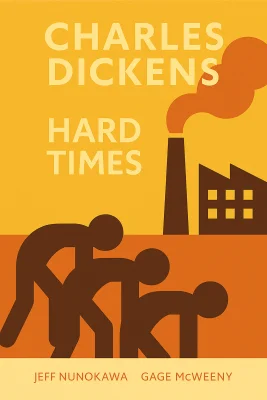
Hard Times
Categories
Fiction, Classics, Historical Fiction, Literature, School, 19th Century, Novels, British Literature, Classic Literature, Victorian
Content Type
Book
Binding
Paperback
Year
2003
Publisher
Pearson
Language
English
ASIN
0321107217
ISBN
0321107217
ISBN13
9780321107213
File Download
PDF | EPUB
Hard Times Plot Summary
Introduction
# Hard Times: The Machinery of Human Hearts In the smoke-choked industrial town of Coketown, where factory chimneys pierce the gray sky like blackened fingers and the air tastes of coal dust and human desperation, Thomas Gradgrind stands before a classroom of pale children. His voice cuts through the stale air like machinery: "Facts, children. Facts alone are wanted in life." Behind him, the aptly named Mr. McChoakumchild waits with mechanical patience, ready to stuff young minds with statistics while starving their souls of wonder. When Gradgrind's cold gaze falls upon Sissy Jupe, a circus girl who cannot define a horse in scientific terms despite living among them, he sees only failure. When pale Bitzer recites the approved definition—"Quadruped. Graminivorous. Forty teeth"—Gradgrind sees perfection. But that evening, as Gradgrind walks home congratulating himself on another day of educational triumph, he discovers his own children pressed against the fence of Sleary's traveling circus, their faces bright with forbidden curiosity. Fifteen-year-old Louisa and her younger brother Tom are watching the dancing horses with the hunger of souls starved for beauty. This moment of discovery sets in motion a tragedy that will consume the Gradgrind family and expose the brutal cost of a philosophy that treats human beings as mere machines. In the factories where Gradgrind's theories play out on a grand scale, workers like Stephen Blackpool will discover that in a world obsessed with facts and profit, the human heart becomes the most dangerous luxury of all.
Chapter 1: Facts and Foundations: The Gradgrind System
The confrontation in Gradgrind's study that night strips away every comfortable illusion. His children, the perfect products of his educational system, have been caught seeking the very fantasies he has worked so ruthlessly to eliminate. Louisa meets her father's shocked gaze with defiant eyes that seem far older than her fifteen years. "I wanted to see what it was like," she says simply, as if this desire were the most natural thing in the world. Her words hang in the air like an accusation Gradgrind is not yet ready to understand. Tom cowers beside his sister, displaying the sullen resentment of a boy denied every natural pleasure of childhood. But Louisa stands her ground, something flickering in her expression like a flame that refuses to be extinguished. In that moment, Gradgrind glimpses the first crack in his philosophical armor, though he lacks the wisdom to recognize it. The discovery of Sissy Jupe's abandonment by her circus father presents Gradgrind with an opportunity to prove his methods. Rather than let the girl return to that world of imagination and wonder, he takes her into his own household, convinced he can transform this creature of fancy into a proper vessel for facts. But Sissy proves remarkably resistant to his methods, clinging to hope and love with a tenacity that both frustrates and secretly impresses him. Years pass like the turning of great wheels, grinding the Gradgrind children into their predetermined shapes. Louisa grows into a young woman of striking beauty and disturbing composure, her dark eyes holding depths that her education has never acknowledged. She sits by the fire in her father's study, watching the flames with an intensity that suggests she is searching for something she cannot name. When Gradgrind asks what she sees there, she answers with characteristic directness: "Fire. Nothing more." But her eyes tell a different story—they burn with suppressed longing for the very emotions her education has taught her to despise. Tom, meanwhile, develops into something far more dangerous than ignorant—he becomes calculating and cruel, learning to manipulate his sister's affection for his own selfish ends. The great educator's son has absorbed every lesson about self-interest while remaining utterly deaf to questions of conscience or compassion. He whispers in Louisa's ear about his future prospects, his need for advancement, his dependence on her goodwill toward their father's friend and benefactor, the mill owner Josiah Bounderby.
Chapter 2: Marriages and Machinery: Louisa's Sacrifice
Josiah Bounderby enters the Gradgrind household like a force of nature—loud, crude, and utterly without charm, but possessed of something Gradgrind values above all else: success. At fifty, he has built his fortune on the backs of Coketown's workers while spinning elaborate lies about his own humble origins. His house reflects his character: ostentatious yet cold, filled with expensive objects that seem to mock rather than comfort. When he looks at twenty-year-old Louisa, he sees not a woman but a prize, validation of his rise from the gutter to respectability. The proposal unfolds with the brutal efficiency of a business transaction. Bounderby, red-faced and sweating, declares his intentions while Louisa sits motionless as a statue. There is no courtship, no romance, only the mechanical arrangement of mutual benefit. The age difference of thirty years is merely a statistic to be calculated, the absence of love a sentimental irrelevance in Gradgrind's utilitarian universe. When Gradgrind asks his daughter for her decision, she responds with a question that cuts to the heart of her tragedy: "Father, do you ask me to love Mr. Bounderby?" The conversation circles around the word love as if it were a dangerous substance that might contaminate their rational discourse. Gradgrind, faced with his daughter's directness, can only retreat into abstractions about duty and practical considerations. But there is one person who can still move Louisa's frozen heart: her brother Tom. He whispers that marrying Bounderby will secure his position at the bank, will prove her love for him, will ensure his future prosperity. Louisa, starved for any genuine emotion, clings to her devotion to Tom as her only remaining connection to humanity. In the end, she accepts Bounderby's proposal with the same mechanical precision her father has taught her: "Since Mr. Bounderby likes to take me thus, I am satisfied to accept his proposal." The wedding takes place without ceremony or joy. Louisa, dressed in white silk that might as well be a shroud, speaks her vows in a voice devoid of feeling. The guests congratulate themselves on witnessing such a sensible match, while Sissy Jupe watches from the margins, her eyes bright with unshed tears for the girl who might have been her sister. As the newlyweds depart, Louisa turns back once to look at her childhood home, her face expressing neither regret nor anticipation, only the terrible blankness of a soul that has been systematically emptied of everything that makes life worth living.
Chapter 3: The Outcast's Path: Stephen's Impossible Choice
In the narrow streets where Coketown's workers live like ants in crowded colonies, Stephen Blackpool walks home through the gathering dusk. At forty, he carries himself with the dignity of a man who has found honor in honest labor, though the world has given him little else. His greatest burden waits in his lodging above a dingy shop—a wife so degraded by drink and madness that she seems more specter than woman, appearing at irregular intervals to claim her legal rights and destroy whatever peace he has managed to build. Stephen's only solace comes from his friendship with Rachael, a gentle woman of thirty-five whose quiet strength has sustained him through years of suffering. They walk together through the grimy streets, speaking in low voices of hopes that seem as distant as stars. But Stephen is trapped by laws that allow the rich to divorce while keeping the poor chained to their mistakes forever. When he seeks advice from Bounderby about ending his marriage, the mill owner's response is characteristically brutal: "I see traces of turtle soup, and venison, and gold spoon in this!" The workers' desperation finally erupts into organized resistance. Slackbridge, a union organizer with theatrical gestures and hollow rhetoric, arrives to whip them into solidarity against their oppressors. His speeches are full of fire and fury but empty of practical solutions, painting their struggle in grand terms while offering nothing but empty promises. When the union votes to strike, Stephen finds himself caught between two impossible choices. His conscience will not let him join the strike—he has given his word to Rachael that he will avoid trouble—but his refusal marks him as a traitor in the eyes of his fellow workers. At a packed meeting in the union hall, Stephen stands alone before hundreds of hostile faces. His simple explanation falls on deaf ears: "I ha' my reasons for being hindered; not on'y now, but awlus—life long!" Slackbridge denounces him as a tool of the masters, and the crowd's anger threatens to consume him. The ostracism that follows is complete and devastating. Former friends cross the street to avoid him. Shopkeepers refuse his business. Even children throw stones and call him names. When Bounderby summons him to explain his position, Stephen tries to articulate the muddle that traps working people between poverty and powerlessness, but his simple eloquence falls on deaf ears. The confrontation ends with his dismissal: "You can finish off what you're at, and then go elsewhere." In Coketown's interconnected industrial web, a man blacklisted by one employer will find no welcome at another.
Chapter 4: Awakening Desire: Harthouse's Dangerous Game
Into this world of grinding machinery and grinding souls comes James Harthouse, a gentleman of fashion whose boredom has driven him to politics as others might turn to gambling or drink. Tall, elegant, and utterly without principles, he possesses the dangerous charm of a man who believes in nothing. His cynicism is polished to a mirror shine that reflects back whatever his audience wishes to see. When he encounters Louisa Bounderby, he finds something that pierces even his cultivated indifference. Harthouse recognizes in Louisa a kindred spirit—someone whose natural feelings have been systematically crushed by the machinery of education and social expectation. Her marriage has settled into the pattern Gradgrind's philosophy demanded: a union of mutual benefit unmarred by sentiment or passion. She endures Bounderby's bombast with frozen composure, her emotions locked away so deeply that she sometimes wonders if they exist at all. Through her brother Tom, now working at Bounderby's bank and already showing signs of moral weakness, Harthouse learns the secrets of the Gradgrind family's emotional poverty. Tom's gambling debts and mounting resentment provide the perfect opening for a man skilled in manipulation. Harthouse begins feeding the young man's weaknesses with loans and flattery, positioning himself as friend and confidant. The seduction unfolds with agonizing slowness in the shadowed gardens of Bounderby's country estate. Harthouse never speaks directly of love or desire; instead, he presents himself as the only person who truly understands Louisa's situation. He sympathizes with her loveless marriage, validates her sense of emptiness, and gradually introduces her to ideas that her father's philosophy has forbidden—that life should contain beauty, pleasure, meaning beyond mere utility. For Louisa, these conversations are like water to someone dying of thirst. Harthouse speaks of art, literature, travel—worlds that exist beyond the smoky confines of Coketown. As feeling returns to her numbed heart, it brings with it a terrible awareness of all she has lost. Her marriage becomes unbearable, and she finds herself counting the hours until Harthouse's next visit, living only for those moments when she can pretend to be someone other than the mechanical creature her education has made her.
Chapter 5: Breaking Points: When Philosophy Meets Reality
The storm that has been building in Louisa's heart finally breaks on a night when lightning splits the sky above Coketown. Harthouse, his patience finally exhausted, presses his suit too far, demanding she abandon her marriage and flee with him. The proposal is made not with passion but with cool logic—her marriage is a sham, her husband a brute, her life a waste. Standing in Bounderby's garden, surrounded by the trappings of respectability that have become her prison, Louisa feels the last restraints of her father's philosophy crumble away. But instead of falling into Harthouse's arms, she makes a choice that surprises them both. She runs—not toward a new life with her would-be lover, but back to the source of her misery. Through the storm-lashed streets she flees, her fine clothes torn by wind and rain, her carefully arranged composure finally shattered. She arrives at her father's house like a ghost returning from the dead, pale and wild-eyed, transformed by the force of emotions too long suppressed. Gradgrind, working late among his beloved facts and figures, looks up to see his daughter as he has never seen her before—not the mechanical creature he has so carefully crafted, but a woman in agony, finally feeling the full weight of what has been done to her. "Father," she says, and in that single word is contained years of suppressed accusation. "You have trained me from my cradle." The confrontation that follows strips away every pretense, every comfortable lie that Gradgrind has told himself about his methods. Louisa's words cut like knives, each one precisely aimed at the heart of his philosophy. She tells him of the garden that should have bloomed in her heart but was never allowed to grow, of the sentiments and affections that were systematically destroyed before they could take root. Most devastating of all, she asks the question he cannot answer: "What have you done with the garden that should have bloomed once, in this great wilderness here?" When she collapses at his feet, unconscious from the strain of finally feeling after years of numbness, Gradgrind sees clearly for the first time the price of his certainty. The great educator, the man who has spent his life reducing human complexity to simple formulas, finds himself face to face with the wreckage of his own creation. Everything he has believed, everything he has taught, everything he has built his life upon crumbles in the space of a single night.
Chapter 6: Crime and Accusation: The Bank Robbery's Consequences
The morning breaks gray and sullen over Coketown as news spreads through the streets like wildfire: Bounderby's bank has been robbed. The theft itself is almost insignificant—a mere hundred and fifty pounds—but its implications ripple through the town's rigid social structure like cracks in a dam. Suspicion falls immediately upon Stephen Blackpool, the dismissed worker who had been seen loitering near the bank in his final days before leaving town to seek employment elsewhere. But the real thief sits among the accusers, his pale face betraying nothing of the guilt that gnaws at his conscience. Tom Gradgrind, spoiled son of the great educator, has finally found a solution to his mounting gambling debts. The bank's safe, the keys, the opportunity—all have fallen into place with mechanical precision. Only a scapegoat was needed, and Stephen Blackpool, already marked as a troublemaker, serves the purpose perfectly. The investigation unfolds with grim efficiency. Posters appear on every street corner offering a reward for Stephen's capture, describing him in terms that make him sound like a dangerous criminal rather than a desperate man seeking honest work. The workers who once shunned him now speak of him with active hatred, their anger fueled by the knowledge that his alleged crime has brought suspicion upon them all. Meanwhile, Tom plays his part with consummate skill, expressing shock and outrage at his former friend's betrayal. He comforts his sister, assists in the investigation, and maintains his facade of innocence with an ease that would have impressed his father's old philosophy. Here is utilitarianism in its purest form—the greatest good for the greatest number, with Tom constituting both the greatest and the number. The manhunt spreads beyond Coketown's boundaries as Stephen, unaware of the charges against him, continues his search for employment in the industrial towns of the north. His letters to Rachael, promising his return to clear his name, never arrive. The trap closes around an innocent man while the guilty one walks free, protected by his social position and his father's reputation. The irony cuts deep: here is the perfect product of Gradgrind's educational system, a young man who has learned to calculate his own advantage with mathematical precision while feeling no more guilt about destroying Stephen Blackpool than a factory owner feels about replacing worn-out machinery.
Chapter 7: Final Judgments: Death, Guilt, and Redemption
The search for Stephen Blackpool ends not with capture but with tragedy. On a bright morning, as Sissy and Rachael walk in the countryside beyond Coketown's smoke-stained boundaries, they discover the truth that has eluded the authorities for weeks. A broken fence, a discarded hat, and then the terrible revelation—Stephen lies at the bottom of an abandoned mine shaft, his body broken by a fall that occurred days earlier as he hurried back to clear his name. The rescue effort brings together all of Coketown's divided factions in desperate unity. But when Stephen is finally brought to the surface, it is clear that his injuries are mortal. In his final moments, he speaks not with bitterness but with forgiveness, his words carrying a wisdom that cuts through years of mutual suspicion and hatred. "It's all a muddle," he whispers, his eyes fixed on a star that seems to shine through Coketown's perpetual haze. Even dying, he refuses to blame individuals for a system that has corrupted them all. His death forces a reckoning that the living have been too proud or too frightened to face. Under pressure from his father and sister, and terrified by the weight of Stephen's death, Tom's facade finally crumbles. His confession reveals the full extent of his moral bankruptcy—he feels no guilt for Stephen's death, only anger at being discovered, only self-pity for his own predicament. The escape that follows reads like a grotesque parody of adventure stories. Tom, disguised as a circus performer in blackface, must flee the very town where his father once reigned as the apostle of respectability. Sleary's circus, that temple of imagination and wonder that Gradgrind once despised, becomes the unlikely sanctuary for his fallen son. The final confrontation between father and son takes place in the circus ring, surrounded by the props and costumes of a world that celebrates everything Gradgrind's philosophy rejected. When offered forgiveness, Tom rejects it with the same cold calculation that has governed all his choices. His words to Louisa reveal the final corruption of family love—even their childhood bond has been twisted into a weapon of manipulation and spite. As he disappears into the night, bound for a ship that will carry him to distant shores, the full cost of Gradgrind's experiment becomes clear: one child destroyed by the suppression of feeling, another destroyed by its complete absence, a working man dead in a pit, a family torn apart, a community poisoned by suspicion and fear.
Summary
The machinery of Coketown falls silent at last, its great engines stilled not by revolution but by the quiet recognition of failure. Thomas Gradgrind sits in his study surrounded by the wreckage of his life's work, his philosophy of facts revealed as a hollow shell incapable of explaining or healing the damage done to human hearts. His daughter Louisa, freed from her loveless marriage but scarred by years of emotional starvation, begins the slow process of learning to feel under Sissy Jupe's patient care. His son Tom has fled to distant shores, carrying with him the guilt of an innocent man's death and the bitter fruit of an education that valued calculation over conscience. The great experiment is over, its results written in human suffering rather than statistical tables. But from its ashes, something new begins to grow—not the mechanical paradise that Gradgrind envisioned, but something more modest and more precious: the recognition that human beings are more than the sum of their parts, that love and imagination and wonder are not luxuries to be discarded but necessities without which the soul withers and dies. In Rachael's faithful memory of Stephen Blackpool, in Gradgrind's painful awakening to his own failures, in the workers' brief moment of unity around a dying man's bedside, we glimpse the possibility of a different kind of society—one built not on the grinding of facts but on the patient cultivation of the human heart. The circus moves on, carrying with it the eternal reminder that people must be amused, must dream, must feel—for without these things, they are not people at all, but merely cogs in a machine that serves no purpose but its own perpetuation.
Best Quote
“There is a wisdom of the head, and... there is a wisdom of the heart.” ― Charles Dickens, Hard Times
Review Summary
Strengths: The review highlights the novel's engaging opening and character development, particularly of Mr. Thomas Gradgrind and Josiah Bounderby. It appreciates Dickens's effective depiction of the industrial setting and the social issues addressed, such as the working conditions in a Lancashire mill town. Weaknesses: The review notes that "Hard Times" is not Dickens's best work and suggests it lacks the descriptive richness typical of his other novels. It also implies that the novel's setting is outside Dickens's usual geographical comfort zone. Overall: The review presents a mixed sentiment, recognizing the novel's thematic significance and character portrayal while critiquing its literary execution. It suggests the novel's brevity makes it accessible, often serving as an introductory read for Dickens's works.
About Author
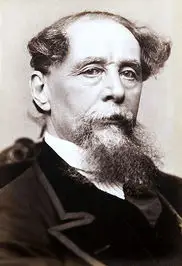
Charles Dickens
Dickens probes the intersection of social inequality and individual ambition, drawing from personal hardships to illuminate broader societal issues. His novels often critique the prevailing injustices of Victorian England, thereby advocating for reform. By embedding rich characters in narratives teeming with wit and empathy, Dickens offers readers a compelling portrait of the human condition. In "Great Expectations," for instance, he navigates themes of self-improvement and moral evolution, while "Bleak House" intricately dissects the inefficiencies of the British legal system. Such thematic diversity underscores his commitment to blending entertainment with pointed social commentary.\n\nThe author’s narrative techniques further reinforce the potency of his messages. Dickens employs a vivid realism that captures the grittiness of urban life, whereas his deft characterizations ensure memorable figures populate his stories. For example, "Oliver Twist" vividly portrays the plight of orphans in industrial England, thereby spotlighting systemic neglect and the need for societal empathy. Meanwhile, his keen sense of humor often juxtaposes the grotesque with the tragic, offering readers a balanced perspective that both entertains and provokes thought. These methods enable Dickens to engage readers on multiple levels, ensuring his works remain relevant across generations.\n\nFor readers, the benefit of engaging with Dickens’s oeuvre lies in his ability to humanize the socio-political struggles of his time. His works not only provide historical insights but also resonate with contemporary issues of justice and inequality. This short bio serves as a testament to Dickens’s enduring impact, illustrating why his narratives continue to captivate and educate audiences. While Dickens never received formal literary awards, his global recognition as a master storyteller underscores the timeless quality of his books, which remain essential for anyone interested in the intersection of literature and social change.
Read moreDownload PDF & EPUB
To save this Black List summary for later, download the free PDF and EPUB. You can print it out, or read offline at your convenience.
Hard Times
by Charles Dickens
