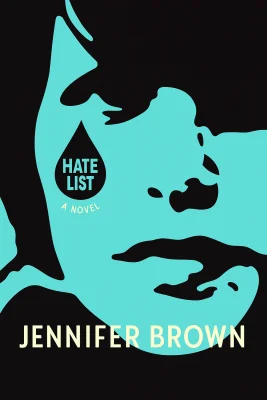
Hate List
Categories
Fiction, Mental Health, Romance, Young Adult, Contemporary, Realistic Fiction, Teen, High School, Drama, Young Adult Contemporary
Content Type
Book
Binding
Hardcover
Year
2009
Publisher
Little, Brown Books for Young Readers
Language
English
ASIN
0316041440
ISBN
0316041440
ISBN13
9780316041447
File Download
PDF | EPUB
Hate List Plot Summary
Introduction
The cafeteria at Garvin High was supposed to be just another morning gathering place. Students clustered around tables, cheerleaders hung posters, the usual pre-class chaos hummed with teenage energy. Valerie Leftman walked in beside her boyfriend Nick Levil, their hands intertwined, her anger still burning over the broken MP3 player courtesy of Christy Bruter. She pointed Christy out to Nick, expecting him to confront the girl who'd tormented them both for years. Instead, Nick pulled out a gun. What followed shattered everything Valerie thought she knew about love, friendship, and herself. In the span of minutes, her boyfriend became a mass shooter, she became both victim and unwitting accomplice, and six people lay dead in pools of blood. When Nick turned the gun on her, then himself, Valerie's life split into before and after—the girl who kept a "Hate List" of tormentors, and the survivor who must face a world that sees her as both hero and villain. Her journey back from the brink would force her to confront not just the ghosts of that terrible morning, but the harder truth about who she really was beneath all the rage.
Chapter 1: The Weight of Guilt: Returning to Garvin High
The snooze alarm had gone off three times before Valerie finally dragged herself from bed. Five months had passed since the shooting, five months of hospital stays, therapy sessions, and hiding in her bedroom while the world debated whether she was victim or accomplice. Now her mother stood in the doorway, voice quavering with that familiar mixture of hope and fear. "The school is being very lenient letting you back in," her mother pleaded. "Don't blow it your first day back." Valerie's leg throbbed where Nick's bullet had torn through her thigh. The physical wound had healed, but walking those halls again felt like stepping into a minefield. She could still see the Commons in her nightmares—the screaming, the blood, Nick's face as he methodically hunted down names from their shared notebook of hatred. The building looked different now. Security guards with metal detectors flanked every entrance. New bulletproof glass replaced the old windows. The Commons, once packed with students each morning, sat eerily empty except for a memorial bulletin board where Christy Bruter had fallen. Mrs. Tate, the guidance counselor, swept Valerie through the corridors like a protective shield. But even her kindness couldn't mask the stares, the whispers, the way conversations died when Valerie passed. In her first class, Ginny Baker took one look at Valerie's face and fled the room in tears, her surgically reconstructed features a permanent reminder of that morning's horror. By lunch, Valerie had learned the cruel mathematics of survival. Her old friends turned away, Stacey's smile frozen with polite distance, Duce's eyes burning with accusation. She sat alone in the hallway, sketching in her notebook—no longer the "Hate List" that had helped fuel Nick's rampage, but something different. A way to see what was really there beneath the surface, to separate truth from the comfortable lies everyone told themselves about healing.
Chapter 2: Shadows of the Past: Unraveling the Hate List
The red spiral notebook had been their secret, their shared poison. Valerie remembered the day it started—just venting frustration about the kids who made their lives miserable. Chris Summers dumping gum in Nick's mashed potatoes. Christy Bruter's endless taunts of "Sister Death." The casual cruelty that seemed so normal until you started writing it down, cataloging every slight, every moment of powerlessness. Detective Panzella arrived at her hospital bedside with printouts of their emails, evidence of a relationship the world couldn't understand. Nick's messages about suicide and escape, her own angry responses about wanting their tormentors to disappear. The prosecutor in his brown suit made it sound calculated, planned. But Valerie remembered something different—a lonely boy quoting Shakespeare in his basement bedroom, sharing his collection of dusty books, seeing beauty in her anger because it matched his own. "SBRB," she finally explained to the detective. "Skinny Barbie Rich Bitches." The code name for girls like Jessica Campbell, who called her Sister Death with such casual venom. It sounded so stupid now, so pathetically juvenile. But back then, those four letters had felt like armor against a world that seemed designed to remind them they didn't belong. The emails painted a picture of two teenagers drowning in rage, romanticizing death like the tragic lovers in Nick's beloved plays. But Valerie knew the truth Detective Panzella couldn't see in his evidence files—she had never really believed Nick meant it. The suicide talk felt like fiction, dark poetry they shared in late-night messages. Even as Nick grew more distant, more obsessed with his new friend Jeremy, she thought they were just playing with words. Now those words had killed six people. Now Ginny Baker's face was permanently disfigured because her name appeared at number 411 on their list of grievances. The notebook that started as teenage venting had become a blueprint for murder, and Valerie couldn't escape the question that haunted her sleepless nights—had some part of her always known what Nick was planning? Had she wanted it to happen?
Chapter 3: Unlikely Allies: Building Bridges with Former Enemies
Jessica Campbell appeared like a ghost from Valerie's nightmares, standing in the hallway with an impossible offer. The same girl who had sneered "Sister Death" now extended an invitation to sit at her lunch table, to join the memorial project, to pretend the past could be rewritten with good intentions. "You didn't shoot anybody," Jessica said, her voice stripped of its old superiority. The confidence that once made her untouchable had cracked, revealing something raw underneath. She'd been there when Nick raised his gun, had cowered against the wall waiting to die, and now she carried that terror in her eyes every time she looked at Valerie. The irony wasn't lost on either of them. Valerie had saved Jessica's life by accident, jumping between Nick and his target not from heroism but desperation to make him stop. Now they sat together in the hallway, sharing petrified Mexican pizza and pretending the gulf between them could be bridged by proximity alone. Student Council felt like visiting an alien planet. Meghan Norris explained with painful honesty that Jessica had forced her to be civil, that her name on the Hate List still stung even if she couldn't remember why she'd earned that distinction. The memorial project became their shared penance—a time capsule to honor the dead, a bench where their names would be carved in stone. Everyone except Nick's name. Even Valerie couldn't bring herself to argue for including him among the victims. These former enemies moved around each other carefully, like survivors of the same disaster learning to speak a new language. Jessica's invitation to Alex Gold's barn party felt like a test neither of them was ready for. But something had changed in both girls that morning in May. They'd seen each other's mortality up close, and that shared knowledge created an uncomfortable intimacy that might, someday, become something like friendship.
Chapter 4: Confronting Truth: Understanding Nick and the Shooting
The memorial work forced Valerie to revisit the Nick she'd loved before he became a monster. In Ginny Baker's hospital room, surrounded by machines and despair, she learned that Nick hadn't always been the angry outsider. He'd been kind once, smart and funny, friends with Ginny until Chris Summers' jealousy poisoned everything. Mrs. Kline received them in her cluttered living room, her husband's death still fresh in the wrinkles around her eyes. She spoke of how Nick had asked for Mrs. Tennille that day, how her husband had died protecting students because he wouldn't give up his colleague's location. Even in her grief, she seemed to understand that Nick had been lost, not born evil. Dr. Hieler helped Valerie separate the boy she'd loved from the killer he'd become. In their sessions, she painted portraits of healing while wrestling with the guilt that ate at her insides. Nick's love of Shakespeare, his gentle touches, his way of making her feel seen—none of that had been fake. But neither had his growing darkness, his obsession with death, his friendship with Jeremy that had pulled him further from reality. The hardest truth was accepting that she might never understand why Nick chose violence. Perhaps he hadn't understood it himself. The boy who once held her on his bedroom floor, quoting Hamlet and talking about being winners together, had somehow convinced himself that murder was their path to significance. She'd thought she knew him completely, but love had made her blind to the storm building behind his dark eyes. At Nick's grave, sitting beside Duce on a concrete bench, Valerie finally spoke the words aloud: "I don't hate you." But forgiveness felt more complicated than the simple absence of anger. Nick had stolen not just lives but the possibility of understanding, leaving behind only questions and the terrible weight of what might have been prevented if someone—anyone—had truly seen what was coming.
Chapter 5: Breaking Points: Facing Threats and Inner Demons
The barn party shattered Valerie's fragile progress like glass against stone. Troy Norris, Meghan's brother, cornered her in the darkness outside the barn with a gun in his hand and hatred in his voice. The weapon might not have been loaded, but his threat was real enough—she didn't belong here, would never be safe, should have died that day with Nick. Her father's rage erupted on the roadside when she called him for rescue, his hands digging into her shoulders as he called her a spoiled brat who ruined everyone else's life. Even her sanctuary felt poisoned when she discovered his affair with young Briley, the secretary whose blush had given away their secret. The family she'd thought the shooting had destroyed had actually been crumbling long before Nick ever pulled a trigger. The psychiatric ward threatened to reclaim her when her parents panicked over a simple evening walk. Dr. Dentley's patronizing voice and clipboard evaluations had nearly broken her the first time, reducing her trauma to checkboxes and medication schedules. The memory of being restrained, sedated, treated like a dangerous object rather than a damaged human being, made her fight harder to prove her stability. But breaking points sometimes crack open space for growth. In Bea's art studio, surrounded by purple light and creative chaos, Valerie learned to punch holes in canvas and call it healing. The eccentric artist saw something in her that others missed—not the girl who helped create a killer, but the artist struggling to emerge from wreckage. Each painting session became an act of rebellion against the world's insistence that she remain frozen in that terrible morning. Even Jessica's friendship carried its own weight of expectation. The girl who'd once embodied everything Valerie hated now demanded emotional labor Valerie wasn't sure she could provide. Their connection was built on shared trauma rather than genuine compatibility, and sometimes that foundation felt too fragile to support the weight of what they'd both survived.
Chapter 6: The Memorial Project: Honoring the Victims' Stories
The interviews changed everything. Sitting in living rooms across town, facing parents whose children would never come home, Valerie discovered the human beings behind the names on her old hate list. Abby Dempsey had loved horseback riding and named her horse Nietzsche. Jeff Hicks had been excited about his new baby brother, suggesting names on his last morning alive. Mrs. Bruter welcomed them with impossible grace, her husband speaking of forgiveness while Christy sat between them, her athletic dreams ended by the bullet that tore through her stomach. The girl who'd tormented Valerie with "Sister Death" taunts now planned to study psychology, to help trauma victims heal. The irony felt almost too heavy to bear. Even Christy's father seemed to understand something about heroes and victims that the media had missed. Not everyone who survived was innocent, and not everyone who suffered deserved it, but pain was pain regardless of its origins. His words about heroes—those who died, those who almost died, those who stopped the shooting—included Valerie in a category she'd never thought she'd earn. The time capsule filled with fragments of interrupted lives: a lock of Nietzsche's mane, a softball, a hospital wristband from baby Damon Jeffrey Hicks. Each item represented dreams cut short, potential never realized, futures stolen by one morning's violence. Valerie's own contribution would be her notebook of drawings—not the hate list that had helped inspire murder, but her new vision of truth beneath surfaces. Jessica insisted on including Nick's name on the memorial, his battered copy of Hamlet joining the capsule alongside the innocent artifacts. The decision felt both merciful and brutal—acknowledging that the shooter had been human too, that his death was also loss even if his life had become unforgivable. Some wounds, Valerie realized, healed into scars rather than disappearing entirely.
Chapter 7: Graduation Day: A Public Act of Reconciliation
The cameras multiplied like hungry eyes as graduation morning arrived. The media that had dissected Valerie's role in the shooting now gathered to witness her final act at Garvin High. She stood at the podium in her cap and gown, feeling the weight of every stare, every expectation, every judgment that had followed her through these months of public penance. Angela Dash sat in the press section with crossed arms and pursed lips, the reporter who'd built her career on spinning Garvin's tragedy into digestible narratives about healing and forgiveness. Her articles had painted the school as transformed, students united by shared trauma, but Valerie knew the messy truth of partial healing and persistent divisions. Jessica's hand found hers as they stood together, two unlikely allies who'd found something like friendship in the wreckage of their adolescence. The memorial bench gleamed white in the afternoon sun, names carved in permanent stone, the time capsule ready for burial. Their project was complete, but completion felt less like victory than acceptance of ongoing complexity. The speech Valerie delivered wasn't the apology everyone expected. Instead, she spoke about the reality of hate, how it persisted even after tragedy supposedly taught everyone to love their neighbors. She and Jessica shared stories of the victims—not as symbols or lessons, but as human beings whose dreams and quirks and hopes had been cut short by bullets. When Nick's name was read aloud, when his beloved Hamlet joined the artifacts in the time capsule, Valerie felt something shift inside her chest. Not forgiveness exactly, but a kind of release. The boy she'd loved and the killer he'd become could coexist in her memory without destroying her. She could honor the victims while acknowledging her own survival, could accept responsibility without drowning in guilt. The standing ovation that followed felt surreal, unearned, but perhaps that was the point. Healing wasn't about deserving grace but accepting it when offered, about finding ways to carry the weight of the past without being crushed beneath it.
Chapter 8: New Beginnings: Choosing to Move Forward
The suitcase lay open on Valerie's bed beside the motionless horses of her childhood wallpaper. Tomorrow she would board a train to destinations unknown, carrying college catalogs and calling cards, Dr. Hieler's book about trusting intuition, and the photograph of her and Nick laughing by Blue Lake before everything went wrong. Her family would survive her departure. Mom had Mel now, his patient presence helping her smile again after years of marital misery. Dad had Briley and probably babies on the way, his second chance at happiness earned through the rubble of his first family. Frankie would navigate Garvin High with soccer skills and natural charm, unlikely to inherit his sister's burden of notoriety. The memorial stood complete, their time capsule buried beneath the bench where future students would sit and perhaps wonder about the names carved in stone. Jessica had surprised her by including Valerie's name among the heroes, a designation that still felt strange but no longer impossible to accept. They'd grown from enemies to allies to something approaching friends, though whether that bond would survive beyond graduation remained uncertain. Dr. Hieler's final session had been about trust—trusting herself to recognize danger, to build healthy relationships, to carry her trauma without letting it define every choice. His office had become her sanctuary over these months, the place where she learned to separate Nick the boy she'd loved from Nick the killer, where she discovered that loving someone who did terrible things didn't make her terrible too. The train ticket represented possibility rather than escape. Valerie had spent too many months hiding, letting others define her story, accepting the weight of collective blame for one morning's horror. Now she would write her own future, carrying the scars of May second without being imprisoned by them. The horses on her wallpaper would remain frozen forever, but she had learned to fly on her own wings.
Summary
Valerie's journey from the ashes of Garvin High revealed truths about love, guilt, and the complex nature of healing that no news story could capture. She learned that loving someone capable of murder didn't make her a monster, that saving lives could happen by accident and still count as heroism, that former enemies could become unlikely allies when stripped of their pretenses by shared trauma. Her path back to wholeness required facing not just Nick's victims and their families, but her own capacity for both hatred and grace. The memorial they built honored not just the dead but the messy, incomplete process of survival. Some wounds heal into wisdom, others into scars that teach different lessons. Valerie's story offers no easy redemption, no simple answers about preventing tragedy or assigning blame. Instead, it suggests that healing happens in fragments—a conversation with a former enemy, an honest look in a therapist's mirror, the choice to board a train toward an uncertain but self-determined future. In the end, the girl who once kept a list of people she hated learned to see the world with clearer eyes, carrying her ghosts without letting them drive.
Best Quote
“Just like there's always time for pain, there's always time for healing.” ― Jennifer Brown, Hate List
Review Summary
Strengths: The review highlights the book's depth in exploring psychological and emotional themes, particularly through the character of Valerie. It praises the book for moving beyond a simplistic portrayal of a school shooting, offering a nuanced perspective on the characters involved. The emotional impact and relatability of Valerie's character are emphasized as significant strengths. Overall: The reviewer expresses a positive sentiment towards "Hate List" by Jennifer Brown, appreciating its dark, psychological exploration of complex themes. The book is recommended for its ability to provoke thought and empathy, offering a deeper understanding of the characters' motivations and emotions.
About Author

Jennifer Brown
Brown explores contemporary issues through narratives that engage young adult readers with depth and empathy. Her work often delves into the aftermath of traumatic events and the psychological impacts on teenagers, as seen in her debut book, "Hate List," which considers a school shooting's repercussions. This theme of addressing serious social issues in accessible ways is consistent throughout her novels, such as "Bitter End," which looks into relationship dynamics and adolescent jealousy. Brown's dedication to these topics highlights her aim to provide readers with insights into challenging real-world situations, thereby encouraging reflection and understanding.\n\nFor readers navigating the complexities of modern life, Brown's novels offer both relatability and solace. Her ability to intertwine emotional depth with pressing social issues allows audiences to engage deeply with her characters' experiences. This impact is evident in the recognition her works have received; for example, "Hate List" and "Bitter End" have garnered critical acclaim and awards, solidifying her reputation as a vital voice in contemporary American literature. Additionally, Brown's contributions extend beyond young adult fiction, as she writes women's fiction under the pen name Jennifer Scott, further showcasing her versatility and commitment to exploring diverse themes.\n\nAs an author, Brown’s professional journey from humor columnist to novelist underscores her evolution in storytelling. Winning the Erma Bombeck Global Humor Award in 2005 and 2006 provided a foundation for her subsequent literary success. Her early career in humor writing informed her unique narrative voice, which combines humor and insight, making her bio a testament to her diverse talents. Through her various works, Brown continues to impact readers by connecting personal experiences with broader societal issues, enhancing both understanding and empathy.
Read moreDownload PDF & EPUB
To save this Black List summary for later, download the free PDF and EPUB. You can print it out, or read offline at your convenience.

Hate List
by Jennifer Brown
