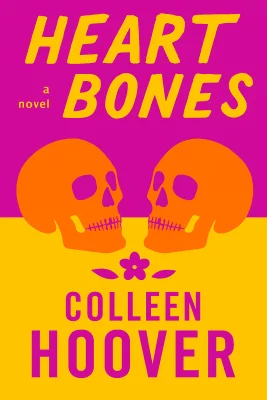
Heart Bones
Categories
Fiction, Audiobook, Romance, Young Adult, Contemporary, Contemporary Romance, Chick Lit, New Adult, Summer, Summer Reads
Content Type
Book
Binding
Kindle Edition
Year
2020
Publisher
Hoover Ink, Inc.
Language
English
ASIN
B084HNWBD6
File Download
PDF | EPUB
Heart Bones Plot Summary
Introduction
In the suffocating darkness of a Kentucky trailer, nineteen-year-old Beyah stares at her mother's lifeless body sprawled across a threadbare couch, a needle dangling from her arm like a grotesque piece of jewelry. The rain pounds against thin walls as she processes this moment she's imagined countless times—the death of Janean, the addict who gave birth to her but never mothered her. With nowhere else to turn, Beyah calls the father she barely knows, trading one form of isolation for another as she flees to the Texas coast. What awaits her is a world of pristine beach houses and privileged teenagers, where her step-sister Sara tries to play matchmaker with the mysterious neighbor boy everyone calls Samson. He's everything Beyah distrusts—wealthy, secretive, and dangerously attractive. But beneath his polished exterior lies a damaged soul that recognizes her own brokenness. As the summer unfolds between sunrise conversations on balconies and stolen kisses in the ocean, Beyah discovers that some connections transcend the boundaries of class and circumstance. Yet when truth collides with deception, she must choose between protecting her heart and saving the boy who taught her how to love.
Chapter 1: Shattered Foundations: A Life Built on Cracks
The McDonald's uniform still clings to Beyah's skin as she stands in the doorway, water dripping from her rain-soaked hair onto the warped linoleum floor. Eight hours of minimum wage drudgery, and now this—Janean motionless on the couch, staring at Mother Teresa's portrait with eyes that will never blink again. The needle tells the whole story, a punctuation mark at the end of a life sentence written in meth and neglect. Beyah has rehearsed this moment in the dark corners of sleepless nights. She expected tears, hysteria, the dramatic collapse of a grieving daughter. Instead, she feels nothing but the familiar weight of survival pressing down on her shoulders. The rain outside sounds like applause for a performance nobody wanted to see. She thinks of the hungry cat Janean once claimed lived in her stomach, the one that growled when unfed. How many nights did she silence that imaginary beast with garbage scraps and couch stuffing, too young to understand that mothers weren't supposed to disappear for days while their children learned to cook on stovetops at six years old? The cat is quiet now, finally fed by the steady paycheck that Janean never saw. When the police arrive, Buzz—the chief whose son Dakota taught Beyah the difference between affection and transaction—treats her with the careful gentleness reserved for broken things. He suggests she call her father, that man who exists in monthly child support checks and awkward summer visits, a stranger who shares her DNA but nothing else. Brian Grim answers his phone in Washington state, his voice thick with sleep and surprise. Beyah lies with practiced ease, claiming homesickness rather than revealing the corpse cooling in the next room. Within hours, she has a plane ticket and a destination—Texas, where her father now lives with his new wife and stepdaughter in a world Beyah cannot fathom. The eviction notice arrives before the coroner van leaves. Gary Shelby, the landlord whose predatory gaze has haunted Beyah's teenage years, shows no mercy for grief. Three days to vacate, he says, because Janean spent the tuition money Brian sent on anything but education. Beyah's full-ride scholarship to Penn State remains her secret, a victory she refuses to share with parents who contributed nothing to her achievements. Dakota drives her to the airport in the pre-dawn darkness, their arrangement ending as it began—with the exchange of money for services rendered. She carries everything she owns in a backpack, plus the portrait of Mother Teresa that somehow became her inheritance. The bread she ate on the ferry that first day seems like a feast compared to the emptiness gnawing at her now.
Chapter 2: Ocean Tides: Finding Refuge on Unfamiliar Shores
The Texas heat hits Beyah like a physical blow the moment she steps off the plane. Brian waits at baggage claim, a stranger wearing her father's face, aged by prosperity and distance. His broken leg excuse for missing her graduation proves as fictional as her missing luggage, but they're both practiced in the art of convenient lies. The beach house rises on stilts like something from a magazine spread, all clean lines and ocean views that mock her trailer park origins. Alana, Brian's wife, emanates that particular brand of blonde perfection that money can buy, while her daughter Sara bounces with the manufactured enthusiasm of someone who's never known genuine hardship. Sara's immediate assumption that Beyah's thinness comes from dieting rather than hunger reveals the chasm between their worlds. When she suggests shopping at somewhere better than Walmart, Beyah feels the familiar sting of being judged for circumstances beyond her control. Yet there's something genuine in Sara's excitement about having a sister, a warmth that Beyah doesn't trust but finds herself craving despite her better judgment. The ocean stretches endlessly beyond the balcony doors, a sight that steals Beyah's breath and threatens to crack the armor she's built around her heart. She's never seen anything so vast and untamable, never felt air this clean in her lungs or experienced the particular silence that comes with infinite water meeting infinite sky. Brian tries to parent with the clumsy enthusiasm of someone making up for lost time. His questions about birth control and boys feel invasive yet oddly comforting—the first time anyone has cared enough about her choices to worry about the consequences. Alana offers to take her to a doctor with the casual ease of someone who's never had to choose between medication and meals. Sara's attempts at sisterhood involve makeup tutorials and shopping trips, foreign concepts to a girl who learned self-reliance before she learned multiplication tables. The nightly bonfires on the beach reveal a social ecosystem Beyah has never navigated—teenagers with enough security to worry about trivial things, whose biggest concern is whether they'll get into their first-choice college rather than whether they'll eat dinner. But it's the neighbor boy who catches her attention despite her determination to remain invisible. Samson moves through this privileged world with an ease that should mark him as untouchable, yet something in his eyes suggests depths that mirror her own.
Chapter 3: Damaged Souls: The Connection Between Two Islands
Samson appears on the ferry like a figure from a dream, camera in hand, capturing Beyah's first encounter with the ocean through his lens. She mistakes his twenty-dollar offering for a proposition—another man trying to buy what Dakota taught her to sell—and responds with the fury of someone tired of being reduced to a transaction. The memory card she steals becomes a revelation when she finally views its contents. His photographs focus on the broken and discarded—pieces of trash floating in pristine water, seaweed piled like debris on perfect sand. In every image of her, she appears as the saddest element in an otherwise beautiful frame, yet somehow the sadness becomes art under his careful attention. Their first real conversation happens on Marjorie's roof at sunset, the elderly woman's three-story house providing a view that encompasses the entire peninsula. Samson repairs the old woman's roof without payment, his calloused hands gentle with the aged shingles. When he speaks of Rake, the mysterious fisherman-poet who disappeared during Hurricane Ike, his voice carries the weight of loss that Beyah recognizes in her own bones. The necklace he wears, carved from the wreckage of Rake's boat, tells a story of love and destruction that resonates with Beyah's own experience of caring for someone who couldn't be saved. They share the particular loneliness of people who've learned to survive without anyone's help, islands of self-sufficiency in a world that assumes everyone has a support system. Sara's attempts to orchestrate romance between them feel unnecessary—the pull between Beyah and Samson operates on a frequency deeper than teenage matchmaking. When he sets an alarm on her phone to wake her for sunrise, it becomes the first of many shared rituals. They sit on their respective balconies in the early morning light, separated by a few feet of space but connected by an understanding that requires no words. The first kiss happens after a jellyfish sting, Brian's protective fury mistaking Samson's care for assault. The confusion reveals how little any of them truly know each other, but it also demonstrates Brian's capacity for love, however misguided. Samson takes the punches without retaliating, his refusal to fight back speaking to a gentleness that his circumstances should have beaten out of him. In the outdoor shower afterward, as Beyah tends to Samson's bloodied nose, the barrier between them dissolves. His confession about growing heart bones—emotional architecture they've constructed around their feelings—acknowledges that they've moved far beyond the shallow summer fling they promised themselves. The pain that will come from separation feels inevitable now, written into every shared sunrise and stolen kiss.
Chapter 4: Unveiled Truths: When Secrets Wash Ashore
The beach yields its buried secrets during what should have been a perfect date. Pepper Jack Cheese, the stray dog who chose Beyah as his person, digs frantically in the sand behind the dunes until bones emerge—human remains wrapped in the faded remnants of a red-checkered shirt that Samson recognizes with devastating certainty. Rake, the fisherman-poet who wrote love letters to the sea, has been buried here since Hurricane Ike claimed him thirteen years ago. The boy who was abandoned at a shelter and told his father would return has finally found the answer to a question that shaped his entire adolescence. Samson's reaction isn't grief but grim determination—he won't let the authorities reduce Rake to an unmarked grave in a system that never acknowledged his existence. Beyah watches from afar as Samson commits the crime that will eventually destroy their summer. He digs up every bone, every fragment of the man who raised him on the water, and returns Rake to the ocean he loved. The ritual takes hours, a son's final act of devotion performed in solitude while storm clouds gather overhead. The notebook hidden in Samson's backpack reveals the systematic nature of his survival. Every house he's occupied without permission, every repair he's made in payment, every item of food consumed—all meticulously recorded in his careful handwriting. It's the ledger of someone trying to balance scales that were never fair to begin with, attempting to pay debts to a world that gave him nothing. His real name surfaces through fragments—Shawn Samson Bennett, a boy whose father taught him poetry and love for the sea before Hurricane Ike scattered their lives like driftwood. The boarding school story crumbles under scrutiny, replaced by the harder truth of a thirteen-year-old left to navigate foster care and juvenile detention, making choices that survival demanded but the law condemned. The lies multiply under pressure, each fiction designed to protect rather than deceive. Samson never claimed to be rich—Sara and Marcos made that assumption and he simply didn't correct it. The rental houses, the absent parents, the Air Force Academy plans—all elaborate constructions built around a single truth he couldn't voice: he was a boy alone in the world, claiming whatever shelter he could find. When Beyah discovers the depth of his deception, she doesn't feel betrayed but rather impressed by his ingenuity. She recognizes the creativity required to survive without resources, the careful navigation between honesty and self-preservation. His crimes aren't born of malice but of necessity, the desperate mathematics of a young man trying to exist in a system designed to discard people like him. The hurricane tattoo she chooses for him becomes prophetic—a storm that will soon tear through their carefully constructed paradise, leaving destruction in its wake.
Chapter 5: Separation: The Pain of Necessary Distance
The arrest happens in darkness, police surrounding the beach house like hunters converging on cornered prey. Beyah wakes to handcuffs and accusations, Samson's apology cutting through her confusion as officers drag him from the bed they've shared in stolen intimacy. The real owners of the house stand witness to her humiliation, their child clinging to his mother as she tries to process the stranger living in their sanctuary. At the police station, Beyah's ignorance becomes evidence of Samson's deception. She knows nothing of his real history, his family, his crimes—every question reveals another gap in her understanding of the boy she's fallen in love with. The notebook that once seemed like evidence of his conscience now reads like a criminal's confession, each entry documenting another break-in, another violation of property laws. The charges stack like dominoes: breaking and entering, parole violation, arson. Officer Ferrell recites them with the bored efficiency of someone processing another repeat offender, but each count hits Beyah like a physical blow. Six months in juvenile detention for auto theft. A house fire caused by faulty wiring in a building he shouldn't have been occupying. Years of parole violations because he couldn't pay fees while living in the shadows. Brian's rage feels righteous and misplaced, his protective instincts finally emerging at the worst possible moment. He wants restraining orders and promises that Beyah will never see Samson again, treating their connection like a disease that needs quarantining. The irony tastes bitter—after nineteen years of benign neglect, Brian chooses this moment to assert paternal authority. The jail visit confirms Beyah's fears about their ending. Samson sits across from her in the visiting room, wearing county-issued blue and the resignation of someone who's been here before. His refusal to accept her help feels like rejection, his insistence that she continue with her college plans like dismissal of everything they've shared. The argument that follows strips away the romantic veneer from their summer romance, revealing the harsh practicalities underneath. Samson faces years in prison for crimes committed in desperation. Beyah has a full scholarship waiting and a chance to escape the poverty that shaped her childhood. The mathematics of love versus survival show an equation that doesn't balance. His final words echo in the visiting room long after he's walked away: hearts don't have bones to break. But Beyah knows he's lying—hers is fracturing even as he speaks, the pain radiating through her chest like shattered glass. The boy who taught her to love is the same one teaching her how grief feels when it's dressed up as mercy.
Chapter 6: Growth: Building Strength Through Absence
Penn State becomes Beyah's exile from the life she never expected to want. The volleyball scholarship that once represented freedom now feels like a prison sentence, each practice a reminder of the victory she can't fully claim without Samson there to witness it. Her roommate Cierra brings the kind of uncomplicated enthusiasm Beyah envies but cannot emulate, planning parties while Beyah plans legal strategies for appeals that may never come. The birth control pills Alana prescribed before her departure mess with more than Beyah's hormones—they seem to amplify every emotion she's tried to suppress. Missing her mother becomes a sharp ache rather than the dull background noise it was before. Missing Samson threatens to consume her entirely, his absence a phantom limb that throbs with every heartbeat. Kevin provides monthly updates with the detachment of a professional obligated to inform but not comfort. The legal system grinds forward with mechanical indifference: plea bargains, court dates, sentencing hearings that happen without Beyah's presence but with her constant worry. Six years reduced to four with good behavior, Huntsville State Prison becoming Samson's address for the foreseeable future. The returned letter arrives with the finality of a death certificate. Samson's refusal to accept her correspondence makes his intention clear—he meant what he said about cutting contact, about forcing her to move forward without him. The cruelty feels necessary but unbearable, like chemotherapy destroying healthy cells along with the disease. Gradually, Beyah learns to inhabit her new life without constantly measuring it against what she's lost. She makes friends, joins study groups, discovers that she's capable of casual relationships that don't threaten to destroy her. A junior year boyfriend named Marcus treats her with gentle respect, never pushing for more than she's willing to give, never making her feel like a transaction requiring payment. Law school becomes her passion rather than her punishment. Constitutional law, criminal justice reform, the intersection of poverty and incarceration—every class illuminates the system that swallowed Samson and countless others like him. Her professors recognize her fire, the particular intensity that comes from personal investment rather than academic curiosity. Sara's marriage to Marcos provides vicarious joy, their success story proof that some summer romances survive the transition to real life. The clothing line thrives, followers multiplying across social media platforms that didn't exist when Beyah first arrived in Texas. They build a yellow house on the beach where they once sat around bonfires, creating the family they dreamed of as teenagers. But Beyah's own growth happens in solitude, the careful construction of a life that doesn't require anyone else's presence to feel complete. She learns to watch sunrises alone without feeling abandoned, to appreciate beauty without needing to share it immediately. The girl who arrived in Texas carrying everything in a backpack gradually accumulates the trappings of stability—an apartment, a car, friends who know her history without being defined by it.
Chapter 7: Reunion: Where Breaking Waves Become Whole
October sunshine streams through the car windows as Beyah waits in the prison parking lot, four years of anticipation crystallizing into this single moment. She's no longer the desperate teenager who couldn't imagine life without Samson—she's become a woman who chose to remember him despite having every reason to move on. The law school textbooks in her backseat represent the career his arrest inspired, the good that grew from the ashes of their summer. When Samson emerges from behind concrete walls and razor wire, he looks almost exactly as she remembers—broader through the shoulders, more weathered around the eyes, but unmistakably the boy who taught her that hearts could grow bones strong enough to break. His first question isn't about her feelings or their future but about college, about whether she kept the promises they made to each other in different ways. The relief in his face when she confirms her education mirrors her own when he doesn't retreat from her presence. Four years of forced separation haven't diminished the recognition that passes between them—two damaged people who found wholeness in each other's brokenness. The kiss on the hood of her car tastes like salt water and second chances. Marjorie's house waits for them across the dunes, the deed transfer her final gift to the boy who repaired her roof without payment. The old woman understood what courts and lawyers couldn't—that Samson's crimes came from circumstance rather than character, that someone who spent his freedom fixing other people's problems deserved a foundation to build upon. The ocean welcomes Samson home with waves that soak him to the skin as he swims fully clothed, years of institutional captivity washing away in salt water that remembers his name. Beyah watches from the shore as he reacquaints himself with the horizon, his strokes strong and sure despite the cold October water. They sit together on the beach as the sun sets behind them, four years of separation dissolving in the space between one heartbeat and the next. The stories they share—her law school success, his prison education, the ways they've both changed and remained essentially themselves—feel like chapters in a book they're finally ready to finish writing together. The notebook with his father's poems still carries the weight of all their history, but now it also holds Samson's final letter to her—the words he wrote believing they might never see each other again. His comparison of love to water proves prophetic: even when evaporated, it doesn't disappear but transforms, eventually falling again as rain to nourish whatever lies below. Sara and Marcos welcome Samson's return with the generous hearts of people who've found their own happiness and want to share it. The yellow house on the beach becomes a gathering place for second chances and new beginnings, proof that some stories deserve better endings than their middles might suggest.
Summary
In the space between one summer and the next, two broken people discovered that love isn't about fixing each other but about choosing to grow in the same direction despite the obstacles. Beyah's journey from a trailer park in Kentucky to law school in Pennsylvania happened because Samson refused to let her sacrifice her future for his mistakes. His transformation from a desperate teenager stealing shelter to a man worthy of owning a home happened because someone believed he deserved more than the system offered him. The heart bones they grew that summer—the emotional scaffolding that made love possible for people who'd learned to survive alone—proved stronger than the forces trying to separate them. Prison walls and distance, family disapproval and legal consequences, the simple passage of time that changes most people beyond recognition—none of it could diminish what they'd built in the space between sunrise and sunset on a Texas beach. They learned that some connections transcend circumstance, that the deepest love sometimes requires the courage to let go, and that the best reunions happen between people who've become worthy of each other through separate struggles. The ocean that witnessed their beginning still knows their names, still whispers their story to anyone patient enough to listen to the rhythm of waves against an endless shore.
Best Quote
“Hearts don’t have bones. They can’t actually break.” ― Colleen Hoover, Heart Bones
About Author
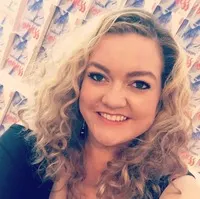
Colleen Hoover
Hoover interrogates the boundaries of contemporary fiction with an unwavering commitment to emotional storytelling that resonates across genres. Her narratives often explore complex themes such as love, resilience, and personal growth, capturing the intricate layers of the human condition. This depth is particularly evident in her psychological thriller "Verity," where she deftly blends suspense with raw human emotion. Such narrative complexity is a hallmark of her writing, ensuring her works consistently earn bestseller status and wide acclaim.\n\nHer method involves using multiple perspectives to illuminate character motivations and struggles, which makes her stories both relatable and profound. By delving into topics like grief, mental illness, and personal healing, Hoover crafts narratives that are simultaneously heart-wrenching and uplifting. Her early book, "Slammed", set a precedent for her emotionally charged style, quickly gaining popularity and allowing her to transition from social work to full-time writing. This bio highlights her trajectory from a social work counselor to a celebrated author, with over 20 million books sold globally.\n\nReaders benefit from Hoover’s unique storytelling ability, finding both solace and understanding within her pages. Her initiatives, such as The Bookworm Box, extend her influence beyond literature by combining philanthropy with her passion for books, underscoring her impact not just as a writer but as a community leader. Through her engaging and emotionally intense narratives, Hoover reaches a diverse audience, offering both entertainment and deep psychological insights that leave a lasting impression.
Read moreDownload PDF & EPUB
To save this Black List summary for later, download the free PDF and EPUB. You can print it out, or read offline at your convenience.

Heart Bones
by Colleen Hoover
