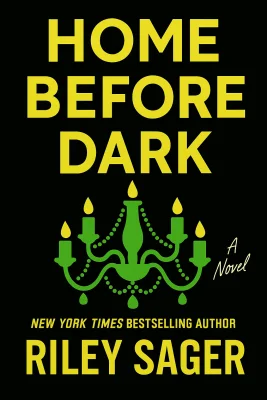
Home Before Dark
Categories
Fiction, Audiobook, Horror, Mystery, Thriller, Adult, Book Club, Suspense, Paranormal, Mystery Thriller
Content Type
Book
Binding
Hardcover
Year
2020
Publisher
Dutton Books
Language
English
ISBN13
9781524745172
File Download
PDF | EPUB
Home Before Dark Plot Summary
Introduction
# Whispers in the Walls: The Haunting Legacy of Baneberry Hall The keys felt cold against Maggie Holt's palm as she stood before the wrought-iron gates of Baneberry Hall, twenty-five years after her family fled in terror. Her father's dying words echoed in her mind: "It's not safe there. Not for you." But Ewan Holt had lied about so many things—most famously in his bestselling book "House of Horrors," which claimed their Vermont mansion was haunted by malevolent spirits. Now, with her father dead and the house unexpectedly hers, Maggie returned seeking truth behind the lies that had defined her entire life. She came to renovate and sell the property, but Baneberry Hall had other plans. Within its walls lay secrets far darker than any ghost story—secrets that would force Maggie to confront not only her family's buried past but the horrifying possibility that her beloved father might have been capable of unspeakable acts.
Chapter 1: The Inheritance: A House with Secrets
The lawyer's mahogany desk stretched between them like a chasm. Arthur Rosenfeld slid the keys across its polished surface, his fingers trembling slightly. Maggie had expected her father's modest inheritance—book royalties, perhaps his small apartment. What she hadn't expected was Baneberry Hall itself. "Your father never sold it," Rosenfeld explained, his voice careful and measured. "He's owned it all these years." The revelation struck like a physical blow. Her father had sworn they'd never returned after that terrifying July night in 1999, when five-year-old Maggie and her parents had abandoned everything and fled to a roadside motel. The book that made them famous claimed supernatural forces had driven them out. But if that were true, why had her father kept the deed? At lunch, her mother Jessica sat rigid behind oversized sunglasses, martini glass trembling in her manicured fingers. When pressed about Baneberry Hall, she finally cracked, revealing what Maggie had suspected all along: the haunting was fiction. Ewan had fabricated the ghost story to launch his writing career, turning their family's manufactured trauma into literary gold. "None of it was real," Jessica insisted, her voice brittle as autumn leaves. "The ghosts, the supernatural events—your father made it all up." But even as relief flooded through Maggie, doubt lingered like smoke in a closed room. If the book was entirely false, why did both parents still warn her away from the house? Why did her father's final words carry such desperate urgency? The truth was still buried somewhere in those Vermont hills, waiting in the shadows of Baneberry Hall.
Chapter 2: Return to Baneberry: Confronting the Past
The house materialized through the trees like something from a fever dream—three stories of weathered stone and timber, its circular tower rising like a lighthouse against the darkening sky. Maggie's truck crunched up the gravel drive as memories that weren't quite memories flickered at the edges of her consciousness. Dane Hibbets emerged from the shadows, tall and solid in the dying light. The grandson of the estate's former caretaker, he'd been maintaining the property for years, paid by her father's mysterious annual visits. His revelation hit like a sledgehammer: Ewan Holt had returned to Baneberry Hall every July 15th—the anniversary of their escape—for twenty-five years. "He'd arrive late and leave early the next morning," Dane explained, his weathered hands gesturing toward the imposing structure. "Never said why. Just walked through the rooms like he was looking for something." Inside, the house felt frozen in time. Dust motes danced in shafts of moonlight, and Maggie's childhood belongings remained exactly where she'd left them—clothes in closets, toys scattered across playroom floors. The family had truly abandoned everything, lending credence to her father's claims of terror. The first sign of wrongness came that very night. Maggie woke to find a figure standing motionless in the woods behind the house, watching the windows with predatory patience. When she ran outside to confront the intruder, they'd vanished into the forest, leaving only questions and the unsettling certainty that Baneberry Hall's secrets were darker than she'd imagined. Someone was watching. Someone was waiting.
Chapter 3: Echoes of the Past: Strange Occurrences Begin
The chandelier blazed with inexplicable light when Maggie returned from town, though she was certain she'd left it dark. In the parlor, William Garson's letter opener—ornate silver engraved with his initials—had vanished from the antique desk. Small violations that whispered of an unseen presence moving through the house like a ghost made flesh. Chief Tess Alcott arrived with the dawn, summoned by reports of an elderly woman wandering the grounds. Elsa Ditmer, once the family's housekeeper, now ravaged by Alzheimer's, had somehow entered the locked house. She clutched at Maggie with desperate fingers, her clouded eyes bright with recognition that shouldn't have been possible. "Petra, my baby," she whispered, her voice cracking like old paper. "You've come back to me." Petra Ditmer—Elsa's sixteen-year-old daughter who had vanished twenty-five years ago, the same night the Holt family fled Baneberry Hall. The police had dismissed her disappearance as a runaway teenager, but Elsa's fractured mind seemed to hold fragments of a different truth. As Alcott led the confused woman away, her daughter Hannah arrived—bitter and worn, aged beyond her years by loss. She refused Maggie's offered sympathy with cold efficiency, but her eyes held accusations that cut deeper than words. The Ditmer family had been destroyed that July night, their lives shattered by whatever had driven the Holts from their home. The coincidence felt too precise to be random. Two families torn apart on the same night, their fates intertwined by secrets that had festered for decades in the walls of Baneberry Hall. The house was remembering, and its memories were stained with blood.
Chapter 4: The Discovery: Bones in the Ceiling
The kitchen ceiling had been patched years ago, a rectangular section that bulged ominously above the butcher-block table. Dane pressed against the weakened plaster, testing its integrity, when his hand punched through completely. The ceiling groaned, cracked, and collapsed in a thunderous cascade of debris and dust. Something heavy struck the table with a sickening thud. Through the settling cloud of plaster dust, Maggie saw a canvas duffel bag, ancient and rotted. Her hands trembled as she tilted it, spilling its contents across the scarred wood surface. Bones tumbled out in a gray cascade—human remains that had been hidden in the ceiling for decades. A skull rolled to a stop, empty sockets staring accusingly at the fluorescent lights above. Scraps of fabric clung to the bones: plaid flannel, a faded t-shirt, and a gold crucifix on a tarnished chain. Hannah Ditmer identified the jewelry immediately when the police arrived. It had belonged to her sister Petra, the girl who had supposedly run away but had actually been murdered and stuffed into Baneberry Hall's hidden spaces. The bones told a story of violence—a fractured skull, a life ended in brutal fashion. Chief Alcott's questions came sharp and relentless. Who had access to the house? Who could have hidden a body in such an elaborate way? The answers all pointed in one direction, toward the man who had owned Baneberry Hall, who had written about it obsessively, who had returned every year to the scene of what was now clearly a crime. Ewan Holt's dying words took on sinister new meaning: "So sorry." Not the regret of a man who had fabricated ghost stories, but the confession of someone who had carried the weight of murder for twenty-five years.
Chapter 5: Unraveling Truth: Father's Hidden Visits
The motel room reeked of cigarettes and industrial cleaner, but Maggie barely noticed as she sat on the sagging bed, bourbon burning her throat. Dane had brought alcohol and companionship, but even his presence couldn't quiet the storm of doubt raging in her mind. The father she'd known—charming, doting, flawed but fundamentally decent—was crumbling under the weight of evidence. Brian Prince, the local reporter who had first publicized the Holt family's supernatural claims, arrived with theories that made Maggie's blood run cold. Petra Ditmer had vanished the exact same night they'd fled Baneberry Hall. In his book, Ewan had written extensively about the teenage girl, describing her with an attention to detail that now seemed predatory rather than literary. "Your father and Petra seemed quite close," Prince suggested with oily insinuation, his bow tie perfectly knotted despite the accusation he was leveling. "Considering their age difference." The implication hung in the air like smoke. Had her father, the man who'd taught her to appreciate Bergman films and Miles Davis, been capable of such betrayal? The photographs she'd found in his study showed Petra posing playfully, flirting with whoever held the camera. Her father's camera. But even as the evidence mounted, Maggie couldn't reconcile the man she'd known with the monster others were painting. Ewan Holt had been many things—a liar, a manipulator, a man who'd built his career on fabricated trauma—but a killer? A predator? The disconnect between her memories and the emerging truth left her feeling unmoored, as if the ground beneath her feet was shifting like quicksand. The house watched her struggle, its windows like eyes reflecting her torment back at her.
Chapter 6: The Missing Girl: Petra's Final Night
The record player sat on the study desk, spinning "The Sound of Music" at full volume despite being unplugged and stored in the closet. Maggie's scream echoed through the empty house as she ripped the needle from the vinyl, her heart hammering against her ribs. Someone had been inside again, moving through the rooms like a ghost, leaving traces of their presence in impossible places. The teddy bear she and Dane had found was gone, vanished as completely as the letter opener before it. But this time, Maggie had glimpsed the intruder fleeing through the woods—a dark figure that melted into the forest shadows before she could give chase. The breach in the stone wall provided easy access to anyone who knew about it, and in a small town like Bartleby, secrets had a way of spreading. In the parlor, she discovered a cache of notes hidden in the secretary desk—dozens of messages written in the same desperate handwriting. "WHERE??" demanded one. "WHY?" pleaded another. Someone had been searching for Petra Ditmer for years, leaving increasingly frantic questions for Ewan Holt to find during his annual pilgrimages to Baneberry Hall. The messages painted a picture of obsession and grief, of someone who refused to accept the official story of a runaway teenager. They knew Petra was dead, knew she was hidden somewhere in the house, and they'd been trying to force Ewan to reveal her location. But he'd taken that secret to his grave, leaving only cryptic apologies and warnings about dangers that were all too real. The truth was crystallizing like ice in Maggie's veins. Her father hadn't returned to Baneberry Hall out of nostalgia or guilt over fabricated ghost stories. He'd come back because he was hiding something far more terrible than literary fraud—the murder of a sixteen-year-old girl whose only crime had been trusting the wrong person.
Chapter 7: Shadows of Doubt: Truth or Fiction
The night terror came with vivid clarity—Mister Shadow emerging from the armoire, leaning over her bed with eyes like black holes, whispering threats in a voice that sounded disturbingly like her father's. Maggie woke gasping, her childhood fears bleeding into adult reality as the boundaries between memory and nightmare dissolved. But some memories were undeniably real. Standing in the kitchen with her father, painting over green walls with gray primer, his gentle voice encouraging her to leave a handprint so she'd "always be part of this place." The recollection struck with crystalline precision, proving that not everything in her father's book had been fabricated. Some events had happened exactly as he'd written them. The Polaroid photographs told the same story—a sleepover with the Ditmer girls, the kitchen ceiling collapse, her father's increasingly haggard self-portraits as their stay at Baneberry Hall progressed. Truth and fiction were woven together so tightly that separating them seemed impossible. Her father had been a master manipulator, seeding his lies with enough reality to make them believable. Chief Alcott's revelation about Dane's violent past added another layer of uncertainty. The man she'd nearly slept with had spent a year in prison for assault, his victim hospitalized for weeks. In Bartleby, where everyone knew everyone else's secrets, trust was a luxury Maggie couldn't afford. Even her allies might be hiding dangerous truths. As reporters gathered outside the gates and the investigation intensified, Maggie found herself trapped between competing narratives. Was her father a killer who'd hidden his crimes behind supernatural fiction? Or was someone else responsible for Petra's death, using Ewan Holt as a convenient scapegoat? The house that had defined her entire life was finally ready to reveal its secrets, but the truth might be more devastating than any ghost story ever written.
Chapter 8: Final Revelations: The Real Monster Unveiled
The baneberries tasted sweet at first, hidden in the cherry pie that Marta Carver had brought as a neighborly gesture. By the time Maggie recognized the bitter aftertaste, the poison was already coursing through her veins. The elderly baker stood over her bed with a pillow in her hands and murder in her eyes, no longer the kindly woman who'd welcomed her back to Bartleby. Twenty-five years of secrets spilled out in the darkness like blood from a wound. Marta had lost her own daughter Katie to what everyone believed was her husband's murderous rage. But grief had driven her to desperate measures. She'd been sneaking into Baneberry Hall through a hidden passage, watching Maggie sleep, pretending for a few precious moments that her own child was still alive. The night Petra died, she'd caught Marta in the act. The confrontation had been swift and tragic—a struggle at the top of the stairs that ended with a sixteen-year-old girl's neck snapping like a twig. Marta had panicked, hidden the body in the ceiling, and let Maggie's family take the blame when they fled the house with their ghost story. "I never meant to hurt anyone," Marta whispered as she pressed the pillow down harder. "I just wanted to watch you sleep, like I used to watch Katie. But Petra was going to tell. She was going to ruin everything." The poison worked quickly, but not quickly enough. As Maggie's vision blurred and her strength faded, she saw a figure at the top of the stairs—not Petra's ghost, but Elsa Ditmer, lost in the fog of Alzheimer's but lucid enough to recognize a killer. The old woman's push sent Marta tumbling down the same staircase that had claimed her daughter's life. Justice, delivered by a mother's failing but fierce love.
Summary
In the shadow of Baneberry Hall, Maggie Holt discovered that some hauntings are far more terrible than any supernatural presence. The house that had made her family famous for surviving ghostly encounters held a darker secret—the murdered remains of Petra Ditmer, hidden for twenty-five years behind a carefully constructed narrative of paranormal terror. Her father's book wasn't just fiction designed to launch his career; it was an unwitting shield protecting his daughter from a truth too horrible to comprehend. The revelation transformed everything Maggie thought she knew about her past, her family, and herself. The real monster hadn't been her father or any supernatural entity, but a grieving mother whose love had curdled into something poisonous and deadly. As Baneberry Hall finally surrendered its secrets, Maggie understood that the most frightening ghosts are often the ones we create ourselves—the lies we tell to protect those we love, and the terrible prices we pay when those lies finally crumble. Some houses do remember everything, and this one had been waiting twenty-five years to speak the truth that would finally set its victims free.
Best Quote
“Grief is tricky like that. It can lie low for hours, long enough for magical thinking to take hold. Then, when you’re good and vulnerable, it will leap out at you like a fun-house skeleton, and all the pain you thought was gone comes roaring back.” ― Riley Sager, Home Before Dark
Review Summary
Strengths: The review highlights the book's engaging suspense and intricate plot with numerous twists, some of which are surprising even if others are predictable. The comparison to "Final Girls" and "Hill House" suggests a compelling blend of horror and mystery. The narrative structure, featuring a story within a story, adds depth and intrigue. Overall: The reviewer expresses a strong positive sentiment towards "Home Before Dark," recommending it to fans of ghost stories and thrillers. The book's evolving sub-genre style and its ability to maintain suspense and deliver unexpected twists are praised, making it a recommended read for Riley Sager enthusiasts and horror aficionados.
About Author

Riley Sager
Sager investigates the dark corridors of the human psyche, weaving psychological thrillers that captivate readers with their suspenseful atmospheres and intricate plots. Known for his chilling narratives set in isolated locations or mysterious mansions, Sager's novels frequently delve into themes of survival, deception, and dark secrets. His works, including "The Only One Left" and "Home Before Dark," often feature protagonists facing psychological trauma while unraveling complex mysteries. These themes connect with readers seeking to explore the shadowy depths of human nature and the resilience required to confront them.\n\nIn the literary world, Sager's method combines his background in journalism, editing, and graphic design to create visually compelling and tightly structured stories. This multifaceted approach ensures that each book not only maintains a gripping plot but also a visually evocative setting that draws readers in. As a bestselling author, Sager offers more than just thrilling tales; his novels, such as "Final Girls," which won the International Thriller Writers Award for Best Hardcover Novel, provide readers with a deeper understanding of the psychological and emotional landscapes his characters navigate.\n\nFor those who appreciate a well-crafted mystery and the psychological tension of a suspense novel, Sager's books are a perfect fit. His ability to create atmospheric settings and complex characters makes his work particularly appealing to fans of psychological thrillers. Whether you're drawn to the survival themes in "Lock Every Door" or the historical blend in "The Only One Left," Sager's novels offer a rich tapestry of suspense and intrigue. As his bio suggests, this author continues to engage readers by pushing the boundaries of the thriller genre while maintaining a keen focus on human resilience and mystery.
Read moreDownload PDF & EPUB
To save this Black List summary for later, download the free PDF and EPUB. You can print it out, or read offline at your convenience.
Home Before Dark
by Riley Sager
