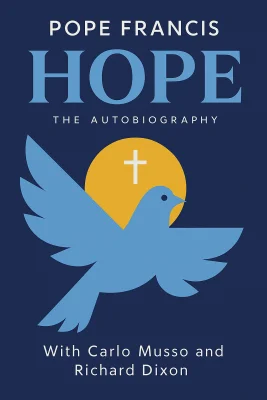
Hope
The Autobiography
Categories
Nonfiction, Biography, History, Memoir, Religion, Spirituality, Audiobook, Autobiography, Christianity, Catholic
Content Type
Book
Binding
Hardcover
Year
2025
Publisher
Random House
Language
English
ASIN
0593978773
ISBN
0593978773
ISBN13
9780593978771
File Download
PDF | EPUB
Hope Plot Summary
Introduction
Argentina in the 1970s descended into one of history's darkest chapters when military forces seized control of the government, initiating what would become known as the "Dirty War." In the predawn hours of March 24, 1976, tanks rolled through Buenos Aires as military leaders arrested the elected president and suspended the constitution. What followed was not merely a change in government but a systematic campaign of state terrorism designed to eliminate all forms of opposition through kidnapping, torture, and murder. For seven years, thousands of citizens would "disappear" into a network of secret detention centers, their fates unknown to desperate families searching for answers. This journey through Argentina's dictatorship reveals how quickly a society can descend into barbarism when power operates without accountability, and how ordinary people found extraordinary courage to resist in both public and private ways. The story encompasses the military junta's rise to power, their methodology of disappearances, and the remarkable response of groups like the Mothers of Plaza de Mayo who transformed personal grief into powerful political resistance. Through examining the divided response of institutions like the Catholic Church and the personal dilemmas faced by figures like Jorge Bergoglio (later Pope Francis), we gain insight into the moral complexities of living under authoritarian rule. This exploration offers crucial lessons for contemporary societies facing polarization and democratic fragility, demonstrating how the human spirit can maintain dignity even in history's darkest moments.
Chapter 1: Seeds of Conflict: Political Polarization (1960s-1975)
The seeds of Argentina's darkest period were sown in the turbulent decades of the 1960s and early 1970s. Following the overthrow of Juan Perón in 1955, Argentina entered a period of political instability characterized by military interventions and brief civilian governments. The military, positioning itself as the guardian of national values, repeatedly disrupted democratic processes whenever they perceived threats to their vision of Argentina. This cycle of interrupted democracy created deep institutional weaknesses that would later enable authoritarian rule. By the mid-1960s, social tensions had intensified dramatically. Labor unions, student movements, and left-wing organizations gained momentum, inspired by revolutionary ideologies spreading throughout Latin America after the Cuban Revolution. The Catholic Church, traditionally a powerful institution in Argentine society, experienced internal divisions. Progressive clergy, influenced by liberation theology, advocated for social justice and worked closely with marginalized communities, while conservative elements aligned with the military establishment and wealthy elites. This religious polarization mirrored broader societal divisions. Economic instability further exacerbated these tensions. Inflation, currency devaluations, and industrial unrest created a climate of uncertainty that fueled extremism on both ends of the political spectrum. The brief return of Perón in 1973, after years in exile, initially sparked hope but quickly gave way to disappointment as he failed to unite the deeply divided Peronist movement. Right-wing Peronists, represented by figures like José López Rega (known as "The Sorcerer"), formed paramilitary groups like the Argentine Anti-Communist Alliance (Triple A) that began targeting left-wing activists with impunity. Violence escalated dramatically with guerrilla organizations like the Montoneros (left-wing Peronists) and the Revolutionary Army of the People (ERP) carrying out kidnappings, assassinations, and attacks on military installations. Their actions, though supported by some segments of society, provided justification for increasingly harsh military responses. The death of Perón in July 1974 left his wife and vice president, Isabel Perón, in power—a position she was ill-equipped to handle as the country spiraled toward chaos. By 1975, Argentina was experiencing what many described as an undeclared civil war, with bombings, targeted killings, and disappearances becoming commonplace in major cities. The military, with support from business elites and conservative sectors of society, positioned itself as the only institution capable of restoring order. Behind closed doors, military leaders were already planning not just to take power but to fundamentally "reorganize" Argentine society through what would become one of the most brutal campaigns of state terrorism in Latin American history. The stage was set for military intervention, with many Argentines, exhausted by violence and economic chaos, willing to accept authoritarian rule in exchange for promised stability. Few could imagine the horror that would follow.
Chapter 2: The Junta's Rise: Systematic Terror Begins (1976)
On March 24, 1976, the Argentine military seized power in a carefully orchestrated coup d'état that had been months in planning. Led by General Jorge Rafael Videla, Admiral Emilio Eduardo Massera, and Brigadier General Orlando Ramón Agosti, the junta swiftly dissolved Congress, suspended the constitution, and imposed martial law. President Isabel Perón was arrested in the middle of the night and flown to a remote location in Patagonia. The coup was executed with clinical precision, revealing the extent of preparation by military leaders who had been waiting for the right moment to intervene. The junta immediately announced what they called the "Process of National Reorganization" (Proceso de Reorganización Nacional), presenting themselves as saviors of a nation on the brink of collapse. Their rhetoric emphasized the need to eliminate "subversion" and restore Argentina's traditional values. In reality, they were implementing a radical ideological project aimed at restructuring Argentine society through terror and economic transformation. The military government received tacit support from the United States, which under Secretary of State Henry Kissinger's influence, viewed the junta as a bulwark against communism in the region. Economic policy under the dictatorship took a sharp neoliberal turn under Economy Minister José Alfredo Martínez de Hoz, a representative of Argentina's traditional oligarchy. His policies included currency devaluation, removal of trade barriers, cuts to public spending, and freezing of wages. These measures devastated Argentina's working class while benefiting financial speculators and large agricultural exporters. The economic program was presented as necessary modernization but served to weaken organized labor and transfer wealth to economic elites who supported the regime. Public reaction to the coup was complex and varied. Many middle-class Argentines, exhausted by years of political violence and economic instability, initially welcomed the military intervention. Major newspapers like La Nación and Clarín published editorials supporting the new government. The Catholic Church hierarchy, with notable exceptions, offered its blessing to the new regime. International financial institutions responded positively, with foreign loans flowing into Argentina despite growing evidence of human rights abuses. Within days of taking power, the junta began implementing a clandestine plan to eliminate opposition. Military task forces, operating from secret detention centers established throughout the country, began kidnapping individuals suspected of subversion. The definition of "subversive" was deliberately broad, encompassing not just armed guerrillas but union organizers, student activists, journalists, lawyers, psychologists, and even those who worked with the poor. The military's concept of "Western Christian civilization" under threat required a "surgical" response that would remove not just active opponents but anyone who might question their vision for Argentina. By the end of 1976, the pattern of state terrorism was firmly established. Thousands had already disappeared into a network of clandestine detention centers. Public spaces were heavily militarized, with armed personnel checking identifications at random. Cultural censorship was pervasive, with books burned and artists forced into exile. The junta had succeeded in creating a climate of fear that would paralyze Argentine society for years to come, while presenting to the outside world an image of a country finally achieving order and stability after years of chaos.
Chapter 3: Disappearances: Methodology of State Terrorism
The hallmark of Argentina's military dictatorship was its systematic practice of forced disappearances—a methodology of terror adopted as official state policy. Between 1976 and 1983, an estimated 30,000 people "disappeared" after being abducted by security forces. These victims, known as "desaparecidos," came from all walks of life: students, workers, professionals, pregnant women, and even adolescents. The military operated with a chilling bureaucratic efficiency, maintaining detailed records of their victims while publicly denying any knowledge of their whereabouts. The process typically began with kidnappings carried out by plainclothes operatives in unmarked Ford Falcon cars—vehicles that became symbols of terror on Argentine streets. These abductions, euphemistically called "transfers" by the military, often occurred at night in victims' homes or workplaces. Families would awake to find loved ones missing, beginning an agonizing search for information that would yield nothing but denials from authorities. As Admiral Massera cynically stated in a public speech: "We have disappeared people, not bodies." The network of clandestine detention centers formed the backbone of this system of terror. The largest and most notorious was the Navy Mechanics School (ESMA) in Buenos Aires, where approximately 5,000 people were held and tortured. Other infamous centers included La Perla in Córdoba, Campo de Mayo in Buenos Aires Province, and hundreds of smaller facilities throughout the country. In these places, detainees endured systematic torture including electric shocks, simulated drowning, rape, and psychological abuse. Interrogators sought not just information but the complete psychological destruction of their victims. The fate of most disappeared was death. Many were drugged and thrown alive from military aircraft into the Atlantic Ocean in what became known as "death flights." Others were executed by firing squad and buried in unmarked graves or cremated. Pregnant women were kept alive until giving birth, after which they were killed and their babies given to military families or their associates in a systematic plan to "reeducate" the next generation. This theft of children represented one of the most perverse aspects of the regime's ideology. The dictatorship's targeting went far beyond armed guerrillas to encompass anyone perceived as threatening the military's vision of society. Psychologists were targeted because their profession was viewed as subversive; journalists for reporting uncomfortable truths; lawyers for defending political prisoners; union leaders for organizing workers; teachers for encouraging critical thinking. The regime's concept of "subversion" extended to ideas themselves, with the military waging what they called a "war against ideas" to eliminate progressive thinking from Argentine society. International complicity enabled this system of disappearances. The United States provided training in counterinsurgency techniques through programs at the School of the Americas, while maintaining economic and diplomatic relations with the junta despite mounting evidence of atrocities. European governments and financial institutions continued business as usual, accepting the junta's narrative that Argentina was fighting necessary battles against terrorism. This international silence emboldened the military to continue its campaign of terror with impunity, believing they had the tacit approval of the Western world in their crusade against "subversion."
Chapter 4: Resistance in Darkness: The Mothers' Courage
In April 1977, a remarkable movement of resistance was born when fourteen women gathered in Plaza de Mayo, the main square facing the presidential palace in Buenos Aires. United by the disappearance of their children, these women began what would become a weekly ritual of walking silently around the plaza wearing white headscarves embroidered with the names of their missing loved ones. This simple act of presence in public space constituted a profound challenge to the military regime, which had succeeded in terrorizing most of society into silence and compliance. The Mothers emerged from desperation after exhausting all conventional channels for information about their disappeared children. They had gone from police stations to military barracks, from government offices to Church authorities, only to be dismissed, mocked, or threatened. Azucena Villaflor, one of the founding members, proposed that they take their private grief into public space: "If we go one by one, they will not listen to us. We must go together to the Plaza." This strategic decision transformed individual trauma into collective action and created a powerful symbol of resistance that would eventually gain international attention. The regime's response to the Mothers was brutal. They were labeled "las locas" (the madwomen) in state-controlled media. Intelligence agents infiltrated their meetings. In December 1977, several founding members including Azucena Villaflor were kidnapped by a navy task force after being betrayed by Alfredo Astiz, a naval officer who had infiltrated their group posing as a relative of a disappeared person. These women were taken to the ESMA detention center, tortured, and then thrown alive into the sea in one of the notorious "death flights." Yet despite these terrifying consequences, other women continued to appear in the plaza, their numbers gradually growing. The Mothers developed innovative strategies to sustain their movement under extreme repression. They communicated through coded messages and changed meeting locations frequently. They leveraged international media attention during the 1978 World Cup in Argentina to spread awareness about disappearances. They formed alliances with human rights organizations abroad, ensuring that testimonies about Argentina's state terrorism reached international forums. Most importantly, they reframed motherhood itself as a political identity, challenging the junta's own rhetoric about "family values" by demanding accountability for their children. As their movement evolved, the Mothers articulated an increasingly sophisticated political analysis. They came to understand that their children had been targeted not as innocent victims but because of their political commitments to social justice. Many Mothers began to embrace the very causes their children had fought for, transforming from traditional housewives into human rights activists with a radical critique of Argentine society. As one Mother stated: "Our children gave birth to us." This political evolution led to internal divisions within the movement, particularly regarding questions of how to respond to later government attempts at reconciliation. The Mothers of Plaza de Mayo fundamentally transformed human rights activism by centering the experiences and moral authority of victims' families. Their white headscarves became internationally recognized symbols of resistance to state terrorism. Their slogan "Aparición con vida" (Appearance alive) rejected government attempts to declare the disappeared dead without accountability. Most significantly, they demonstrated that even in the darkest circumstances, when all traditional forms of political opposition had been crushed, creative forms of resistance remained possible.
Chapter 5: Church Divided: Faith Under Authoritarian Rule
The Catholic Church in Argentina, traditionally one of the nation's most powerful institutions, found itself deeply divided in its response to the military dictatorship. This division reflected broader tensions within the Church following the Second Vatican Council (1962-1965), which had encouraged greater engagement with social issues and recognition of human dignity. In Argentina, these theological currents produced starkly different responses to state terrorism. The Church hierarchy, led by figures like Archbishop Adolfo Tortolo and Cardinal Juan Carlos Aramburu, largely supported the military regime. They provided religious legitimacy to the junta by appearing at official functions, celebrating Masses for military leaders, and issuing statements endorsing the "fight against subversion." When international criticism of human rights abuses mounted, these Church leaders often defended the regime, suggesting that reports of disappearances were exaggerated or fabricated by Argentina's enemies. Some priests even served as chaplains in detention centers, offering spiritual comfort to torturers while ignoring the suffering of prisoners. In stark contrast, a significant minority of clergy actively opposed the dictatorship and paid a heavy price for their courage. Bishops like Enrique Angelelli of La Rioja, who documented human rights abuses in his diocese, was murdered in a staged car accident in 1976. French nuns Alice Domon and Léonie Duquet were kidnapped and killed after working with the Mothers of Plaza de Mayo. Numerous parish priests who served in poor communities were targeted for their social ministry, labeled as "communist infiltrators" within the Church. The military specifically targeted these progressive clergy, seeing them as particularly dangerous because they challenged the junta's claim to be defending "Christian civilization." The Vatican's response to the Argentine situation was complicated by Cold War politics. Pope Paul VI and later John Paul II expressed concern about human rights but were also wary of liberation theology and left-wing movements in Latin America. This ambivalence created space for the Argentine hierarchy to maintain its supportive stance toward the military. When the Pope visited Argentina in 1982 during the Falklands/Malvinas War, the visit was used by the junta for propaganda purposes, though the Pope also made subtle calls for reconciliation and respect for human dignity. For ordinary Catholics, the Church's divided response created profound moral confusion. Many faithful Catholics who witnessed or heard about disappearances turned to their parish priests or bishops for guidance, only to be told to trust the authorities or to avoid "politics." This betrayal by religious leaders who should have defended human dignity left deep wounds in Argentine Catholicism. Some Catholics found themselves questioning their faith entirely, while others formed clandestine prayer groups and Bible studies where they could reconcile their religious beliefs with their moral opposition to the regime. The experience of Jorge Bergoglio, then a young Jesuit provincial (later Pope Francis), exemplified these tensions. Working largely behind the scenes, he helped hide people targeted by the regime and intervened personally with military leaders to secure the release of detained priests. Yet he also faced criticism for not taking a more public stance against the dictatorship. This complex legacy reflects the impossible choices faced by many Church leaders trying to protect lives while maintaining the Church's ability to function under authoritarian rule.
Chapter 6: Behind Closed Doors: Personal Acts of Resistance
While the Mothers of Plaza de Mayo demonstrated publicly, countless Argentines engaged in quieter forms of resistance that, though less visible, were equally vital to maintaining human dignity under dictatorship. These personal acts of defiance occurred in homes, workplaces, and communities across the country, creating what one survivor called "invisible networks of solidarity" that sustained hope during the darkest years of military rule. For many families with disappeared loved ones, the simple act of preserving memory became a form of resistance. They maintained photo albums, celebrated birthdays of the missing, and kept their possessions intact—refusing the regime's attempt to erase these individuals from history. Parents of disappeared children often conducted their own investigations, meticulously documenting every detail they could gather about their child's abduction and sharing this information with human rights organizations. These personal archives would later become crucial evidence in trials against military officers. Cultural resistance flourished in unexpected spaces. Musicians developed elaborate systems of metaphor to evade censorship while still communicating messages of hope and defiance. Writers circulated manuscripts in private readings. Artists created works with hidden meanings that spoke to those who understood the coded language of resistance. Psychologists, whose profession was viewed with particular suspicion by the regime, continued to treat trauma victims in secret, developing innovative therapeutic approaches that acknowledged the political roots of psychological suffering. Education became another battlefield for resistance. University professors who had been purged from their positions organized "catacombs universities"—informal classes held in private homes where critical thinking could still be nurtured. High school teachers found subtle ways to encourage questioning among their students, using historical examples or literature to prompt reflection on present circumstances. Parents who understood the regime's attempt to control education through strict curricula and surveillance supplemented their children's learning with banned books and honest discussions about what was happening in the country. Some of the most significant resistance came from individuals within institutions who used their positions to save lives. Diplomats like Roberto Kozak of the International Organization for Migration used their diplomatic immunity to secure the release of detainees and arrange their safe passage out of the country. Sympathetic doctors in hospitals falsified death certificates to protect families from persecution. Court clerks "lost" files or delayed proceedings to give targeted individuals time to escape. Even some military personnel quietly passed information to families about the whereabouts of their disappeared relatives, risking their own safety in the process. The cumulative impact of these personal acts of resistance was profound. They preserved spaces of moral clarity and human connection in a society where terror was designed to atomize and paralyze. They demonstrated that even under the most oppressive conditions, individuals retained the capacity to make ethical choices and act with compassion. As one survivor reflected: "The dictatorship wanted to destroy our humanity, but in our small acts of defiance, we reclaimed it." These everyday forms of resistance laid the groundwork for the broader social movements that would eventually help restore democracy to Argentina.
Chapter 7: Return to Democracy: The Long Path to Justice
The military junta's grip on power began to weaken significantly in the early 1980s, undermined by economic failure, internal divisions, and growing international isolation. By 1982, inflation had reached 200%, foreign debt had ballooned to $45 billion, and industrial production had collapsed by nearly 20%. These economic disasters eroded middle-class support for the regime, which had justified its human rights abuses as necessary sacrifices for economic prosperity. As living standards plummeted, Argentines increasingly questioned what they had gained from years of authoritarian rule. In a desperate attempt to restore national unity and legitimacy, the military junta, then led by General Leopoldo Galtieri, launched an invasion of the British-controlled Falkland Islands (Islas Malvinas) in April 1982. The initial success in seizing the islands triggered an outpouring of patriotic support, but this quickly evaporated when British forces recaptured the territory after a 74-day war. The humiliating defeat exposed the military's incompetence and deception, as Argentines learned that poorly equipped conscripts had been sent to fight against professional soldiers. The Malvinas debacle accelerated the regime's collapse and forced the military to announce a transition to democracy. The return to democratic rule in December 1983, with the election of President Raúl Alfonsín, marked the beginning of Argentina's painful reckoning with its recent past. Alfonsín established the National Commission on the Disappearance of Persons (CONADEP), which documented nearly 9,000 cases of disappearance in its groundbreaking report "Nunca Más" (Never Again). This was followed by the historic trial of the military juntas in 1985, where nine former military commanders were prosecuted. The trial represented a watershed moment in Latin American justice, as it was the first time a civilian court had held military leaders accountable for human rights abuses in the region. However, the path to justice soon faced significant obstacles. Military uprisings in 1987 pressured Alfonsín to pass the "Full Stop" and "Due Obedience" laws, which limited prosecutions. His successor, Carlos Menem, went further by pardoning convicted junta members in 1990 in the name of "national reconciliation." These measures created a culture of impunity that deeply frustrated victims' families and human rights organizations, who continued to demand accountability. The Mothers and Grandmothers of Plaza de Mayo maintained their weekly marches, insisting that there could be no genuine democracy without justice. A significant breakthrough came in the early 2000s when federal judge Gabriel Cavallo declared the amnesty laws unconstitutional, a ruling later upheld by the Supreme Court in 2005. This judicial revolution, combined with the election of President Néstor Kirchner, who made human rights a centerpiece of his administration, reopened hundreds of cases against military officers. The ESMA detention center was transformed into a memorial museum, and March 24 was designated a national day of remembrance. By 2016, over 700 former military officers and their civilian accomplices had been convicted of crimes against humanity. Argentina's experience with transitional justice became a model for other countries emerging from authoritarian rule. The principle that certain crimes—including forced disappearance, torture, and the theft of children—cannot be amnestied has been incorporated into international law. The country's emphasis on memory through museums, memorials, and educational programs demonstrates a commitment to ensuring that new generations understand the horrors of dictatorship. While debates continue about how best to remember this period, Argentina's ongoing commitment to confronting its past represents a powerful rejection of the culture of impunity that once protected perpetrators of state terrorism.
Summary
Throughout Argentina's darkest years, a fundamental conflict played out between two visions of society: one based on authoritarian control, ideological purity, and the elimination of dissent, and another grounded in human dignity, democratic participation, and the right to question authority. This tension manifested not just in political structures but in religious institutions, family relationships, and individual consciences. The military junta's attempt to "reorganize" Argentine society through systematic terror revealed the extreme lengths to which ideological fundamentalism can go when unchecked by democratic institutions or moral constraints. Yet even in this darkness, countless acts of resistance—from the public witness of the Mothers of Plaza de Mayo to hidden efforts to save targeted individuals—demonstrated the resilience of the human spirit and the power of solidarity. The Argentine experience offers crucial lessons for contemporary societies facing polarization and authoritarian tendencies. First, democracy requires constant vigilance, as its institutions can be rapidly dismantled when citizens become willing to sacrifice liberty for promised security. Second, the language of "national security" and "traditional values" can be manipulated to justify grave human rights abuses, making ethical discernment essential. Finally, healing from collective trauma requires both justice and memory—not to remain trapped in the past, but to ensure that history's darkest chapters are not repeated. As Argentina continues to process this painful legacy through trials, memorials, and education, it demonstrates that confronting historical truth, however difficult, is essential for building a more just future. The courage of those who maintained their humanity in inhuman circumstances remains a powerful testament to faith in the face of terror.
Best Quote
“Those who are afraid of questions are afraid of the answers, and this is the characteristic of dictatorships, of autocracies, or of empty democracies, not of free children.” ― Pope Francis, Hope: The Autobiography
Review Summary
Strengths: The review highlights the autobiographical nature of the book, noting it as the first autobiography published by a pope while still alive. It emphasizes the pope's strong faith, his revolutionary ideas, and his diverse background, including his origins and education. The review appreciates the inclusion of personal anecdotes and the pope's call for unity and hope.\nOverall Sentiment: Enthusiastic\nKey Takeaway: The review presents the book as a spiritual testament of Pope Francis, showcasing his deep faith, commitment to unity, and encouragement for young people to hold onto hope and dreams amidst challenges.
About Author
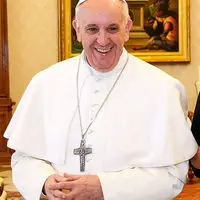
Pope Francis
Pope Francis probes the intersection of faith and social justice through a lens of humility and inclusivity. His works emphasize divine compassion, as seen in "The Name of God is Mercy," where he explores the boundless forgiveness of God, positioning it as a fundamental aspect of belief. Meanwhile, "Hope: The Autobiography" offers readers an introspective look at his spiritual journey and aspirations for the Church. Both books have attracted attention for their accessible yet profound discourse, which blends theological insights with a pastoral sensitivity, making them relevant to a broad audience interested in faith and human dignity.\n\nHis papacy was marked by groundbreaking initiatives such as the advocacy for immigrants, the poor, and environmental protection. Pope Francis was the first to declare laws that criminalize homosexuality as "unjust," significantly influencing contemporary religious dialogue. He also played a pivotal diplomatic role in mending relations between Cuba and the United States, demonstrating the Church's potential as a force for peace. His writings and actions continue to challenge unbridled capitalism and advocate for a sustainable future, making him a critical voice in global ethical and moral discussions.\n\nReaders of his works benefit from his commitment to a Church that serves as a "field hospital," prioritizing engagement with marginalized communities over insularity. His theological contributions, including "Laudato si'," underscore the importance of environmental stewardship and social equity, resonating with those seeking a compassionate and responsive Church. This short bio captures Pope Francis's unique approach as both a spiritual leader and a reformer, whose ideas and initiatives continue to influence the direction of the Catholic Church and global societal norms.
Read moreDownload PDF & EPUB
To save this Black List summary for later, download the free PDF and EPUB. You can print it out, or read offline at your convenience.
Hope
by Pope Francis
