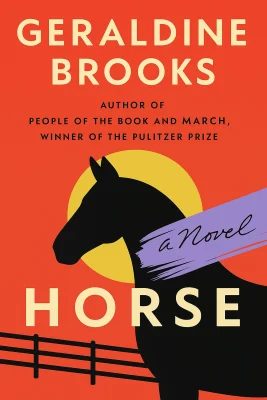
Horse
Categories
Fiction, Art, Animals, Audiobook, Historical Fiction, Book Club, Historical, Race, Horses, Literary Fiction
Content Type
Book
Binding
Hardcover
Year
2022
Publisher
Viking
Language
English
ASIN
0399562966
ISBN
0399562966
ISBN13
9780399562969
File Download
PDF | EPUB
Horse Plot Summary
Introduction
# The Unbroken Bond: Lexington's Legacy Across Time In the pre-dawn darkness of a Kentucky stable, thirteen-year-old Jarret pressed his ear against the swollen belly of Alice Carneal, listening for the heartbeat that would change his life forever. The mare thrashed in her stall, her labor fierce and unforgiving, while outside the plantation slept under stars that had witnessed countless births and deaths in this land built on human bondage. When the foal finally slipped into the world on trembling legs, Jarret was the first to touch him—a bay colt with four white feet and a blaze like lightning down his face. This was 1850, and in the rolling hills of the Bluegrass, horses meant everything and humans meant nothing unless they were white. But in that stable, as the newborn colt struggled to stand, something passed between boy and horse that transcended the brutal mathematics of slavery. Jarret, son of the master trainer Harry Lewis, possessed an intuitive understanding of thoroughbreds that even seasoned horsemen envied. The colt would be named Darley, later Lexington, and their bond would span decades, surviving betrayal, blindness, and the collapse of the world that created them. This is the story of a champion who ran into history on failing eyes, guided by hands that loved him more than freedom itself.
Chapter 1: Birth of a Champion: The Sacred Bond Between Jarret and Darley
Dr. Elisha Warfield arrived at the Meadows as sunrise painted the Kentucky hills gold, his physician's eyes examining the ungainly result of his expensive breeding experiment. The colt's legs seemed too long for his body, his head oversized, his movements clumsy as he nursed from Alice Carneal's side. Warfield frowned, wondering if he had wasted his money mating the mare to the legendary but violent Boston. Harry Lewis thought otherwise. The master trainer, a free Black man whose expertise had made him wealthy despite the color of his skin, ran experienced hands over the colt's frame and felt the future trembling beneath the surface. His son Jarret watched from the stall door, already sensing something electric in the newborn's presence. When the boy extended his palm, the colt's velvet muzzle brushed against his skin with surprising gentleness. Day after day, Jarret became the colt's shadow. He taught Darley to accept a halter, to respond to voice commands, to channel his explosive energy into controlled power. The young horse learned with startling intelligence, as if he understood his destiny. When Jarret approached the pasture, Darley would trot to the fence and nicker a greeting, their bond deepening beyond the usual relationship between human and animal. As the colt grew into his frame, his awkward gait transformed into something fluid and deadly. Racing the other yearlings around the paddock, he would start last, distracted by butterflies or rustling leaves, then suddenly explode forward with a stride that devoured ground like a machine. His white feet flashed signals in the dust as he passed his rivals and kept running, as if the act of speed itself brought him joy. By his third year, Darley had become magnificent—compact but powerful, with the long elastic stride that marked a true champion. Harry Lewis decided to test him in the Phoenix Stakes at Lexington's Kentucky Association track, a grueling race that would announce the colt's arrival to the racing world. But success would bring dangerous attention from men who understood that in the antebellum South, a Black man's achievements were always precarious, no matter how extraordinary.
Chapter 2: Stolen Dreams: The Forced Journey South and New Identities
The betrayal came wrapped in the language of business necessity. Captain Willa Viley arrived at the Meadows with a copy of the Kentucky Association rules, his finger marking a regulation that cut like a blade: "No negro or mulatto, to make nomination in any stake, to be run over this course." Harry Lewis could not race his horse on the most prestigious tracks in the state, despite years of patient work that had created a champion. Richard Ten Broeck materialized from the shadows like a well-dressed predator, his pale eyes missing nothing as he examined Darley with the calculating gaze of a true horseman. The New York gambler spoke with cultured accents about opportunity and partnership, but his offer was really an ultimatum. Sell the horse or watch his career wither under the weight of racist regulations. The negotiation took place over dinner while Jarret waited in anguish. By morning, both he and Darley belonged to Ten Broeck, who rechristened the horse Lexington after the city of his birth. The colt would travel south to the exotic world of New Orleans racing, where fortunes were won and lost on the turn of a card and the thunder of hooves on shell roads. The steamboat Fashion carried them down the Mississippi, that great brown artery of American commerce. Jarret slept beside Lexington in the stock pens, protecting him from the noise and chaos of river travel while the endless forests and plantations slid past like a fever dream. At Natchez, they encountered William Johnson, a free Black barber whose elegant shop served the white elite while his ledgers recorded the secret histories of a slave-holding society. Ten Broeck's destination was Fatherland plantation in Mississippi, owned by Colonel Adam Bingaman and stretching beyond the horizon in cotton fields worked by hundreds of enslaved souls. Here Jarret would learn his trade under John Pryor, the finest trainer in the state, while Lexington prepared for the races that would make him famous. But first, the jealous Pryor banished Jarret to field work, separating horse and trainer in a calculated act of cruelty that nearly destroyed them both.
Chapter 3: Racing in Darkness: The Secret of the Blind Champion
New Orleans pulsed with energy unlike anywhere in America, its mixture of French Creoles, Spanish merchants, and Anglo-Americans creating a society where the usual rules bent like iron in a forge. At Ten Broeck's magnificent Metairie racecourse, Jarret found himself elevated from field hand to deputy trainer after Lexington nearly died from colic under Pryor's negligent care. The gambler recognized that the bond between horse and trainer was worth more than wounded pride. The first great test came against Sallie Waters, a proven filly owned by Louis Smith of Alabama. Twenty thousand spectators jammed the shell roads to Metairie, their carriages creating traffic jams for miles while fortunes changed hands in the betting rings. Lexington exploded from the starting line with such violence that veteran horsemen cursed in amazement, his stride lengthening with each furlong as he pulled away from the field. But victory came with a terrible cost that Jarret noticed first in small things—the way Lexington tilted his head to favor one eye, how he stumbled over obstacles he should have seen clearly. The inflammation around his left eye had seemed minor at first, easily treated with cold compresses. Yet as weeks passed, the swelling returned, bringing with it a devastating realization that would change everything. The great champion was going blind. A growth of misshapen bone around his left eye was pressing against the optic nerve, stealing his sight inch by inch. By the time they returned from their summer training in the North, Lexington could see only shadows and shapes, his world fading to gray and then to black. Jarret faced an agonizing choice. Revealing the blindness would end Lexington's racing career immediately, but staying silent meant asking a sightless horse to compete at the highest level. Yet Lexington's other senses had sharpened to compensate, and his trust in Jarret was so complete that he could still perform miracles. When Gilbert Patrick, the veteran jockey hired to replace the discredited Henri Meichon, discovered the secret, he too understood what was at stake. Some truths were too dangerous to speak aloud.
Chapter 4: Thunder Against Time: Breaking Records Through Trust and Courage
The Race Against Time captured America's imagination like no sporting event before it. Twenty thousand spectators crowded Metairie on April 2, 1855, many carrying the new mass-produced stopwatches that had been marketed specifically for the event. Former President Millard Fillmore sat in the grandstand while telegraph operators prepared to flash the results across a nation hungry for heroes and records. Jarret spent the morning in Lexington's stall, speaking softly to the horse who could no longer see his face. The track had been stripped and hardened for speed, creating conditions that would punish any misstep. With only shadows to guide him, Lexington would have to trust completely in his jockey's hands and his own supernatural sense of pace and distance developed through years of running blind. Gilbert Patrick understood the magnitude of what they were attempting as he settled into the saddle. The horse beneath him was a coiled spring of controlled power, his ears pricked forward despite his sightless eyes, his nostrils flared with anticipation. When they cantered to the starting line, Lexington moved with the confidence of a champion who had never been told he was disabled. The drum tapped and they were away, Lexington finding his rhythm immediately despite running virtually alone against the clock. Patrick had to restrain him through the early miles as the horse tried to go too fast, his competitive instincts fired by muscle memory and the electricity of the crowd. But in the final mile, when Patrick gave him his head, Lexington unleashed a finishing kick that left twenty thousand people gasping in disbelief. The time was announced in stunned whispers that built to a roar: 7:19 and three-quarters. A new world record by more than six seconds, achieved by a horse running blind through sheer courage and trust. As Jarret led Lexington back through the cheering throng, he noticed that both front shoes had worked loose during the race. The champion had run the final miles on damaged feet, never wavering, never giving less than everything he had. In that moment, watching Lexington's sightless eyes turned toward applause he could not see, Jarret knew they had witnessed something beyond sport—the triumph of will over circumstance, of partnership over adversity.
Chapter 5: Echoes in Bone and Paint: Modern Discoveries of a Lost Legacy
The skeleton hung in the Smithsonian's dusty storage facility like a forgotten prayer, its bones yellowed with age and labeled simply "Horse" in the catalog. Dr. Jess Flynn, a young bone specialist from Australia, had come to examine what she assumed was routine specimen preparation, never suspecting she was about to encounter the remains of a legend whose story had been scattered across time like leaves in a hurricane. Her trained eye immediately recognized something extraordinary in the proportions—the perfect architecture of speed, the dense bone structure that spoke of incredible strength, the wear patterns that told the story of a life lived at full gallop. But it was the deformed bone around the left eye socket that made her pause, her fingers tracing the irregular surface that whispered of disease, pain, and ultimately, the blindness that had made Lexington's achievements even more miraculous. Across the city, Theo Northam was pursuing his own investigation into nineteenth-century equestrian art, his research focused on recovering the lost stories of Black horsemen whose contributions had been systematically erased from racing history. The young art historian had found references to a missing painting by Thomas J. Scott—a portrait of Lexington that had vanished when Turf, Field and Farm magazine folded in 1903, taking with it a masterpiece that might have been destroyed decades ago. Their paths crossed in a Georgetown coffee shop when Theo's dog knocked Jess off her bicycle, an encounter that began with accusations and ended with the recognition that they were pursuing pieces of the same puzzle. The skeleton in the Smithsonian and the missing painting were fragments of a story that had been scattered across time, waiting for someone to reassemble the pieces and speak for those who had been silenced. The breakthrough came when Theo spotted a painting in a neighbor's trash, its surface so blackened with grime that the image was barely visible. Something about the composition caught his trained eye, and he rescued it from the garbage truck with minutes to spare. Hours of careful cleaning revealed Scott's earliest portrait of Lexington as a yearling at the Meadows, painted more than a century and a half ago and somehow surviving in the hands of a Black family whose ancestors had treasured it without knowing its true value.
Chapter 6: The Price of Truth: Tragedy and the Fight for Recognition
The authentication of the painting should have been Theo's triumph, the culmination of years of research into the forgotten contributions of Black horsemen to America's racing heritage. Instead, it became the prelude to tragedy, as if the forces that had erased Jarret Lewis from history were determined to silence anyone who tried to speak his name. Walking through Rock Creek Park on a rainy evening, Theo came upon a fallen jogger and stopped to help, his natural kindness overriding any concern for his own safety. In the darkness, with rain falling and tensions high, Officer Michael Chen saw only what his training had taught him to see—a Black man in a hoodie standing over a white woman. The shot that killed Theo echoed through the park like a judgment, silencing forever a brilliant mind that had devoted itself to recovering lost stories. The investigation that followed was a masterpiece of institutional protection, each revelation carefully managed to support the narrative of justified force. The officer feared for his life, the suspect appeared armed, the darkness made identification impossible. The woman Theo had tried to help remembered nothing, her concussion erasing the crucial moments that might have provided exoneration. Jess Flynn watched the machinery of injustice grind forward with the inexorability of a natural disaster, her grief over Theo's death channeled into rage at a system that could destroy such a gentle soul. The media coverage followed predictable patterns—Theo's accomplishments minimized, his character questioned, his death reduced to statistics and talking points that missed the essential truth of who he had been. The painting he had rescued became his memorial, purchased by a Kentucky collector who insisted it be donated to the International Museum of the Horse with a plaque reading "Given in memory of Theodore Naade Northam." It was a small gesture, but it ensured that Theo's name would be linked forever with the story he had died trying to tell—the tale of Jarret Lewis and the blind champion who had trusted him with everything.
Chapter 7: Homecoming: Bones and Stories Return to Kentucky
The bones came home at last, carried in climate-controlled trucks from the Smithsonian's storage facility to the heart of Kentucky's Bluegrass region, where Lexington's story had begun in a stable more than a century and a half before. His skeleton would stand in the International Museum of the Horse, where visitors could see the physical foundation of greatness—the long bones that had powered his stride, the skull that had housed his intelligence, the deformed socket that told the story of his blindness and courage. Jess supervised every detail of the installation, her grief over Theo's death transformed into determination that Lexington's story would be told completely and honestly. The exhibit would include not just the skeleton but the painting Theo had rescued, the two artifacts finally reunited after decades of separation. Visitors would learn about the horse's dominance on the racetrack and in the breeding shed, but also about the Black horsemen whose skill had made that success possible. The museum's halls echoed with the ghosts of champions—horses and humans alike who had shaped the sport of kings in America. Lexington's descendants still thundered around racetracks across the world, carrying his blood in their veins, his speed in their stride. The Kentucky Derby, the Preakness, the Belmont Stakes—all bore the imprint of his genetic legacy, a river of excellence flowing through time from that stable where Jarret had first touched a newborn colt's muzzle. But the human stories proved more fragile than bloodlines. Jarret Lewis had disappeared from most historical records, his name surviving only in scattered references and the painting that had somehow found its way through generations of a family that had treasured it without knowing its worth. The systematic erasure of Black contributions to the thoroughbred industry had been so complete that even sympathetic historians struggled to recover the truth. Theo's research had begun to change that, his careful scholarship illuminating the lives of horsemen whose achievements had been stolen or ignored. His death had silenced that work, but others would continue it, building on the foundation he had laid with his life. The painting he rescued would inspire new questions, new investigations, new attempts to recover the lost stories of American excellence that had been buried beneath the weight of prejudice and time.
Summary
The story of Lexington spans more than a century and a half, from the antebellum South to the digital age, but its themes remain achingly contemporary. Excellence transcends the boundaries society tries to impose, yet those boundaries exact a terrible price from those who dare to cross them. Jarret Lewis and Theo Northam lived in different centuries, but both discovered that talent and dedication could not shield them from the prejudices that shaped their worlds. One spent his life in bondage to a system that valued his skills while denying his humanity; the other died trying to recover the stories of men like Jarret, silenced by the same forces that had erased them from history. The great horse's bones now rest in Kentucky, where his story began, surrounded by the rolling hills where his descendants still graze and run. His skeleton tells the tale of a champion who ran blind into history, trusting in the hands that guided him, the voice that called his name, the love that sustained him through darkness. It is a story of partnership across the color line, of excellence achieved despite impossible odds, of bonds that death itself could not break. In the museum's quiet halls, where visitors pause to marvel at the architecture of speed made manifest in bone, Lexington's legacy endures—not just as the foundation of American racing, but as testament to the unbreakable connections between souls who recognize greatness in each other, regardless of species or the artificial barriers that humans create.
Best Quote
“You never get a second chance to have a first impression.” ― Geraldine Brooks, Horse
Review Summary
Strengths: The book is praised for its rich narrative that intertwines horse racing, race relations, and art, creating a memorable story. The historical fiction aspect is passionately conceived and beautifully written. The use of language is highlighted, with the reader appreciating the vocabulary and the depth of the narrative. The portrayal of racial injustice across different timelines is considered masterful, and the character of Lexington, the horse, is well-received. Weaknesses: The storyline involving Theo and Jess is criticized for being disjointed and distressing, with Jess's character and her relationship with Theo deemed unbelievable. This detracts from the overall enjoyment of the book. Overall: The reader expresses a strong appreciation for the book's historical and thematic depth, despite some narrative flaws. The novel is recommended for its compelling storytelling and exploration of racial issues, though some character arcs may not resonate with all readers.
About Author

Geraldine Brooks
Brooks investigates the intricate tapestry of human experience through the lens of meticulously researched historical fiction, engaging readers with narratives that interweave personal and global events. Her books often explore themes of loss, resilience, and cultural identity, exemplified by her Pulitzer Prize-winning novel "March," which delves into the American Civil War through the eyes of the March family. While Brooks's storytelling is intimate, it simultaneously spans vast historical landscapes, demonstrating her ability to blend factual details with imaginative elements.\n\nHer transition from journalism to fiction writing enriched her narrative style, which is both informative and evocative. This skill is particularly evident in "Year of Wonders," a book set during the bubonic plague, and "People of the Book," inspired by the Sarajevo Haggadah. Readers benefit from her ability to capture pivotal moments in history while providing insights into the complexities of human behavior. Brooks's background as a journalist informs her nonfiction works, such as "Nine Parts of Desire," which explores the lives of Muslim women, further highlighting her commitment to cultural understanding.\n\nGeraldine Brooks is celebrated not only for her storytelling prowess but also for her impact on contemporary literature. Her works resonate across cultures and generations, earning numerous accolades such as the Anisfield-Wolf Book Award for "Horse." Through her compelling narratives, Brooks offers readers a chance to connect with diverse perspectives, enriching their understanding of the past and its influence on the present. This short bio underscores her status as a distinguished author whose contributions continue to shape literary discourse.
Read moreDownload PDF & EPUB
To save this Black List summary for later, download the free PDF and EPUB. You can print it out, or read offline at your convenience.
Horse
by Geraldine Brooks
