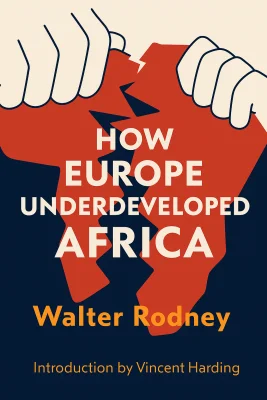
How Europe Underdeveloped Africa
Categories
Nonfiction, History, Economics, Politics, Sociology, Africa, Social Justice, Historical, Theory, Race
Content Type
Book
Binding
Paperback
Year
1980
Publisher
Howard Univ Pr
Language
English
ASIN
0882580965
ISBN
0882580965
ISBN13
9780882580968
File Download
PDF | EPUB
How Europe Underdeveloped Africa Plot Summary
Introduction
# How Europe Underdeveloped Africa: Five Centuries of Systematic Exploitation In the golden age of medieval Mali, African merchants controlled trade routes that stretched across the Sahara, their caravans carrying not just gold and salt, but ideas, technologies, and cultural innovations that enriched civilizations from Timbuktu to Cairo. The University of Sankore attracted scholars from across the known world, while African metallurgists produced steel of such quality that it would later be coveted by European traders. Yet by the twentieth century, this same continent would be dismissed as primitive and backward, its people portrayed as incapable of self-governance or technological advancement. This dramatic transformation was neither accidental nor inevitable. It was the calculated result of five centuries of systematic exploitation that redirected Africa's wealth, labor, and resources toward European development while simultaneously blocking African advancement. Through the horrors of the slave trade, the violence of colonial conquest, and the subtle mechanisms of economic control, Europe didn't simply extract wealth from Africa—it actively underdeveloped the continent, creating the very backwardness that would later be used to justify continued domination. Understanding this process reveals how global inequality was deliberately constructed and why Africa's struggles cannot be separated from Europe's prosperity.
Chapter 1: Pre-Colonial Africa: Sophisticated Civilizations Before European Contact
Before Portuguese ships rounded the Cape of Good Hope in the late fifteenth century, Africa was home to some of the world's most sophisticated civilizations. The empire of Mali controlled gold mines that supplied much of Europe's currency, while its capital at Niani rivaled any European city in wealth and grandeur. When Mansa Musa made his famous pilgrimage to Mecca in 1324, his lavish distribution of gold in Cairo depressed the metal's price for a decade, demonstrating the enormous wealth that African societies had accumulated through centuries of trade and production. The technological achievements of pre-colonial Africa were equally impressive. African metallurgists had mastered iron-working techniques by 500 BCE, producing high-quality steel that amazed early European visitors. The stone churches of Lalibela in Ethiopia, carved directly from solid rock, represented architectural mastery that required sophisticated engineering knowledge. In Great Zimbabwe, massive stone walls built without mortar demonstrated construction techniques that European colonizers would later refuse to believe Africans capable of achieving. These societies were not isolated achievements but part of a broader pattern of development across the continent. The Yoruba city-states of West Africa had developed complex political systems that balanced monarchical authority with democratic participation. The Buganda kingdom in East Africa maintained sophisticated administrative structures that efficiently governed large territories and diverse populations. Along the Swahili coast, African merchants engaged in maritime trade that connected the continent to Asia through networks of commerce and cultural exchange. Perhaps most significantly, these African societies were actively evolving when European contact intensified. They were not static civilizations frozen in time, but dynamic societies experiencing their own processes of political consolidation, technological innovation, and cultural development. The kingdom of Kongo was expanding its administrative capacity, while West African states were developing new forms of military organization. This indigenous development would be fundamentally disrupted by European intervention, which redirected African energies away from internal advancement toward serving European commercial interests. The diversity of African political and economic systems reflected sophisticated adaptations to different environments and challenges. Some societies emphasized age-grade systems that distributed authority across generations, while others developed elaborate monarchies with complex bureaucracies. This variety represented not confusion or primitiveness, but intelligent responses to local conditions that had evolved over centuries of experimentation and refinement.
Chapter 2: The Atlantic Slave Trade: Demographic Catastrophe and Economic Disruption
The transformation of Africa from a continent of developing civilizations into a supplier of human cargo began gradually in the late fifteenth century but accelerated dramatically as European colonies in the Americas created an insatiable demand for labor. Over four centuries, an estimated twelve to fifteen million Africans were forcibly transported across the Atlantic, but this figure represents only those who survived the horrific Middle Passage. When we account for those killed in raids, those who died during forced marches to coastal ports, and those who perished in the brutal conditions of slave ships, the total human cost rises to staggering proportions. The slave trade was not simply a matter of Europeans purchasing people who were already enslaved. Instead, it created a vicious cycle of violence that penetrated deep into the African interior, transforming societies that had previously focused on production and trade into militarized states whose primary economic activity became the capture and sale of human beings. European demand for captives encouraged warfare between African societies, while the introduction of firearms created an arms race that forced participation in the slave trade simply to acquire the weapons necessary for survival. This systematic extraction of labor had devastating consequences for African development. The slave trade removed precisely those individuals who were most crucial for economic growth—young adults in their prime productive years. African societies lost not only their current workforce but also the future generations who would never be born. The demographic impact was so severe that Africa's population remained stagnant for centuries while other continents experienced steady growth that fueled their economic development. European traders deliberately fostered political instability to maintain steady supplies of captives. They played different African groups against each other, supplied weapons to fuel conflicts, and established fortified trading posts that became centers of violence and exploitation. The famous Elmina Castle, built by the Portuguese in 1482, exemplified how European presence transformed African coastal societies, creating zones of perpetual warfare that reached hundreds of miles inland. Perhaps most tragically, the slave trade established the fundamental pattern that would characterize Africa's relationship with Europe for the next five centuries. African societies found themselves increasingly oriented toward supplying Europe with what it wanted rather than developing their own productive capacities. Resources that might have been invested in technological advancement, political development, or economic diversification were instead channeled into the destructive business of human trafficking, setting Africa on a path of dependency that would prove remarkably difficult to escape.
Chapter 3: Colonial Conquest: Political Subjugation and Resource Extraction Systems
The late nineteenth century witnessed the "Scramble for Africa," a frenzied period of European territorial acquisition that saw the continent divided among European powers with breathtaking speed and cynicism. The Berlin Conference of 1884-1885 epitomized this process, as European statesmen carved up Africa on maps without any African representation or consideration of existing political boundaries. Within two decades, virtually the entire continent was under European political control, with only Ethiopia and Liberia maintaining nominal independence. The military conquest of Africa was facilitated by European technological advantages, particularly the Maxim gun, which allowed small European forces to defeat much larger African armies. However, the ease of conquest was also enabled by the political fragmentation that centuries of slave trading had helped create. European colonizers employed the classic strategy of divide and rule, exploiting existing conflicts between African societies and creating new ones where necessary. The same divisions that had made the slave trade possible now facilitated colonial conquest. Colonial political systems were designed not to govern in the interests of African populations, but to facilitate economic exploitation with minimal European investment. The British system of "indirect rule" maintained traditional authorities as subordinate administrators, while the French policy of "assimilation" sought to create a small class of Africans who would identify with French interests. Both systems shared the fundamental goal of political control that would enable systematic economic extraction while minimizing administrative costs. The destruction of African political institutions had profound consequences for the continent's long-term development. Traditional systems of governance, law, and social organization that had evolved over centuries were either eliminated or subordinated to colonial administration. African rulers who had once been accountable to their people became accountable to colonial officials, fundamentally altering the relationship between rulers and ruled and creating a crisis of legitimacy that would plague post-colonial African states. Colonial boundaries, drawn without regard for ethnic, linguistic, or economic realities, created artificial political units that often made little sense from an African perspective. These boundaries frequently separated related peoples while forcing together groups with little in common, creating problems that persist to this day. The colonial state was fundamentally an alien institution imposed on African societies, designed to serve European rather than African interests, and lacking the organic connection to local communities that characterizes legitimate governance.
Chapter 4: Systematic Underdevelopment: Blocking African Industrial and Technical Progress
Colonial economic policy was explicitly designed to prevent African industrialization and maintain the continent as a supplier of raw materials for European factories. This was not an accidental byproduct of colonial rule but a deliberate strategy to ensure that Africa remained dependent on European manufactured goods. When Africans attempted to establish processing facilities for their own raw materials, they faced discriminatory taxation, import restrictions on machinery, and often outright prohibition from colonial authorities. The infrastructure built during the colonial period reinforced this extractive model. Railways ran from mining areas and cash-crop regions directly to ports, enabling the export of raw materials but doing little to connect different parts of Africa or promote internal trade. Roads, telecommunications, and other infrastructure followed the same pattern, creating transportation and communication networks oriented toward Europe rather than serving African development needs. As one colonial administrator noted, "Every mile of railroad should pay for itself in increased exports to the mother country." Colonial governments imposed economic structures that guaranteed continued underdevelopment. Marketing boards, ostensibly created to help African farmers, actually functioned as instruments of exploitation, purchasing African crops at artificially low prices and selling them on world markets at much higher prices, with the profits flowing to European treasuries. Currency systems tied African economies to European currencies at rates that favored European trade, while banking systems channeled African savings into European investments. The few European technologies that were transferred to Africa were specifically chosen to facilitate extraction rather than development. Mining equipment was introduced to increase the output of raw materials, but Africans were denied access to the technical knowledge that might have enabled them to develop their own industrial capacity. Agricultural techniques were promoted only when they increased the production of export crops, not when they might improve food security or enable economic diversification. This systematic blocking of African development created a self-reinforcing cycle of dependency. As European industries grew more sophisticated and productive through the use of African resources and labor, they could produce manufactured goods more cheaply than African craftsmen using traditional methods. These European products were then sold back to Africa, destroying local industries and creating ever-greater dependence on European imports. Africa was thus forced to finance its own underdevelopment while being denied the benefits of the wealth it produced.
Chapter 5: Educational Control: Creating Mental Colonization and Cultural Dependency
Colonial education systems were carefully designed instruments of cultural and psychological control, not genuine efforts to develop African human resources. The curriculum deliberately emphasized European history, geography, and values while systematically denigrating African knowledge and achievements. Students learned about European rivers and mountains while remaining ignorant of African geography, memorized European historical dates while being taught that Africa had no history worth studying. The quantitative limitations were as significant as the qualitative distortions. In 1938, French West Africa, with a population of fifteen million, had only 77,000 students in colonial schools. The Belgian Congo, with over thirteen million people, produced only sixteen university graduates by independence. These numbers were not accidents but reflected deliberate policies to limit African access to advanced education that might threaten colonial control or enable independent development. When Africans did receive education, it was carefully structured to serve colonial needs rather than African development. Primary education produced clerks and interpreters for the colonial administration. Secondary education, where it existed, trained low-level administrators and teachers who would help maintain the colonial system. Technical education was virtually nonexistent because colonial policy required Africa to remain a supplier of raw materials rather than developing manufacturing capabilities. The psychological impact of colonial education proved as damaging as its practical limitations. Students were taught to despise their own cultures and aspire to European standards they could never fully achieve within the colonial system. The most successful products of colonial education often became the most alienated from their own societies, creating a class of Africans who identified more with European values than with African realities. This mental colonization complemented political and economic domination, creating internalized barriers to African development that would persist long after political independence. Traditional African educational systems, which had been closely integrated with practical skills and cultural values, were systematically destroyed and replaced by colonial schools designed to produce subordinate functionaries rather than independent thinkers. The result was not education but a form of mental conditioning that prepared Africans to accept their subordinate position within the colonial hierarchy while destroying their confidence in their own cultural traditions and capabilities.
Chapter 6: African Resistance: Independence Movements and the Struggle for Liberation
Despite the overwhelming power of colonial systems, Africans never passively accepted their subjugation but consistently resisted in various forms throughout the colonial period. Early resistance movements like the Herero and Nama uprising in German South-West Africa, the Maji Maji rebellion in German East Africa, and the various wars against British expansion demonstrated that Africans were willing to fight for their independence despite overwhelming military disadvantages and brutal European retaliation. As colonial rule became entrenched, resistance evolved into new forms adapted to changed circumstances. African intellectuals and political leaders began organizing movements that combined traditional sources of legitimacy with modern political techniques. The African National Congress in South Africa, founded in 1912, exemplified this evolution, as did similar organizations across the continent that emerged to challenge colonial rule through legal and political means when military resistance proved impossible. The Second World War provided crucial opportunities for African advancement toward independence. African participation in the conflict, both as soldiers and as suppliers of raw materials, demonstrated the continent's importance to the global economy while exposing the contradictions in European claims about democracy and freedom. African soldiers who fought against fascism in Europe returned home with new ideas about political rights and self-determination that they applied to their own situations under colonial rule. Educational resistance proved particularly significant in the long term. When colonial authorities restricted African access to education, African communities created their own schools. Independent churches established educational programs that emphasized African dignity and capability. Traditional rulers supported scholars who preserved African history and culture despite colonial attempts at cultural destruction. These efforts created the intellectual foundation for later independence movements and helped maintain African cultural identity under colonial oppression. The achievement of independence across most of Africa in the 1960s represented the culmination of centuries of resistance to European domination. However, the legacy of colonial exploitation and systematic underdevelopment meant that political independence did not automatically translate into economic independence or rapid development. The new African states inherited economies designed to serve European rather than African interests, political boundaries that often made little sense, and populations that had been systematically deprived of education and technical skills necessary for modern development.
Chapter 7: Neocolonial Legacy: Continued Exploitation After Political Independence
Political independence in the 1960s represented a crucial victory for African peoples, but it did not automatically solve the problems created by centuries of systematic exploitation and underdevelopment. The transition to independence was carefully managed by European powers to maintain economic control even after political control ended. European companies retained ownership of major economic assets, European banks continued to control financial systems, and European markets remained the primary destinations for African exports while European manufacturers continued to dominate African import markets. This neocolonial system allowed European exploitation to continue under the guise of independent African states. The same colonial economic structures that had extracted wealth from Africa for decades remained largely intact, simply operating under new political arrangements. African governments found themselves trapped in relationships of dependency that made genuine independence extremely difficult to achieve, as attempts at economic restructuring were met with European economic pressure and political interference. The educational legacy of colonialism proved particularly difficult to overcome. African universities continued to use European curricula and standards, producing graduates better prepared for European than African conditions. Technical education remained underdeveloped, forcing continued dependence on European expertise for industrial and technological development. The brain drain drew Africa's best-educated citizens to European and American institutions, further weakening African development capacity just when it was most needed. International economic institutions created during the colonial period continued to serve European interests after independence. The World Bank and International Monetary Fund, dominated by former colonial powers, imposed structural adjustment programs that forced African countries to maintain the same export-oriented economies that had characterized the colonial period. These programs typically required African governments to reduce spending on education and healthcare while opening their markets to European competition, perpetuating the cycle of underdevelopment. The persistence of these neocolonial relationships demonstrates how deeply the structures of exploitation had been embedded in the global economy. African independence occurred within a world system that had been shaped by centuries of colonial exploitation, making it extremely difficult for newly independent African states to break free from patterns of dependency and achieve genuine development on their own terms.
Summary
The five-century relationship between Europe and Africa reveals a fundamental pattern of systematic exploitation that deliberately underdeveloped Africa while developing Europe. This was not an accidental byproduct of contact between different societies, but a calculated process by which European capitalism extracted wealth, labor, and resources from Africa while actively blocking African development and redirecting African energies toward European enrichment. The slave trade, colonial domination, and neocolonial arrangements were all aspects of a single system designed to serve European interests at African expense. Understanding this history transforms our perspective on contemporary global inequality and the challenges facing Africa today. African underdevelopment was not a natural condition but a historically created result of European exploitation that can therefore be understood and potentially reversed. This requires recognizing that Africa's problems are not primarily internal but stem from centuries of external exploitation that created structures of dependency designed to perpetuate European advantage. Only by honestly confronting this history can we begin to build more equitable relationships between Africa and the rest of the world, relationships based on reparations for past exploitation and fundamental restructuring of global economic systems to allow genuine African development on African terms.
Best Quote
“For the only great men among the unfree and the oppressed are those who struggle to destroy the oppressor.” ― Walter Rodney, How Europe Underdeveloped Africa
Review Summary
Strengths: The book presents persuasive arguments explaining African underdevelopment, emphasizing the historical impact of European exploitation and the disruption caused by the slave trade. It effectively refutes colonial claims of modernization and highlights the lack of technological and educational advancement during colonial rule. Weaknesses: The book contains outdated views on communism in the Soviet Union and China, which may seem naïve today. It also overlooks the impact of the Arab slave trade, which similarly affected Africa over a longer period. Overall: The review suggests a generally positive sentiment towards the book's analysis of African underdevelopment, despite some outdated perspectives. It is recommended for its insightful historical critique, though readers should be aware of its limitations.
About Author

Walter Rodney
Rodney reflects on the intersections of scholarship and revolutionary practice, utilizing a distinctive approach grounded in dialectical materialism and Marxist analysis. By emphasizing the active role of ordinary working-class people in shaping history, he argued that post-independence Africa could only achieve true liberation under socialism and the leadership of the working classes. His commitment to bridging academia and grassroots communities was evident in his efforts to build political relationships with those opposing external control across Africa, particularly through his work as a Pan-Africanist activist. Rodney’s scholarship, therefore, played a pivotal role in challenging the status quo and inspiring a generation to reconsider the dynamics of global politics.\n\nIn exploring Rodney's body of work, readers gain insight into his transformative impact on anticolonial and Pan-African thought. His groundbreaking book, "How Europe Underdeveloped Africa", redefined discussions around Third World underdevelopment, revealing how European imperialism systematically contributed to Africa's modern challenges. This book, alongside others such as "A View from the Third World", which critiques various perspectives on the Russian Revolution, demonstrates his ability to engage with complex global issues. Rodney's contributions continue to influence and educate those interested in political theory and liberation struggles, providing invaluable context for understanding the interconnectedness of history, power, and resistance.\n\nThe legacy of this author is not only preserved in his books but also in the profound ways he reshaped intellectual thought. Rodney's works offer a powerful bio of his life as a scholar and activist, underscoring his enduring influence on contemporary movements seeking social justice and equality. His ability to integrate rigorous academic inquiry with militant political activism remains a source of inspiration for readers, encouraging them to think critically about the broader implications of history and power dynamics.
Read moreDownload PDF & EPUB
To save this Black List summary for later, download the free PDF and EPUB. You can print it out, or read offline at your convenience.
How Europe Underdeveloped Africa
by Walter Rodney
