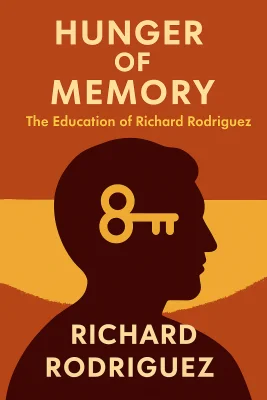
Hunger of Memory
The Education of Richard Rodriguez
Categories
Nonfiction, Biography, Education, Memoir, Autobiography, Biography Memoir, School, Race, College, Read For School
Content Type
Book
Binding
Paperback
Year
2004
Publisher
Dial Press Trade Paperback
Language
English
ASIN
0553382519
ISBN
0553231936
ISBN13
9780553382518
File Download
PDF | EPUB
Hunger of Memory Plot Summary
Introduction
In the quiet corridors of American academia, where the echoes of different languages and cultures converge, Richard Rodriguez emerged as one of the most compelling voices examining the complex relationship between education, identity, and belonging. Born to Mexican immigrant parents in Sacramento, California, Rodriguez navigated the transformative journey from a Spanish-speaking home to the pinnacles of American intellectual achievement, becoming a scholarship student at prestigious institutions including Stanford and Columbia. Rodriguez's story unfolds against the backdrop of the civil rights era and the rise of affirmative action policies in higher education. His journey reveals the profound tensions between public achievement and private loss, between the promises of the American dream and the cultural costs of assimilation. Through his experiences, readers encounter the nuanced realities of language acquisition, religious transformation, and the sometimes uncomfortable privileges that come with educational advancement. His narrative offers insights into the nature of cultural identity, the power and limitations of public policy, and the deeply personal struggles that accompany social mobility in America.
Chapter 1: The Scholarship Boy: Early Years and Academic Transformation
Richard Rodriguez's earliest memories were shaped by the intimate sounds of Spanish echoing through his family's Sacramento home. Born the third of four children to Mexican immigrant parents, young Richard inhabited a world divided between the private warmth of family conversations and the intimidating public sphere where English dominated. His parents, optimistic and ambitious despite their working-class status, had chosen to live among gringos in a neighborhood of white bungalows, far from the Mexican south side of town. The transformation began when Rodriguez entered Sacred Heart Grammar School, staffed by the Sisters of Mercy. On that first day, hearing his name pronounced in English for the first time, he experienced the initial shock of linguistic displacement. The nuns, recognizing the academic potential in their young student, were determined to help him succeed in American institutional life. They understood that mastery of public English was essential for his advancement, even if it meant sacrificing the intimate language of home. The intervention came when three nuns visited the Rodriguez household, diplomatically suggesting that the family speak English at home to help the children's academic progress. This moment marked a crucial turning point in Rodriguez's life. His parents, devoted to their children's success and respectful of the Church's authority, immediately complied. The family's linguistic transformation was swift and irreversible, changing forever the texture of their domestic life. As Rodriguez mastered English, he became increasingly distant from his parents' world. The boy who had once been enveloped by the consoling sounds of Spanish now found himself excelling in a classroom where his parents could not follow. He developed into what Richard Hoggart termed a "scholarship boy," caught between two worlds, successful in public yet increasingly alienated from the intimate culture of his youth. His academic achievements came at a profound personal cost. The more fluent he became in the language of public success, the more difficult it became to communicate meaningfully with his parents. Family dinners grew quieter, conversations more strained. Rodriguez had gained entry into the American mainstream, but he had lost the easy intimacy that had once defined his family relationships. This early experience of educational transformation would shape his understanding of the complex relationship between public achievement and private loss for the rest of his life.
Chapter 2: Language and Belonging: Navigating Between Two Worlds
The linguistic divide in Rodriguez's life created a profound sense of existing between two distinct realms. At home, Spanish had been the language of intimacy, warmth, and belonging. The family's conversations flowed with ease and affection, creating a protective cocoon against the alien public world. When his parents spoke Spanish, their voices carried confidence and authority that disappeared when they struggled with English in public settings. The transition to English as the family's primary language fundamentally altered the emotional landscape of the Rodriguez household. What had once been a refuge of familiar sounds became a space of careful translation and hesitant expression. Rodriguez observed his parents' discomfort as they navigated conversations with their increasingly Americanized children, often ending exchanges with frustrated "never mind" when understanding failed to bridge the growing cultural gap. Rodriguez rejected the later calls for bilingual education, arguing that such programs fundamentally misunderstood the nature of public and private language. He believed that his early experience of linguistic loss, though painful, was necessary for gaining access to American public life. The bilingual education movement of the 1960s and 1970s seemed to him to offer false promises, suggesting that students could maintain their private cultural identity while gaining public success. The author's analysis of language extends beyond mere communication to encompass questions of identity and social membership. He observed that Spanish remained a marker of exclusion in American society, while English represented access to power and opportunity. His parents' accented English marked them as outsiders, while his own fluent English secured his place in academic and professional circles. The complexity of Rodriguez's relationship with language deepened as he encountered other Spanish speakers throughout his life. He felt both kinship and distance from Mexican farmworkers, whose dark skin and Spanish conversations reminded him of possibilities he had rejected. These encounters forced him to confront the choices he had made and the person he had become through his educational journey. Through his linguistic transformation, Rodriguez learned that assimilation into American public life required more than learning new words; it demanded a fundamental reorientation of identity and belonging. The price of public success was the loss of cultural intimacy, a trade-off that shaped his understanding of American social mobility and the persistent tensions between individual achievement and community belonging.
Chapter 3: Complexion and Identity: Confronting Cultural Tensions
Rodriguez's dark complexion became a source of profound anxiety and self-consciousness throughout his youth. His mother's warnings about staying out of the sun reflected broader family concerns about the social implications of dark skin in American society. She feared he would end up looking like los braceros, the Mexican laborers whose brown, sun-weathered faces marked them as members of the lowest social class. The author's family represented Mexico's complex colonial heritage, with relatives displaying a spectrum of complexions and features. While some family members could pass for European, Rodriguez inherited distinctly indigenous features that marked him as visibly different from his lighter-skinned siblings. This physical difference became a source of shame and insecurity during his adolescent years. Family conversations often centered on the advantages of light skin and the disadvantages of dark complexion. Relatives exchanged remedies for lightening skin and expressed relief when children were born fair. These discussions created a family hierarchy based on color, with darker members bearing an unspoken burden of social disadvantage. Rodriguez internalized these messages, developing a deep self-consciousness about his appearance that influenced his behavior and self-image. During his teenage years, Rodriguez attempted to avoid activities that would darken his skin further. He shunned physical education classes, avoided swimming, and remained in the shade whenever possible. This self-imposed isolation from physical activity and outdoor life represented a rejection of his body and, by extension, a rejection of an essential part of himself. The transformation came during a college summer when Rodriguez took a construction job, deliberately exposing himself to the sun and physical labor he had long avoided. This experience marked a turning point in his relationship with his body and his cultural identity. He discovered the pleasure of physical exertion and began to accept his appearance without shame. Rodriguez's journey with his complexion reflects broader American attitudes toward race, class, and social mobility. His story reveals how physical appearance intersects with economic opportunity and social acceptance, creating complex negotiations of identity for those who occupy ambiguous racial categories. His eventual acceptance of his dark skin paralleled his growing understanding of the relationship between appearance, social position, and personal authenticity.
Chapter 4: Catholic Faith: The Evolution of Religious Experience
Rodriguez's Catholic faith provided both continuity and transformation throughout his educational journey. Raised in the Mexican Catholic tradition, with its emphasis on saints, ritual, and communal worship, he experienced religion as a deeply embodied and sensory practice. The family's Catholicism was characterized by whispered prayers, votive candles, and a strong devotion to the Virgin of Guadalupe, who represented their cultural heritage within the universal Church. The transition from Mexican Catholicism to American Catholic education marked another significant transformation in Rodriguez's life. At Sacred Heart Grammar School, the nuns introduced him to a more intellectual and structured approach to faith. The Baltimore Catechism replaced the spontaneous prayers of home, while formal religious instruction emphasized doctrine over devotion. This educational Catholicism proved to be excellent preparation for academic success, teaching Rodriguez to trust authority and value memorization as a path to knowledge. The liturgical life of the Church provided Rodriguez with a sense of belonging that transcended the cultural divisions in his daily experience. As an altar boy, he found himself at the center of sacred drama, participating in Latin rituals that connected him to a universal Catholic tradition. The Latin mass, with its mysterious beauty and solemn ceremony, offered him an aesthetic and spiritual experience that validated his cultural complexity. Rodriguez's faith evolved as he progressed through higher education, becoming more intellectual and less emotionally satisfying. By college, he was reading Protestant theology alongside Catholic doctrine, engaging with religious questions in an academic rather than devotional manner. This intellectual approach to faith reflected his broader transformation from a culture of feeling to a culture of analysis. The liturgical reforms of Vatican II, which Rodriguez encountered as a young adult, represented both loss and change in his religious experience. The replacement of Latin with vernacular languages and the emphasis on congregational participation transformed the mysterious, hierarchical worship of his youth into something more democratic but less transcendent. He mourned the loss of the high ceremonial mass while acknowledging that the new liturgy reflected the changed circumstances of modern Catholic life. Rodriguez's relationship with the Church illustrates the broader challenges facing Catholic Americans in the post-Vatican II era. His story reveals how individual faith must adapt to changing institutional practices while maintaining connection to essential spiritual truths. His continued attendance at mass, despite his reservations about liturgical changes, demonstrates the persistence of religious identity even through periods of doubt and transformation.
Chapter 5: Affirmative Action: Challenging the Minority Label
Rodriguez's experience with affirmative action began in the late 1960s when he found himself suddenly categorized as a "minority student" in graduate school. This labeling came as a surprise to someone who had achieved academic success through traditional merit-based competition. The designation opened doors to fellowships, teaching opportunities, and professional advancement that might otherwise have been unavailable to him. The irony of his situation became increasingly apparent as Rodriguez recognized that his educational achievements had actually separated him from the disadvantaged communities that affirmative action was designed to help. Unlike students who came from poverty or inadequate schooling, he had benefited from excellent Catholic education and family support for his academic ambitions. His "minority" status was primarily racial rather than genuinely reflective of social or economic disadvantage. Rodriguez observed that affirmative action programs often benefited middle-class minority students like himself while doing little for those most in need of educational assistance. The policy's emphasis on racial categories over class differences meant that well-prepared minority students received additional advantages while poorly educated students of all backgrounds continued to struggle. This misalignment between policy goals and actual outcomes troubled him throughout his academic career. The author's critique of affirmative action extended to his observation of how the policy affected both minority and majority students. He witnessed the resentment of white students who felt disadvantaged by racial preferences, while also noting how some minority students developed a sense of entitlement or self-doubt about their achievements. The policy created artificial divisions among students while failing to address the fundamental educational inequalities that limited opportunities for the truly disadvantaged. Rodriguez's decision to reject academic job offers based on his minority status represented a personal protest against what he saw as the contradictions of affirmative action. This choice cost him potential career advancement but allowed him to maintain his integrity and challenge others to confront the policy's limitations. His public criticism of affirmative action, expressed through essays and speaking engagements, established him as a controversial voice in debates about race and education. Through his analysis of affirmative action, Rodriguez revealed the complexity of American racial categories and the limitations of policies based on simplistic understandings of disadvantage. His story illustrates how good intentions can create unintended consequences and how individual experiences can challenge popular assumptions about social policy. His critique remains relevant to ongoing debates about the role of race in American institutional life.
Chapter 6: Public and Private Self: The Writer Emerges
The development of Rodriguez's voice as a writer paralleled his broader journey from private to public identity. His early writing was academic and impersonal, following the conventions of scholarly discourse without revealing the personal struggles that motivated his intellectual interests. The transformation into an autobiographical writer required him to bridge the gap between his private experience and public expression. Rodriguez's decision to write about his family and cultural background represented a violation of the privacy that his parents had always maintained. His mother's distressed reaction to his first autobiographical essay revealed the deep cultural divide between those who see personal experience as inherently private and those who view it as material for public examination. This conflict between family loyalty and artistic expression became a central tension in his literary career. The author's relationship with his reading audience evolved as he began to address issues of education, language, and identity that resonated with broader American experiences. His essays on bilingual education and affirmative action established him as a public intellectual willing to challenge conventional wisdom about multicultural policies. This role required him to speak to audiences who knew nothing of his personal background while drawing on intimate experiences for his authority. Rodriguez's writing process involved a careful balance between revelation and discretion, sharing personal experiences while protecting family privacy. He learned to transform private memories into public discourse, creating a narrative voice that could speak to universal themes through particular experiences. This literary skill allowed him to become a bridge between different cultural communities while maintaining his individual perspective. The loneliness of the writer's life reflected Rodriguez's broader experience of existing between communities without fully belonging to any single group. His work required extended periods of solitude and reflection that separated him further from conventional social relationships. This isolation, though necessary for his artistic development, reinforced the themes of alienation and displacement that characterized his personal story. Through his emergence as a writer, Rodriguez discovered that public expression could provide a form of belonging unavailable through traditional community membership. His readers became his primary audience, replacing the intimate family relationships that had been damaged by his educational journey. This literary community offered intellectual companionship while respecting the distance that made authentic self-expression possible.
Chapter 7: Family Bonds: Navigating Separation Through Education
The Rodriguez family's evolution reflected the broader changes affecting Mexican-American families during the era of expanding educational opportunity. Rodriguez's parents, who had emigrated from Mexico with dreams of providing better lives for their children, watched as education simultaneously fulfilled their hopes and transformed their family relationships in unexpected ways. Rodriguez's mother became the family's main advocate for education, recognizing it as the key to social mobility in American society. Her own limited schooling and work experience had taught her that education could provide her children with opportunities unavailable to previous generations. She encouraged her children's academic achievement even while struggling to understand the world they were entering through their schooling. The father's relationship with his children's education was more complex and ambivalent. Having abandoned his own educational dreams due to economic necessity, he both celebrated his children's success and felt distanced by their achievements. His silence during family gatherings reflected not indifference but rather the difficulty of communicating across the growing cultural divide that separated him from his educated children. Family gatherings became increasingly strained as the children's educational advancement created communication barriers with their parents. Conversations that had once flowed naturally became formal exchanges of information rather than intimate sharing of experience. The parents' pride in their children's achievements was tempered by the recognition that success had made their children strangers to the culture of their upbringing. Rodriguez observed how education affected each family member differently, with some siblings maintaining closer connections to their parents while others, like himself, experienced greater alienation. These differences reflected individual personality traits as well as the varying degrees to which each child embraced educational transformation. The family's experience illustrated the complex and often unpredictable effects of social mobility on intimate relationships. The author's adult relationship with his family was characterized by love tempered by distance and mutual recognition of irreversible change. Holiday gatherings brought the family together physically while highlighting the cultural and intellectual differences that separated them emotionally. Rodriguez's role as the family intellectual created both pride and unease, as relatives celebrated his achievements while struggling to understand his perspective on their shared experiences.
Summary
Richard Rodriguez's journey through American education reveals the profound personal costs and extraordinary opportunities that define the immigrant experience in America. His story demonstrates that the path to public success often requires the sacrifice of cultural intimacy, creating individuals who exist between worlds without fully belonging to any single community. Through his honest examination of language loss, religious transformation, and family alienation, Rodriguez illuminates the complex negotiations of identity that characterize American social mobility. Rodriguez's insights challenge readers to consider the true meaning of cultural diversity and the limitations of policies designed to preserve ethnic identity while promoting social advancement. His critique of bilingual education and affirmative action emerges from lived experience rather than ideological position, offering a perspective that transcends conventional political categories. For anyone seeking to understand the relationship between education and identity in contemporary America, Rodriguez's narrative provides essential insights into the ongoing tensions between individual achievement and community belonging that continue to shape American society.
Best Quote
“But one does not forget by trying to forget. One only remembers.” ― Richard Rodriguez, Hunger of Memory: The Education of Richard Rodriguez
Review Summary
Strengths: The review highlights the author's skilled writing, observant nature, and honest expression. It appreciates the book's exploration of themes such as cultural heritage, identity, and the immigrant experience, particularly in academia. The memoir's ability to resonate with readers of similar backgrounds is also noted as a strength. Overall: The review conveys a positive sentiment towards the book, emphasizing its profound impact on readers who share similar cultural experiences. It recommends the book for its insightful portrayal of the struggle to maintain cultural heritage while navigating assimilation, suggesting it is a valuable read for those interested in multiculturalism and personal identity.
About Author

Richard Rodríguez
Rodríguez delves into the intricate layers of cultural identity and assimilation through his writing, delving into personal and collective experiences. His work, characterized by its autobiographical narrative style, engages with the tension between private and public identities. In "Hunger of Memory: The Education of Richard Rodríguez," he reflects on his journey from a Spanish-speaking child to an assimilated American adult, focusing on the role of education and language in shaping identity. By exploring the sacrifices involved in cultural assimilation, Rodríguez invites readers to consider the complexities of navigating different cultural spheres.\n\nThe author’s early book, "Days of Obligation: An Argument with My Mexican Father," nominated for the Pulitzer Prize, further investigates familial and cultural ties, highlighting the influence of religion and his relationship with his Mexican heritage. Meanwhile, "Brown: The Last Discovery of America" broadens this exploration to encompass themes of race and cultural hybridity, thereby providing a nuanced look at the intersections of ethnicity and identity. These works collectively offer a deep dive into the challenges and richness of living between cultures.\n\nRodríguez's contributions to literature and cultural studies have garnered significant recognition, including the Anisfield-Wolf Book Award and a Peabody Award for his television commentaries. His essays and books resonate with readers interested in the dynamics of ethnicity, race, and language, offering insights into the personal and societal dimensions of cultural assimilation. Through his bio, Rodríguez not only narrates his own experiences but also opens up a dialogue on the broader implications of identity in contemporary society.
Read moreDownload PDF & EPUB
To save this Black List summary for later, download the free PDF and EPUB. You can print it out, or read offline at your convenience.
Hunger of Memory
by Richard Rodríguez
