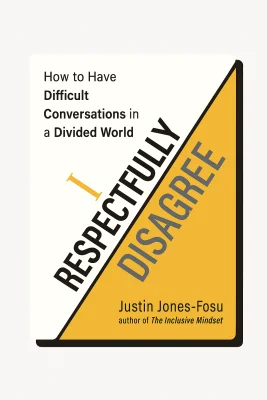
I Respectfully Disagree
How to Have Difficult Conversations in a Divided World
Categories
Nonfiction, Leadership
Content Type
Book
Binding
Paperback
Year
2024
Publisher
Berrett-Koehler Publishers
Language
English
ASIN
152300651X
ISBN
152300651X
ISBN13
9781523006519
File Download
PDF | EPUB
I Respectfully Disagree Plot Summary
Introduction
In a world increasingly polarized by differing opinions, the ability to engage in respectful disagreement has become a rare and precious skill. Every day, we encounter moments where our perspectives clash with others - from casual conversations about movies to heated debates about politics. These moments can either deepen divisions or become opportunities for growth and understanding. The art of respectful disagreement isn't about compromising your values or pretending to agree when you don't. Rather, it's about acknowledging the humanity in others even when their views differ sharply from yours. By learning to challenge your perspective, become a student in conversations, cultivate genuine curiosity, seek the gray areas in seemingly black-and-white issues, and choose respect regardless of difference, you can transform potentially divisive interactions into bridges of understanding. This journey may not always be easy, but the rewards - deeper connections, expanded perspectives, and more effective communication - make it invaluable in our divided world.
Chapter 1: Challenge Your Perspective to Humanize Others
Challenging your perspective is about recognizing that how you see others fundamentally shapes your interactions with them. This first pillar of bridging divides requires us to consciously move from dehumanization to humanization, from seeing others as enemies to seeing them as fellow humans with their own valid experiences. Consider the story of Jack, a former skinhead whose life was defined by hatred and prejudice. He reveled in derogatory labels, using confrontation as his sustenance and validation. Jack's worldview was shaped by childhood neglect and physical abuse from an alcoholic father who blamed "outsiders" for societal problems. Seeking belonging, Jack embraced these hateful views not necessarily because he fully believed them, but because they connected him to a community when he desperately needed one. What ultimately transformed Jack wasn't confrontation or condemnation. Rather, it was encountering people who chose to listen to him without interruption or judgment. These individuals - often the very people he demonized - extended something unexpected: respect. They met his hostility with patience and refused to mirror his bitterness. This paradox created a disquieting question in Jack's mind: How could he hate those who refused to hate him in return? To practice this perspective shift in your own life, start with cognitive reframing - the mental practice of consciously challenging your initial negative thoughts about others. When encountering someone with opposing views, pause before making assumptions. Ask yourself: "What might have shaped this person's perspective?" Remember that everyone's worldview is influenced by their unique experiences, just as yours is. Another practical approach is to practice positive self-talk before and during disagreements. Remind yourself that the person you're engaging with is your equal, worthy of dignity and respect. If it's someone you care about, reinforce that they likely have good intentions, even if their expression seems harmful. The foundation of respectful disagreement begins with this choice: to see others not as objects of contempt but as complex human beings worthy of understanding. By making this perspective shift, you create space for meaningful dialogue even amid profound differences.
Chapter 2: Become a Student in Every Conversation
Being a student in conversations means approaching each interaction with a genuine desire to learn rather than simply to assert your viewpoint. This pillar encourages you to listen more than you lecture, to absorb before you argue, to understand before you seek to be understood. Robert and Michelle exemplify the importance of this approach in their relationship. Robert, a political science professor with exceptional oratory skills, and Michelle, a brilliant economist running her consulting firm, appeared to be the perfect intellectual match. At social gatherings, they captivated audiences with their insights. However, at home, a troubling pattern emerged. Whenever they disagreed, Robert would dominate the conversation, drawing from political theories to validate his points while showing little interest in Michelle's economic perspective. Their most significant disagreement arose when planning a major house investment. Despite Michelle's economic analysis supporting the decision, Robert focused solely on political implications, interrupting her whenever she tried to share her perspective. He would even stand when disagreeing with her, subconsciously trying to dominate the conversation. Eventually, Michelle confronted him: "Our disagreements should be opportunities for us to understand each other's perspectives, not platforms for you to lecture." This wake-up call prompted Robert to seek therapy and make conscious changes. He began catching himself when interrupting Michelle, apologizing when he did, and summarizing her points before sharing his own. These small shifts allowed him to appreciate Michelle's expertise and acknowledge her viewpoint. Their relationship strengthened as they learned to listen, understand, and grow together. To incorporate this principle into your life, practice what researchers call "Level 3 listening." Level 1 is hearing words while preparing your response; Level 2 involves asking a question and hearing the answer; Level 3 means allowing the speaker to share their viewpoint at least three times before joining with your thoughts. This deeper engagement helps you truly understand rather than merely waiting for your turn to speak. Another powerful tool is the simple phrase "Tell me more." This invitation encourages others to elaborate, creating richer dialogue and demonstrating your genuine interest in understanding. Remember that seeking comprehension doesn't mean you must agree - it simply shows you value the other person enough to fully engage with their perspective. By becoming a student in your conversations, you transform potentially confrontational exchanges into opportunities for mutual growth and understanding. The humility to learn from anyone, regardless of whether you ultimately agree with them, is a cornerstone of respectful disagreement.
Chapter 3: Cultivate Curiosity Instead of Making Assumptions
Cultivating curiosity means resisting the natural tendency to fill knowledge gaps with assumptions and instead approaching them with genuine questions and interest. This pillar encourages us to stay open to learning about others rather than quickly categorizing them based on limited information. In 2018, the author found himself grappling with deep-seated anger toward his father who had been largely absent throughout his childhood. Following his parents' divorce when he was just four years old, initial weekend visits gradually dwindled to monthly meetings and eventually years of silence. As an adult in his thirties, he often broke down questioning what he had done to push his father away, particularly struggling on Father's Day when he couldn't even manage to reach out through his overwhelming emotions. Planning a trip to Ghana where his father now resided, the author initially intended to confront him with years of resentment. However, encouraged by his therapist and a supportive cohort, he chose a different approach: to hear his father's story rather than simply unload his pain. Though still expressing his hurt honestly, he committed to viewing his father as a human with his own complexities and to maintaining their connection. During a recent trip, his stepmother showed him an old letter he had never seen before, in which his father had expressed love for him as a child. This shift in approach exemplifies what the author calls avoiding "taking the exit" on people. Just as we might habitually take the same exit on a familiar drive even when we meant to continue straight, we often veer away from truly knowing someone the moment we encounter a challenging difference. Our brains naturally try to conserve energy by filling in blanks with assumptions rather than investing in deeper understanding. To practice greater curiosity in your own disagreements, be aware of what researchers call the "Dotted Line Dilemma" - our tendency to complete sentences and thoughts with our own assumptions rather than seeking more information. When someone says something that triggers disagreement, pause and ask "What do you mean by that?" or "Can you tell me more about how you arrived at that view?" Another practical approach is challenging the "illusion of asymmetric insight" - the belief that we understand others better than they understand us. Recognize that everyone is complex, with multifaceted experiences shaping their views. By acknowledging the limitations of your understanding, you create space for genuine curiosity rather than premature judgment. Cultivating curiosity doesn't mean you must accept or agree with everything you hear. Rather, it's about valuing the journey that led someone to their beliefs, even if you don't value the beliefs themselves. This openness creates space for more respectful and productive disagreements.
Chapter 4: Seek the Gray in a Black and White World
Seeking the gray means acknowledging the complexity and nuance in issues that are often presented as black and white. This pillar encourages moving beyond binary thinking to recognize that many perspectives have validity, even when they appear contradictory. The author shares a personal experience involving a tragic incident between a young man and police officer that ended with the young man's life cut short. Deeply saddened, he shared his thoughts on social media, where his post received widespread support. However, when some responses became harshly critical of all police officers, he felt uncomfortable. Yet when a young white woman cautioned against generalizing, his internal reaction was defensive: "I don't have to be careful on my page." Instead of responding negatively, he reached out privately to understand her perspective. Their conversation proved eye-opening - she was married to a police officer and shared their story of service in their community. Her heartfelt arguments against broad generalizations made him realize he was doing exactly what he disliked - stereotyping an entire group of people. This interaction inspired him to broaden his understanding through what he called his "circles of grace challenge." He read articles, spoke with friends in law enforcement, and even participated in a late-night police ride-along in Charlotte, North Carolina. During just three hours, he was amazed by the multiple roles officers needed to play - from law enforcer to social worker, mental health counselor, bodyguard, and more. To apply this principle in your own disagreements, try viewing others as collaborators rather than competitors. When we approach disagreements as battles to be won, we perceive everything in stark black and white - right versus wrong, with no room for nuance. By reframing the interaction as a teamwork challenge where both parties contribute valuable perspectives, you create space for discovery rather than debate. William Isaacs, author of "Dialogue: The Art of Thinking Together," suggests that true dialogue isn't about one person trying to convince another of position A while the other defends position B. Instead, it's about how they can create position C together - not necessarily a 50/50 compromise, but a new understanding that incorporates elements from both perspectives. By seeking the gray in seemingly black-and-white issues, you transform disagreements from win-lose scenarios into opportunities for mutual discovery and growth. This approach doesn't require abandoning your convictions but expanding your capacity to see validity in different perspectives.
Chapter 5: Choose Golden Respect Regardless of Difference
Golden Respect is the revolutionary concept that everyone deserves respect based on their shared humanity, not because they've earned it or because they agree with you. This pillar forms the foundation for all respectful disagreement, establishing that the way we treat others shouldn't depend on alignment of views. Consider the story of Tasha and her mother Pamela. Tasha had always looked up to Pamela, who naturally took charge in family situations from a young age. When Tasha became a mother herself, she hoped to lean on her mother for support. However, every interaction - phone calls, Sunday dinners, casual meetups - became opportunities for Pamela to provide unsolicited advice about child-rearing. While Tasha respected her mother's wisdom and agreed with some suggestions, the relentless nature of these remarks wore thin. Tasha developed sarcastic responses as a defense mechanism, creating a growing rift between them. Pamela, believing her position as mother entitled her to respect (which to her meant not just listening but implementing her advice), couldn't understand why Tasha seemed resistant. Their once unshakable bond deteriorated until Tasha's husband suggested family counseling. Through counseling sessions, they confronted issues, shared fears, and voiced grievances. Pamela learned to curtail her instinct to intervene, while Tasha practiced communicating her feelings more openly. They realized that while experience is valuable, every generation has its own path, and sometimes it's okay for the young tree to grow in its own direction. To practice Golden Respect in your own disagreements, remember the 10 characteristics that distinguish it from societal views of respect. While society often teaches that respect must be earned, given conditionally, or equated with agreement, Golden Respect holds that everyone deserves respect based on their humanity alone. It allows for being assertive rather than passive, encourages healthy conflict rather than avoidance, and focuses on heart-centered interactions rather than just external behaviors. A practical tool for implementing this principle is the 3FA Framework (Full Acknowledgment) for respectful interactions. The three types are: Full Acknowledgment with Full Agreement (FA+FA), Full Acknowledgment with Partial Agreement (FA+PA), and Full Acknowledgment with No Agreement (FA+NA). Even when there is no agreement, you can still fully acknowledge the other person with phrases like "Thank you so much for sharing your perspective with me." Another powerful technique is the "Thank you, because" approach developed by Stanford researcher Xuan Zhao. Rather than defaulting to "No, because" in disagreements, start with appreciation before sharing your different view. This method has been shown to help people feel heard and increase perceptions of common ground. By choosing Golden Respect regardless of difference, you create space for honest, productive disagreements that honor everyone involved as fully human, even amid profound disagreement.
Chapter 6: Build Bridges Through Meaningful Acknowledgment
Building bridges through meaningful acknowledgment involves recognizing and valuing others' perspectives even when you disagree with them. This pillar focuses on creating connections rather than divisions through intentional communication that shows you truly see and hear the other person. Nelson Mandela exemplified this approach in South Africa during the early 1990s. Released after twenty-seven years in prison for opposing apartheid, Mandela faced the seemingly impossible task of navigating a nation torn by racial tension and violence. South Africa resembled a jigsaw puzzle with pieces forced into wrong places - the African National Congress clashing with the apartheid-supporting National Party and other factions like the Zulu nationalist Inkatha Freedom Party, often with deadly consequences. Despite this chaotic landscape, Mandela stood as an unwavering beacon of peace. His approach wasn't to steamroll opposition but to build bridges through deep listening, acknowledging the fears and concerns of his adversaries, and seeking compromise where everyone could see their threads in the final tapestry. Even after the horrific Boipatong massacre in 1992, when forty-five lives were lost in racial violence, Mandela channeled tragedy into renewed urgency for ending apartheid rather than abandoning negotiations. His patience, empathy, and commitment to acknowledgment ultimately led to the landmark Interim Constitution of 1993 and the first democratic, non-racial elections in 1994, with Mandela becoming South Africa's first Black president. His life demonstrates that meaningful acknowledgment isn't about conquering adversaries but finding common ground and creating a shared future. To practice meaningful acknowledgment in your disagreements, start by fully listening before responding. Research shows that we tend to underestimate how much others benefit from expressing their opposing opinions - everyone wants to be heard. Using the "Power of 3" approach, allow the other person to express their viewpoint at least three times before offering your perspective. Another effective technique is hedging your claims with softeners like "somewhat," "might," or "possible" to create space for dialogue rather than confrontation. Studies have found that communicating with receptiveness makes others view you not only as a more desirable collaborator but also as more persuasive. Consider your communication medium carefully as well. Research indicates that hearing someone's voice rather than reading their words helps humanize them, even when expressing opposing views. While written communication offers time for thought composition, a phone call or in-person conversation may create better conditions for meaningful acknowledgment. By building bridges through acknowledgment, you transform potentially divisive disagreements into opportunities for connection and understanding. This doesn't require abandoning your convictions but expressing them in ways that honor the full humanity of those with whom you disagree.
Chapter 7: Transform Difficult Dialogues with Conversational Receptiveness
Conversational receptiveness means demonstrating through your words and behaviors that you're genuinely open to understanding differing perspectives. This approach transforms difficult dialogues from defensive standoffs into productive exchanges where both parties feel valued and heard. Amy and Bill's story exemplifies the transformative power of receptiveness in a deeply divided community. Amy, an outspoken liberal and social justice organizer, and Bill, a staunch conservative gun store owner, had found themselves on opposite sides of every local and national debate for decades. Their disagreements were often public and heated, creating palpable tension throughout their town. When a controversial bill passed in their state, tensions escalated further, with protests and counterprotests dividing the community. During this contentious period, Bill's wife fell seriously ill. Overwhelmed by managing her healthcare, maintaining his business, and navigating the town's political climate, Bill struggled to cope. It was then that Amy made a remarkable choice. Despite their profound differences, she recognized their shared humanity and decided to bridge the divide by organizing a local fundraiser to help with Bill's wife's medical bills. During the fundraiser, Amy and Bill found themselves truly talking for the first time. They shared their fears, hopes, and dreams for their community, discovering that despite their different ideas about what was best, they both deeply loved their town. While this didn't resolve all their disagreements, it sparked a meaningful change. Their subsequent public debates became less fiery and more respectful. They encouraged their supporters to engage in civil discourse rather than hostile rhetoric and began collaborating on community projects where their goals aligned. To practice conversational receptiveness in your own difficult dialogues, employ the four key strategies outlined in the Harvard Business Review article "Disagreement Doesn't Have to Be Divisive": acknowledge the other person's perspective, express your claims with a dash of uncertainty, frame disagreements positively, and highlight areas of agreement. These approaches signal that you value the exchange even amid disagreement. Before engaging in challenging conversations, do a self-awareness check to ensure you're emotionally and physically prepared. Fatigue, hunger, or preexisting stress can significantly impact your ability to remain receptive. Sometimes, breaking a disagreement into multiple conversations allows everyone time to process and reflect, leading to more thoughtful responses. Setting appropriate boundaries also supports receptiveness. If you notice a conversation veering into personal attacks, it's reasonable to suggest taking a pause until both parties can communicate more constructively. Remember that setting boundaries isn't being disrespectful - it's often the most respectful choice for all involved. By approaching difficult dialogues with conversational receptiveness, you create spaces where disagreement doesn't have to mean division. This practice transforms potentially contentious exchanges into opportunities for mutual understanding and growth, even when fundamental differences remain.
Summary
The journey through respectful disagreement reminds us that how we disagree matters just as much as what we disagree about. By challenging our perspectives, becoming students rather than lecturers, cultivating genuine curiosity, seeking nuance in seemingly black-and-white issues, choosing Golden Respect, building bridges through acknowledgment, and practicing conversational receptiveness, we transform potentially divisive moments into opportunities for connection and growth. As the author powerfully states, "We can vehemently disagree with someone's ideology and still passionately pursue their humanity!" Your next step is simple yet profound: choose one conversation in the coming days where you might normally avoid disagreement or engage disrespectfully. Apply just one pillar from this approach - perhaps asking "Tell me more" instead of making assumptions, or acknowledging the other person's perspective before sharing your own. This small shift can begin a ripple effect, gradually transforming your relationships and contributing to a world where respect amid difference becomes the norm rather than the exception.
Best Quote
“When we don’t understand context, we draw our own conclusions, and that’s the beginning of catastrophic communication.” ― Justin Jones-Fosu, I Respectfully Disagree: How to Have Difficult Conversations in a Divided World
Review Summary
Strengths: The book is described as timely, easy to read, well-organized, and impactful. It effectively uses stories and life experiences, making it relatable and practical. The reviewer appreciates the graphics and finds the advice easy to implement, leading to more assertive and respectful conversations.\nOverall Sentiment: Enthusiastic\nKey Takeaway: The book is considered a "game-changer" for navigating disagreements respectfully and is praised for providing practical tools that enhance communication and understanding, even in contentious situations.
About Author

Justin Jones-Fosu
Justin Jones-Fosu is a global leadership researcher, keynote speaker, and the CEO of Work. Meaningful., a consultancy focused on workplace engagement and inclusion. He helps organizations build cultures where employees feel valued and connected. Jones-Fosu is known for his high-energy presentation style and his ability to discuss difficult topics like diversity and bias without alienating his audience.\n\nHe is the author of I Respectfully Disagree: How to Have Difficult Conversations in a Divided World. In a time of extreme polarization, Jones-Fosu offers a practical framework for engaging with people who hold different views. His approach moves beyond mere tolerance to "respectful disagreement," teaching skills for empathy, perspective-taking, and finding common ground. He encourages leaders to foster environments where diverse opinions can exist without causing toxic conflict.
Read moreDownload PDF & EPUB
To save this Black List summary for later, download the free PDF and EPUB. You can print it out, or read offline at your convenience.
I Respectfully Disagree
by Justin Jones-Fosu
