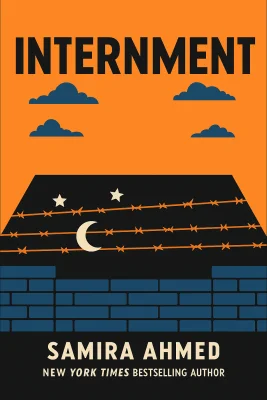
Internment
Categories
Fiction, Science Fiction, Audiobook, Young Adult, Social Justice, Book Club, Contemporary, Realistic Fiction, Teen, Dystopia
Content Type
Book
Binding
Paperback
Year
2019
Publisher
Atom
Language
English
ASIN
0349003343
ISBN
0349003343
ISBN13
9780349003344
File Download
PDF | EPUB
Internment Plot Summary
Introduction
The knock came at midnight, sharp and demanding against the Amin family's front door. Seventeen-year-old Layla froze as two men in dark suits pushed inside, their hands resting near holstered weapons. Behind them, uniformed guards flanked the entrance like sentries of a new world order. This wasn't a random raid—this was systematic, calculated, inevitable. The census forms they'd filled out honestly months ago had become death warrants, marking every Muslim family in America for what the government called "relocation." As her father's poetry books were seized as evidence of sedition and her mother's hands trembled while packing a single bag, Layla understood that the America she'd grown up believing in was dying. The buses were already waiting. The camps were already built. And somewhere in the California desert, behind electrified fences and razor wire, a place called Mobius waited to strip away everything she'd ever known about freedom, family, and the price of resistance.
Chapter 1: The Night They Came: America's Descent into Darkness
The fairy lights on Center Square's gazebo twinkled like dying stars as Layla crept through her small college town's empty streets. Curfew loomed thirty minutes away, but she needed to see David one last time before the world completely unraveled. The book burning's acrid smoke still hung in the air, carrying the ashes of her father's poetry into the desert wind. When she collided with Mrs. Brown on the corner—sweet Mrs. Brown who'd made her childhood birthday cakes—the woman's eyes held no recognition, only fear. The books spilling from her bag told the whole story: works by Muslim authors, including Layla's own father, destined for the flames. Mrs. Brown wouldn't even speak her name. David waited in his neighbors' pool house, surrounded by nautical decorations that felt like relics from a gentler time. Their kisses tasted of desperation and farewell, though neither dared speak it aloud. Outside, flashlight beams cut through the darkness as the Patriot's Alliance prowled the streets, neighbors hunting neighbors in the name of safety. The knock that shattered their front door came with boots and badges and the cold certainty of law. Two suits, four guards, and a clipboard that reduced the Amin family to numbers on a registry. Layla's father—professor, poet, American citizen—was thrown to the floor like a common criminal. Her mother's screams echoed off suburban walls that had once felt safe. Ten minutes to pack a life. Ten minutes to say goodbye to everything they'd built in the country that had promised them freedom. As the door slammed shut behind them, Layla glimpsed a shadow running toward their police car—was it David? The distance swallowed her scream as America's newest prisoners disappeared into the night.
Chapter 2: Behind Electric Fences: Life Under Surveillance
The train car reeked of fear and industrial disinfectant, carrying its cargo of American Muslims through landscapes that grew increasingly barren. Layla pressed her face to the grimy window, watching her old life disappear into heat mirages and hostile desert. The other passengers sat in stunned silence, clutching single suitcases that contained all they'd been allowed to keep. Mobius spread across the valley like a geometric cancer, its rows of FEMA trailers—euphemistically called "Mercury Homes"—arranged with military precision. Fifteen-foot fences topped with razor wire enclosed everything, while watchtowers loomed against the Sierra Nevada's beauty like concrete tombstones. The Director, a red-faced man in an ill-fitting suit, welcomed them with threats disguised as hospitality. The barcode burned into Layla's wrist felt like a brand, invisible under UV light but permanently marking her as property of the state. Their new home measured smaller than her old bedroom—a cramped trailer where cameras watched their every breath and guards counted their steps. Her parents tried to make tea taste like comfort, but nothing could wash away the dust that coated everything like a second skin. Roll call came at dawn, their flesh-and-blood existence reduced to numbers scanned from scarred wrists. The minders—fellow Muslims who'd sold their souls for scraps of authority—smiled their treacherous smiles while herding their own people like livestock. Unity. Security. Prosperity. The camp's motto echoed from speakers like a prayer to false gods. At night, searchlights swept the grounds in mechanical rhythms, and the electric fence hummed its deadly lullaby. Some internees already spoke of making the best of things, of creating community within their cage. But Layla watched the stars through razor wire and knew that survival wasn't enough. Not when America itself was dying just beyond their reach.
Chapter 3: Seeds of Resistance: Finding Allies in Captivity
Ayesha's laughter cut through the cafeteria's oppressive silence like sunlight through storm clouds. The Pakistani girl with the sharp wit and sharper tongue had arrived on the same transport, and their friendship bloomed fast in the forced intimacy of shared imprisonment. Over meals of institutional slop, they traded stories of the outside world and dreams of the one waiting beyond the fence. The garden project felt like mockery at first—prisoners growing vegetables for their captors—but Layla saw something else in the turned earth. Here, under the pretense of agricultural therapy, whispers could travel between the blocks. Soheil, the Egyptian boy with his grandmother's ancient curses, brought news from the Arab quarters. The hijabi girls from Block Eight carried their own quiet defiance beneath their headscarves. Corporal Reynolds haunted the edges of Layla's vision, a puzzle wrapped in an Exclusion Guard's uniform. The compass tattoo on his forearm spoke of different directions, different truths than the ones he was paid to enforce. When he found her breaking curfew in the garden, searching desperately for some crack in their prison's foundation, he could have reported her. Instead, he walked her home in silence that felt like understanding. The Director's weekly announcements grew more shrill as outside pressure mounted. The Resistance hadn't forgotten them—protesters were gathering at the gates, their chants carrying hope across electrified wire. But with hope came danger. People began disappearing in the night, taken to places that existed beyond maps and mercy. The whisper network carried their names like prayers for the dead. In the shadow of the mountains, under stars that still shone free, seeds of rebellion took root in desert soil. Not all cages could hold the human spirit. Not all walls could silence the voice that cried out for justice. And in a seventeen-year-old girl's heart, courage grew like flowers in poisoned ground, beautiful and impossibly strong.
Chapter 4: Words as Weapons: Broadcasting Truth from Within
The burner phone felt like contraband salvation in Layla's palm as Jake—she'd stopped thinking of him as Corporal Reynolds—slipped her into the Hub's abandoned kitchen. David's voice across the crackling connection was home and heartbreak combined, carrying news of the protests growing outside Mobius's gates. The world hadn't forgotten them, but silence was the Director's greatest weapon. Words became bullets in her war against erasure. Late at night, by the glow of her tiny desk lamp, Layla wrote the stories the Director wanted buried. The woman tased at orientation for speaking truth to power. The families torn apart by bureaucratic cruelty. The children who no longer laughed as they used to, their innocence ground to dust under the wheels of American fascism. Jake's multiple identities unraveled slowly—not just guard but guardian, following orders that originated from shadows deeper than the Director's authority. He smuggled her stories to the outside world, where they exploded across social media and news networks like grenades of conscience. Anonymous journalists picked up her words and broadcast them into living rooms where Americans still believed in justice. The Director's rage grew nuclear as his perfect façade cracked under scrutiny. High Command descended like vultures, their dark suits and darker purposes making even the guards nervous. Lockdowns multiplied. Surveillance tightened. But the stories kept flowing, each one a crack in the wall of silence that imprisoned them all. When David risked everything to see her again, sneaking into the camp disguised as a sanitation worker, their stolen moments in a supply closet felt like prayers in a cathedral. His hands shook as he kissed her goodbye, knowing that love had become another form of resistance. Outside, the Occupy Mobius movement swelled with righteous anger, their voices joining the chorus that demanded justice for America's lost children.
Chapter 5: The Director's Fury: Brutality and Breaking Points
The Red Cross visitors arrived with clipboards and good intentions, their white shirts and naive hope making them easy marks for the Director's performance. He'd transformed Mobius into a stage set, all scrubbed surfaces and forced smiles, while the real story hid behind closed doors and sealed lips. The model prisoners played their parts, knowing that defiance meant disappearance. But Layla and her friends had planned their own show. As the Mess filled with officials and observers, they sat at Table One with empty trays and raised fists, refusing to eat the lies along with their dinner. The Director's mask slipped as Soheil spoke truth to cameras, his young voice carrying across the desert and into the world's consciousness. The first blow cracked more than Soheil's nose—it shattered the illusion of benevolent imprisonment. Blood splattered the institutional floor as the Director's true nature emerged, snarling and vicious. The Red Cross observers shouted about Geneva Convention violations while guards moved to restore order through violence. In the chaos, Soheil disappeared into medical custody, his broken body a testament to the cost of courage. Layla's own reckoning came in a windowless room that smelled of bleach and fear. The Director's hands left bruises that would heal, but his words carved deeper wounds. He knew about David, about her family, about every vulnerability that made her human. His threats hung in the air like toxic smoke, promising consequences that extended far beyond her own pain. The holding cell became her world—four walls and a cot where nightmares lived in broad daylight. Jake's absence felt like abandonment until she learned the truth: he'd been ordered to let her suffer, to gather evidence of the Director's crimes. In the algebra of resistance, her pain was the price of justice. Some equations demanded blood to balance.
Chapter 6: Standing Together: The Final Protest
The power outage hit Mobius like a gift from rebel angels, plunging the camp into darkness that felt like possibility. In the confusion, Layla and her conspirators slipped from the Mess and gathered at the fence, where cameras waited to capture their defiance. Thirty-three voices raised in silent protest, their fists cutting through the night like signals to the watching world. Beyond the wire, the Occupy movement surged forward, their solidarity crackling across the divide between free and captive. David's voice carried over the chaos, shouting his love into the darkness where she stood surrounded by razor wire and broken dreams. For one perfect moment, the barriers seemed meaningless—they were together in spirit if not flesh. But the Director's madness had reached its breaking point. As the crowd pressed against the fence—still electrified, still deadly—Soheil appeared among the protesters. Layla's scream tore through the air as he leaped toward the wire, his body arcing through space like a shooting star burning out against the sky. The crack of electricity and his final cry would echo in her nightmares forever. The aftermath brought martial law to their prison paradise. Parents disappeared in midnight raids while children cowered in trailers that felt more like tombs. The Director's private security roamed like wolves, untouchable and unaccountable. When they came for Layla's parents, the broken teacup on their kitchen floor became a monument to another family destroyed by American hate. In her cell, nursing fresh bruises from the Director's latest interrogation, Layla felt the weight of every choice that had brought them to this moment. Jake's guilt-ridden face told her the truth—she'd been bait in a trap designed to catch bigger fish. The knowledge tasted like betrayal, but revolution always demanded sacrifice. The question was whether hers would be worth the price.
Chapter 7: Beyond the Gates: The Cost of Freedom
The final confrontation came with morning light and the scent of revolution in the desert air. Layla led her people toward the fence one last time, their voices raised in songs of freedom that had echoed through history's darkest hours. Behind them, the camp emptied as internees chose between safety and dignity, between survival and the chance to be truly human again. The Director emerged from his bunker with wild eyes and desperate threats, her parents held hostage against the crowd's growing courage. But his private army was crumbling, guards peeling away as conscience finally overcame orders. When his own security detail refused to fire on children, his empire collapsed into dust and screaming fury. The gunshot that ended it all came from unexpected hands. As the Director raised his weapon toward Layla's defiant figure, Jake threw himself between them, taking the bullet meant for her heart. His blood soaked into the same earth that had drunk Soheil's life, another sacrifice on freedom's altar. The compass tattoo on his cooling arm pointed toward a true north he'd finally found too late. The gates opened like a prayer answered, though the price had been written in young blood and shattered lives. Families stumbled into sunlight that felt like resurrection, blinking away the dust of imprisonment as news crews captured their liberation for a world that had finally remembered its conscience. The Exclusion Laws crumbled under public outrage, but the scars would never fully heal. Walking through those gates, Layla carried Jake's courage and Soheil's sacrifice in her heart alongside her parents' love and David's devotion. The America waiting outside was different now—wounded but perhaps wiser, forced to confront the fascism that had grown like cancer in its own body. Freedom was never free, but some prices were worth paying. Some cages were meant to be broken, no matter the cost.
Summary
In the end, Mobius fell not to armies or politicians but to the simple power of human dignity refusing to bow. Layla Amin walked free with dust in her hair and revolution in her blood, carrying the stories of those who didn't survive to see justice done. The camps closed, the laws changed, and America began the long work of healing from its self-inflicted wounds. But the barcode remained invisible on her wrist, a permanent reminder that freedom is fragile and courage is the only currency that matters when democracy dies in darkness. The ghosts of Mobius—Jake with his compass pointing toward truth, Soheil with his grandmother's curses turned to blessings, all the nameless ones who disappeared into America's night—whisper still in the desert wind. Their sacrifice bought more than liberation; it purchased a lesson written in blood and tears: that ordinary people can do extraordinary things when they refuse to accept the unacceptable, when they choose to be the lightning that splits the sky of oppression. In a world where cages multiply like cancer, they proved that some birds are meant to fly free, no matter how high the walls or how sharp the wire that tries to clip their wings.
Best Quote
“The scariest monsters are the ones who seem the most like you.” ― Samira Ahmed, Internment
Review Summary
Strengths: The review highlights the importance of the book's themes, which include Islamophobia, xenophobia, and the politics of fear. The reviewer appreciates the novel's attempt to address these critical issues and acknowledges the need for more fiction exploring such topics, particularly from affected populations. Weaknesses: The execution of the novel is criticized, particularly after the initial 20% which was described as gripping. The reviewer found the main character's focus on her boyfriend, the storyline involving a guard, and the dialogue to be problematic. Additionally, the characters were perceived as lacking depth, and the overall premise felt shallow and akin to an after-school special. Overall: The reader expresses disappointment, stating that the book did not meet their expectations despite its important content. They feel the novel failed to effectively convey its message and did not resonate with them, ultimately rating it poorly.
About Author

Samira Ahmed
Ahmed explores the complex intersections of identity and social justice through her compelling narratives. Her writing often features young Muslim and South Asian protagonists, who navigate the challenges of contemporary America while confronting issues such as Islamophobia and systemic inequality. Ahmed's work is characterized by a hopeful perspective, which she infuses into her stories, providing readers with a sense of possibility amid adversity.\n\nHer books, including the bestselling "Love, Hate & Other Filters" and the dystopian novel "Internment", engage readers with their timely exploration of cultural and political themes. Ahmed's method involves crafting narratives that delve into the liminal space between childhood and adulthood, focusing on the growth and resilience of her characters. She has also made her mark in the world of comics as the first South Asian Muslim writer for Ms. Marvel, further expanding her narrative reach.\n\nReaders of Ahmed's books benefit from her nuanced portrayal of identity struggles and her emphasis on social activism. By interweaving personal and societal challenges, her work resonates with those interested in young adult fiction that addresses real-world issues. Her stories not only entertain but also inspire and educate, making her a significant voice in literature that encourages empathy and understanding across cultural boundaries. This bio highlights her role as an influential author whose contributions continue to impact young adult literature.
Read moreDownload PDF & EPUB
To save this Black List summary for later, download the free PDF and EPUB. You can print it out, or read offline at your convenience.
Internment
by Samira Ahmed
