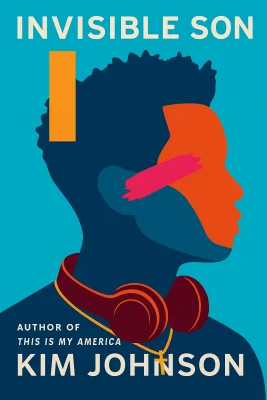
Invisible Son
Categories
Fiction, Audiobook, Mystery, Young Adult, Thriller, Family, Social Justice, Contemporary, Realistic Fiction, Friendship
Content Type
Book
Binding
Library Binding
Year
2023
Publisher
Random House Books for Young Readers
Language
English
ASIN
0593482115
ISBN
0593482115
ISBN13
9780593482117
File Download
PDF | EPUB
Invisible Son Plot Summary
Introduction
# Invisible Chains: A Story of Justice and Survival The ankle monitor's red light pulses in the darkness of Andre Jackson's bedroom like a digital heartbeat, marking time in a life that feels suspended between guilt and innocence. Outside his window, the Whitaker family's perfect house stands silent in the Portland rain, its manicured lawn hiding secrets that could destroy everything Andre thought he knew about justice, friendship, and survival. Seventeen years old and fresh from juvenile detention, Andre carries the weight of crimes he didn't commit—stolen goods planted in his gym locker, fingerprints on evidence he never touched, and a best friend who vanished without explanation just days before Andre's trial. Eric Whitaker disappeared like smoke, leaving behind only questions and a backpack full of lies that sent Andre into the system's grinding machinery. Now, as a deadly pandemic locks down the city and his grandfather fights for life on a ventilator, Andre must navigate the suffocating restrictions of electronic monitoring while searching for the truth about Eric's disappearance. The invisible chains around his ankle are nothing compared to the web of deception that threatens to bury him alive, but Andre Jackson is about to learn that sometimes the only way to break free is to make yourself impossible to ignore.
Chapter 1: The Weight of Electronic Shackles
The black device clamped around Andre's ankle weighs exactly four ounces, but it might as well be a boulder chained to his soul. Marcus Smith, his probation officer, drives through Northeast Portland's rain-slicked streets while explaining the rules that will govern the next six months of Andre's life. No parties. Nine PM curfew. GPS tracking every step. The monitor must be charged two hours daily, a digital leash that never lets him forget his place in the system's hierarchy. Andre presses his face against the passenger window, watching his neighborhood blur past like scenes from someone else's life. The coffee shops where his father's bookstore used to thrive have been replaced by boutique galleries. The corners where Mr. Green used to watch over neighborhood kids now host food trucks serving twelve-dollar sandwiches to young professionals who moved here for the "authentic urban experience." Gentrification has scrubbed away the community that raised him, leaving behind a sanitized version of home that feels more foreign than juvenile detention ever did. Marcus pulls into the driveway of Andre's grandparents' weathered house, its peeling paint and sagging porch a stark contrast to the renovated homes sprouting around it like expensive weeds. Grandma Jackson waits on the steps wearing plastic gloves, her rose-scented embrace smaller and more fragile than Andre remembers. Two months in MacLaren Youth Correctional Facility have taught him to measure time in stolen moments and lost connections, but seeing his grandmother's worried face makes the real cost of his imprisonment crystal clear. Grandpa Jackson stands in the doorway wearing his faded Vietnam Vet hat, his patient eyes carrying the weight of watching his grandson dragged away in handcuffs for crimes that made no sense to anyone who actually knew Andre. The old man's silence speaks volumes about the questions that have haunted the family since the arrest—how stolen jewelry ended up in Andre's gym locker, why his fingerprints were on a backpack he'd never seen before, and most troubling of all, why Eric Whitaker had vanished just when his testimony could have cleared Andre's name. Marcus conducts his official tour of the house, marking exits and windows on his tablet while explaining the electronic monitoring system with the practiced efficiency of someone who's done this hundreds of times before. Andre lifts his pant leg to show his grandparents the ankle monitor, watching their faces confirm what he already knows—this isn't freedom, it's just a more comfortable cage. The device will track his every movement, alert authorities if he strays beyond approved boundaries, and serve as a constant reminder that the system considers him guilty regardless of what any court might have said about rehabilitation and second chances. The irony tastes bitter in his mouth. He's home but not free, surrounded by family but isolated by suspicion, carrying the burden of someone else's crimes while the real thieves walk free in the house next door. The Whitaker family's sprawling home looms beyond the narrow strip of grass that separates their properties, its windows glowing with the warm light of people who sleep peacefully at night, unburdened by the weight of stolen time and manufactured guilt.
Chapter 2: Disappeared: When Best Friends Vanish
The Whitaker house feels like a mausoleum when Andre crosses the threshold, its polished floors and expensive furniture radiating the kind of perfection that money can buy but never quite feels lived-in. Sierra Whitaker waits in the foyer with her crooked smile and gold hoop earrings, beautiful in the way that makes Andre's chest tight with longing and loss. But something's different in her dark eyes—a wall that wasn't there before, a distance that has nothing to do with the months he spent locked away. Paul Chase emerges from the basement like he owns the place, his hands wrapped around Sierra's waist with casual possession. The rich white boy who reported the robbery that sealed Andre's fate now claims the girl Andre's loved since childhood, his smug smile a reminder that some people take whatever they want while others pay the price. Sierra's apologetic glance only twists the knife deeper, her silence speaking volumes about the choices she's made while Andre rotted in detention. Mr. Whitaker pulls Andre aside with the practiced concern of a politician who's learned to weaponize empathy. His blue eyes carry the weight of carefully constructed gratitude—he funded Andre's legal defense, secured the community monitoring program that kept him out of longer detention, positioned himself as the white savior who rescued a troubled Black youth from the system's worst impulses. But his generosity comes with invisible strings, the understanding that Andre owes him silence, compliance, and eternal gratitude for scraps of justice doled out like charity. The conversation turns to Eric, and Andre's blood chills at the carefully rehearsed lies that spill from Mr. Whitaker's mouth. Eric had suffered a breakdown, been hospitalized for psychiatric evaluation, then ran away rather than face the intensive treatment his condition required. The story sounds polished, practiced, designed to explain away the convenient timing of Eric's disappearance. Andre nods and accepts the burden of another secret, another weight to carry in the suffocating silence that surrounds his friend's vanishing act. Mrs. Whitaker appears with a plate of homemade cookies and the kind of maternal warmth that feels performative, her concern for Andre's wellbeing layered over something harder and more calculating. She speaks about Eric with the resigned sadness of a mother who's done everything possible for a troubled child, but Andre catches the relief in her voice when she mentions that Eric is "getting the help he needs" at an undisclosed location where he can't be reached or contacted. Later, alone in his room, Andre stares at the list Sierra left him—every song they'd ever made reaction videos to, written in her curly handwriting with a note that says "Been watching these since you've been gone." The paper trembles in his hands as he realizes how much has been stolen from him, how many relationships have been poisoned by the lies that sent him away. Eric's absence feels like a missing limb, a phantom pain that throbs with every breath. His best friend since childhood, the one person who could have cleared his name, had vanished like smoke just when Andre needed him most.
Chapter 3: Pandemic Isolation and Family Loss
The fever hits Andre's household like a sledgehammer in the dark, the virus spreading through his family with the ruthless efficiency that's been decimating communities of color across Portland. First his father, then his grandmother, then Andre himself, their bodies burning with COVID-19 while the city locks down around them like a tomb. But when Grandpa Jackson starts coughing, Andre truly understands the meaning of terror. Robert Jackson has been the anchor of their family for seventy-eight years, a man who survived segregation, economic hardship, and the slow gentrification that transformed their Northeast Portland neighborhood from a thriving Black community into something unrecognizable. Now he lies in a hospital bed connected to machines that breathe for him while his family watches through computer screens, helpless and heartbroken by pandemic restrictions that reduce their most sacred moments to pixelated approximations of human connection. Andre presses his face against his bedroom window, staring across the narrow strip of grass at the Whitaker house where Sierra recovers from her own bout with the virus. Even in the midst of his family's crisis, he can't stop thinking about Eric's disappearance, the timing that feels too convenient to be coincidental. The Whitakers maintain their careful distance, Mrs. Whitaker emerging periodically in elaborate protective gear to tend her rose garden while Mr. Whitaker holds campaign meetings on video calls from his home office. The irony makes Andre's stomach turn—Mr. Whitaker is running for city commissioner, positioning himself as a voice for community healing and racial justice while the Black teenager next door carries the burden of crimes committed by his own adopted son. The campaign signs sprouting across the neighborhood promise "Real Change" and "Justice for All," empty slogans that taste like ash in Andre's mouth as he watches his grandfather slip away through a computer screen. Hospital visits become impossible under lockdown restrictions, reducing their final goodbye to a video call that cuts out just as Grandpa Jackson's heart stops beating. Andre performs CPR when the old man's condition deteriorates at home, his lifeguard training kicking in as he fights to keep the most important person in his life breathing. But the ambulance arrives in full protective gear, their faces hidden behind masks that make them look like soldiers in a war zone, and Andre knows with crushing certainty that he's losing the battle against forces too large and indifferent to care about one family's pain. The funeral feels like a fever dream—four people standing around a grave while the pastor's voice echoes across empty grass. No church family, no military honor guard, no community to celebrate a life well-lived. Just the hollow sound of loss amplified by pandemic restrictions that strip death of its dignity and meaning. Sierra appears like an angel in flowing black, her presence the only thing that keeps Andre from completely falling apart as dirt falls on his grandfather's coffin like rain on a roof that will never shelter him again.
Chapter 4: Unraveling the Web of Lies
The lie unravels with a single phone call to Legacy Emanuel Hospital, where Dr. Vitale's confused voice cuts through months of carefully constructed deception like a knife through silk. She's never heard of Eric Whitaker, never treated any teenager matching his description, never seen the psychiatric evaluation that supposedly triggered his placement in residential treatment. The Whitaker family's story about Eric's disappearance collapses like a house of cards, leaving Andre staring at his phone with trembling hands and a growing certainty that his best friend's vanishing act was anything but voluntary. Andre's mind races back through the months leading up to his arrest, searching for clues he might have missed in Eric's increasingly erratic behavior. His friend had been different in those final weeks—more secretive, more anxious, constantly looking over his shoulder as if he expected trouble to find him around every corner. Andre had attributed it to typical teenage drama, but now he wonders if Eric had known something was coming, if he'd seen the trap being set and tried to warn Andre in ways that were too subtle to understand. The theft ring had been sophisticated, targeting wealthy families at house parties throughout Portland's affluent neighborhoods with inside knowledge that could only have come from someone who moved easily through different social circles. Eric had been at every party, charming and popular, the kind of kid who could slip through crowds without raising suspicion. But he'd also been the one person who could have cleared Andre's name, the witness who'd seen the real perpetrators plant evidence in Andre's gym locker. Andre pulls out his laptop and begins searching for any trace of Eric's digital footprint, following threads that lead nowhere and dead ends that feel deliberately constructed. Social media accounts have gone silent, email addresses bounce back as inactive, and even the art website where Eric had been selling his digital paintings shows no recent activity. It's as if Eric Whitaker has been systematically erased from existence, his online presence scrubbed clean by people who understand the importance of controlling information. The more Andre digs, the more questions multiply like cancer cells. Why hadn't the Whitakers filed a missing person report? Why did they tell different stories to different people about Eric's whereabouts? And why did Mr. Whitaker seem so confident that Eric wouldn't be returning to testify, as if he knew something about his adopted son's fate that he wasn't sharing with the police or the courts? A pattern begins to emerge from the fragments of information Andre can gather, a picture of systematic manipulation that goes far beyond simple theft. Eric had been involved in the crime ring, but not as a mastermind—he'd been used, exploited by older kids who understood how to weaponize his desire to fit in and his desperate need for money. When the operation began to unravel, someone had needed a scapegoat, and Andre fit the profile perfectly. A Black teenager from a working-class family, already struggling with the stigma of his parents' separation and his grandmother's declining health, he had access to the gym where the stolen goods were found and had been present at the parties where the thefts occurred. Most importantly, he was expendable in a way that the wealthy white kids who'd orchestrated the scheme were not.
Chapter 5: Rising Up: Truth in the Streets
The murder of George Floyd ignites something in Portland that had been smoldering for generations, and Andre watches from his bedroom window as protests erupt across the city like wildfire. The ankle monitor around his leg keeps him tethered to his house, a prisoner of the system even as thousands march for the justice he's been denied. But the irony of his situation becomes a powerful narrative tool when he starts broadcasting live commentary about the demonstrations, his authentic voice and personal experience with injustice drawing viewers who see in his story everything the protests are fighting against. Sierra appears at his window one evening, her face flushed with the excitement of someone who's discovered activism like a new religion. She's been attending the protests with her siblings, carrying signs and chanting slogans about Black lives mattering, the naivety of her enthusiasm both touching and infuriating to Andre, who's lived the reality she's just beginning to understand. Her invitation for him to join the marches feels like salt in an open wound—some people get to choose when they fight the system, while others are born into the battle. Andre's YouTube channel explodes as his audience grows, drawn to the powerful contradiction of a young Black man who's been railroaded by the system but still finds ways to speak truth to power. His videos go viral, attracting attention from activists, journalists, and politicians who see in his story a perfect example of everything the protests represent. But his growing platform also attracts unwanted attention from Jim Adkins, a probation officer with a reputation for harassing young Black men, who begins showing up at Andre's house unannounced with threats about violations and new charges. The harassment is clearly designed to intimidate Andre into silence, but it only makes him more determined to expose the corruption he's uncovered. Through careful investigation and surveillance, Andre discovers that Jim Adkins is working with Mr. Whitaker to sabotage the protests themselves, infiltrating the demonstrations with provocateurs who will incite violence and give authorities an excuse to crack down on the movement. The plan is sophisticated and cynical—fake protesters will blend in with legitimate demonstrators, then engage in property destruction and confrontations with police, with the resulting chaos blamed on Black Lives Matter organizers. For Mr. Whitaker, the scheme serves multiple purposes, boosting his political career by positioning him as a law-and-order candidate who can restore peace to Portland while distracting attention from his family's secrets. It also gives him leverage over Andre, who could be arrested for violating his probation if he tries to expose the plot. But Andre has learned something important from Eric's disappearance—sometimes the only way to survive a rigged game is to flip the table entirely. On the night of a major bridge demonstration, Andre makes a choice that changes everything. He deliberately disables his ankle monitor and heads downtown, knowing he's risking everything but unable to stand by while the movement is sabotaged from within. Armed with evidence of the Whitakers' lies and proof of the plot to disrupt the protests, he prepares to go live on his YouTube channel and tell the world everything he knows about Eric's disappearance, the conspiracy that framed him, and the ongoing efforts to silence both him and the broader movement for justice.
Chapter 6: The Garden of Secrets
The confrontation begins with a phone call that Andre broadcasts live to over a million viewers, the numbers climbing as protesters fill the Burnside Bridge behind him and reporters share links across social media platforms. Mr. Whitaker's voice carries practiced political concern when he answers, but Andre can hear the underlying tension as he cuts straight to the heart of the matter without wasting time on pleasantries. "Why'd you do it?" Andre asks, his voice steady despite the chaos around him. "You allowed an infiltration of the protest to happen so federal agents could take over the city for your own political gain. You're supposed to represent us, but really you don't have our backs." The accusation hangs in the air as Andre watches his viewer count explode, news outlets picking up the stream while people in the crowd hold up their phones to capture this moment of reckoning between a teenager with an ankle monitor and one of Portland's most prominent political figures. Mr. Whitaker's denials sound hollow even to him, his carefully constructed facade beginning to crack under the pressure of live broadcast scrutiny. "Is that what you and Eric did? Talk?" Andre pushes harder, knowing he has to force something incriminating into the open. "Eric wanted to turn himself in. He wasn't okay with me being set up. Then what, you shut him up for good when he threatened your political aspirations?" The silence that follows is deafening, and Andre can practically hear Mr. Whitaker's mind racing, calculating his options, trying to figure out how much Andre actually knows about Eric's fate. When the politician finally speaks again, his voice has gone cold and calculating, the mask of concern replaced by something harder and more dangerous. "How much would it take for you to keep this quiet?" Mr. Whitaker finally asks, his desperation bleeding through the phone line like blood through bandages. But Andre has moved beyond the reach of bribes and threats, his grief for his grandfather and his fury at the system's betrayal burning away any fear of consequences. "You can't pay me off. That what you did to Eric?" Andre's question cuts to the bone, and Mr. Whitaker's response confirms his worst fears about his missing friend's fate. "I'm not worried about what Eric has to say," the man replies, and those words carry the weight of terrible finality. The live stream captures everything, the evidence spreading across the internet faster than any attempt at damage control can contain it. When Sierra finally takes the stage to read Eric's letter aloud, her voice breaking as she reveals the truth about their family's abuse and Eric's desperate attempt to protect Andre, the crowd's response is electric. This isn't just about one corrupt politician or one wrongfully convicted teenager—this is about a system that protects the powerful while sacrificing the vulnerable. But even as the truth finally emerges, the most important question remains unanswered. If Eric isn't at boarding school, if he hasn't run away, if he's been silenced to protect the Whitakers' secrets, then where is he? The answer comes from Luis, the youngest Whitaker child, who finally breaks his silence about what he witnessed the night Eric disappeared—the sounds of an argument, the sudden silence, the sight of Mr. Whitaker burning Eric's belongings in the backyard while his wife planted new roses in the front garden.
Chapter 7: Breaking Free from Systemic Chains
The shovel hits something solid three feet beneath Mrs. Whitaker's prized roses, and the officer's subtle gesture sends a chill through everyone watching as crime scene tape goes up around the house that had seemed so perfect from the outside. Andre stands with Sierra and her siblings as their adoptive parents are led away in handcuffs, the Whitakers maintaining their innocence even as the evidence mounts against them, their carefully constructed facade crumbling beyond any hope of repair. The discovery of Eric's body beneath the rose garden sends shockwaves through Portland's political establishment, Mr. Whitaker's campaign collapsing overnight as supporters flee and details emerge about the systematic abuse and manipulation that had characterized their household for years. The boarding school applications, the false police reports, the elaborate cover-up—all of it unravels under the scrutiny of investigators who can no longer ignore the truth that's been hidden in plain sight. For Andre, vindication comes in the form of a brief court hearing conducted over Zoom due to pandemic restrictions, the judge who had sentenced him to community monitoring now facing the uncomfortable reality that an innocent teenager had been railroaded by a system that prioritized convenience over justice. "In light of new evidence," she says, her voice carefully neutral, "all charges against Andre Jackson are hereby dismissed. The court extends its apologies for the miscarriage of justice that has occurred." The words should feel triumphant, but Andre finds himself thinking about Eric, who will never receive such vindication. His best friend died trying to do the right thing, killed by the people who were supposed to protect him, and no court ruling can bring him back or undo the trauma his death has caused. Marcus personally removes the ankle monitor that had defined Andre's existence for months, the device falling away like shed skin and leaving behind only a pale band of unmarked flesh where it had rested. Andre's YouTube channel explodes during the protests, growing from a few hundred followers to over a million as his story spreads across social media and news outlets clamor for interviews. Book publishers call with offers, activist organizations invite him to speak at rallies, and the invisible boy becomes impossible to ignore. But fame feels hollow without Eric to share it, and Andre finds himself drawn to the memorial garden that replaces the Whitakers' rose bushes, where Sierra plants new flowers in Eric's memory while the empty house stands as a monument to the secrets that money and privilege can hide. The trials drag on for months, the Whitakers' lawyers arguing that Eric's death was an accident, that the cover-up was motivated by panic rather than malice. But the evidence is overwhelming—the systematic abuse, the elaborate deception, the cold calculation that characterized their response to their son's death. Andre testifies at both trials, his words carrying the weight of someone who survived the system's attempt to destroy him, speaking about Eric's courage and the price of truth in a world designed to silence inconvenient voices.
Summary
Andre Jackson's journey through the labyrinth of juvenile justice reveals the brutal mathematics of American inequality, where privilege multiplies options while poverty and prejudice divide them into smaller and smaller fractions. His ankle monitor becomes a metaphor for the invisible shackles that bind Black youth to cycles of suspicion and punishment, even when their only crime is trusting the wrong people and existing in a system that sees their skin color as evidence of guilt. The search for Eric Whitaker transforms from a quest for friendship into a reckoning with betrayal that cuts deeper than any legal sentence, teaching Andre that some freedoms cannot be granted by judges or probation officers but must be seized through the courage to speak truth even when that truth threatens the comfortable lies others need to sleep at night. In a world where justice is rationed by race and class, the ultimate liberation comes not from removing physical restraints but from refusing to carry the shame that others would place on your shoulders, demanding that your voice be heard and your humanity recognized in a society determined to render you invisible.
Best Quote
“George Floyd is a name I shouldn’t know. Like so many names I shouldn’t know.” ― Kim Johnson, Invisible Son
Review Summary
Strengths: The review highlights the book's powerful and thought-provoking narrative, emphasizing the protagonist Andre's honest and realistic voice. The story is described as heart-wrenching and deeply affecting, with a conclusion that is particularly impactful. The reviewer praises the book as a "MUST READ" and commends the author for delivering another compelling work. Overall: The reader expresses a highly positive sentiment towards the book, awarding it five stars. The review recommends the book as a significant and engaging read, particularly noting its relevance and emotional depth. The book is appreciated for its exploration of themes such as justice, identity, and resilience.
About Author

Kim Johnson
Morrison explores the complex dynamics of identity and cultural heritage through narratives that blend historical and contemporary elements. By weaving intricate stories that address race, community, and personal growth, she crafts a unique tapestry that resonates with readers on multiple levels. Her method involves a deep dive into the psyche of her characters, thereby illuminating broader societal issues. This approach allows Morrison to challenge readers to reflect on their own experiences and perceptions, fostering a deeper understanding of the human condition.\n\nIn her books, Morrison employs rich symbolism and lyrical prose to convey her themes, encouraging readers to engage with the text beyond the surface level. The author’s early book that gained significant attention, although not specified here, highlights her ability to intertwine personal and collective histories. Readers benefit from her work as it broadens their perspectives, offering insights into the complexities of cultural identity and belonging. Her narratives often serve as a mirror, prompting introspection and dialogue among diverse audiences.\n\nThis short bio underscores Morrison’s influence in the literary world, where her contributions have left an indelible mark. Her writing is celebrated for its profound impact on discussions of race and identity, offering valuable perspectives that continue to shape contemporary discourse. By delving into her narratives, readers are invited to explore the rich layers of meaning that define her work, making her books essential reading for those interested in the intersections of history, culture, and personal identity.
Read moreDownload PDF & EPUB
To save this Black List summary for later, download the free PDF and EPUB. You can print it out, or read offline at your convenience.
Invisible Son
by Kim Johnson
