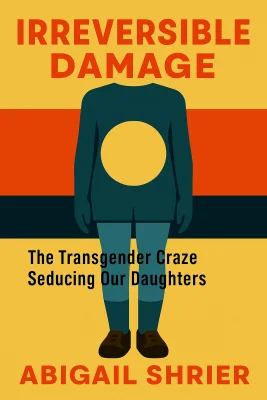
Irreversible Damage
The Transgender Craze Seducing Our Daughters
Categories
Nonfiction, Psychology, Science, Parenting, Politics, Audiobook, Feminism, Sociology, Cultural, Gender
Content Type
Book
Binding
Hardcover
Year
2020
Publisher
Regnery Publishing
Language
English
ISBN13
9781684510313
File Download
PDF | EPUB
Irreversible Damage Plot Summary
Introduction
# The Sudden Shift: Adolescent Girls and the Transgender Identity Crisis Lucy had always been what her mother described as a "girly girl." Growing up, she loved Disney princesses, played dress-up with feminine characters, and had an array of pets she tenderly cared for. Though academically gifted, Lucy struggled socially in middle school, finding it difficult to navigate the complex social hierarchies among girls. When Lucy entered a liberal arts college in the Northeast, she was invited to state her name, sexual orientation, and gender pronouns during orientation. Within a year, Lucy had begun testosterone treatments, shaved her head, adopted boys' clothes and a new name. This dramatic transformation wasn't preceded by any childhood history of gender dysphoria. Lucy's story represents a phenomenon sweeping across Western nations: an unprecedented surge in adolescent girls suddenly identifying as transgender. Between 2016 and 2017, the number of gender surgeries for natal females in the U.S. quadrupled, with biological women suddenly accounting for 70 percent of all gender surgeries. In the UK, there was a 4,400 percent rise over the previous decade in teenage girls seeking gender treatments. These young women are navigating a perfect storm of social media influence, educational ideology, family disruption, and medical intervention that promises solutions but may create lasting consequences. Understanding this phenomenon requires examining not just individual stories, but the broader cultural forces shaping how young women see themselves and their futures.
Chapter 1: Digital Echoes: How Online Communities Shape Identity
Chase Ross, a twenty-eight-year-old Canadian female-to-male transgender YouTuber, has garnered over 10 million views on his channel since 2006. With a septum ring, lip ring, cat tattoos, and an impressive beard from nearly a decade on testosterone, Chase offers advice, encouragement, and personal confessions to gender-confused adolescents. His physical transformation is compelling—abundant facial and body hair, a widened nose, squared jaw, and deepened voice—all convincingly masculine results of testosterone. Chase discovered his own transgender identity through YouTube at age fifteen. "I was watching probably cat videos on YouTube when I was fifteen and I stumbled across a trans person," he recalls. "After watching a couple of these videos, I was like 'Omigod, everything in my life makes sense.'" This pattern of discovery through social media has become common among today's transgender youth. Platforms like YouTube, Instagram, Tumblr, Reddit, and TikTok have become hubs for sharing physical transformations, offering tips for procuring hormones, and commiserating about the challenges of being transgender. Trans influencers typically promote several key messages: If you think you might be trans, you are; binders are a great way to start exploring your identity; testosterone is amazing and may solve all your problems; parents who don't support your trans identity don't truly love you; and if you're not supported in your trans identity, you'll probably kill yourself. These influencers rarely mention the dangerous side effects of binding—fractured ribs, collapsed lungs, breathing problems—or the permanent consequences of testosterone, including infertility and increased cancer risks. Instead, they celebrate the pain of hormone injections as proof of commitment to the cause. For adolescent girls struggling with anxiety, depression, and social difficulties, these online spaces offer a ready-made explanation for their distress and a clear path to resolution. The internet doesn't just provide information—it creates a powerful feedback loop that reinforces transgender identification, offering not just answers but a sense of belonging and purpose that may be missing from their offline lives.
Chapter 2: Classroom Ideology: Schools and the Gender Revolution
In June 2019, the California Teachers Association voted to allow trans-identified minor students to leave campus during school hours to obtain gender hormone treatments without parental permission. This wasn't an isolated incident but rather the logical extension of gender ideology already permeating schools across America. California now mandates gender identity and sexual orientation instruction for all K-12 students, explicitly barring parental opt-out. This was achieved through clever legal maneuvering: while California law allows parents to opt their children out of sexual health education, the legislature exempted materials related to "gender identity, gender expression" and "sexual orientation" from that opt-out. In schools across America, kindergarteners are taught that biological sex and gender often come apart. They're introduced to the "Genderbread Person" and "Gender Unicorn," taught that they might have a "girl brain in a boy body" or vice versa. Middle schoolers participate in activities like "Imagining a Different Gender," where teachers instruct students to stand up, turn around twice, and sit down again, then say, "I want each of you to imagine that you are a different gender." High school curricula often include explicit sexual content alongside gender ideology. One mother, Faith, noticed her seventh-grade daughter seemed to be taking the rainbow fervor at school with unusual intensity. "They had a festival. They had a booth where they were painting rainbow flags on everybody." By the end of seventh grade, Faith's daughter had decided she was "asexual," and then "trans." Perhaps most concerning is the policy in many schools to conceal a student's transgender identity from parents. As one fifth-grade teacher explained: "Even parents that come in and say, 'I don't want my kid to be called that.' That's nice, but their parental right ended when those children were enrolled in public school." This creates an environment where children can live double lives—using one name and set of pronouns at school, and another at home—transforming educational institutions into ideological battlegrounds where young minds are shaped without parental knowledge or consent.
Chapter 3: Families Under Fire: Parents Navigate Uncharted Waters
Katherine Cave's twelve-year-old daughter Maddie announced she was transgender after a school assembly featuring a transgender fifteen-year-old. Though Maddie had never shown signs of gender dysphoria in childhood—she had never been a tomboy and had never expressed discomfort with her body—Katherine tried to keep an open mind. She called ten different therapists, all of whom told her the same thing: "At this age, kids know who they are." Following the therapists' advice, Katherine began using Maddie's new male name and pronouns. She even bought her daughter a binder to compress her breasts after being warned that otherwise, Maddie would resort to dangerous methods like duct tape. But rather than improving, Maddie's mental health seemed to worsen. Katherine grew increasingly concerned when the gender clinic recommended puberty blockers, medications that would artificially halt Maddie's development. Katherine began researching these medications and was disturbed by what she found. "When you've stopped puberty with puberty blockers and go straight to cross-sex hormones, you absolutely guarantee that you will be infertile," she discovered. Meanwhile, without Katherine's knowledge, Maddie's school had begun using her new name and pronouns. On an overnight trip, Maddie had even been allowed to sleep in a boys' bunk. As Katherine tried to share her concerns with her daughter's school, she was treated "like the biggest transphobe." She found herself increasingly isolated, unable to find support within her progressive social circles. "This whole thing has shifted how I read, what I believe, the whole concept of an expert," Katherine said. "I used to think association guidelines were based upon consensus or experts, I just don't believe anything anymore. I can't tell you what my politics are anymore." These parents find themselves caught between their concern for their children's long-term wellbeing and the accusation that questioning their child's transgender identity makes them transphobic or abusive. Their struggle reveals a heartbreaking reality: families are being torn apart by ideological forces that prioritize affirmation over careful consideration of a child's future.
Chapter 4: The Affirmation Trap: Medicine's Rush to Transform
For transgender-identified adolescent girls, medical transition typically begins with puberty blockers like Lupron. Originally used to treat precocious puberty and in the chemical castration of sex offenders, Lupron is now prescribed to halt normal puberty in gender dysphoric minors. Gender doctors present it as a neutral "pause button," claiming that if the blockade is withdrawn, normal puberty should resume. But imagine being a fifteen-year-old girl with no pubic hair, no period, no breasts, and no sexual development while all your peers are maturing. The psychological impact is far from neutral. The statistics are striking: in clinical trials, 100 percent of children put on puberty blockers proceeded to cross-sex hormones. This contrasts sharply with the roughly 70 percent of gender dysphoric children who naturally outgrow their dysphoria when no intervention is made. Puberty blockers carry serious risks, including suppression of normal bone density development, greater risk of osteoporosis, loss of sexual function, interference with brain development, and possibly suppressing peak IQ. If an adolescent moves from puberty blockers to cross-sex hormones, infertility is almost guaranteed. Access to testosterone has become increasingly easy. In 2007, there was one gender clinic in the United States; today, there are well over fifty. Many provide testosterone on a first visit on an "informed consent" basis, with no referral or therapy required. One young woman, Helena, simply drove to Chicago, claiming to be on a sleepover, and walked out of a clinic the same day with a prescription for testosterone—without even needing a therapist's note. The current standard of care requires mental health professionals to "affirm" not only the patient's self-diagnosis but also the accuracy of the patient's perception, abandoning the fundamental therapeutic principle of exploration and curiosity in favor of immediate validation.
Chapter 5: Bodies in Transition: Medical Interventions and Hidden Costs
Helena was eighteen when she drove six hours to Chicago, telling her parents she was at a sleepover. At an informed-consent clinic, she recited the script she had memorized from online forums: "I've always known I was a boy. I used to rip off my dresses as a child." Though these statements weren't true, they worked. After a brief consultation, she left with a prescription for testosterone, no therapist letter required. The euphoria she felt after her first injection was overwhelming—finally, she was on her way to becoming her true self. The physical changes came quickly. Within months, her voice deepened, facial hair appeared, and her body fat redistributed away from her hips and thighs. The testosterone elevated her mood and gave her a newfound sense of confidence. But there were unexpected effects too—painful vaginal atrophy, intense mood swings, and a cloudy mental state that made it difficult to think clearly. After a year on testosterone, Helena began planning for "top surgery"—the removal of her healthy breasts. The surgeon required no psychological evaluation; her own desire for the procedure was considered sufficient diagnosis. The final step for many is "top surgery"—a double mastectomy that removes healthy breast tissue to create a more masculine-appearing chest. This irreversible procedure is now being performed on adolescents as young as thirteen. The long-term health consequences of these interventions are significant. Testosterone increases the risk of heart attack, stroke, and certain cancers. After five years, many females on testosterone are advised to undergo hysterectomy due to increased risk of reproductive cancers. What makes these medical risks particularly concerning is the lack of evidence that transition resolves the underlying distress. No long-term studies show reduced rates of depression or suicidality after medical transition, yet vulnerable young women are making irreversible decisions before their brains have fully matured, consequences that will follow them for a lifetime.
Chapter 6: Voices of Regret: Stories from Those Who Turned Back
Benji was thirteen when she discovered transgender content on Tumblr. An anxious, intellectually precocious girl who felt uncomfortable with puberty, she was immediately drawn to the stories of females who had transformed themselves into males. When she quietly announced herself as trans online, she received an overwhelming "love bombing" from strangers. "There's just so much positive reinforcement that there's just no room at all for any criticism or any thought that something bad could be happening," she recalled. By fifteen, Benji had changed her name and pronouns at school without telling her parents and became president of her school's Gay-Straight Alliance. After high school, Benji planned to start testosterone and undergo top surgery. But a visit to a gay male friend undergoing chemotherapy for leukemia changed her perspective. "He was like, 'I'm literally going to die if I don't have this medical procedure,'" she recalled. "Why would you put yourself in the position to be under the knife and under anesthesia with all these possible complications when you're not literally going to die from having breasts?" This question struck Benji deeply. At nineteen, she detransitioned, keeping her masculine name but reclaiming her female identity. Helena's story followed a similar path. After initially experiencing euphoria from testosterone, she began having doubts as the physical changes accumulated. When a friend sent her a video montage of pictures from the previous year, Helena was shocked. "I just looked at them and I was like, 'This is not me.... What have I done?'" She had a panic attack, dropped out of college, and realized she had alienated her family and friends for an identity that wasn't solving her problems. These detransitioners describe the transgender community as an environment that discourages questioning, creating a cultlike atmosphere that makes it nearly impossible to express doubts or explore alternative perspectives. Their shared message is clear: medical professionals failed them by affirming too quickly, and the promised transformation brought new problems without resolving the underlying pain that drove them to seek change in the first place.
Chapter 7: Finding Balance: Support Without Surgical Solutions
Buck Angel, a famous transgender adult who transitioned decades ago, watches the current wave of adolescent transitions with growing alarm. "They see candy. They see something that can make them feel better about themselves because all these trans kids have YouTube channels, social media, and I think that's influencing. We're idiots if we don't say that's influencing. It's 100 percent influencing," he says with conviction born of experience. Despite being transgender himself, Buck believes the current approach to transgender youth is dangerously misguided. "So when we see these kids all speaking the same language, all doing the same thing, all wanting to transition right away, they think it's a fix. That's what they think. They think 'It's going to fix everything about the way I feel about myself.'... And that's the dangerous part." Parents seeking a more balanced approach have found several strategies helpful. Some have completely removed smartphones from their daughters' lives, recognizing that social media is often the primary vector for transgender contagion. Others have reasserted parental authority, setting boundaries while maintaining connection. Some families have taken more dramatic steps, physically moving their daughters away from peer groups and schools promoting gender ideology. One family moved from a progressive city to an immigrant community that shared their values. Their daughter, who had been binding her breasts and insisting she was transgender, gradually abandoned her trans identity in the new environment. Mental health professionals who take a more cautious approach emphasize the importance of comprehensive assessment before any medical interventions. They explore underlying issues like trauma, autism spectrum traits, social difficulties, and internalized homophobia that might contribute to gender dysphoria. Rather than immediately affirming, they help adolescents understand that discomfort with one's body or rejection of gender stereotypes doesn't necessarily mean one is transgender. Perhaps most importantly, these balanced approaches emphasize that there's nothing wrong with being female. The balanced path requires courage from parents willing to withstand accusations of transphobia, from clinicians willing to risk professional censure, and from young women brave enough to question the narrative that their female bodies need fixing.
Summary
Throughout this exploration of the transgender phenomenon among adolescent girls, we've witnessed a perfect storm of factors converging to create a public health crisis. Social media algorithms that feed vulnerable teens an endless stream of transition content, schools that introduce and reinforce gender ideology without parental knowledge, and a medical establishment that has abandoned caution in favor of immediate affirmation have all contributed to an unprecedented surge in young women rejecting their female bodies. What makes this situation particularly heartbreaking is how many of these girls are seeking escape from very real pain, navigating a culture saturated with impossible expectations and finding in transgender identity a seemingly perfect solution. But as the growing voices of detransitioners reveal, medical transition often creates new problems without resolving the underlying distress. The path forward requires courage to question prevailing narratives and compassion for young women struggling to find their place in a complex world. By balancing support with careful exploration, we can help these girls discover that womanhood itself is not the problem to be solved, but rather a journey worth embracing. The stories shared here remind us that behind every statistic is a human being deserving of thoughtful care, and that sometimes the most loving response is not immediate affirmation but patient guidance toward authentic self-acceptance without irreversible consequences.
Best Quote
“I can’t think of any branch of medicine outside of cosmetic surgery where the patient makes the diagnosis and prescribes the treatment. This doesn’t exist.” ― Abigail Shrier, Irreversible Damage: The Transgender Craze Seducing Our Daughters
Review Summary
Strengths: The reviewer acknowledges that Shrier presents some important points, particularly regarding the need for careful medical supervision during the transition process. Shrier does not deny the existence of transgender individuals but critiques the speed and oversight of transitions. Weaknesses: The reviewer is skeptical about the existence of the problem Shrier describes, finding it unrealistic that medical transitions occur too hastily. They also disagree with Shrier's stance on social transitioning and her opposition to LGBT+ education, arguing that education and safe spaces are crucial. Overall: The reviewer is not convinced by Shrier's arguments, perceiving them as exaggerated and lacking realism. They suggest that fostering education and safe spaces for gender exploration is more beneficial than Shrier's proposed solutions.
About Author

Abigail Shrier
Shrier investigates contemporary social issues with a focus on challenging prevailing norms and exploring identity. Her incisive analysis and elegant prose aim to provide clarity on complex societal dynamics, engaging readers in deep exploration of contentious topics. Her method involves weaving personal narratives with rigorous research, allowing her to scrutinize and elucidate modern cultural phenomena. This approach is evident in her notable book "Bad Therapy: Why the Kids Aren't Growing Up," which delves into the impact of modern therapeutic practices on youth, sparking both conversation and controversy.\n\nBy scrutinizing the psychological and cultural dynamics affecting today's youth, Shrier offers insights that are particularly beneficial to readers interested in social criticism and cultural critique. Her work invites an audience that seeks to understand the underlying themes influencing contemporary society, including the exploration of identity and the societal challenges faced by younger generations. Through her contributions to the Wall Street Journal and her published works, Shrier has established herself as a formidable voice in investigative journalism, thereby cementing her status as a thought leader in the discourse on modern societal challenges.
Read moreDownload PDF & EPUB
To save this Black List summary for later, download the free PDF and EPUB. You can print it out, or read offline at your convenience.
Irreversible Damage
by Abigail Shrier
