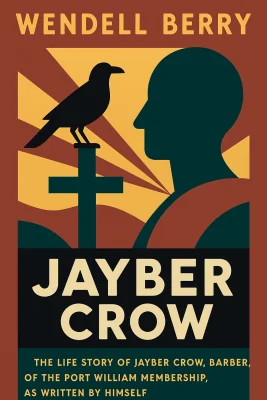
Jayber Crow
Categories
Fiction, Classics, Audiobook, Historical Fiction, Poetry, Literature, Book Club, Novels, Adult Fiction, Literary Fiction
Content Type
Book
Binding
Paperback
Year
2001
Publisher
Counterpoint
Language
English
ISBN13
9781582431604
File Download
PDF | EPUB
Jayber Crow Plot Summary
Introduction
# The Barber's Testament: A River of Memory and Faithful Love In the winter of 1937, a young man named Jayber Crow walked through flood-ravaged Kentucky carrying everything he owned in a cardboard box. He had fled seminary school, abandoned his calling to preach, and now found himself face-to-face with Burley Coulter in a johnboat on the risen waters. "Port William's fresh out of a barber," Burley said with a grin, and in that moment, Jayber's wandering life found its anchor. What followed was not the story of a man who cut hair, but of a witness who watched a community live and die across four decades. From his barber chair, Jayber would observe the secret rhythms of Port William—its loves and losses, its quiet heroisms and devastating failures. He would discover that sometimes the deepest calling comes not from God's voice, but from the simple act of staying put and paying attention to the world around you. Most of all, he would learn that love can sustain a man even when it can never be spoken, even when it must remain forever a secret marriage of the heart.
Chapter 1: The Orphan's Journey: From Seminary Doubts to Barbershop Calling
The terrible winter of 1918 took everything from three-year-old Jonah Crow. Ice gorges crushed the Kentucky River valley, and in that chaos of frozen destruction, both his parents died within hours of each other. The boy found himself crouched behind a kitchen stove, refusing comfort from strangers, until Aunt Cordie appeared—not really his aunt, but close enough—a woman in black who gathered him up without asking permission. At Squires Landing, where the Daggetts ran a small store on the Kentucky River, Jonah found a world that seemed eternal. Steamboats whistled and docked, Uncle Othy taught him to fish, and Aunt Cordie showed him how to read the rhythms of river life. But even this refuge proved temporary. When both his guardians died before he turned twelve, the boy became an orphan twice over, shipped back to The Good Shepherd orphanage with no family left to claim him. The orphanage filled his head with notions of calling and purpose. Brother Whitespade saw potential in the quiet, bookish boy and steered him toward the ministry. When Jonah claimed to have received "the call" to preach, it opened doors to privileges and eventually a scholarship to Pigeonville College. But the calling proved hollow. In literature classes, he discovered a hunger for books that had nothing to do with sermons. The questions that had driven him to claim a false calling now tormented him with their persistence. The crisis came in Professor Ardmire's office, where the old Greek scholar listened to his doubts with knowing eyes. "How can I preach if I don't have any answers?" he finally asked. "How can you?" Ardmire replied simply. The professor's final words haunted him: "You have been given questions to which you cannot be given answers. You will have to live them out—perhaps a little at a time." That winter day, he walked away from his scholarship and his supposed destiny, carrying nothing but questions into an uncertain world.
Chapter 2: Waters of Return: Finding Home in Port William's Heart
The flood of 1937 changed everything and revealed everything. As Jayber walked through the devastated landscape, he felt the pull of something deeper than memory—a current as persistent as the risen river itself. On the backwater of Willow Run, he encountered Burley Coulter standing in a johnboat, raising fish baskets with the calm efficiency of a man completely at home in his world. Burley remembered the boy from Squires Landing and offered more than a ride to Port William—he offered a future. The barbershop stood crooked and weathered in the town's center, a narrow two-story building that seemed to lean with age. Upstairs was a single empty room; downstairs, a barber chair waited like a throne. Mat Feltner, the town's banker, looked Jayber straight in the eye and offered terms: three hundred dollars for the shop, a third down, the building as collateral. When Jayber pulled crumpled bills from his shoe and jacket lining—his entire savings—neither man showed the slightest surprise. That first night, sleeping in the barber chair with newspaper for warmth, he felt something he hadn't experienced since childhood: the sensation of being exactly where he belonged. The barbershop became more than a place of business; it transformed into Port William's unofficial town hall, where men gathered not just for haircuts but for the democracy of conversation. From his chair, Jayber watched the rhythms of Port William unfold. He learned the names and histories of families who had lived along the river for generations. Winter nights brought music when the Mixter brothers arrived with their instruments, filling the small space with fiddle tunes that seemed to call up the very soul of the place. In those moments, Jayber understood he had found not just a livelihood but a calling as the keeper of Port William's stories.
Chapter 3: Silent Devotion: The Secret Marriage of Unrequited Love
She first caught his attention during a Vacation Bible School afternoon in the churchyard. Mattie Chatham was playing with the youngest children, her own daughter Liddie among them, guiding their games with a generosity that was both childlike and utterly maternal. In that moment, watching her complete presence with the children, Jayber felt the world fall away beneath his feet. Love didn't pierce his heart like an arrow—instead, everything else simply disappeared, leaving him suspended in air with only the ache of longing. But Mattie belonged to another. She had married Troy Chatham, the golden boy athlete whose handsome face masked a restless ambition that would never be satisfied. Troy was all surface flash and self-regard, the kind of man who assumed the world existed to admire him. Where Mattie was grounded and present, Troy was always performing, always reaching for something just beyond his grasp, chasing dreams of farming success that led him deeper into debt. The breaking point came at a Christmas dance at Riverwood roadhouse. Jayber had gone with Clydie Greatlow, the red-haired waitress who offered him companionship in the nightlife of Hargrave. Then he looked up and saw Troy dancing with a blonde woman who was not his wife. Troy caught his eye and winked, raising his hand in a crude gesture of masculine conspiracy. The sight hit Jayber like a physical blow—not just the betrayal of Mattie, but the assumption that he and Troy were somehow alike. Sick with revulsion, Jayber fled through a bathroom window into the cold night, leaving Clydie and his car behind. He walked twelve miles home through the darkness and falling snow, and by the time he reached Port William, he had made a decision that would define the rest of his life. In the darkness of that long walk, Jayber married Mattie Chatham in his heart. He spoke vows to the night air, promising to be the faithful husband she deserved but would never know she had—a marriage of one, a covenant with love itself.
Chapter 4: Community's Keeper: Witnessing a World's Transformation
Pearl Harbor changed everything, even in a place as small as Port William. Miss Gladdie Finn hung out her washing with tears streaming down her face. "Oh, honey, boys will be killed," she said, and Jayber understood that for her, this new war was just the old one returning. The town developed a new kind of conversation, full of careful omissions and unspoken fears. When someone was shipped overseas, his father would simply announce, "Well, he has gone across the waters," and nothing could reduce the strangeness and dreadfulness of that phrase. Jayber himself faced the draft with a mixture of dread and duty. His conscience objected to war, but it also objected to making an exception of himself while Port William's sons marched off to die. The choice was taken from him when a military doctor discovered a heart murmur that made him 4-F, unfit for service. The shame of being rejected stung worse than the fear of being accepted had. The years accumulated like sediment, each season adding its layer to Jayber's understanding of what it meant to belong somewhere. He learned that Port William existed in the space between memory and hope, sustained by stories that connected the living to the dead. His customers aged and died, their sons took their places in his chair, and gradually he became not just the town's barber but its unofficial keeper of secrets and sorrows. The old ways were disappearing. Steamboats no longer called at the river landings. Small farms gave way to larger ones, and young people left for cities and never returned. The school consolidated, the stores closed one by one, and Port William began its long, slow slide toward invisibility. Yet something essential persisted—a quality of attention, a way of knowing people and places that couldn't be measured in dollars. Jayber discovered that his true calling had never been to preach salvation but to practice it—the salvation that comes from paying attention, from staying put long enough to see the patterns that connect all things.
Chapter 5: River Sanctuary: Retreat to Nature's Sacred Embrace
By 1969, the modern world had finally caught up with Jayber's anachronistic barbershop. A government inspector arrived with clipboard and regulations, declaring his simple operation non-compliant with health codes. The cost of bringing the shop up to modern standards would have bankrupted him, and the principle of the thing—having strangers dictate how he could serve his neighbors—offended his deepest beliefs about community and freedom. Rather than submit to bureaucratic tyranny, Jayber chose exile. Burley Coulter offered him the use of a small camp house on the Kentucky River, a simple two-room cabin that sat on a narrow bench of land between the water and the wooded hillside. The move represented more than a change of address; it was a spiritual transformation. For the first time in his adult life, Jayber lived according to his own rhythms rather than the demands of others. Life by the river restored something essential to his spirit. He woke each morning to the sound of water flowing past his door, a constant reminder of time's passage and nature's persistence. He planted a garden, built a small boat, and learned to sustain himself from the river's bounty. His old customers found their way down the wooded path to his new location, where he continued cutting hair in exchange for voluntary donations—a perfect expression of the gift economy that had always been his true calling. Hidden in the hills above the river lay a tract of old-growth forest that Athey Keith had preserved as his "nest egg"—fifty acres of virgin timber saved for times of desperate need. Jayber discovered this sanctuary and found in it a spiritual home more sacred than any church. The forest spoke to him in languages older than words, and it was here, by chance or deeper design, that he began encountering Mattie during her own solitary walks. These meetings were never planned, never spoken of, never acknowledged by the outside world. In the cathedral silence of the old forest, they walked together without need for words, sharing the wonder of discovering beauty that needed no explanation.
Chapter 6: The Nest Egg's Fall: Love's Final Recognition and Forgiveness
The final chapter unfolded with terrible inevitability. Troy Chatham's relentless pursuit of agricultural success finally collapsed under the weight of debt and environmental destruction. Faced with bankruptcy and the loss of everything he had worked for, he made the ultimate betrayal—selling the timber rights to Athey's beloved Nest Egg, the sacred grove that had been preserved for generations. Jayber arrived at the forest to find massive logging equipment tearing through the ancient trees, reducing centuries of growth to marketable timber in a matter of hours. The sound of chainsaws and bulldozers violated the cathedral silence he had known and loved, while Troy stood among the fallen giants, grinning with desperate pride at the money this destruction would bring. In that moment, watching the man he had hated for forty years reduced to selling his wife's inheritance to pay his debts, Jayber felt his anger transform into something deeper—pity, understanding, and finally, forgiveness. The destruction of the Nest Egg coincided with Mattie's final illness. Cancer had claimed her body just as progress had claimed the land she loved, and she lay dying in a sterile hospital room while the trees that had sheltered their secret meetings crashed to earth. When Jayber finally found the courage to visit her, she greeted him with full knowledge of what he had meant to her all these years. Her dying eyes held recognition and gratitude as she offered him the smile he had never seen—a gift that covered him "all over with light." She knew, had always known, about his faithful devotion, his secret marriage to her in his heart, his role as the husband she deserved but could never have. Her final smile was both blessing and release, freeing him from the burden of unrequited love while affirming its sacred worth. In her dying, Mattie gave Jayber the only thing she could—acknowledgment of the love that had sustained them both through the long years of silence.
Chapter 7: Testament of Faithful Hearts: The River's Eternal Teaching
As the old barber sits by the river in his final years, the water continues its ancient conversation with the banks, carrying away the debris of human ambition while nurturing the seeds of what might yet grow. Jayber Crow has outlived most of his generation, witnessed the transformation of his world from rural community to suburban sprawl, and learned that love's true measure is not in its fulfillment but in its faithfulness. His story stands as testament to the power of quiet devotion in a world obsessed with noise and spectacle. Through decades of humble service—cutting hair, digging graves, tending his garden—he discovered that meaning comes not from grand gestures or public recognition, but from the daily practice of love in all its forms. His secret marriage to Mattie Chatham, known only to himself and finally to her, proved more real and enduring than many conventional unions blessed by church and state.
Summary
Jayber Crow's journey from orphaned wanderer to Port William's faithful witness reveals the profound difference between having a career and finding a calling. His true ministry was never meant for pulpits but for the barber's chair, where he served as confessor, witness, and keeper of the community's deepest truths. In choosing fidelity over fulfillment, service over success, he found a peace that the world's promises could never deliver. The river flows on, carrying its eternal message that all things pass, but love—patient, faithful, undemanding—remains the one force capable of redeeming even the most broken of worlds. Through his secret devotion to Mattie and his faithful service to Port William, Jayber learned that some questions can only be answered by living them, that some callings come not as voices from heaven but as the quiet recognition of where you're needed most. In a world increasingly drawn to movement and change, he found his purpose in the radical act of staying put, of bearing witness to the ordinary grace that sustains small places and the people who choose to call them home.
Best Quote
“Telling a story is like reaching into a granary full of wheat and drawing out a handful. There is always more to tell than can be told.” ― Wendell Berry, Jayber Crow
Review Summary
Strengths: The review highlights the book's emotional depth, character development, and the protagonist's integrity. The narrative is praised for its ability to bring ordinary lives to life with rich history and emotion. The prose is described as beautiful, and the book is noted for its ability to evoke reflection and a deeper appreciation of life. Overall: The reader expresses a profound connection to the book, finding it both soul-stirring and haunting. The novel is highly recommended, with the reviewer increasing their rating from four to five stars, suggesting it deserves even higher. The book is seen as a timeless story that grows in impact with each reading.
About Author

Wendell Berry
Berry interrogates the intricate relationship between humans and the land through his work as an author, poet, and essayist. His rural Kentucky upbringing deeply informs his exploration of sustainable agriculture and ecological responsibility. His writing often critiques industrial agribusiness, advocating for traditional farming methods that preserve community and natural cycles. His fictional works, such as "Nathan Coulter" and "Jayber Crow," delve into the life of the fictional Port William community, illustrating the complexities of rural life over generations. Meanwhile, his essays like "The Unsettling of America: Culture & Agriculture" provide an influential critique of modern agricultural practices.\n\nBerry's work is not just a reflection of his personal philosophy but a call to action for readers who value environmental stewardship and community integrity. His blend of narrative fiction, poetry, and nonfiction creates a holistic view of rural living, making his writings resonate with anyone interested in sustainable living and conservation. Moreover, his activism, notably against the construction of a dam in Kentucky's Red River Gorge, underscores his commitment to environmental preservation, earning him accolades like the 2010 National Humanities Medal. This bio of Berry's contributions highlights the profound impact of his literary and ecological efforts, which continue to inspire a harmonious relationship with nature.
Read moreDownload PDF & EPUB
To save this Black List summary for later, download the free PDF and EPUB. You can print it out, or read offline at your convenience.
Jayber Crow
by Wendell Berry
