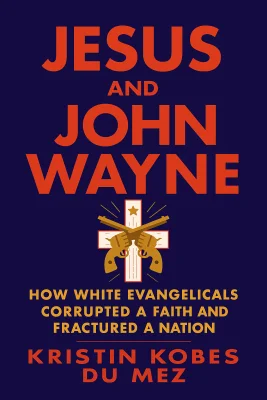
Jesus and John Wayne
How White Evangelicals Corrupted a Faith and Fractured a Nation
Categories
Nonfiction, Christian, History, Religion, Politics, Audiobook, Sociology, Theology, Christianity, Faith
Content Type
Book
Binding
Hardcover
Year
2020
Publisher
Liveright Publishing Corporation
Language
English
ISBN13
9781631495731
File Download
PDF | EPUB
Jesus and John Wayne Plot Summary
Introduction
# The Rise of Militant Christian Masculinity in American Evangelicalism On a cold January morning in 2016, Donald Trump stood before a crowd of evangelical students at Liberty University, his voice echoing through the packed auditorium as he promised to protect Christianity and make America great again. The thunderous applause that followed seemed to defy everything observers thought they knew about evangelical values. How could a movement built on family values embrace a thrice-married casino owner? How could followers of the Prince of Peace cheer for a candidate who mocked the disabled and bragged about sexual assault? The answer lies not in a sudden abandonment of evangelical principles, but in a decades-long transformation that had been quietly reshaping American Christianity since the end of World War II. This transformation involved the systematic replacement of Jesus the gentle shepherd with Jesus the warrior king, the elevation of masculine toughness over Christian compassion, and the fusion of faith with an aggressive nationalism that brooked no compromise. From Billy Graham's muscular Christianity to Jerry Falwell's Moral Majority, from the Promise Keepers filling football stadiums to the embrace of the Iraq War as holy crusade, evangelicals had been constructing a militant masculinity that would ultimately find its perfect expression in the most unlikely of champions. Understanding this history reveals not just how evangelicals came to support Trump, but how American Christianity itself became a vehicle for white male grievance and authoritarian power.
Chapter 1: Cold War Foundations: Building the Warrior Christ (1940s-1960s)
The seeds of militant evangelical masculinity were planted in the aftermath of World War II, when a new generation of Christian leaders emerged from the conflict convinced that their faith needed to be tougher and more masculine. The war had been a crucible that transformed American evangelicalism, creating leaders who saw no contradiction between following Jesus and supporting military might. Billy Graham embodied this new approach, preaching a gospel that emphasized both God's love and His righteous judgment, often declaring that Jesus was "no weakling" but rather "the strongest man who ever lived." The Cold War provided the perfect backdrop for this militant Christianity to flourish. As America faced off against godless communism, evangelical leaders found their message resonating with a nation hungry for moral clarity and spiritual strength. Graham's crusades drew millions, but his message was clear: real Christian men needed to be warriors for Christ, ready to defend their faith, their families, and their nation against the forces of evil. This wasn't merely metaphorical language—evangelical leaders consistently supported American military interventions and viewed the nation's global mission as fundamentally righteous. The movement's westward migration, particularly to Southern California, proved crucial in shaping this warrior mentality. Here, in the land of Hollywood cowboys and aerospace engineers, evangelicals found cultural symbols that perfectly captured their vision of Christian masculinity. John Wayne became an unlikely theological icon, his rugged individualism and willingness to use violence for righteous causes serving as a model for how Christian men should approach the world. Pastors began invoking Wayne from the pulpit, arguing that Jesus himself would have admired the Duke's courage and determination. This fusion of faith and force created a theological framework that would prove remarkably durable. Evangelical leaders had successfully rebranded Christianity as a religion for tough guys, warriors who weren't afraid to fight for what was right. The gentle Jesus of Sunday school was replaced by a masculine savior who could appeal to men raised on westerns and war movies. This transformation laid the groundwork for evangelical political engagement that would consistently favor military solutions and strong-man leadership, establishing patterns that would persist long after the Cold War ended.
Chapter 2: Cultural Upheaval: John Wayne Christianity and Gender Anxiety (1960s-1970s)
The social upheavals of the 1960s sent shockwaves through evangelical communities, as the civil rights movement, antiwar protests, and women's liberation challenged traditional authorities and gender roles. Rather than embracing these changes, evangelical leaders responded by doubling down on their commitment to masculine authority and patriarchal order. They interpreted the decade's chaos as evidence that America had grown weak and feminine, abandoning the strong masculine leadership that God intended for both families and nations. John Wayne's cultural significance reached its peak during these turbulent years, as evangelicals embraced the aging actor as a symbol of the kind of masculine authority they believed America desperately needed. Wayne's 1968 film "The Green Berets" became a rallying cry for evangelicals who supported the Vietnam War, while his personal appearances at Republican events cemented his status as a conservative icon. For evangelicals struggling with cultural change, Wayne represented a nostalgic return to an era when masculine authority went unquestioned and America's moral superiority seemed self-evident. The rise of feminism triggered particularly intense anxiety among evangelical leaders, who saw women's liberation as a direct attack on God's design for the family. Leaders like Tim LaHaye and his wife Beverly began organizing conservative women to oppose the Equal Rights Amendment, arguing that feminism would destroy the family and leave women vulnerable to male predation. Their "Concerned Women for America" became a powerful force in conservative politics, mobilizing millions of women to defend traditional gender roles and masculine authority. This period witnessed the emergence of "family values" as both a theological concept and a political weapon. Books like Marabel Morgan's "The Total Woman" and James Dobson's "Dare to Discipline" became bestsellers by promising to restore proper order to Christian homes through male authority and female submission. But these weren't merely domestic arrangements—they were training grounds for spiritual warfare. Christian fathers who learned to rule their households with firm discipline were preparing to lead the nation's moral restoration. The evangelical response to the 1960s established a pattern that would define their political engagement for decades: the identification of cultural threats, the mobilization of masculine authority to combat them, and the equation of Christian virtue with traditional gender hierarchies. They had learned to see social change not as inevitable evolution but as spiritual warfare requiring militant resistance.
Chapter 3: Political Awakening: Family Values and Reagan's Masculine Leadership (1980s)
The 1980 election of Ronald Reagan marked the full emergence of evangelicals as a political force, driven by their conviction that America needed the kind of strong masculine leadership that only a true cowboy could provide. Reagan's Hollywood background, his tough rhetoric about the Soviet Union, and his willingness to use military force made him the ideal candidate for evangelicals who had been taught to value strength above all else. When Reagan called the Soviet Union an "evil empire" and launched military interventions in Grenada and Nicaragua, evangelical leaders cheered him as a true Christian warrior. The formation of Jerry Falwell's Moral Majority in 1979 crystallized evangelical political activism around a comprehensive worldview that linked personal morality, family structure, and national strength. Falwell's "Listen, America!" didn't simply address domestic concerns but opened with graphic descriptions of communist atrocities, connecting moral decay at home to vulnerability abroad. For Falwell and his followers, defending the family required military strength, and American security depended on powerful, godly masculine leadership. James Dobson emerged as perhaps the most influential voice in this political awakening, using his credentials as a child psychologist to promote authoritarian parenting and rigid gender roles. Through his Focus on the Family organization, Dobson reached millions of listeners with advice that was simultaneously domestic and political, teaching evangelicals to see the reassertion of masculine authority as essential for saving both families and the nation. His warnings about the "feminization" of American culture resonated powerfully with men who felt displaced by social change. The Iran-Contra scandal revealed the extent to which evangelical leaders had become embedded in Reagan's foreign policy apparatus. Oliver North became a hero to conservative Christians not despite his willingness to break the law, but because of it. Evangelicals had been taught that real men did whatever was necessary to defeat evil, and North's actions perfectly embodied this ethic. Jerry Falwell led the canonization of North, comparing him to Jesus and organizing petition drives for his pardon. Reagan's presidency validated the evangelical approach to politics, convincing them that their vision of militant Christian masculinity wasn't just theologically sound but politically powerful. They had successfully linked their religious convictions to a broader conservative movement that celebrated military strength, traditional gender roles, and American exceptionalism. This fusion of faith and politics would prove remarkably durable, surviving even the scandals and disappointments that followed.
Chapter 4: Institutionalizing Militancy: Promise Keepers and Warrior Theology (1990s)
The 1990s brought a massive mobilization of Christian men through movements like Promise Keepers, which filled football stadiums with hundreds of thousands of men seeking to reclaim their God-given masculine authority. These gatherings weren't simply about personal spiritual growth—they were about preparing Christian warriors for the battles ahead. Promise Keepers events combined the emotional intensity of revival meetings with the aggressive energy of sporting events, as men were called to be "tender warriors" who would "take back" their homes, churches, and communities. The popularity of books like John Eldredge's "Wild at Heart" revealed the depth of evangelical men's hunger for a more aggressive expression of their faith. Eldredge argued that Christianity had been feminized and domesticated, robbing men of their God-given wildness and warrior spirit. Real Christian men, he insisted, were meant to be dangerous—not to their families, but to the enemies of righteousness. This message resonated powerfully with men who felt emasculated by cultural changes and yearned for a faith that validated rather than constrained their aggressive impulses. The movement's emphasis on "biblical manhood" provided theological justification for increasingly militant expressions of Christian masculinity. Organizations like the Council on Biblical Manhood and Womanhood developed sophisticated arguments for male authority based on careful biblical interpretation, but their conclusions always pointed in the same direction: God had designed men to lead and women to follow, and any deviation from this pattern was rebellion against divine order. Publishers churned out dozens of books celebrating warrior masculinity, from Stu Weber's "Tender Warrior" to Steve Farrar's "Point Man." These authors consistently portrayed Jesus as a tough, aggressive leader who had more in common with Navy SEALs than with the gentle shepherd of traditional Christian imagery. They argued that the church's problems could be traced to its failure to embrace this militant vision of Christianity, and they called on Christian men to reclaim their roles as spiritual warriors. These men's movements created networks of influence that would prove crucial in later political mobilizations. The same men who attended Promise Keepers rallies and read "Wild at Heart" would become the foot soldiers of evangelical political activism, their understanding of Christian manhood shaped by decades of teaching that equated spiritual maturity with militant leadership. They had been trained to see themselves as warriors in God's army, and they were ready for battle.
Chapter 5: War on Terror: Islam as the Perfect Enemy (2000s)
The September 11 attacks provided evangelicals with a perfect enemy and a perfect justification for their militant theology. Here was evil incarnate, an enemy that threatened not just American lives but Christian civilization itself. The response was swift and overwhelming: evangelical leaders declared their support for the War on Terror with an enthusiasm that surprised even secular observers. This wasn't simply patriotic duty—it was holy war, and they were eager to fight it. The demonization of Islam became a central feature of evangelical discourse in the 2000s, with leaders like Franklin Graham declaring Islam a "wicked and violent religion" and former Muslims like Ergun Caner becoming celebrity speakers by describing Islam as inherently violent and bent on world domination. These narratives reinforced evangelical convictions that they were engaged in a cosmic battle between good and evil, with American military might serving as God's instrument of judgment against the enemies of righteousness. Military leaders like General William Boykin openly declared that America's enemies were fighting against a Christian nation and a Christian God, while evangelical organizations worked to evangelize military personnel and influence military policy. The Air Force Academy became a particular focus, with evangelical cadets and officers creating an atmosphere where Christian faith and military service were seen as inseparable. This wasn't simply about personal evangelism—it was about ensuring that America's warriors understood their divine mission. The prolonged nature of the wars in Iraq and Afghanistan allowed evangelical militarism to become institutionalized within both military and civilian culture. Books like Oliver North's "American Heroes" and Chuck Holton's military fiction created a popular literature that celebrated Christian warriors fighting Islamic enemies. These weren't simply adventure stories—they were theological statements about the righteousness of American power and the necessity of Christian violence in defense of civilization. By the end of the Bush administration, evangelical support for military intervention had become so automatic that it seemed less like a political position than a religious doctrine. The warrior Christ they had been constructing for decades had found His perfect enemy in radical Islam, and His perfect instrument in the American military. This fusion of faith and force would prove remarkably resistant to the disappointments and failures that followed, as evangelicals had invested too much theological capital in militant masculinity to abandon it easily.
Chapter 6: Trump's Triumph: The Ultimate Militant Christian Leader (2016-Present)
The election of Barack Obama triggered an unprecedented crisis of confidence among white evangelicals, who saw in America's first Black president the culmination of all their fears about cultural displacement and moral decline. Obama's very existence seemed to challenge their understanding of America as a Christian nation, and his policies on issues like same-sex marriage and transgender rights confirmed their worst suspicions about the direction of American culture. The sense of embattlement that had always characterized evangelical political engagement reached fever pitch, creating a constituency desperate for a champion who would fight back against their perceived enemies. Donald Trump's emergence as that champion initially surprised many observers, who couldn't understand how "family values" voters could support such an obviously immoral candidate. But Trump's appeal wasn't despite his moral failures—it was because of his willingness to fight dirty against evangelical enemies. His crude language, his sexual boasting, his obvious lack of Christian virtue were all evidence that he was exactly the kind of warrior they needed: someone unrestrained by conventional morality, willing to do whatever it took to win. The Access Hollywood tape, which many assumed would end Trump's evangelical support, instead revealed the depth of their commitment to militant masculinity over traditional Christian virtue. Evangelical leaders didn't abandon Trump—they defended him, arguing that God often used flawed instruments to accomplish His purposes. Tony Perkins famously said that evangelicals were willing to give Trump a "mulligan" because they were tired of being pushed around by liberal elites. This response revealed how completely evangelical political identity had become divorced from traditional Christian ethics. Trump's presidency validated this approach, as evangelical leaders celebrated his willingness to fight their enemies without restraint. His attacks on immigrants, his defense of Confederate monuments, his embrace of authoritarian leaders abroad—all of this was seen as evidence of the kind of strong leadership America needed. When Trump tear-gassed peaceful protesters to pose with a Bible outside St. John's Church, evangelical leaders praised him for defending religious freedom against radical leftists. The January 6 insurrection represented the logical culmination of decades of militant evangelical rhetoric. When Trump called on his supporters to "fight like hell" to overturn the election results, many evangelicals heard this as a divine mandate to defend Christian America against its enemies. The fact that some rioters carried Christian flags and prayed in the Senate chamber revealed how completely the movement had fused religious identity with political violence. They had spent decades constructing a theology that made strength synonymous with righteousness, and Trump was the perfect embodiment of their creation.
Summary
The transformation of American evangelicalism from a religious movement focused on personal salvation into a political army organized around militant masculinity represents one of the most significant developments in modern American history. This evolution wasn't accidental—it was the deliberate creation of leaders who understood that cultural anxiety about changing gender roles could be weaponized for political gain. By teaching their followers to see themselves as warriors in a cosmic battle between good and evil, evangelical leaders created a movement that prioritized power over principle, strength over service, and dominance over discipleship. The central contradiction of this movement lies in its simultaneous claim to represent traditional Christian values while embracing leaders and tactics that contradict the most basic teachings of Jesus Christ. From John Wayne to Oliver North to Donald Trump, evangelicals have consistently chosen heroes who embody worldly power rather than Christian virtue. This pattern reveals a movement that has lost its way so completely that it can no longer distinguish between the Jesus of the Gospels and the strongmen of Hollywood and politics. The lessons of this history are sobering for anyone concerned about the future of American democracy and Christianity. Religious movements that prioritize political power over spiritual integrity inevitably corrupt both their faith and their politics. The evangelical embrace of militant masculinity offers a cautionary tale about what happens when cultural anxieties are allowed to override moral principles. Moving forward, Americans of all faiths must grapple with the challenge of distinguishing authentic religious conviction from political manipulation disguised as spiritual truth, while working to reclaim the prophetic voice that calls power to account rather than serving as its chaplain.
Best Quote
“Christian nationalism—the belief that America is God’s chosen nation and must be defended as such—serves as a powerful predictor of intolerance toward immigrants, racial minorities, and non-Christians.” ― Kristin Kobes DuMez, Jesus and John Wayne: How White Evangelicals Corrupted a Faith and Fractured a Nation
Review Summary
Strengths: The review highlights the thoroughness of Du Mez's research, noting her comprehensive exploration of the connections between evangelicalism, politics, and cultural figures like John Wayne. The book is praised for its compelling evidence and thought-provoking arguments that challenge readers to reconsider evangelical support for Trump and the intertwining of religion with commercialism and politics. Weaknesses: The content is described as difficult to endure at times, with moments that are "cringey" and uncomfortable, which may deter some readers. Additionally, there is an acknowledgment of potential disagreement with some of Du Mez's conclusions. Overall: The reader finds the book to be a challenging yet essential read, particularly for those interested in understanding the historical and cultural dynamics of evangelicalism. It is recommended for its insightful analysis, though it may evoke feelings of lament and grief due to its heavy subject matter.
About Author

Kristin Kobes Du Mez
Du Mez reflects on the intersections of gender, religion, and politics through a critical lens that challenges conventional narratives. Her work often critiques the cultural impacts of evangelical Christianity, particularly focusing on how it has shaped gender roles and political ideologies. This exploration is evident in her notable book "Jesus and John Wayne: How White Evangelicals Corrupted a Faith and Fractured a Nation", which critiques the promotion of rugged masculinity and Christian nationalism within American evangelicalism. The book achieved significant recognition, becoming a "New York Times" bestseller and sparking widespread discussion in both secular and religious circles.\n\nIn addition to her acclaimed books, Du Mez's scholarly pursuits extend into various media platforms, where she writes for major outlets like "The New York Times" and "Christianity Today". Her contributions offer insightful commentary on contemporary issues, reflecting her commitment to examining the socio-political implications of religious beliefs. Her work not only appeals to academics and students but also to general readers interested in understanding the cultural dynamics that shape society. Through her role as a professor at Calvin University, Du Mez has become a significant figure in gender studies and history, influencing both her students and a broader audience with her thought-provoking analysis.\n\nHer first book, "A New Gospel for Women", delves into Christian feminism by exploring the life of 19th-century Methodist activist Katharine Bushnell. Meanwhile, her upcoming project, "Live Laugh Love", promises to be a cultural study of white Christian womanhood, further emphasizing her focus on gender dynamics within religious contexts. This author’s bio showcases her dedication to challenging traditional narratives and fostering a deeper understanding of the complex relationships between faith, culture, and identity. Her work continues to resonate with those seeking to critically engage with the influences of evangelical history on modern society.
Read moreDownload PDF & EPUB
To save this Black List summary for later, download the free PDF and EPUB. You can print it out, or read offline at your convenience.
Jesus and John Wayne
by Kristin Kobes Du Mez
