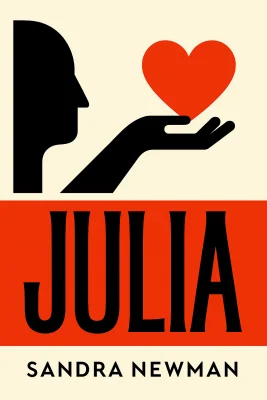
Julia
Categories
Fiction, Classics, Science Fiction, Audiobook, Feminism, Historical Fiction, Book Club, Literary Fiction, Retellings, Dystopia
Content Type
Book
Binding
Hardcover
Year
2023
Publisher
Mariner Books
Language
English
ASIN
0063265338
ISBN
0063265338
ISBN13
9780063265332
File Download
PDF | EPUB
Julia Plot Summary
Introduction
# The Woman Behind the Thought Crime: Julia's Shadow Rebellion The wrench slips from Julia's oil-stained fingers as another victory broadcast crackles through the Ministry of Truth. Around her, the Fiction Department's machines grind out tomorrow's lies while she repairs the very instruments that manufacture Oceania's reality. But beneath her Anti-Sex League sash beats the heart of a predator—a woman who has learned that in Big Brother's world, survival demands the sacrifice of others. When Winston Smith presses a crumpled note into her palm, Julia sees not romance but opportunity. The thin, nervous man from the Records Department represents everything she has been trained to hunt: a potential rebel, ripe for betrayal. What she doesn't expect is how his desperate hunger for truth will awaken something she thought she had killed long ago. In a world where love is the ultimate crime, Julia must choose between the safety of her carefully constructed lies and the dangerous possibility of genuine human connection.
Chapter 1: The Mechanics of Survival: Growing Up in Oceania's Shadow
The machines never stopped humming in the Fiction Department, their kaleidoscope arms selecting fragments of reality to reshape into acceptable truth. Julia moved among them with practiced ease, her hands steady on gears that had ground out propaganda for seven years. The other mechanics saw only what she wanted them to see—a cheerful Party member who reported thoughtcrimes with mechanical precision. But Julia's education in survival had begun long before she arrived at the Ministry. In the dying village of Hesham, she had watched the Party's agricultural policies turn green fields into graveyards. Her mother Clara, once a revolutionary who had fought alongside Big Brother himself, made a terrible choice as starvation tightened its grip. She told her fourteen-year-old daughter the truth about the Party's lies, about the deliberate cruelty of the famine, about the men who had once been heroes and were now marked for death. On that final night, Clara led Julia to the police station. She had prepared her daughter for what must be done, coached her in the words that would save one life and damn another. Julia denounced her own mother as a traitor, watched as Clara was dragged away to torture and death. The Party rewarded her with the title of Heroine of the Socialist Family, but Julia knew the truth—she had murdered the only person who truly loved her. The guilt should have destroyed her, but instead it forged her into something harder than steel. She learned that survival meant becoming the monster the Party required. Love was weakness. Trust was death. And conscience was a luxury she could no longer afford. Years later, standing in the Ministry's corridors with Winston's note burning in her palm, Julia felt the familiar calculation begin. Here was another victim for the machine, another life to be traded for her own continued existence. She had done this dance before, seduced dissidents into betrayal while dreaming of escape. But something about Winston's desperate scrawl made her hands shake in a way they hadn't since that night in Hesham when she learned that monsters were made, not born.
Chapter 2: Dangerous Games: When Love Becomes a Weapon
The countryside beyond London stretched like a green wound in the earth, untouched by telescreens and the Party's watchful eyes. Julia led Winston through the undergrowth with the confidence of someone who had mapped every escape route in the city. She had chosen this place carefully, far enough from surveillance to speak freely, close enough to return before curfew. What she hadn't planned for was the way Winston's face transformed when she began unbuttoning her coveralls. His hunger was so desperate, so pure, that it almost made her sick. She whispered the words he needed to hear—about hating purity, about wanting everyone corrupt to the bones—while calculating how best to lead him deeper into the trap. Their affair bloomed in stolen moments and whispered conversations. Julia taught Winston the techniques of survival she had perfected over years of secret crimes, never telling him that each lesson was also a step toward his destruction. She had been having illegal affairs since she was fourteen, each relationship a masterclass in deception, teaching her to compartmentalize desire from sentiment, pleasure from attachment. Winston approached their meetings with the solemnity of a religious ritual, as if their coupling could somehow redeem the world's ugliness. He spoke of their lovemaking as revolutionary, their orgasms as acts of rebellion against Big Brother. Julia found his earnestness both touching and irritating. Sex was sex—a physical pleasure, a moment of freedom, nothing more. But something was changing in the careful equations of her survival. When Winston spoke of the future, of a world without the Party, Julia found herself listening instead of calculating. The danger excited her more than Winston himself, but beneath the familiar thrill of risk lay something more troubling—the growing realization that her feelings for this doomed man might be genuine. She pushed the thought away as they walked back through London's bombed streets. Emotion was a luxury she couldn't afford, not when survival was at stake. But Winston's hand in hers felt different now, less like a tool and more like an anchor. In the gray world of Oceania, that difference might be enough to destroy them both.
Chapter 3: The Room Above Charrington's: Sanctuary and Trap
The antique shop felt like a museum of the forbidden past, its shelves lined with objects that had no place in the sterile world of Oceania. Charrington, the elderly proprietor, moved among his treasures with the careful steps of a man who understood the value of discretion. When he offered Julia and Winston the room upstairs, his rheumy eyes held secrets that went deeper than mere commerce. Julia knew the room was a trap—had suspected it from the moment Charrington first mentioned it. But Winston's hunger for a private space, somewhere they could exist without constant surveillance, was so desperate that she found herself agreeing. Perhaps it was love that made her reckless, or perhaps it was the growing certainty that her double life was becoming unsustainable. They furnished the dusty space with stolen moments and borrowed dreams. Winston brought his diary, the leather-bound confession that would damn him. Julia brought her body and her secrets, though she kept the most dangerous ones locked away. They made love on the narrow bed while the coral paperweight watched from the mantel, its pink depths holding all the beauty they couldn't speak aloud. The book arrived through careful orchestration, Goldstein's manifesto that promised to explain everything. Winston devoured it with the hunger of a man dying of thirst, reading passages aloud while Julia dozed against his shoulder. She had seen such books before, knew they were bait in a larger trap, but she let him believe in its revolutionary power. In the room above Charrington's shop, they played at being rebels while the walls closed in around them. The Thought Police had been watching, waiting, allowing their love to ripen before the harvest. Charrington's kindly face was a mask, his shop a carefully baited snare. And Julia, caught between her training and her growing feelings, could only watch as the man she had come to love walked deeper into the trap she had helped to set. The coral paperweight caught the afternoon light like a trapped sunset, beautiful and fragile as everything they were building together. Soon it would lie shattered on the floor, its fragments reflecting the harsh glare of the telescreen that had been watching them all along.
Chapter 4: Masks Fall Away: The Ministry of Love's Embrace
The Ministry of Love rose from London's heart like a concrete cancer, its windowless walls hiding chambers where the Party's true work was done. Julia had walked these corridors before, in her official capacity, but never as a prisoner. The irony wasn't lost on her as the guards dragged her through passages she had once traveled freely, past cells where she had helped break other minds. The arrest had come with theatrical precision. Charrington's mask had fallen away to reveal the face of a Thought Police operative, his elderly shuffle replaced by the confident stride of a predator. The coral paperweight lay shattered on the floor, its pink fragments catching the harsh light of the telescreen that had been watching them all along. In the holding cells, Julia found herself among the dregs of Oceania—thieves, prostitutes, and political prisoners who wore their terror like badges of honor. She kept her head down, her training kicking in even as her world collapsed. The other prisoners saw only another victim of the Party's paranoia, not the agent who had helped fill these cells with broken souls. O'Brien came for Winston first, his cultured voice promising enlightenment through pain. Julia watched through the cell's one-way glass as the man she loved was strapped to a table, electrodes attached to his skull like a crown of thorns. The screams that echoed through the corridors were Winston's, but the agony was shared. When her turn came, Julia discovered that her years of service bought her no mercy. O'Brien's eyes held the same cold interest whether she was colleague or victim. The pain was methodical, scientific, designed not just to break her body but to shatter the very concept of self. In Room 101, facing her deepest fears, Julia learned that loyalty was a luxury the Party could not afford—not even from its most faithful servants. The rats came for her as they had come for Winston, their yellow teeth promising a death beyond imagination. In that moment of ultimate terror, Julia discovered what Winston had learned before her—that love, no matter how genuine, could not survive the encounter with one's deepest fears. She screamed his name and meant it, betraying him completely to save herself from the gnawing darkness.
Chapter 5: Walking Among Ghosts: Life After Betrayal
The London that Julia returned to was the same city she had left, yet everything had changed. The telescreens still blared their endless propaganda, the crowds still shuffled through their daily routines, but she moved among them like a ghost. The Party had released her not out of mercy but as a final cruelty—she was free to walk the streets as a living reminder of what happened to those who dared to love. Her body bore the Ministry of Love's signature in scars and broken bones. Her hands, once steady enough to repair the most delicate machinery, now shook when she tried to hold a cup of tea. The other residents of the hostel where she lived avoided her eyes, recognizing in her damaged form the shape of their own possible futures. The Chestnut Tree Café became her refuge, its dim corners filled with others like herself—former Party members who had been chewed up by the machine they had once served. Here, among the defeated and the damned, Julia found a strange kind of peace. The gin was watered down and the music was melancholy, but it was honest in a way that nothing else in Oceania could be. It was here that she encountered Winston again, his once-sharp features now bloated with drink and defeat. They sat across from each other like strangers, the love that had once burned between them reduced to ash. When he spoke of betrayal, his voice carried no accusation—they had both done what they had to do to survive. The song that played on the café's speakers seemed written for them: "Under the spreading chestnut tree, I sold you and you sold me." Julia listened to the words and felt something like relief. The game was over, the masks could finally come off. In a world built on lies, their mutual betrayal was the closest thing to truth they would ever know. She watched Winston trace patterns in spilled gin, his fingers following invisible maps to nowhere. They had loved each other as completely as two broken people could manage, and they had betrayed each other just as completely. In Room 101, faced with their deepest fears, they had chosen themselves over each other. It was the most human thing either of them had ever done.
Chapter 6: Revolution's Promise: The Crystal Palace Deception
The revolution came not with fanfare but with the quiet efficiency of one machine replacing another. Julia learned of it through whispers in the café, fragments of news that filtered through the city's underground networks. The Brotherhood was real after all—not the mythical organization of Winston's dreams, but a practical alliance of forces who had grown tired of Big Brother's rule. When the fighting reached London's outskirts, Julia made her choice. She had spent too many years serving masters who saw her as expendable. If the world was changing, she would change with it. The bicycle she stole carried her south through streets filled with the debris of a collapsing regime. Behind her, the city burned with the fever of transformation. The Crystal Palace stood like a jewel against the countryside, its glass walls reflecting the fires of revolution. Inside, she found not the grim revolutionaries of Party propaganda but young men who spoke of freedom with the enthusiasm of children playing at war. They offered her clean clothes, real food, and the promise of a new world built on justice rather than fear. But even in this palace of liberation, Julia discovered that freedom was just another word for a different kind of servitude. The Brotherhood's questionnaire was familiar—the same list of crimes that O'Brien had once offered to Winston, dressed up in the language of righteous rebellion. They wanted her to commit murder, to sacrifice innocents, to become the very monster the Party had always claimed she was. In the palace's golden bathtub, surrounded by luxury that Big Brother had hoarded while his people starved, Julia finally understood the joke. There was no escape from the machine, only the illusion of choice between different operators. The Brotherhood would rule with the same iron fist as the Party, justified by the same noble lies, fed by the same human hunger for power over others. Yet as she sank into the warm water, feeling clean for the first time in months, Julia found herself smiling. She had survived the Party's rule and would survive whatever came next. The revolution was over, but her war—the quiet, personal battle for her own soul—would continue as long as she drew breath.
Chapter 7: The Eternal Machine: Understanding Power's True Face
The new regime settled over England like a fresh coat of paint on a rotting wall. The Brotherhood's flags replaced Big Brother's portraits, but the telescreens still watched and the patrols still marched. Julia walked through London's rebuilt streets and saw the same fear in people's eyes, the same careful neutrality that had characterized life under the Party. She had been assigned a new role in the new order—a minor position in the Ministry of Information, where she helped craft the stories that would justify the Brotherhood's rule. The work was familiar, the lies merely painted in different colors. Where once she had written about the evils of Eurasia, now she composed reports on the crimes of the former regime. The machine ground on, requiring only new operators to feed it. In quiet moments, Julia found herself thinking of Winston. He had died during the revolution, she learned, caught in the crossfire between old and new tyrannies. Perhaps it was a mercy—he would never have to see how little had really changed, never have to watch his dreams of freedom transform into fresh chains. His diary, that leather-bound confession that had once seemed so dangerous, now gathered dust in some archive, just another artifact of a discredited past. The coral paperweight had been recovered from Charrington's shop and now sat on her desk, its pink depths catching the light from her office window. Sometimes she imagined she could see Winston's face in its swirled interior, young and hopeful as he had been in their stolen moments above the antique shop. But the glass revealed only what it had always shown—beauty trapped in crystal, perfect and lifeless and forever beyond reach. Julia had learned the hardest lesson of all: that rebellion was not about changing the world but about preserving something human in the face of systems designed to crush the spirit. She had loved Winston Smith as completely as her damaged heart could manage, and she had betrayed him just as completely. Both acts had been necessary, both had been real, and both had been utterly futile in the face of power's eternal hunger. The machine would always win because it was patient and people were not. It could wait for love to turn to fear, for hope to curdle into despair, for rebels to become collaborators. But in the space between one breath and the next, in the moment when two broken people chose to trust each other despite everything, something indestructible flickered to life. The machine could crush it, could torture it, could force it to betray itself, but it could never quite extinguish it completely.
Summary
Julia Worthing's journey through the shadows of Oceania reveals the terrible complexity of survival under totalitarian rule. Her story is not one of heroic resistance but of human adaptation—the compromises we make, the masks we wear, and the prices we pay for the simple act of staying alive. In loving Winston Smith, she discovered that even the most carefully constructed defenses could be breached by genuine feeling. In betraying him, she learned that love itself could become both weapon and wound in the hands of those who understood its power. The revolution that swept away Big Brother's regime brought not freedom but merely a changing of the guard. The Crystal Palace, with its golden bathtubs and revolutionary rhetoric, was just another prison with prettier bars. Julia's final rebellion was not against any particular system but against the very idea that human beings could be reduced to their usefulness to the state. In a world built on lies, her stubborn insistence on her own humanity—scarred, compromised, and unrepentant—became the most radical act of all. She had learned to hate Big Brother, but more importantly, she had learned to love herself. In the end, that might be the only victory that truly matters.
Best Quote
“Once she asked if it made him feel better to know more than other people. He said tartly, “My feelings don’t matter in the least. What matters is what’s true.” ― Sandra Newman, Julia
About Author

Sandra Newman
Newman considers the intersections of identity, time, and political realms through her innovative narrative techniques. Her work often blends speculative fiction with literary elements, crafting narratives that are both imaginative and thought-provoking. For example, in "The Country of Ice Cream Star", she envisions a dystopian future, using language to create a richly detailed world that captivates readers. Meanwhile, "The Heavens" explores themes of loss and idealism by intertwining early 21st-century New York with Elizabethan England, creating a unique dreamlike experience.\n\nHer approach to writing is characterized by a blend of historical and contemporary themes, allowing her to delve into alternative histories and near-future dystopias. Newman's style is experimental, incorporating unusual structures and linguistic innovations, akin to Russell Hoban’s "Riddley Walker". This method not only distinguishes her books but also engages readers who appreciate layered narratives. Furthermore, her works often reflect a deep commitment to exploring personal and political dimensions, thereby providing readers with a nuanced perspective on the complexities of modern life.\n\nNewman's books, such as her debut "The Only Good Thing Anyone Has Ever Done", have garnered significant critical acclaim, with nominations for the Guardian First Book Award, among other honors. Her ability to fuse speculative elements with literary depth makes her a unique voice in contemporary literature, appealing to readers who seek both intellectual stimulation and narrative innovation. This short bio underscores her role as a dynamic author whose contributions continue to influence and challenge literary norms.
Read moreDownload PDF & EPUB
To save this Black List summary for later, download the free PDF and EPUB. You can print it out, or read offline at your convenience.
Julia
by Sandra Newman
