
Keeping Faith
Categories
Fiction, Religion, Romance, Adult, Book Club, Contemporary, Novels, Adult Fiction, Chick Lit, Drama
Content Type
Book
Binding
Paperback
Year
2006
Publisher
William Morrow Paperbacks
Language
English
ASIN
0060878061
ISBN
0060878061
ISBN13
9780060878061
File Download
PDF | EPUB
Keeping Faith Plot Summary
Introduction
# Keeping Faith: When the Sacred Meets the Secular The morning Mariah White discovered her husband in bed with another woman, her seven-year-old daughter Faith began talking to God. Not the stern patriarch of Sunday school lessons, but a gentle presence who appeared as a woman in sandals and a brown dress, speaking in whispers that made the child feel safe in a world suddenly torn apart. What started as an imaginary friend to cope with divorce became something far more disturbing when Faith's palms began bleeding without wounds, perfect holes appearing overnight that defied every medical explanation. Dr. Blumberg stared at the X-rays in bewilderment—clean perforations through flesh and bone with no tissue damage, no trauma, no rational cause. The word "stigmata" whispered through hospital corridors like a prayer or a curse. When Faith's dying grandmother came back to life after the child touched her still heart, the media descended like vultures. Television crews camped outside their Connecticut farmhouse while believers gathered on the lawn, desperate to touch what they saw as divine. But Colin White returned with lawyers and custody papers, claiming his ex-wife was mentally unstable and exploiting their daughter for attention. As Faith's condition worsened and the legal battle intensified, Mariah faced an impossible choice between protecting her child's privacy and fighting for the right to believe in miracles that might destroy them both.
Chapter 1: The Unraveling: When Marriage Ends and Miracles Begin
The betrayal came wrapped in steam and silence. Mariah climbed the stairs of their century-old farmhouse expecting to find Colin showering after work. Instead she found her marriage ending in real time—her husband wrapped in a towel, another woman emerging from their bathroom like some fever dream made flesh. Seven years of careful routine, of Monday dollhouse frames and Tuesday furnishings, shattered in the space between one heartbeat and the next. Faith felt the fracture before anyone spoke the words. The seven-year-old with fairy-white hair stopped talking entirely, moving through rooms like a ghost child while her parents' world collapsed around her. Dr. Johansen prescribed Prozac for Mariah and time for Faith's selective mutism. But time had different plans. The voice came first in darkness, gentle and warm, speaking to Faith when sleep wouldn't come. Not the bearded God of stained glass windows, but someone who smelled like oranges and listened when Faith worried about Daddy leaving. Mariah found her daughter having animated conversations with empty air, speaking names that meant nothing to a child but everything to anyone who'd studied medieval saints. Herman Joseph from Steinfeld. Elizabeth from Schonau. Juliana Falconieri. Dr. Keller, the child psychiatrist, initially dismissed it as healthy coping. Children of divorce often created imaginary friends. But when Faith began quoting Genesis like nursery rhymes, when she knew things she'd never learned, the professional composure cracked. "Your daughter," Dr. Keller said quietly, "I think she's seeing God." The bleeding started three weeks later, Faith waking with screams that shattered the farmhouse silence. Crimson seeped through her pajamas from wounds that appeared overnight—perfect circles in her palms that went straight through flesh and bone without damaging surrounding tissue. At Connecticut Valley Medical, Dr. Blumberg examined the injuries with growing bewilderment. Traditional clotting agents had no effect. The holes were real, painful, and medically impossible.
Chapter 2: Divine Wounds: The Stigmata of a Seven-Year-Old
The circus was supposed to be celebration, grandmother Millie's gift to lift spirits in a house heavy with divorce papers. Faith rode an elephant, laughed at clowns, tasted cotton candy that dissolved like dreams on her tongue. Then chaos erupted—the trained dog spooked, the elephant reared, and Faith tumbled into sawdust as juggling knives fell like silver rain across her back. Twenty stitches later, Faith lay unconscious while Mariah bargained with a God she wasn't sure existed. "If I can't have Colin," she whispered to the sterile hospital air, "please let me have her." Faith's first word in weeks was "Mommy," and something fundamental shifted in Mariah's understanding of prayer. But the real miracle came in darkness. Faith woke with her hands burning, small fists clenched around invisible fire. Her guard appeared as she always did, offering comfort and explanation. The pain would pass, she promised, kissing Faith's palms with lips warm as summer. When Faith opened her hands, perfect circles marked her skin like stigmata, like the wounds of Christ himself. Dr. Blumberg had seen penetrating trauma before—wounds that tore and bled and left ragged edges in their wake. Faith's hands defied medical logic. Clean holes that passed completely through palm and bone, bleeding slowly but steadily, with no actual tissue damage visible on any scan. "There is no way," he told Mariah in the corridor, exhaustion weighing down his words, "an object can enter the palm and exit the other side without causing substantive damage." Yet Faith's X-rays showed impossible geometry—perfect round wounds as if light itself had passed through her flesh. The medical team threw every test they had at the phenomenon. Blood work, MRIs, consultations with specialists who flew in from Boston and New York. Nothing explained what they were seeing. A seven-year-old girl with holes in her hands that shouldn't exist, speaking of divine visitations that couldn't be real. Word leaked despite their efforts at secrecy. First came curious neighbors, then desperate believers seeking miracles. Mariah woke one morning to find her driveway lined with cars, her front yard occupied by strangers in red robes calling themselves the Order of the Great Passion. Cameras flashed as Faith played outside, innocent of the storm gathering around her small form.
Chapter 3: Resurrection and Media Circus: When Private Faith Becomes Public Spectacle
Ian Fletcher arrived like a dark angel, his painted Winnebago a garish presence among the makeshift shrines. The famous teleatheist had built his career debunking religious claims, his Southern drawl and devastating logic turning believers into doubters on national television. He came to New Canaan expecting another hoax to unravel, another fraud to expose for his show "The Atheist Hour." Instead he found himself watching a seven-year-old girl play with a dying baby, her small hands gentle as she kissed the child's festering sores. Faith didn't perform for crowds or demand money from pilgrims. She seemed genuinely confused by the attention, trying to hide her bandaged palms when cameras appeared. The confrontation with Millie Epstein was swift and brutal. Ian's words struck like arrows, his skepticism sharp enough to stop an old woman's heart. Millie collapsed on the porch, pronounced dead by paramedics who worked for twenty minutes without success. The crowd held its breath as Faith was summoned from hiding, this child who spoke to God but looked like any other little girl in her purple dress and yellow flowers. What happened next defied every law Ian Fletcher thought he knew. Faith climbed onto the gurney, pressed her wounded hands to her grandmother's face, and kissed her full on the mouth. Millie's arms rose stiff and slow, clinging to her granddaughter as life flooded back into her body. The dead woman sat up asking what she was doing in the hospital, her heart strong as a teenager's, her resurrection witnessed by dozens who would never forget. The media explosion was immediate and merciless. Television crews lined the road like mechanical beasts, their satellite dishes reaching toward heaven. Faith couldn't leave the house without being photographed, couldn't play in her own yard without strangers calling out questions about God's plans for humanity. The MotherGod Society claimed her as proof that the divine was female. Local police struggled to control crowds that grew larger each day. Mariah pulled Faith from school when classmates began taunting her as "Bloody Mary." She hired tutors and tried to maintain normalcy, but normal had become impossible. Every grocery run became a gauntlet of believers desperate to touch Faith, reporters shouting questions, skeptics hurling accusations. The seven-year-old who once worried about ballet lessons now carried the weight of everyone's spiritual hunger.
Chapter 4: The Custody War: A Father's Return and Legal Battle
Colin White returned with a new wife, a baby on the way, and custody papers that painted Mariah as dangerously unstable. He'd been watching the news coverage from his comfortable new life, seeing his daughter portrayed as either saint or victim of abuse. Neither image sat well with him, but it was the sight of Faith collapsing during a televised appearance that finally drove him to action. Malcolm Metz, Colin's attorney, was a shark who specialized in high-profile cases that generated media attention. He saw the Faith White custody battle as career-making opportunity, a chance to prove that even miracles couldn't stand up to good legal strategy. His approach was surgical in its cruelty—paint Mariah as a mentally ill woman exploiting her child for attention, then present Colin as the stable alternative. "Your ex-wife spent four months in a psychiatric institution," Metz reminded Colin during their first meeting. "She tried to kill herself when she found you cheating. Now she's claiming your daughter talks to God and bleeds spontaneously. The pattern is clear—she's having another breakdown, and this time she's dragging Faith down with her." The legal papers arrived on a Tuesday morning, delivered by a sheriff's deputy who looked embarrassed to be serving a mother whose child was supposedly chosen by God. Mariah read the accusations with growing horror. Munchausen Syndrome by Proxy. Child abuse. Mental instability. Colin was demanding immediate custody, claiming Faith was in physical and psychological danger. Joan Standish, Mariah's attorney, was a scrappy public defender who specialized in family law. She'd seen plenty of custody battles turn ugly, but nothing quite like this. "They're going to argue that you're making Faith sick for attention," she explained to Mariah. "That the bleeding, the visions, all of it is either faked or psychologically induced by you." The irony cut deep. Seven years earlier, Colin had Mariah committed against her will when she became suicidal after discovering his first affair. Now he was using that hospitalization as evidence she was unfit to raise their daughter. The man who had destroyed her mental health was claiming to be Faith's savior, and the courts were listening.
Chapter 5: Flight to Kansas: Unlikely Sanctuary with a Famous Atheist
When the custody threat became real, Mariah made a desperate decision. She grabbed Faith and fled to the airport, boarding the first plane out—destination Kansas City. But fate had a cruel sense of humor. Ian Fletcher was on the same flight, traveling to visit his autistic brother Michael at a care facility called Lockwood. What began as mutual suspicion slowly transformed into something neither expected. Ian offered them shelter in a remote cabin by Lake Perry, far from cameras and crowds. "The ultimate cover," he drawled in that honey-thick voice. "The very last place anyone would expect you'd go underground is with me." For the first time in months, Faith could play outside without being photographed. She swung on a rusted playground set while Ian disappeared on mysterious errands, returning with groceries and haunted eyes. At night, Mariah heard him crying out in his sleep, fighting fires that existed only in memory. She began to see past the television persona to the man beneath—someone who brought yellow roses to a sick child, who carried Faith to safety when she collapsed bleeding in the woods. But Ian had his own agenda. He'd convinced himself Faith was an elaborate fraud, and he wanted to prove it by having her attempt to heal his brother Michael. The meeting at Lockwood was carefully orchestrated. Michael sat in the corner of the recreation room, turning cards with mechanical precision, lost in the autism that had claimed him thirty years ago. Ian's visits were the only constant in Michael's world—Tuesday at three-thirty, never varying, never changing. Faith approached without fear, her small hand reaching toward Michael's shoulder. "Don't," Ian warned, but she was already touching him, her wounded palms pressed against his temples. Michael's scream shattered the quiet, a sound of pure anguish that brought nurses running. But in that moment of contact, something passed between them. The healing wasn't dramatic, wasn't the stuff of television miracles. Michael didn't suddenly speak or embrace his brother or transform into someone he'd never been. But the walls around him grew thinner, more permeable. He reached for Ian's hand, held it briefly, offered the gift of human connection that had been lost for three decades. It was enough. It was everything.
Chapter 6: Expert Testimony: Science Versus the Supernatural in Court
They returned to New Canaan to face the legal battle Colin had prepared. The courtroom became a battleground where faith met skepticism, where a mother's love confronted a father's rights, where the impossible had to be weighed against the law. Faith's future hung in the balance, dependent on which story the judge chose to believe. Dr. Celestine Birch took the witness stand with the confidence of a man who had testified in dozens of high-profile cases. As Malcolm Metz's expert on Munchausen Syndrome by Proxy, he painted a clinical picture of maternal abuse disguised as devotion. According to Birch, mothers with MSP deliberately harmed their children to gain attention and sympathy from medical professionals. "The perpetrator appears to be the perfect parent," Birch explained to the packed courtroom. "She brings the child for treatment, seems deeply concerned about the symptoms, and often has some medical knowledge that helps her create convincing illnesses. But underneath this caring facade, she's systematically destroying her child's health." The syndrome fit Mariah's profile disturbingly well. Recent divorce, history of mental illness, desperate need for attention and support. The bleeding wounds were easy to fake, Birch claimed, and the religious visions could be induced through psychological manipulation. Faith had been conditioned to give her mother what she wanted—a miraculous child who drew sympathy and media coverage. But Joan Standish had her own expert. Dr. Alvin Fitzgerald specialized in psychosomatic disorders in children of divorce. He offered an alternative explanation that didn't require painting Mariah as an abuser. Faith's symptoms could be genuine manifestations of psychological stress, her mind creating physical ailments in response to her parents' bitter separation. The most damaging testimony came from an unexpected source. Allen McManus, a reporter from the Boston Globe, revealed that he'd received an anonymous tip about Mariah's psychiatric history from Ian Fletcher. The revelation shattered Mariah's growing trust in the man who had seemed to believe in Faith's abilities. Ian had been playing both sides, gathering information for his television exposé while pretending to support them. When Ian took the witness stand, he surprised everyone by refusing to condemn Faith or her mother. Instead of providing the damning testimony Metz expected, he praised Mariah's devotion and protective instincts. But the damage was done—Mariah now knew that the man she'd begun to love had been the source of some media attention destroying their lives.
Chapter 7: Between Life and Death: A Child's Crisis Tests Every Theory
Faith's condition deteriorated rapidly during the custody hearing. What began as bleeding hands escalated into full system failure—kidney dysfunction, cardiac arrest, and finally a coma that left her hovering between life and death. The timing seemed to support Dr. Birch's theory about Munchausen Syndrome by Proxy. As legal pressure on Mariah intensified, Faith's symptoms became more severe. Judge Rothbottam issued a restraining order keeping Mariah away from her daughter, based on expert testimony that separation from an MSP perpetrator typically led to improvement. If Faith recovered while isolated from her mother, it would prove Mariah was the cause of her illness. If she continued to deteriorate, the theory would be disproven—but Faith might die in the process. Dr. Blumberg watched Faith's vital signs spiral downward with growing alarm. Her fever spiked to dangerous levels, her heart stopped twice, and her kidneys shut down completely. The seven-year-old who had seemed so vibrant just days earlier now lay unconscious, sustained only by machines. The medical team threw everything they had at her condition, but nothing worked. Meanwhile, Mariah sat at home, forbidden by court order from seeing her dying daughter. Phone calls from the hospital grew more desperate with each passing hour. Faith's fever wouldn't break. Her heart had stopped again. The doctors were running out of options. But Mariah couldn't even hold her child's hand, couldn't whisper comfort in her ear, couldn't be the mother Faith needed in what might be her final moments. Kenzie van der Hoven, the court-appointed guardian, made the decision that would change everything. Watching Faith slip away while her mother was kept at bay by legal technicalities seemed like a perversion of justice. In the early hours of Sunday morning, she called Mariah with simple instructions: "Come now. Your daughter needs you." Mariah's arrival at the hospital triggered Faith's miraculous recovery. Within minutes of her mother's presence, the seven-year-old's eyes fluttered open, her vital signs stabilized, and her fever broke. The medical team watched in amazement as systems that had been failing for days suddenly returned to normal function. There was no clinical explanation for the dramatic turnaround, but the correlation was undeniable.
Chapter 8: The Verdict of Love: When Faith Triumphs Over Doubt
When court resumed Monday morning, Faith walked into the courtroom healthy and vibrant, her only remaining symptoms the faint bandages on her palms. Dr. Birch, who had confidently predicted that separation from Mariah would cure the child, found his theory shattered by the evidence before him. Faith had nearly died while isolated from her mother and recovered only when reunited with her. Mariah took the witness stand with quiet dignity, finally able to tell her story in her own words. She spoke of loving Colin despite his betrayals, of fighting depression while trying to be the perfect mother, of watching her daughter develop abilities that defied explanation. Her voice never wavered as she described the impossible choice between protecting Faith's privacy and seeking help for symptoms no doctor could understand. "I don't know why Faith sees God," Mariah testified. "I don't know why she bleeds without wounds or heals the dying. But I know she's telling the truth, and I know she needs her mother. Taking her away from me won't make the miracles stop—it will only leave her alone to face something no seven-year-old should have to handle by herself." Malcolm Metz's cross-examination was brutal but ultimately ineffective. He produced evidence of Mariah's apparent instability, her attacks on camera crews, her history of mental illness. But the context—a mother protecting her child from exploitation—only reinforced her image as a devoted parent. His attempts to paint her as unstable crumbled against the evidence of Faith's recovery when mother and daughter were reunited. Judge Rothbottam called Faith into his chambers for a private conversation, away from the lawyers and media circus that had consumed her young life. He found himself talking to a remarkably composed child who spoke about God with the same casual certainty other children discussed their pets. When he asked how he could know if she was telling the truth, Faith turned the question back on him with startling wisdom. "When you're in court, how do you tell?" she asked. "People swear on a Bible, right? But if I'm not telling the truth, wouldn't they just be saying words over some book?" The judge realized he was dealing with something beyond his legal training. Whether Faith was truly chosen by God or simply an extraordinary child with psychosomatic symptoms, one thing was clear—she belonged with the parent who had never stopped fighting for her. "I'm not here to determine whether God is talking to Faith White," Judge Rothbottam announced in his final ruling. "That's not the job of this court. What I must determine is who listened when this seven-year-old girl had something important to say. And based on all the testimony I've heard, Mariah White's ears are wide open."
Summary
Faith White returned home to a world forever changed by her brief journey into the realm of the inexplicable. The crowds still gathered on the lawn, the reporters still shouted questions, and the believers still reached out desperate hands hoping to touch divinity. But something fundamental had shifted in the dynamic between mother and daughter, between the sacred and the secular, between what could be proven and what could only be believed. Mariah had learned that love sometimes requires faith in the impossible, that protecting a child might mean accepting mysteries that defy rational explanation. Colin, humbled by his defeat in court and his daughter's obvious need for her mother, began the slow process of rebuilding his relationship with Faith on her terms rather than his own. The story of Faith White would continue to ripple outward, touching lives in ways both profound and mundane. Some would always see her as a fraud, others as a saint, but those closest to her understood a simpler truth—that sometimes the most extraordinary thing about a miracle is not the divine intervention itself, but the human courage required to believe in it. In a world that demanded proof for everything, Faith had taught them that some truths could only be accepted on faith, and that the greatest miracle of all might simply be a mother's unwavering love for her child, bleeding hands and all.
Best Quote
“The truth doesn't always set you free; people prefer to believe prettier, neatley wrapped lies” ― Jodi Picoult, Keeping Faith
About Author
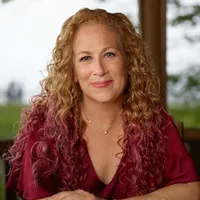
Jodi Picoult
Picoult interrogates the moral complexities and emotional depth of human relationships, drawing from the rich tapestry of real-life experiences to inspire her work. Her writing delves into pressing social issues, such as medical ethics in "My Sister's Keeper" and racial prejudice in "Small Great Things," inviting readers to explore and challenge their own beliefs. By crafting stories that blend narrative with social critique, she offers a unique lens through which to view the human condition.\n\nThrough eloquent prose and emotional resonance, Picoult's books serve as a conduit for understanding multifaceted themes like justice, inequality, and familial love. Her collaborative effort with Jennifer Finney Boylan on "Mad Honey" exemplifies her skill in addressing contemporary social topics with nuanced storytelling. As a bestselling author, she continues to captivate a global audience by transcending cultural and geographical boundaries.\n\nReaders of Picoult's work benefit from her ability to engage with complex issues in a manner that is both thought-provoking and accessible. Her stories not only entertain but also encourage introspection, providing a mirror through which individuals can examine their own values. This bio highlights her enduring impact on contemporary fiction, as she continues to leave a lasting mark on the literary landscape.
Read moreDownload PDF & EPUB
To save this Black List summary for later, download the free PDF and EPUB. You can print it out, or read offline at your convenience.

Keeping Faith
by Jodi Picoult
