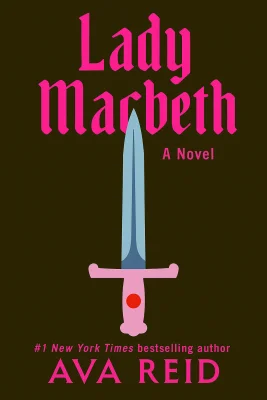
Categories
Fiction, Audiobook, Horror, Historical Fiction, Romance, Fantasy, Adult, Historical, Retellings, Gothic
Content Type
Book
Binding
Hardcover
Year
2024
Publisher
Del Rey
Language
English
ASIN
0593722566
ISBN
0593722566
ISBN13
9780593722565
File Download
PDF | EPUB
Lady Macbeth Plot Summary
Introduction
The marriage carriage rattles through the mist-shrouded highlands of Scotland, carrying its veiled cargo toward an ancient castle perched on murderous cliffs. Inside sits Roscille, bastard daughter of a Breton duke, her pale hair and unsettling eyes hidden beneath gossamer that proclaims her cursed by witchcraft. Her father has traded her beauty for political alliance, wedding her to Macbeth, Thane of Glammis—a lord whose reputation for violence precedes him like the scent of blood. But Glammis Castle harbors darker secrets than political marriages. In its flooded basement, three ancient women wash clothes in chains, their blind eyes seeing futures written in blood and prophecy. They speak of crowns and kings, of monsters and madness, of a unicorn's horn that will someday pierce the veil between worlds. As Roscille learns to navigate the brutal politics of her new home, she discovers that survival requires more than beauty or cunning. It demands the kind of power that transforms wives into widows, and widows into something far more dangerous.
Chapter 1: The Veiled Bride of Glammis
The wind tears across the Scottish highlands like a blade, carrying salt and the promise of violence. Roscille's carriage climbs the treacherous road to Glammis Castle, where her new husband waits. She has been many things in her seventeen years—Roscille in Brittany, Rosele crossing the channel, Roscilla on Scottish soil—but always she has been the Duke's beautiful, cursed daughter. The stories follow her like shadows. How her gaze drives men to madness. How she was touched by witchcraft in her cradle. How even her own father fears to look directly into her death-dark eyes. The veil protects the world from her stare, or so they claim. In truth, it protects her from seeing too clearly what men become when they think themselves unobserved. Macbeth towers over her in the torchlit hall, a mountain of muscle and scars. His wedding feast is a grim affair—no women present save herself, no celebration, only warriors gnawing meat and watching their new lady with suspicious eyes. When he draws his bow and shoots a white bird from the air, its death is offered like a promise. Here is a man who takes what he desires without hesitation. Their wedding night passes in ritual rather than passion. Macbeth listens as she speaks the ancient custom—three requests a bride may make before submitting to her husband's bed. Her first demand seems innocent enough: a necklace of gold set with rubies. But Roscille knows what she asks. The gold mines of Scotland lie in Cawdor, ruled by Macbeth's enemy. Her trinket will cost blood, and blood will buy her time.
Chapter 2: Three Wishes and Witches' Prophecies
War comes to Cawdor swift and merciless. Macbeth returns victorious, the rival thane's blood still wet in his beard, a ruby necklace heavy in his hands. The gold chain settles around Roscille's throat like a collar, its weight a reminder of the violence she has orchestrated with a single wish. But victory breeds ambition, and ambition seeks prophecy. In the flooded chambers beneath Glammis Castle, three women wash clothes in endless cycles. Their chains rattle against stone as they lift their blind, milk-white eyes to Macbeth. These are the Weird Sisters, witches bound to serve the lords of Glammis through generations of dark servitude. Their voices blend like wind through broken stone as they speak the words that will remake the world: "All hail Macbeth, Thane of Glammis. All hail Macbeth, Thane of Cawdor. All hail Macbeth, King Hereafter." The prophecy hangs in the salt air like incense, intoxicating and terrible. Roscille watches her husband's face transform as the words take root. She sees the moment when Thane becomes insufficient, when loyalty to King Duncan curdles into something hungrier. The witches have planted a seed that will grow into regicide, and she has watered it with Cawdor's blood. Power, she realizes, is not taken—it is cultivated, like poison mushrooms in dark soil.
Chapter 3: Blood for a Crown
King Duncan arrives at Glammis with his sons in tow, trusting in his cousin's loyalty. The old king is withered by mysterious illness, his hands shaking as he lifts his wine cup, his authority maintained more by habit than strength. Prince Lisander, the elder son, moves with unsettling grace, his beauty almost inhuman in its perfection. His brother Evander burns bright with golden ambition, everything a prince should be. In Duncan's presence, Roscille remains veiled and silent, but she watches. She sees how Lisander's green eyes linger on her, how he alone seems unafraid of her rumored curse. When they speak privately on the castle ramparts, his voice carries the lilting sounds of her native Breton, a impossible intimacy that makes her heart race beneath the ruby necklace. But Macbeth's hunger cannot wait for natural succession. In the dead of night, Roscille finds herself in Duncan's chamber, her power of compulsion turning the king's own guards into instruments of murder. Their swords pierce the sleeping monarch's flesh as she watches in horror, her enchanted commands making assassins of innocent men. The aftermath unfolds like a carefully orchestrated dance. The guards lie dead by their own blades, apparent murderers who killed their king and then themselves in guilt. Duncan's blood soaks the stone floors while Macbeth plays the grieving, loyal cousin. Only Lisander's eyes hold suspicion, but he cannot voice what he merely suspects. The crown passes to the strongest hand, not the rightful heir.
Chapter 4: The Dragon and the Lady
With Duncan dead, his sons flee into exile rather than face their father's murderer. But Lisander carries a curse darker than political intrigue. He is the monster his bloodline has bred—by day a prince, by night a dragon whose scales shimmer with otherworldly green fire. Roscille discovers his secret in moments of desperate intimacy. When she comes to his cell with a knife meant for murder, she finds instead a connection that transcends the political machinations surrounding them. His touch awakens something in her that has nothing to do with compulsion or curses—it is desire, pure and dangerous. But their stolen moments are brief. Lord Banquo, Macbeth's most trusted ally, discovers Roscille's deceptions. The staged attack that made heroes of him and his son Fléance was her invention, designed to bind them to her through shared lies. His rage burns cold and calculated as he drags her to the dungeons. The whip falls across her thighs like liquid fire, each lash payment for her presumption in thinking a woman might manipulate the games of men. Fléance wields the weapon with boyish uncertainty, but pain is pain regardless of the hand that delivers it. She bites back her screams and endures, knowing that to cry out would be to give them the satisfaction they crave. Through it all, she hears Lisander's desperate protests from his cell, his human voice cracking with anguish as she suffers for his sake.
Chapter 5: Chains of Power and Madness
Macbeth's return brings no relief, only new chains. He sees the marks on his wife's body and recognizes them as symbols of rebellion rather than punishment. In his twisted logic, her suffering proves her value—she is worth torturing because she is worth possessing. The ruby necklace tightens around her throat as he claims his conjugal rights with brutal efficiency. Her second wish—a cloak of white furs from six different animals—seems safely impossible until Macbeth returns with pelts that include the horn of Scotland's own unicorn. Even the national symbol bleeds for his ambition. But prophecy has made him paranoid. When the Weird Sisters speak of Banquo's future—that he shall beget kings though be none himself—Macbeth's trust shatters like glass. His oldest friend becomes his greatest threat, and friendship dies beneath a Druid's trepanning drill. The surgery to release "treacherous humors" from Banquo's brain leaves only a corpse and a traumatized son who knows too much. Roscille watches the madness consume her husband as surely as ambition consumed his honor. Each prophecy fulfilled breeds hunger for the next, each enemy slain reveals new threats lurking in shadow. The crown that should bring security becomes the source of endless paranoia. She realizes that she has not married a man but a force of nature, as implacable and destructive as the sea that crashes against Glammis's cliffs.
Chapter 6: The Wood Upon the Hill
War comes to Scotland as English armies mass at the border, led by Duncan's exiled son Evander and backed by Saxon gold. Macbeth's grip on power weakens with each defection, each village burned by foreign soldiers. His own men begin to question their king's sanity as he rants about impossible prophecies and unbreakable fate. The final prophecy seems to offer security: "None of woman born shall harm Macbeth" and "He shall never vanquished be until Birnam Wood to Dunsinane Hill shall come." Trees cannot walk, women cannot birth men without fathers. The logic seems unassailable, yet Roscille has learned to read the spaces between words where truth hides like poison in wine. Fléance, driven mad by his father's death and his own dishonor, confesses to Macbeth the secret he has nursed through months of imprisonment. The foreign witch-wife is no virgin bride but an adulteress who lay with the dragon prince. Her womb carries not Macbeth's heir but a monster's spawn. The accusation rings true in ways that matter more than facts. Macbeth's paranoia finds perfect focus in his wife's betrayal, and his rage burns away the last restraints of human feeling. He drags Roscille to the flooded chambers and abandons her to the darkness, leaving her to rot with the other discarded wives who wash clothes in chains. But he has underestimated what she has become in the crucible of his cruelty.
Chapter 7: Lady Macbeth Unveiled
In the depths beneath Glammis, Roscille discovers her true inheritance. The Weird Sisters are not servants but prisoners, each one a former Lady Macbeth who refused to disappear quietly into history. Gruoch, the first wife who poisoned Macbeth's entire family to make him Thane of Glammis. Others whose names have been stolen along with their humanity. They break their chains together, four women united by rage and the desire for justice. Roscille emerges from darkness into light, no longer hidden behind veils or weighed down by golden collars. The power that men claimed she possessed by curse is revealed as birthright—the strength to see through lies and compel truth from unwilling lips. The final battle unfolds with prophetic precision. Lisander returns as promised, the dragon carrying the wood of Birnam Forest on his scales as he flies to Glammis. The sight of their rightful prince, monster though he may be, turns the tide as Scottish soldiers abandon their usurping king for Duncan's legitimate heir. In the castle's depths, Macbeth faces the wife he sought to destroy. His mockery turns to horror as her unveiled gaze strips away his flesh, revealing the hollow skull beneath. The prophecy fulfills itself with terrible irony—she is none of woman born because she has transcended such simple categories. She is witch and woman, victim and destroyer, the dagger that finally finds its target's heart.
Summary
The crown passes to worthier hands as Lisander takes his father's throne, no longer hiding his monstrous nature but embracing it as part of his humanity. A king who acknowledges his darkness rules more justly than one who denies it, and Scotland begins to heal from the wounds of ambition and betrayal. Roscille stands beside him not as chattel or prize but as partner and equal, her true face finally revealed to the world. The veil that once hid her supposed curse has been cast aside, leaving only a woman who refuses to be diminished by others' fears. She has learned the hardest lesson of all—that power shared willingly is stronger than power seized by force, and that sometimes the only way to escape the roles others write for you is to take up the pen yourself and begin a new story entirely.
Best Quote
“And there is nothing more dangerous than a creature who pretends to be one thing and is in truth another.” ― Ava Reid, Lady Macbeth
About Author

Ava Reid
Reid explores the intricate tapestry of folklore, identity, and power through her gothic fantasies, crafting narratives that delve into the silence of women in history. By interweaving elements of dark academia and sapphic romance, her books offer profound insights into marginalized identities within patriarchal and ableist societies. This approach is exemplified in her early book, "The Wolf and the Woodsman," which received critical acclaim for its unique narrative voice and thematic depth. \n\nBeyond simply telling stories, Reid's work provides a mirror to societal exclusion and the struggle for self-definition, resonating with readers who appreciate layered storytelling and complex character arcs. Her novels, including "Juniper & Thorn," "A Study in Drowning," and the anticipated "Lady Macbeth," are not just stories but explorations of the human condition, inviting readers to question and reflect. Her ability to transform these themes into captivating gothic fantasies has earned her significant recognition, including achieving #1 New York Times bestseller status and adaptations for film, further cementing her impact on contemporary literature. \n\nThis bio summarizes how Reid's unique blend of themes and style captures the imagination, offering both escapism and a deeper understanding of cultural and historical dynamics. Her work appeals to a broad audience, from those interested in fantasy and folklore to readers seeking narratives that challenge societal norms and highlight the nuances of identity. As an internationally bestselling author, Reid continues to shape and redefine the landscape of modern fantasy literature.
Read moreDownload PDF & EPUB
To save this Black List summary for later, download the free PDF and EPUB. You can print it out, or read offline at your convenience.
Lady Macbeth
by Ava Reid
