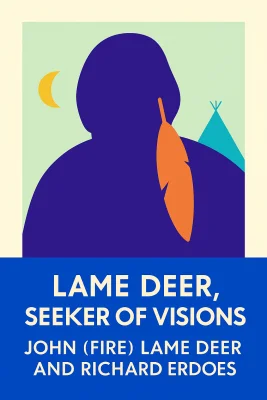
Lame Deer, Seeker of Visions
Categories
Nonfiction, Philosophy, Biography, History, Memoir, Religion, Spirituality, Indigenous, Native American, Native Americans
Content Type
Book
Binding
Mass Market Paperback
Year
1994
Publisher
Simon Schuster
Language
English
ASIN
0671888021
ISBN
0671888021
ISBN13
9780671888022
File Download
PDF | EPUB
Lame Deer, Seeker of Visions Plot Summary
Introduction
# The Medicine Man's Journey: Lame Deer's Sacred Path In the windswept plains of South Dakota, where ancient spirits still whisper through the prairie grass, John Fire Lame Deer emerged as one of the most authentic voices of Native American spirituality in the twentieth century. Born around 1903 on the Rosebud Reservation, he witnessed his people's transformation from the last echoes of the warrior age to the harsh realities of reservation life. His journey from a rebellious youth to a revered medicine man offers a rare glimpse into the soul of Lakota culture and the enduring power of indigenous wisdom. Lame Deer's story transcends typical narratives of cultural preservation. Through his experiences, readers encounter the raw honesty of a man who refused to romanticize either his heritage or the challenges facing his people. His life embodied the tension between two worlds—the sacred traditions of his ancestors and the relentless pressure of modern American society. From his spiritual awakening on a vision hill to his role as a bridge between cultures, Lame Deer's experiences illuminate the profound wisdom embedded in Native American traditions, the resilience required to maintain cultural identity under oppression, and the universal human quest for meaning and connection to the sacred.
Chapter 1: Lakota Roots: Childhood on the Reservation
John Fire Lame Deer's earliest memories were steeped in the rich traditions of the Lakota nation, shaped by grandparents who carried the living memory of a free people. Born into the Minneconjou band, he inherited not just a name but a legacy of resistance and spiritual power. His great-grandfather, the original Lame Deer, had been a respected chief who died in 1877 during what whites called a battle but Indians knew as a betrayal—killed while attempting to make peace after honoring a treaty that promised his people one final buffalo hunt. The young boy grew up in a twelve-by-twelve log cabin on the prairie, surrounded by the extended family network that formed the backbone of Lakota society. His grandparents, Good Fox and Plenty White Buffalo, served as his primary teachers, sharing not just practical knowledge but the deeper wisdom of their people. Good Fox, a survivor of both the Battle of Little Bighorn and the Wounded Knee Massacre, carried scars that told the story of his people's struggle for survival. The reservation world of Lame Deer's childhood was one of profound transition and loss. The buffalo were gone, replaced by government-issued cattle. The vast hunting grounds had been carved up into individual allotments, fenced and regulated by white authorities. Yet within this constrained world, the old ways persisted in quiet corners and whispered teachings. His grandmother would rise before dawn to make coffee, always pouring the first spoonful on the ground as an offering to the spirits. The stories shared around the evening fire carried more than entertainment—they held the philosophical and spiritual foundations of Lakota culture. Through tales of Iktome the trickster spider and the sacred origins of the peace pipe, young Lame Deer absorbed lessons about the interconnectedness of all life, the importance of humility, and the dangers of greed and selfishness. These stories would later inform his understanding of the fundamental differences between Indian and white worldviews. The arrival of government agents to force him into boarding school marked the end of this protected childhood and the beginning of his lifelong struggle to maintain his cultural identity. The threat that had once been used to quiet misbehaving children—"the white man will come and take you away"—became a harsh reality. Yet the foundation laid by his grandparents proved unshakeable, providing the spiritual bedrock upon which he would build his identity as a medicine man and cultural interpreter.
Chapter 2: Vision Quest: Spiritual Awakening and Sacred Calling
At sixteen, John Fire underwent the hanblechia, the vision quest that would transform him from boy to man and set him on the path to becoming a medicine man. This ancient rite of passage required him to spend four days and nights alone on a hilltop, without food or water, crying for a vision that would guide his life's purpose. The experience began with purification in the sweat lodge, where the intense heat and sacred steam prepared his spirit for the ordeal ahead. The vision pit, a hole dug into the earth of a hill that had been used by medicine men in his family for generations, became his world for those transformative days. Wrapped in a star blanket made by his grandmother specifically for this ceremony, he carried only a peace pipe and a gourd rattle containing forty pieces of his grandmother's flesh, cut from her arm as an offering to ensure his success. The pipe, passed down through generations of his family, connected him to his ancestors and to the sacred traditions that defined his people's relationship with the divine. As the hours passed and hunger and thirst took their toll, the boundary between the physical and spiritual worlds began to dissolve. The young seeker experienced the presence of a great bird, feeling its wings touch him and hearing its cries that seemed to speak directly to his soul. In his altered state, he found himself transported beyond the confines of his earthly body, looking down from a great height at the world below. The voices of the winged ones spoke to him, welcoming him as a brother and promising that he would become a medicine man who would teach others and heal the people. The most profound moment came when the spirit of his great-grandfather, Tahca Ushte, appeared before him. The old chief, bearing the wounds from the bullets that had killed him, communicated his wish that his great-grandson take his name and carry on his legacy. This encounter filled the young man with a power he had never experienced before—a flood of spiritual energy that confirmed his calling and gave him the strength to endure whatever challenges lay ahead. When the medicine man Chest came to retrieve him after four days, the boy who had climbed the hill was gone, replaced by a man with a sacred mission. The vision had revealed not just his destiny but his new identity—he was no longer simply John Fire but Lame Deer, carrier of his great-grandfather's name and inheritor of his spiritual power. This transformation marked the beginning of a lifelong journey of learning and service that would eventually make him one of the most respected medicine men of his generation.
Chapter 3: Walking Between Worlds: Tradition Meets Modernity
Lame Deer's life became a constant negotiation between the sacred world of his ancestors and the harsh realities of twentieth-century America. This cultural duality manifested most painfully in the government boarding schools, designed explicitly to "kill the Indian and save the man." At these institutions, he was forbidden to speak Lakota, forced to cut his hair, and punished for any expression of his cultural identity. The schools operated like military installations, with rigid schedules and harsh discipline intended to break the spirit of indigenous children. Despite the school's efforts to erase his cultural identity, Lame Deer proved remarkably resistant to assimilation. He deliberately played the role of the "dumb Indian," refusing to cooperate with attempts to transform him into what he later called an "apple"—red on the outside, white on the inside. His acts of rebellion, from throwing live chickens at teachers to dismantling musical instruments, were not mere mischief but assertions of cultural resistance. The period following his mother's death in 1920 marked the beginning of what he called his "roaming time"—a decade of wandering that took him across the American West in search of experience and understanding. He worked as a rodeo rider, sheep herder, bootlegger, and even tribal policeman, each role teaching him something about the complex relationship between Indian and white societies. This wandering was not aimless but represented a deliberate attempt to understand both worlds fully before choosing his path as a medicine man. His experiences in the broader American society revealed the depth of racial prejudice and cultural misunderstanding that Native Americans faced. Whether working as a potato picker in Nebraska or serving in the Army during World War II, he encountered the same pattern of exploitation and dismissal. White society wanted Indian labor and military service but had no interest in Indian wisdom or perspectives. The tension between worlds was not merely external but internal as well. Lame Deer struggled with the temptations of white society—alcohol, materialism, and the promise of easier living—while feeling the constant pull of his spiritual calling. His periods of heavy drinking and wild behavior were not simply personal failings but symptoms of the broader cultural trauma experienced by indigenous people caught between disappearing traditions and an unwelcoming modern world. Yet through all these struggles, his vision remained constant, providing an anchor that eventually drew him back to his true purpose as a keeper of Lakota spiritual traditions.
Chapter 4: Sacred Ceremonies: Mastering the Ancient Ways
The path to becoming a wicasa wakan, a holy man, required Lame Deer to master multiple dimensions of spiritual practice and healing knowledge. Unlike the formal education system of white society, medicine man training was deeply personal and experiential, based on visions, dreams, and direct transmission of power from elder practitioners. His teachers included some of the last great medicine men who had learned their craft in the pre-reservation era, men like Chest and Thunderhawk who carried knowledge that stretched back to the time when Lakota people lived freely on the plains. The foundation of his medical practice rested on an understanding of illness that differed fundamentally from Western medicine. Rather than viewing disease as merely physical malfunction, traditional Lakota healing recognized the interconnection between spiritual, mental, and bodily health. Sickness might result from spiritual imbalance, broken relationships, or the intrusion of harmful forces into a person's energy field. Healing therefore required not just the application of herbal remedies but the restoration of harmony between the patient and the larger web of relationships. His knowledge of medicinal plants represented generations of accumulated wisdom about the healing properties of prairie flora. Each herb had not only physical effects but spiritual significance, and the gathering, preparation, and administration of plant medicines required proper ceremony and spiritual preparation. He learned that the same plant might have different effects depending on how it was approached—some berries tasted bitter if gathered from the windward side but sweet when picked from the leeward side. The yuwipi ceremony became central to his practice as a spiritual healer. In these nighttime rituals, conducted in complete darkness, he would be bound with rawhide thongs and wrapped in a blanket while spirits manifested through mysterious lights, sounds, and movements. These ceremonies served multiple purposes: healing the sick, finding lost objects or people, and providing spiritual guidance to community members facing difficult decisions. The power demonstrated in these rituals was not mere showmanship but evidence of his ability to serve as a conduit between the human and spirit worlds. Perhaps most importantly, Lame Deer understood that being a medicine man meant taking responsibility for the spiritual and physical welfare of his people. This was not a profession in the Western sense but a calling that demanded sacrifice, humility, and constant attention to the needs of others. He accepted no fixed fees for his services, trusting that the spirits would provide for his needs through the gratitude of those he helped.
Chapter 5: Keeper of Wisdom: Teaching and Cultural Preservation
As Lame Deer matured in his role as a medicine man, he became increasingly concerned about the transmission of traditional knowledge to younger generations. The boarding school system had disrupted the natural process of cultural transmission, creating a generation gap that threatened the continuity of Lakota spiritual traditions. Many young people had been raised in Christian households and knew little about their ancestral religion, while the elders who possessed sacred knowledge were aging and dying without passing on their wisdom. Recognizing this crisis, Lame Deer dedicated significant effort to teaching and mentoring young Lakota people who showed interest in learning the old ways. He understood that the survival of his culture depended upon creating a new generation of spiritual practitioners who could carry the traditions forward. This teaching required not only sharing knowledge but also helping students develop the spiritual discipline and commitment necessary for sacred work. His teaching methods were traditional, emphasizing experiential learning over theoretical instruction. Students learned by participating in ceremonies, observing their teacher's actions, and gradually taking on increasing responsibility under careful supervision. This apprenticeship model ensured that knowledge was transmitted not just intellectually but through direct spiritual experience. He would often test his students' commitment by requiring them to undergo hardships and make sacrifices, understanding that only those with genuine calling would persevere. Lame Deer also recognized the importance of reaching beyond the immediate Lakota community. He began working with anthropologists, writers, and other non-Native people who could help document and share traditional knowledge with a broader audience. This collaboration was controversial within some Native communities, as many believed that sacred knowledge should remain secret. However, Lame Deer argued that the survival of indigenous wisdom required making it accessible to those who would respect and protect it. Through his teaching and outreach efforts, Lame Deer helped spark a broader revival of interest in Native American spirituality during the 1960s and 1970s. His work contributed to the American Indian Movement and other efforts to assert indigenous rights and cultural sovereignty. He demonstrated that traditional knowledge was not merely historical curiosity but living wisdom with contemporary relevance and power, capable of addressing the spiritual hunger and environmental crises of the modern world.
Chapter 6: Healing the People: Medicine and Community Service
Central to Lame Deer's work as a medicine man was his role as a healer, addressing not only physical ailments but also spiritual and emotional imbalances that affected individuals and communities. His approach to healing was holistic, recognizing that illness often resulted from disrupted relationships, spiritual imbalance, or disconnection from traditional ways of life. Treatment involved not just herbal remedies but ceremony, counseling, and community support, addressing the root causes of suffering rather than merely its symptoms. Lame Deer's healing practice drew upon an extensive knowledge of medicinal plants and their proper preparation and use. This botanical wisdom had been developed over countless generations of careful observation and experimentation. Each plant had its own spiritual as well as physical properties, and effective treatment required understanding both aspects. The gathering, preparation, and administration of plant medicines were all conducted with appropriate ceremony and prayer, recognizing that the healing power came not just from the chemical compounds but from the spiritual relationship between healer, patient, and plant. Beyond individual healing, Lame Deer understood his role as a healer of his community and culture. The historical trauma inflicted upon Native American peoples through genocide, forced relocation, and cultural suppression had created deep wounds that affected entire communities. Alcoholism, suicide, domestic violence, and other social problems were symptoms of this collective trauma. His work involved helping people reconnect with their cultural identity and spiritual traditions as a pathway to healing these wounds. His healing ceremonies often addressed problems that Western medicine could not touch. People came to him with broken hearts, lost direction, family conflicts, and spiritual emptiness. Through the yuwipi ceremony, sweat lodge rituals, and other traditional practices, he helped restore balance and harmony to their lives. Many who had been written off by doctors and psychiatrists found healing through his ministrations, demonstrating the power of indigenous healing traditions to address the whole person. The wisdom that Lame Deer embodied and taught emphasized the interconnectedness of all life and the importance of living in balance with natural and spiritual forces. His teachings offered an alternative to the materialism and individualism of modern society, presenting a worldview based on relationship, reciprocity, and reverence for the sacred dimensions of existence. This holistic approach to healing recognized that true wellness required not just the absence of disease but the presence of harmony between individual, community, and cosmos.
Chapter 7: Bridging Cultures: Legacy of Indigenous Wisdom
In his later years, Lame Deer emerged as more than a traditional healer—he became a cultural interpreter and bridge between worlds, helping both Indians and non-Indians understand the enduring relevance of indigenous wisdom. His willingness to share sacred knowledge with outsiders was controversial within some Native communities, but he believed that the survival of his people's spiritual traditions required making them accessible to a broader audience. The environmental and spiritual crises of the modern world, he argued, could only be addressed through a return to the circular thinking and earth-based spirituality that indigenous peoples had maintained for millennia. His prophecies about the future reflected both deep concern about the direction of modern civilization and hope for spiritual renewal. He foresaw a time when the electrical power that drove industrial society would fail, forcing people to rediscover more natural ways of living. This was not wishful thinking about returning to the past but a practical assessment of the unsustainability of a system based on endless consumption of finite resources. The collapse he predicted would be painful but ultimately healing, creating space for the emergence of values based on harmony rather than domination. The young people who came to learn from him in his final decades represented hope for cultural continuity and renewal. Unlike earlier generations who had been taught to be ashamed of their indigenous heritage, these young Indians sought to reclaim their traditions and integrate them with contemporary life. Lame Deer's role as teacher and mentor to this new generation ensured that his knowledge would not die with him but would continue to evolve and adapt to changing circumstances. His critique of modern society was balanced by genuine affection for individuals from all backgrounds who showed respect for indigenous wisdom and genuine desire to learn. He recognized that the spiritual hunger evident among many white people, particularly the young, created opportunities for cross-cultural understanding that had not existed in earlier periods. The counterculture movement of the 1960s, despite its sometimes superficial appropriation of Indian symbols, represented a genuine search for alternatives to materialistic values that resonated with indigenous perspectives. The legacy of Lame Deer extends beyond his specific teachings to encompass a model of how traditional knowledge can remain relevant in contemporary contexts. His life demonstrated that maintaining cultural authenticity did not require isolation from the modern world but rather the development of sophisticated strategies for engaging with change while preserving essential values. His example continues to inspire indigenous activists, spiritual seekers, and environmentalists who recognize that the wisdom of indigenous peoples offers crucial insights for addressing the challenges facing humanity in the twenty-first century.
Summary
Lame Deer's journey from a rebellious reservation youth to a revered spiritual leader embodies the resilience and adaptability that have enabled indigenous cultures to survive centuries of oppression and forced assimilation. His life story reveals that true spiritual power lies not in rejecting the complexities of the modern world but in maintaining connection to sacred traditions while engaging creatively with contemporary challenges. Through his example, we learn that authentic leadership requires the courage to walk between worlds, serving as a bridge between ancient wisdom and present needs. The wisdom he shared transcends cultural boundaries, offering insights that remain urgently relevant in an era of environmental crisis and spiritual emptiness. His teachings about the interconnectedness of all life, the importance of generosity over accumulation, and the need for harmony between human communities and the natural world provide a roadmap for anyone seeking alternatives to the destructive patterns of modern civilization. For those interested in indigenous wisdom, alternative approaches to healing, or the intersection of spirituality and social justice, Lame Deer's story provides both inspiration and practical guidance for living with greater authenticity and purpose.
Best Quote
“Before our white brothers came to civilize us we had no jails. Therefore we had no criminals. You can't have criminals without a jail. We had no locks or keys, and so we had no thieves. If a man was so poor that he had no horse, tipi or blanket, someone gave him these things. We were too uncivilized to set much value on personal belongings. We wanted to have things only in order to give them away. We had no money, and therefore a man's worth couldn't be measured by it. We had no written law, no attorneys or politicians, therefore we couldn't cheat. We really were in a bad way before the white men came, and I don't know how we managed to get along without these basic things which, we are told, are absolutely necessary to make a civilized society.” ― John Lame Deer, Lame Deer, Seeker of Visions
Review Summary
Strengths: The review highlights the book's authenticity and the absence of smugness often found in spiritually inclined texts. The narrative is praised for its genuine portrayal of the author's life, including both his victimization and wrongdoings, without glorification or apology. The book is recommended for those experiencing spiritual uncertainty or crisis. Overall: The reviewer expresses a strong positive sentiment towards the book, appreciating its authenticity and spiritual depth without the pretentiousness found in similar genres. It is highly recommended for readers seeking genuine spiritual insight.
About Author

John Fire Lame Deer
Lame Deer reflects on the intersection of Native American spirituality and cultural resilience, highlighting the challenges faced by the Lakota people in the modern world. As a Miniconjou-Lakota Sioux born on the Rosebud Reservation, his life was deeply intertwined with the struggle for indigenous rights and the preservation of Lakota traditions. Through his autobiography, "Lame Deer, Seeker of Visions", co-authored with Richard Erdoes, he presents an unflinching account of his journey from a tumultuous youth to becoming a revered spiritual leader, or "wicasha wakan". This book serves as a vital source for understanding the dynamics of Native American spirituality against the backdrop of systemic suppression.\n\nLame Deer's narrative is characterized by its exploration of both positive and negative aspects of life, underscoring the belief that a true holy man must experience the full spectrum of human existence. His work, therefore, offers a comprehensive view of Lakota ceremonial traditions and their significance in sustaining cultural identity. Meanwhile, Lame Deer's involvement with the American Indian Movement and participation in events like the Wounded Knee occupation underscore his commitment to social activism. His efforts were pivotal during a time when Native American issues gained national attention, therefore making his bio a compelling resource for those interested in civil rights movements and indigenous histories.\n\nReaders drawn to Native American history, spirituality, and rights will find Lame Deer's insights particularly beneficial. His narrative resonates with a wide audience, appealing to those who appreciate candid accounts of cultural resilience and spiritual depth. While Lame Deer did not receive formal literary awards, his contributions have left a lasting impact, elevating his book to the status of a classic in Native American literature and ensuring that his voice continues to inform and inspire future generations.
Read moreDownload PDF & EPUB
To save this Black List summary for later, download the free PDF and EPUB. You can print it out, or read offline at your convenience.
Lame Deer, Seeker of Visions
by John Fire Lame Deer
