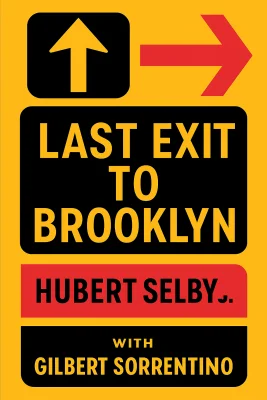
Last Exit to Brooklyn
Categories
Fiction, Classics, Thriller, Literature, American, Contemporary, Novels, New York, Literary Fiction, Dark
Content Type
Book
Binding
Paperback
Year
1999
Publisher
Marion Boyars
Language
English
ASIN
0747549923
ISBN
0747549923
ISBN13
9780747549925
File Download
PDF | EPUB
Last Exit to Brooklyn Plot Summary
Introduction
# Last Exit to Brooklyn: Fractured Souls in Urban Wasteland The neon lights of the Greeks diner cast sickly shadows across faces that had nowhere else to go. In post-war Brooklyn, near the Army base where soldiers stumbled drunk through streets that promised nothing but violence, a collection of broken souls moved through their nights like sleepwalkers in hell. They gathered in diners and bars, these fragments of humanity—young thugs with reform school swagger, drag queens chasing impossible love, union men drunk on temporary power, and teenage girls who learned too early that their bodies were currency in a world that gave them nothing else to trade. Each carried their own particular brand of damage, their own desperate hunger for something more than the grinding poverty and casual brutality that defined their existence. But Brooklyn offered no easy exits, only deeper descents into darkness where violence and desire intertwined like lovers in a death embrace. The city watched with indifferent eyes as its children destroyed themselves and each other, seeking connection but finding only exploitation, reaching for dignity but grasping only degradation.
Chapter 1: The Wasteland: Brooklyn's Lost Souls and Empty Dreams
The boys sprawled along the counter of the Greeks diner like discarded mannequins, another night bleeding into another drag of existence near the Brooklyn Army base. Vinnie wore his prison number tattooed on his wrist with pin and ink, a badge of honor from his time upstate. He'd known Steve, the guy who got killed by bulls during a stickup, and that connection to violence made him feel important in the endless nights of boredom and chrome-obsessed conversations. They talked cars with religious fervor—Pontiac grills, Plymouth pickups, Buick road-handling—their voices creating a liturgy of stolen rides and outrunning cops. The jukebox wailed hillbilly records that made them groan and shuffle outside, spitting into gutters, adjusting their turned-up collars in the hip shuffle they'd perfected behind bars. When three drunken rebel soldiers stumbled past, making crude remarks about Rosie—Freddy's occasional lay who clung to him like a parasite—the night exploded beyond boredom. Freddy's hand cracked across her face with the sound of breaking glass. The soldiers intervened with Confederate curses, and suddenly fists were flying in the sickly neon light. They piled into Freddy's car, chasing the fleeing soldiers down empty streets until panic drove one to climb a chain-link fence. The boys dragged him down like wolves, their kicks methodical and brutal. His face splashed into vomit and blood while they stomped his ribs and kidneys, the sound of breaking bones mixing with their laughter. The cops arrived to find the soldier barely breathing, uniform soaked in blood and puke. But Freddy had his story ready—they insulted his wife, he was defending her honor. The police, tired and wanting no paperwork, let it slide. Another night in Brooklyn ended with violence and lies, the boys washing blood from their shoes in the Greeks' filthy bathroom, already forgetting the look on the soldier's face when they threw him off the fence.
Chapter 2: Masks and Masquerades: Identity Crisis in Urban Shadows
Georgette was a hip queer who wore her homosexuality like armor, complete with women's panties, eye makeup dusted with gold and silver stardust, and long marcelled hair that caught light when she moved. At six-foot-four in heels and padded bra, she towered magnificent and defiant, refusing to hide behind marriage or masculine pretense like the closet queens who haunted the neighborhood's shadows. But beneath the glamour lay desperate love for Vinnie, the ex-con who treated her like a pet when the mood struck and ignored her when it didn't. She followed him everywhere, buying coffee, sitting on his lap, begging for attention while he patted her ass and called her sweetchips. The other guys tolerated her because she could get them high when they were broke, but Vinnie was different—he was her obsession, her impossible dream of love in a world that offered only cruelty. The dream shattered the night Harry threw a knife at her feet, playing a vicious game that ended with the blade buried deep in her calf. Blood poured from the wound, soaking her shoe, but what hurt worse was Vinnie's laughter as he poured iodine into the cut and watched her scream. The pain was nothing compared to the sound of his amusement at her agony. When she limped home, her brother Arthur found the benzedrine pills and the red spangled G-string she wore beneath her clothes. His rage was biblical—he ripped apart her drag clothes, destroyed her photographs, called her a filthy degenerate while their mother wept helplessly in the corner. Trapped in her room for days, forbidden visitors, denied even the pills that kept her functioning, Georgette felt the walls closing in. The room shrank around her until she couldn't breathe, couldn't think, couldn't exist without something to lift her out of the suffocating reality of who she was and who she could never be. Finally, she escaped to Goldie's apartment uptown, where the other queens lived on benzedrine and dreams, where she could pretend for a few more hours that love was possible.
Chapter 3: Bonds of Blood and Betrayal: Family as Prison
The wedding happened four hours before the christening, but what the hell—they got married first anyway. Tommy had knocked up Suzy, a big-hipped Polish girl who hid her pregnancy until she was seven months gone, her belly finally too large to disguise beneath loose dresses and careful posture. Her father, a lush who studied racing forms between beers, threw them a party at Murphy's Hall after the ceremony. The reception sprawled across long tables loaded with whiskey, beer, and sandwiches stacked high like small monuments to working-class celebration. Tommy sat quietly through the festivities, especially compared to the other guys, his real love reserved for his '76 Indian motorcycle—a small but powerful machine he'd fixed up with chrome and streamers. When Tommy kicked the Indian over, the engine roared to life while other guys struggled with their bikes, kicking and cursing as their machines coughed and farted like dying animals. Tommy would sit calmly, gun the motor, and wait for them to get started, his patience a stark contrast to their mechanical frustrations. Spook had been desperate for a bike for months, wearing a motorcycle hat long before he could afford wheels. When he finally scraped together enough money for an old police bike, his excitement was barely containable. The wedding party was in full swing when Spook announced he had to go riding—the night was perfect, clear and warm, made for the open road and the freedom that only came with speed. Tommy figured he might as well take a spin with Spook. Suzy was exhausted from the birth, ready to go home with the baby and sleep off the celebration. She told him to go ahead—what the hell, he'd be stuck in the house tomorrow anyway, fixing things and taking care of the kid. Roberta, a hip queer from the neighborhood who'd been dancing and entertaining the crowd all night, begged Tommy to take her along. So they left together—Tommy, Spook, and Roberta—three figures disappearing into the Brooklyn night while the party continued until dawn, unaware that some exits led nowhere good.
Chapter 4: Descent into Darkness: Self-Destruction as Survival
Tralala was fifteen the first time she was laid, in the park with three or four couples finding their own trees and grass patches in the darkness. There was no passion, just diversion from the endless boredom of hanging out at the Greeks, another way to kill time in a neighborhood that offered nothing but variations on emptiness. While other girls played games and giggled, Tralala didn't fuck around—either you put out or you didn't, and she had big tits that made her look like a woman instead of some kid still playing with dolls. She learned quickly that sex was currency, that the guys had what she wanted—money from rolled drunks, loot from jobs, enough cash for movies and pizza and brief escapes from the grinding poverty that defined their world. She'd set up sailors and soldiers, walking them into dark doorways or through empty lots where the boys waited with bricks and fists. The waterfront was filled with drunken seamen during the war, all of them carrying more money than they needed, more than they'd ever see again once they shipped out to die in foreign waters. But Tralala wanted more than her small share of the take. She figured it would be smarter to get laid by one guy and get it all instead of splitting with the crew. When a doggie with a thick roll bought her drinks and talked about his medals, his wounds, his plans to go home, she listened just long enough to get him to a hotel room. Then she hit him over the head with a whiskey bottle and emptied his pockets—fifty bucks, not bad for listening to his bullshit about getting shot up overseas. The doggie came looking for her the next night, blood caked on his face, begging just for his ID card back so he could return to base. He was shipping out, hadn't been home in three years, needed that card to get through the gate. Tralala spit in his face and kicked him in the balls while Tony and Al dragged him into a doorway and beat him unconscious. She stomped on his face until both eyes were bleeding and his nose was broken, then kicked him in the groin one more time before they left him lying in his own blood.
Chapter 5: Power and Its Illusions: The Strike as False Salvation
Harry Black was the worst lathe operator in a factory of more than a thousand men, but he was also the shop steward who could shut down the entire plant with a phone call. He'd taken the position during the war when the regular steward was drafted, and now he spent his days walking the factory floor, collecting dues, harassing workers who moved too fast, and telling the bosses to go fuck themselves whenever they questioned his authority. When the union contract expired and negotiations stalled, Harry felt power surge through him like electricity. He would be in charge of the strike headquarters, dispensing food and beer to the men, stamping their books, making sure the picket lines stayed strong. The empty store next to Willie's bar became his kingdom, complete with folding chairs, coffee urns, and cases of beer that he could order at will and charge to the union. The first days of the strike were almost festive. Men grabbed their signs eagerly, walked their shifts with purpose, gathered in the headquarters to drink beer and joke about how they'd bring the bosses to their knees. Harry sat behind his desk like a general, stamping books, making phone calls, feeling important for the first time in his life. He even bought a radio for the office—thirty dollars that came from union funds, all proof of his elevated status. But as weeks turned to months, the mood soured. The novelty wore off, replaced by the grinding reality of food lines and empty paychecks. When company trucks tried to break the picket line, the men exploded into violence—fists and clubs and fire hoses, bodies rolling in the street, ambulances screaming through the Brooklyn night. Harry watched from the sidelines, then bragged about the fight he'd avoided, his lies growing bigger with each beer. The strike was breaking him down, revealing the hollow man beneath the bluster, but he couldn't stop pretending he was in control. Power, he was learning, was as fragile as the picket signs that would soon be battered by weather and time.
Chapter 6: Violent Reckonings: When Desire Meets Consequence
The neighborhood queens gathered at Goldie's apartment for a benzedrine-fueled party, their voices rising in brittle laughter as they dished dirt and waited for the rough trade to arrive. When Vinnie and his crew showed up, drunk and high and looking for kicks, the night took on a dangerous edge that everyone could feel but no one wanted to acknowledge. Georgette sat on her makeshift throne, desperate for Vinnie's attention, while Lee preened in her golden hair and perfect makeup, convinced of her own superiority over the other queens. The apartment filled with smoke and nervous energy, benzedrine sharpening every edge until the air itself seemed to vibrate with potential violence. Harry from the bar grabbed Lee by the arm, his eyes bugging with benzedrine and lust. When she tried to pull away, he twisted her wrist until she screamed, then dragged her toward the bedroom with Vinnie's help. They threw her on the bed and took turns while she stopped struggling and started enjoying it, wrapping her legs around them and begging for more. The violence became pleasure, the degradation became desire, and the night spiraled into something darker than any of them had planned. Georgette watched it all happen, her dreams of love with Vinnie crumbling as he fucked Lee with mechanical brutality. She shot morphine into her leg and tried to pretend this was what she wanted, that having Vinnie at all was better than not having him. But when her turn came, when he finally called her sweetchips and led her to the bedroom, she tasted only the residue of what he'd done to Lee. The party ended with everyone scattered and broken, the queens counting their bruises and the boys washing blood from their knuckles. Georgette stumbled to the subway and rode back to Brooklyn, shooting up again in the bathroom of a flophouse, trying to kill the pain of knowing that love was just another lie she told herself to make the nights bearable.
Chapter 7: The Final Exit: Destruction Without Redemption
Tralala's descent accelerated after the beating, her standards dropping with each passing month like stones thrown into dark water. The Broadway bars became 8th Avenue dives, the 8th Avenue dives became waterfront joints where she'd fuck anyone with fifty cents for beer. She pulled her sweater tight over her sagging tits and waited for the next drunk to buy her a drink, but even the bums started avoiding her as she got dirtier and more desperate. When she finally stumbled back to Willie's bar in her old neighborhood, she was barely recognizable—hair matted with grease and God knows what else, makeup smeared into abstract patterns of desperation, clothes hanging in rags that barely covered her deteriorating body. But she still had those tits, and when she pulled her sweater up and bounced them in her hands, the crowd of drunken sailors and soldiers went wild with animal hunger. Someone poured beer over her nipples, someone else grabbed her ass, and suddenly she was the center of attention again, the queen of the bar for one last night. They dragged her out to the empty lot on 57th Street, ten or fifteen drunks forming a line while she lay on a car seat pulled from a wrecked vehicle, the springs poking through torn upholstery. She kept yelling about having the biggest goddamn pair of tits in the world while they took their turns, passing around cans of beer, more men arriving as word spread through the neighborhood like wildfire. Forty, maybe fifty men used her before she passed out, and then the kids who'd been watching took their turn, putting out cigarettes on her nipples, pissing on her, jamming a broomstick up her cunt while she drifted in and out of consciousness. When they finally got bored and left her lying among the broken bottles and garbage, Tralala was still breathing but barely conscious. Blood seeped from between her legs, mixing with the urine and semen that covered her body like a baptism in filth. She'd gotten what she always wanted—to be the center of attention, to have men fighting over her, to matter to someone. But the price was everything she'd ever been or could have been, and as she lay there in the rubble of the lot, she was already disappearing into the Brooklyn night.
Summary
In the wasteland of post-war Brooklyn, Selby's characters stumble through lives defined by violence, desperation, and the crushing weight of unfulfilled dreams. Georgette's tragic love for Vinnie, Tralala's descent from teenage prostitute to broken victim, Harry's pathetic grab for power during the strike—each story reveals souls fractured by poverty, prejudice, and the brutal indifference of urban life. They seek connection but find only exploitation, reach for dignity but grasp only degradation, their humanity slowly eroded by circumstances beyond their control and choices that lead only to deeper darkness. The book's title promises an exit, but Selby's Brooklyn offers none. His characters are trapped in cycles of abuse and self-destruction, their dreams ground down by the machinery of a world that creates such suffering without purpose or redemption. Yet in their very brokenness lies a terrible beauty—the recognition that even the most damaged souls yearn for love, respect, and meaning. Last Exit to Brooklyn stands as both indictment and elegy, a howl of rage against a society that abandons its children to violence and despair, and a mourning song for all the lives that could have been if mercy had ever walked these streets.
Best Quote
“In the winter everyones hate was bare if you looked. She saw hate in the icicles that hung from her window; she saw it in the dirty slush on the streets; she heard it in the hail that scratched her window and bit her face; she could see it in the lowered heads hurrying to warm homes …” ― Hubert Selby Jr., Last Exit to Brooklyn
Review Summary
Strengths: The review provides a critical examination of the literary establishment's narrow-mindedness in the 1960s, highlighting the unjust dismissal of certain narratives and characters. It effectively argues for the relevance and authenticity of underrepresented voices in literature, such as those of marginalized individuals. Weaknesses: The review lacks specific examples from the book to support its claims, and it occasionally veers into broader social commentary, which may detract from a focused literary analysis. Overall: The reviewer expresses regret over dismissing "Last Exit" due to critical bias, acknowledging its importance in depicting the realities of marginalized communities. The review suggests that the book remains relevant, challenging societal norms and the role of law in perpetuating inequality.
About Author

Hubert Selby Jr.
Selby interrogates the complexities of human suffering and addiction through his unyielding literary vision, drawing inspiration from the raw edges of life in Brooklyn. His writing emerged from a personal battle with illness and the absence of formal education, compelling him to transform adversity into creativity. While his first book, "Last Exit to Brooklyn," is notorious for its graphic depiction of urban despair, it is his novel "The Room" that Selby himself considered his most powerful work. His narrative style, often likened to jazz, employs stream-of-consciousness techniques and fragmented dialogue, reflecting the chaotic and painful experiences of his characters.\n\nSelby's themes extend beyond personal torment to explore societal issues, as demonstrated in "Requiem for a Dream," a harrowing tale of heroin addiction. Despite facing initial resistance in the United States, his works have found a more appreciative audience in Europe, where their complex emotional truths resonate deeply. Meanwhile, Selby's teaching career at the University of Southern California allowed him to influence aspiring writers, offering a platform to explore similar themes of obsession and redemption. Therefore, readers interested in exploring the darkest corners of the human psyche will find his books both challenging and enlightening.\n\nThe author’s impact extends beyond literature, with adaptations like "Requiem for a Dream" bringing his stories to a wider audience. His bio reflects a life marked by struggle and triumph, emphasizing the transformative power of literature. Although his work was initially overlooked by American critics, his narrative style and fearless exploration of taboo subjects continue to inspire new generations of writers. Selby’s ability to connect personal hardship with universal themes of isolation and hope ensures his place as a significant figure in American literature.
Read moreDownload PDF & EPUB
To save this Black List summary for later, download the free PDF and EPUB. You can print it out, or read offline at your convenience.
Last Exit to Brooklyn
by Hubert Selby Jr.
