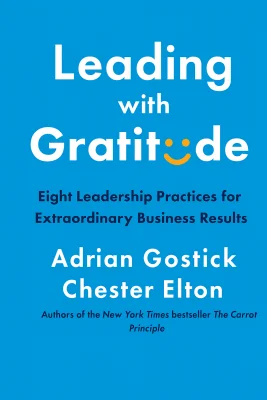
Leading with Gratitude
Eight Leadership Practices for Extraordinary Business Results
Categories
Business, Nonfiction, Self Help, Leadership, Audiobook, Management, Buisness
Content Type
Book
Binding
Kindle Edition
Year
2020
Publisher
Harper Business
Language
English
ASIN
B07SRT9XV4
ISBN
006296576X
ISBN13
9780062965769
File Download
PDF | EPUB
Leading with Gratitude Plot Summary
Introduction
Jane was exhausted. As the newly appointed manager of a struggling sales team, she had spent months implementing new strategies, refining processes, and pushing her team to meet ambitious targets. While the numbers were slowly improving, the atmosphere in the office remained tense. One evening, after everyone had left, she discovered a note slipped under her door from Mark, one of her most reliable team members. It simply read: "I've been working here for three years, and no one has ever noticed how I stay late to help new hires. I don't need a parade, but sometimes I wonder if anyone sees what I'm doing." Jane sat back in her chair, stunned by the realization that in her focus on fixing problems, she had completely overlooked acknowledging the good things happening right under her nose. This scenario plays out in workplaces everywhere, creating what experts call the "gratitude gap" – the chasm between knowing that appreciation matters and actually practicing it consistently. Research shows that while 81% of employees would work harder if their boss showed more gratitude, only a small percentage of leaders regularly express appreciation. This disconnect isn't just unfortunate – it's costly. Organizations suffer from increased turnover, reduced engagement, and diminished innovation when gratitude is absent. The good news is that the ability to lead with gratitude is not an innate talent but a learnable skill. By understanding why this gap exists and adopting specific practices to bridge it, anyone can transform their leadership approach and create environments where people feel valued, motivated, and ready to contribute their best work.
Chapter 1: The Gratitude Gap: Why Leaders Fail to Express Appreciation
Garry Ridge, CEO of WD-40 Company, noticed something strange during the 2008 financial crisis. As he toured company locations, employees kept asking him, "Garry, how are you?" with unusual frequency. At first, he worried they'd heard rumors about his health. Then it dawned on him – they weren't asking about his wellbeing; they were really asking about the company's future. "They wanted confirmation that our company was okay," Ridge explained. Rather than letting fear consume his workforce, Ridge saw an opportunity. "Let's not waste a good crisis," he declared. "Everywhere else our people would go they'd hear about the horror; when they came to work with us, they were going to hear about hope." He instituted a policy of "No lying, no faking, no hiding conversations" and promised that, unlike many companies at the time, they would not lay off a single person or reduce any benefits. Instead, they would increase investment in employee learning and development during the downturn. Most importantly, Ridge instructed his managers to lead with gratitude by regularly expressing sincere appreciation to their "tribe." Once managers understood this expectation, they began finding creative ways to acknowledge employees for living the company's core values. They would publicly thank team members for "owning it" when helping clients understand new products, or for aiding teammates through challenges and "succeeding as a tribe." Even the supply chain leader created a presentation highlighting how his people were helping "sustain the company economy." The results were remarkable. In 2010, WD-40 Company reported the best financial performance in its fifty-seven-year history. Over the next decade, the company's market capitalization grew nearly 300 percent, delivering a compounded annual growth rate of total shareholder return of 15 percent. Even more impressive, employee engagement soared, with 99 percent of team members reporting they love working there. This story illuminates a profound truth: expressions of gratitude – when authentic, specific, and timely – serve as powerful motivators and productivity boosters, especially during challenging times. Yet despite its proven effectiveness, gratitude remains one of the most misunderstood and misapplied management tools. The gratitude gap exists not because leaders don't value appreciation, but because various psychological barriers, cultural norms, and misperceptions prevent them from practicing it consistently. As Ridge observed, "Gratitude creates feelings of belonging. You and I have left an organization, even a relationship, because we didn't feel like we belonged. If our people know we are grateful, we are going to create an organization where they really want to come and give their best."
Chapter 2: Busting the Myths: Overcoming Common Obstacles to Gratitude
Anne was a pharmaceutical sales superstar. Her new employer considered it a major coup to have poached her from a competitor where she had been consistently outperforming her colleagues. With her improv comedy background, Anne had a knack for charming her way past medical office gatekeepers and making such positive impressions on physicians that they would actually ask when she'd be returning – virtually unheard of in medical sales. When asked why she had left her previous company, Anne sighed and told a revealing story. Her former manager had once asked what he could do to improve the workplace. Surprised by his apparent openness, she explained that she rarely received acknowledgment for her contributions and that even occasional thanks would be welcome. Later that day, as they headed to client meetings, the manager mockingly thanked her for every trivial action – "Hey, nice job opening the door" and "Wow, you turned the radio down perfectly!" When Anne didn't laugh at what he considered hilarious, he told her to "lighten up." That night, she began updating her resume. This manager fell victim to one of the most common myths preventing gratitude in the workplace – the belief that employees today want excessive praise. Many leaders, particularly those managing younger generations, complain that workers have become praise-hungry and needy. They worry that offering more recognition will inflate egos, reduce motivation, or lead to demands for higher compensation. Some even cite concerns about the "narcissism epidemic" among younger workers. Research tells a different story. What younger workers primarily seek isn't indiscriminate praise but guidance and feedback. They want to know if their work is correct, valued, and making a meaningful contribution. The Motivators Assessment, taken by over 75,000 people, reveals that the desire for expressions of gratitude at work is three times higher in people in their twenties than those in their sixties – not because they're narcissistic, but because they've grown up with more coaching and immediate feedback in all aspects of life. The irony is that the desire for meaningful feedback isn't unique to millennials or Gen Z. A Forbes survey found 65% of all employees would like more feedback than they currently receive. The difference is that younger workers are more willing to vocalize this need and even leave when it isn't met. Studies consistently show that regular, deserved praise doesn't lead to inflated egos. On the contrary, research dating back more than seventy years demonstrates that reinforcement for positive behaviors and work well done is essential for healthy, productive relationships. Perhaps the most compelling evidence comes from research by psychologists John Gottman and Robert Levenson. Their studies of married couples revealed that relationships that endure maintain a ratio of five positive interactions to each negative one. Those that end in divorce typically have equal or more negative than positive exchanges. Similarly, workplaces that thrive maintain this same crucial balance of positivity, creating environments where people feel valued and motivated to contribute their best.
Chapter 3: Seeing Excellence: How to Spot Valuable Contributions
In the midst of the global financial crisis, Alan Mulally, newly appointed CEO of Ford Motor Company, faced a daunting challenge. The company was hemorrhaging money, and an unhealthy degree of fear had infected its leadership ranks. Executive meetings had become battlegrounds where employees tried to identify flaws in each other's plans rather than collaborating on solutions. The sixteen top leaders from around the world operated in isolation, rarely sharing information or working together. Mulally instituted weekly business plan review meetings, bringing all senior leaders together every Thursday. "This was all new and, of course, they were apprehensive," he recalled. "But it sounded good to them. It sounded like, 'My gosh, we're going to move into the light.'" He introduced his "working-together management system" based on eleven key principles, from "People first... love them up" to "Respect, listen, help, and appreciate each other." The transformation wasn't immediate. Ford had operated on the philosophy that you only bring issues to your boss if you already have a solution. Mulally's new approach acknowledged that problems were inevitable and required everyone's help to solve. He encouraged leaders to share challenges openly and ask for assistance when needed, assuring them the team would collaborate on solutions. The breakthrough came when Mark Fields, North American president, took a chance and admitted a vehicle launch under his purview would be delayed. "The air went out of the room," Mulally recalled. "I could see in people's eyes that they thought doors would open up behind Mark and two large human beings would remove him. 'Bye-bye, Mark.'" Instead, Mulally began applauding and said, "Mark, thank you so much. That is great visibility." Then he asked the group, "Is there anything we can do to help Mark out?" Within seconds, ideas were flying around the room. This simple moment transformed Ford's culture. As Mulally frequently told his leaders, "You have a problem; you are not the problem." By creating transparency and a working-together culture, he eliminated infighting and united the organization. Employee engagement soared from around 20 percent when he arrived to 91 percent eight years later – the highest of any large company in the world. Under his leadership, Ford increased sales, profit, and cash flow while reducing debt, becoming the only major American automaker to avoid government bailout during the recession. Great leaders like Mulally understand that seeing excellence requires creating environments where people feel safe to be transparent about both successes and challenges. When employees know their leader will respond with gratitude rather than judgment, they're more willing to share information that can lead to breakthrough solutions. This approach represents a fundamental shift from the traditional fear-based management that stifles innovation and engagement. Instead of viewing problems as failures, these leaders see them as opportunities for growth, collaboration, and ultimately, excellence. As Mulally summarized, "The leader is really, really important. The world out there is now figuring this out: Skills are one thing, but to create a smart and healthy organization, void of politics, where people don't go after each other, that's about respecting them, showing them the data, and thanking them for what they've done."
Chapter 4: Authentic Expression: Tailoring Gratitude to Individual Needs
Kent, a learning and development director in the software industry, spent months creating a new employee orientation program that would bring new hires up to speed in half the time of the previous method. The innovation was estimated to save the company over seventy-five thousand dollars in its first year. Kent was proud of his achievement and not surprised when, at the next staff meeting, one of the company leaders presented him with a gift card to recognize his hard work. "I thought, okay, that's nice, a twenty-five-dollar gift card," Kent recalled. "I probably wouldn't have thought that much about it except for what happened next." The senior executive who had recognized Kent clapped her hands and said, "Now, let's have some fun. Who can name the teams in this weekend's Super Bowl?" The woman sitting next to Kent raised her hand and got the question right. Her prize? The exact same twenty-five-dollar gift card Kent had received for his months of work and substantial company savings. Kent laughed when telling the story. "I wasn't upset, I thought it was funny. But I also didn't leave feeling my work was that appreciated." His experience highlights a crucial insight: not everyone values the same types of recognition. What makes one person feel deeply appreciated might leave another feeling underwhelmed or even unnoticed. Research from the Motivators Assessment, now taken by over 75,000 people, reveals that each person has a unique combination of workplace drivers among twenty-three common motivators, including autonomy, challenge, creativity, recognition, teamwork, and purpose. Some people are energized by public acknowledgment, while others prefer private appreciation. Some value tangible rewards, while others find greater meaning in being given new opportunities or additional responsibilities. Leaders who understand this principle tailor their expressions of gratitude to match individual preferences. For example, someone driven by autonomy and excelling might feel most recognized when given the chance to work independently on an important project. In contrast, an employee motivated by teamwork and friendship would likely feel more valued when celebrated with colleagues for a significant achievement. Chad Pennington, former NFL quarterback turned entrepreneur, explains: "Tailoring your gratitude toward the specific individual shows first, empathy, and second, that you are in tune to what he or she is accomplishing. It shows they specifically matter to the success of the team." This personalized approach demonstrates that a leader truly sees and values the unique contributions each team member makes. The most effective leaders avoid generic praise like "Good job, everyone!" which can come across as careless or disrespectful. Instead, they take time to notice specific achievements and express appreciation in ways that resonate with each individual. As Dave Kerpen, founder of Likeable Media, discovered after interviewing hundreds of successful CEOs, this attentiveness to individual preferences doesn't just make people feel good – it transforms workplace culture, driving engagement, retention, and ultimately, results.
Chapter 5: Building a Culture of Appreciation: From Personal to Organizational
At the 92nd Street Y, a cultural and community center on Manhattan's Upper East Side, Henry Timms was deeply impressed by employees' commitment to their mission. "We aren't trying to flog a toothpaste the world doesn't need," he explained. "We are about trying to make people's lives happier, more connected to each other, and help them find the gifts inside themselves. That means every day, every member of the staff comes through the doors trying to make people's lives better." Timms understood that for a culture of appreciation to truly flourish, gratitude needed to be woven into the organizational fabric rather than depending solely on leadership. "In one version of this story, Leader A is a great leader: He always expresses gratitude; he always says thank you to the intern. That's fine. But what we would seek is Story B, a culture where gratitude is about everybody. It's not a leader-follower dynamic but a culture for the whole institution. In a perfect institution, there would be a context of gratitude that would exist at every level." This vision represents the evolution from individual expressions of gratitude to a comprehensive culture of appreciation, where acknowledging contributions becomes part of how everyone operates daily. Research supports this approach: a Simply Talent poll of 1,500 employees across Europe found that peers have twice as much influence on employee engagement levels as line managers, and companies with peer-to-peer recognition systems are 35% more likely to report lower employee turnover. JetBlue Airlines exemplifies this holistic approach with their Lift program, where coworkers can nominate colleagues for everyday contributions as well as exceptional efforts. Successes are shared company-wide on an internal newsfeed, creating visibility and reinforcement for valued behaviors. The results speak for themselves: JetBlue data shows that for every 10% increase in people reporting being recognized, they see a 3% increase in employee retention and a 2% increase in engagement. Building such a culture starts with explicitly connecting gratitude to organizational values. At WD-40 Company, CEO Garry Ridge helps his team connect one of their core values – "Creating positive lasting memories in all our relationships" – with expressions of gratitude through an annual retreat. The culminating event involves gathering under the stars where team members write something they're grateful for from the previous year on a piece of paper, then throw it into a campfire. Often participants share their stories, creating powerful moments of connection and meaning. "These moments of gratitude help move people from feeling their work is a mindless ritual to a sacred duty, shared with other humans, and creates special memories that have bonded people to each other," Ridge explains. This approach transforms appreciation from an occasional leadership gesture to a defining characteristic of the organization, where people at all levels actively look for and acknowledge the positive contributions of their colleagues. Frances Hesselbein, former CEO of the Girl Scouts of the USA, whom management guru Peter Drucker called "the best leader I've ever known," summarizes this philosophy perfectly: "We find leaders who are values-based, mission-focused, and demographic-driven are grateful. We find these leaders live with gratitude through their language and their actions. They are the leaders of the future. Without gratitude, we find leaders of the past."
Chapter 6: Taking Gratitude Home: Expanding Your Impact Beyond Work
Mike had worked for his boss Phil for several years and genuinely liked him. Phil was smart, personable, and regularly expressed gratitude for his team's contributions. During lunch with a colleague, Mike shared a surprising story about his brother who lived in a nearby gated community. The brother had mentioned a neighbor whom he called "Mr. Grumpy Pants" – a man so difficult that if you accidentally threw your Frisbee into his yard, you considered it lost forever. If a neighbor's tree branch bent over his fence after a snowfall, he would immediately cut it off. Mike's brother felt sorry for the man's wife and daughter. "So a few weekends ago," Mike continued, "my brother invites me to a party at their clubhouse, and he points the grumpy neighbor out to me. I'm not messing with you. It was MY BOSS, PHIL!" Mike's face grew serious. "It has really made me second-guess him. I mean, is that weird or what? He's a completely different person out of here." This Jekyll and Hyde syndrome isn't uncommon. Some leaders give their best selves at work but have little left for those who should matter most. Others show gratitude freely with friends and family while being completely ungrateful on the job. Both approaches create a disconnect that undermines the full potential of gratitude to transform lives and relationships. When gratitude becomes a way of being rather than just a workplace strategy, its benefits extend far beyond professional success. Robert Emmons, a professor at the University of California, Davis, has conducted extensive research on gratitude's effects. "The benefits from counting blessings are tangible, emotionally and physically," he explains. "People are 25 percent happier and more energetic if they keep gratitude journals, have 20 percent less envy and resentment, sleep 10 percent longer each night and wake up 15 percent more refreshed, exercise 33 percent more, and show a 10 percent drop in blood pressure compared to persons who are not keeping these journals." One leader who experienced this transformation firsthand is Dave Kerpen, founder of Likeable Media. Frustrated by the typical dinner conversation with his children (Parent: "How was your day?" Kids: "Fine." Parent: "What did you do?" Kids: "Nothing."), he instituted a practice where everyone at the dinner table shares three things: their favorite moment of the day, one person they're grateful for who's not at the table, and one person they're grateful for who is at the table but hasn't been thanked yet. "My kids crazy hated the idea at first," Kerpen recalls, "but now it's a practice we do every day and they're proud of it. I get a little teary-eyed. My kids went from cynical and dreading it to embracing it to the point where they share it with friends when they're over for dinner." Other leaders have found equally powerful ways to extend gratitude beyond work. Gail Miller, chairwoman of the Larry H. Miller Group of Companies, involves her grandchildren in philanthropy to build gratitude and character. Starting at age twelve, each grandchild must identify a need that resonates with them, research how a nonprofit would use donated funds, and present their findings to the family board. If approved, the grandchild delivers the funding themselves. "Their responsibility with this exercise is to bless those who don't have what they have," Miller explains. For Rebekah Lyons, gratitude became a lifeline during a period of debilitating anxiety after moving to New York City. "I'm a person of faith, and I read the verse 'Be anxious for nothing, but in everything with prayer and petition, with thanksgiving, let your requests be known to God.' I thought: The key is not just to pray for relief of this anxiety, but to do it with a heart of gratitude." She began keeping a gratitude journal, writing twenty things she was thankful for each day. "My gratitude was birthed from that season of anxiety. I realized that if I want peace every day, then I need to invite it in."
Chapter 7: The Measurable ROI of Gratitude: Financial and Human Benefits
When Hubert Joly became CEO of Best Buy, the electronics retailer was struggling. Rather than starting in the corporate offices, Joly spent his first week working in one of the company's retail stores. "We've got two ears and one mouth, which means we need to do a lot more listening than talking," he explained. "I wanted to learn from our people on the front line, and I learned they were unhappy. For example, the previous leadership team had reduced their employee discount at the same time awarding big retention bonuses to senior executives, so we reinstated the discount. The search engine on the website was not working – they couldn't find products, so we replaced it." This approach of listening and responding with gratitude-inspired actions transformed the company. "We took care of our associates' needs first, and that unleashed unlimited energy and passion because they felt respected and listened to," Joly said. The results were remarkable: under his leadership, Best Buy's stock price increased from $11 to $110, and the company went from losing market share to gaining it against formidable online competitors. Joly's experience isn't an anomaly. A study of 200,000 employees found that grateful managers lead teams with measurably better business outcomes – including up to twice the profitability of their peers, an average 20% higher customer satisfaction, and significantly higher scores in employee engagement metrics like trust and accountability. Research also shows that organizations with robust recognition programs have 31% lower voluntary turnover rates compared to organizations with ineffective recognition programs. Beyond these impressive numbers, the human benefits of gratitude create a powerful ripple effect throughout organizations and communities. Ken Chenault, retired chairman and CEO of American Express, maintained a practice of expressing gratitude to employees at all levels through brown-bag lunches around the world. "If people see a caring criteria is put in place, they get a sense of how your decisions and actions are guided by core values," he explained. These interactions built trust and connection across the company, creating a culture where people felt valued and understood. Jonathan Klein, chairman of Getty Images, uses gratitude to strengthen relationships with both current and potential team members. He personally writes thank-you notes to each of his 2,000 employees on their key work anniversaries. Klein even credits gratitude with helping him recruit a talented employee who initially declined to join the company. After the candidate decided to stay with his previous employer, Klein called to express understanding and appreciation for his consideration. A year later, that same candidate called back ready to make the move to Getty. "He stressed how influential that call and expression of gratitude was to him and his subsequent decision to join us," Klein said. The most powerful testament to gratitude's ROI comes from former astronaut Neil Armstrong. After making history as the first person to walk on the moon, Armstrong sent a letter of gratitude to the entire team who created his extravehicular mobility unit (EMU) – the spacesuit that protected him in the vacuum of space. He wrote that the suit "turned out to be one of the most widely photographed spacecraft in history," adding with characteristic humor that it was "no doubt due to the fact that it was so photogenic. Equally responsible for its success was its characteristic of hiding from view its ugly occupant." He concluded with the simple truth that made all the difference: "Its true beauty, however, was that it worked." This blend of humility and authentic appreciation exemplifies why gratitude creates such profound returns. As Brené Brown discovered in her twelve years of research: "I did not interview one person who had described themselves as joyful who did not actively practice gratitude. It's not joy that makes us grateful, it's gratitude that makes us joyful."
Summary
Throughout these explorations of gratitude in leadership, one truth emerges with striking clarity: the most successful organizations are led by people who genuinely value and consistently express appreciation. From Garry Ridge at WD-40 Company creating hope during economic crisis, to Alan Mulally transforming Ford's culture by celebrating transparency, to Hubert Joly listening and responding to frontline employees at Best Buy – these leaders demonstrate that gratitude isn't just a nice-to-have soft skill but a critical driver of measurable business results and human flourishing. The journey to becoming a more grateful leader begins with awareness – recognizing the myths and barriers that prevent us from expressing appreciation, then consciously adopting practices that make gratitude a natural part of how we lead and live. This means tailoring our expressions of thanks to individual preferences, connecting appreciation to organizational values, and fostering peer-to-peer recognition that creates cultures where gratitude flourishes at every level. Most importantly, it means extending this practice beyond work to enrich all our relationships. As Chad Pennington wisely noted, "The only way you get to big wins and big goals is to accomplish your little goals and little wins – that's why celebrating those is really important." By cultivating this mindset of seeing and celebrating contributions both large and small, we create environments where people feel valued, motivated, and empowered to give their best – not out of fear or obligation, but because they know they matter and their efforts are genuinely appreciated.
Best Quote
“Around here we don’t have mistakes; we have learning moments. A learning moment is a positive or negative outcome of any situation that is openly and freely shared to benefit all. That’s why I tell my people that I’m consciously incompetent, because as we embrace learning moments they lead us to the next step and to the next place.” ― Adrian Gostick, Leading with Gratitude: Eight Leadership Practices for Extraordinary Business Results
Review Summary
Strengths: The book's first section, which dispels myths, is highlighted as the most useful part, offering valuable lessons efficiently. The concept of the Motivators Assessment is considered worth further consideration. Weaknesses: The foreword is criticized for the author's perceived privilege. The writing style is described as filled with unsuccessful humor, making it less readable. The book is noted to be heteronormative, white, Christian, and socially conservative, potentially alienating marginalized readers or those valuing EDI (Equity, Diversity, and Inclusion). Overall Sentiment: Mixed Key Takeaway: While the book contains useful content, particularly in its initial sections, its effectiveness is undermined by its writing style and lack of inclusivity, making it less appealing to diverse audiences.
About Author
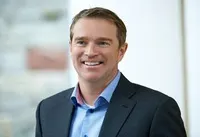
Adrian Gostick
Gostick synthesizes psychological insights and workplace dynamics to redefine modern leadership strategies. He emphasizes the transformative power of gratitude and resilience in organizational culture, evident in his influential books like "Leading with Gratitude" and "Anxiety at Work." These works explore how gratitude extends beyond mere courtesy, instead serving as a potent tool for achieving extraordinary business outcomes. By blending empirical research with engaging narratives, his books provide leaders with practical methods to foster high-performance teams and resilient work environments.\n\nThe author’s approach focuses on cultivating empathy and recognition within the workplace, arguing that these elements are crucial for employee motivation and engagement. For example, his book "The Carrot Principle" discusses the role of positive reinforcement in building an "all-in" culture where employees are fully committed. Therefore, managers and leaders seeking actionable strategies for improving organizational effectiveness will find Gostick’s insights particularly beneficial. His contributions extend beyond individual businesses to influence the broader discourse on leadership and employee engagement.\n\nIn addition to his literary work, Gostick is also recognized as a prominent speaker and consultant, having founded The Culture Works, a global consultancy. This aspect of his career further amplifies his impact on multinational companies looking to enhance their corporate culture. Consequently, his recognition as a No. 1 New York Times bestselling author and a top 10 global guru in leadership underscores his significant influence in the field. This short bio highlights how his work not only enriches business literature but also offers practical benefits for leaders aiming to cultivate more effective and humane workplaces.
Read moreDownload PDF & EPUB
To save this Black List summary for later, download the free PDF and EPUB. You can print it out, or read offline at your convenience.
Leading with Gratitude
by Adrian Gostick
