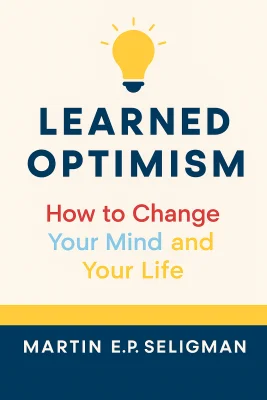
Learned Optimism
How to Change Your Mind and Your Life
Categories
Business, Nonfiction, Self Help, Psychology, Philosophy, Health, Science, Mental Health, Audiobook, Personal Development
Content Type
Book
Binding
Paperback
Year
2006
Publisher
Vintage
Language
English
ISBN13
9781400078394
File Download
PDF | EPUB
Learned Optimism Plot Summary
Introduction
# Learned Optimism: How Explanatory Style Transforms Resilience and Achievement Why do some individuals emerge stronger from life's inevitable setbacks while others find themselves trapped in cycles of defeat and despair? This fundamental question about human resilience reveals a profound truth that challenges our conventional understanding of success and failure. The answer lies not in our circumstances, intelligence, or even our efforts, but in something far more subtle yet powerful: the habitual way we explain events to ourselves. This book presents a groundbreaking psychological framework that transforms optimism from a vague personality trait into a precise, measurable cognitive skill. Through rigorous scientific research, we discover that our explanatory style—the automatic patterns we use to interpret both victories and defeats—serves as the hidden architect of our emotional reality. This internal narrative doesn't merely describe our experiences; it actively shapes our future behavior, influences our physical health, and ultimately determines whether we thrive or merely survive in an unpredictable world. The theory reveals how mastering these explanatory patterns can serve as a form of psychological immunization against depression, failure, and learned helplessness.
Chapter 1: The Three Dimensions of Explanatory Style
Explanatory style represents the characteristic way individuals interpret the causes of events in their lives, particularly negative ones. This cognitive framework operates as an automatic mental filter that determines whether setbacks become stepping stones or stumbling blocks. Understanding explanatory style requires examining three fundamental dimensions that work together to create our unique psychological fingerprint for processing adversity. The first dimension, permanence, distinguishes between temporary and permanent explanations for negative events. When someone loses a job and thinks "The economy is terrible right now" versus "I'm unemployable," they are choosing between temporary and permanent interpretations with vastly different psychological consequences. Temporary explanations preserve hope and motivation by suggesting that circumstances can change, while permanent explanations create a sense of futility that undermines future effort. The second dimension, pervasiveness, concerns whether we view causes as specific to one situation or universal across multiple life domains. A student who fails an exam and concludes "I'm bad at math" demonstrates specific thinking, while one who decides "I'm stupid" exhibits universal thinking that contaminates unrelated areas of competence. Specific explanations contain damage to particular situations, while universal explanations spread failure like a psychological virus throughout one's entire self-concept. The third dimension, personalization, involves the degree to which we internalize blame for negative events versus attributing them to external factors. While appropriate self-responsibility is healthy, excessive personalization can destroy self-esteem and motivation. The key lies in developing balanced attribution patterns that acknowledge personal agency without falling into destructive self-blame. These three dimensions combine to create two distinct explanatory patterns with profound implications for mental health and achievement. Optimistic individuals explain bad events as temporary, specific, and external while viewing good events as permanent, pervasive, and personal. Pessimistic individuals reverse this pattern, creating a cognitive framework that amplifies setbacks and minimizes successes. This systematic difference in explanatory style predicts everything from academic performance to physical health, revealing why two people facing identical challenges can have completely different life outcomes.
Chapter 2: Measuring and Understanding Optimistic vs Pessimistic Patterns
The scientific study of explanatory style required developing sophisticated methods to measure something as subjective as our internal dialogue about causation. Traditional personality assessments often relied on self-reports that could be easily manipulated or influenced by social desirability bias. The breakthrough came through creating instruments that captured automatic thought patterns rather than conscious self-perceptions, revealing the true cognitive habits that drive behavior. The Attributional Style Questionnaire represents the gold standard for measuring explanatory patterns through carefully constructed hypothetical scenarios. Participants read situations involving both positive and negative events, then provide spontaneous causal explanations that are systematically coded along the three dimensions of permanence, pervasiveness, and personalization. This method bypasses conscious filtering to reveal unconscious explanatory habits that people might not recognize in themselves. A complementary technique called Content Analysis of Verbatim Explanations allows researchers to assess explanatory style from naturally occurring speech or writing. By analyzing how people spontaneously explain events in interviews, diaries, press conferences, or social media posts, researchers can determine explanatory patterns without formal testing. This method has enabled fascinating studies of historical figures, athletes, and public personalities whose explanatory styles can be linked to their achievements and failures across decades. The measurement process reveals that explanatory style exists on a continuum rather than as discrete categories of optimist versus pessimist. Most people fall somewhere between these extremes, with their patterns varying somewhat across different life domains such as work, relationships, and health. However, individuals tend to show consistent explanatory tendencies that remain relatively stable over time unless deliberately modified through intervention. These assessment tools have uncovered surprising findings about how explanatory style relates to other psychological measures. Optimistic explanatory style correlates strongly with resilience and performance but shows little relationship to intelligence, socioeconomic status, or initial talent levels. This suggests that explanatory patterns represent a distinct psychological factor that operates independently of cognitive ability or external advantages, making it accessible to anyone regardless of their starting circumstances. The precision of these measurement techniques has enabled researchers to test explanatory style's predictive power across numerous life domains with remarkable consistency. From insurance sales to Olympic swimming, from academic achievement to recovery from heart surgery, the measurements consistently reveal that how people explain events matters as much as their circumstances or abilities in determining outcomes.
Chapter 3: The ABC Model: Adversity, Belief, and Consequences
The ABC model provides a simple yet powerful framework for understanding how our minds process difficult experiences and generate emotional responses. This model reveals that our reactions to setbacks don't stem directly from the events themselves, but from our beliefs and interpretations of those events. Adversity represents the triggering situation, Belief encompasses our explanatory response, and Consequences include both our emotional reactions and subsequent behaviors. The model operates on a deceptively simple principle that challenges our intuitive understanding of cause and effect. We typically assume that adversity directly causes our emotional consequences, creating a linear relationship where bad events inevitably produce bad feelings. However, the ABC model demonstrates that our beliefs about adversity serve as the crucial mediating factor that determines our actual response. The same objective adversity can produce vastly different consequences depending on the explanatory beliefs we apply to it. Consider two entrepreneurs whose businesses fail during an economic downturn. The first entrepreneur thinks, "I'm a terrible businessperson and should never have tried this." The second thinks, "This was bad timing with the recession, but I learned valuable lessons for my next venture." The adversity is identical, but their beliefs lead to dramatically different consequences. The first entrepreneur feels hopeless and abandons entrepreneurial pursuits, while the second feels motivated to apply their newfound knowledge to future opportunities. The power of this model lies in its revelation that we have far more control over our responses than we typically realize. While we cannot always control the adversities that befall us, we can learn to recognize and modify our automatic beliefs about those adversities. This insight transforms us from passive victims of circumstance into active agents capable of choosing our emotional and behavioral responses to life's inevitable challenges. The ABC model also explains why traditional approaches to building resilience often fall short. Simply encouraging people to "think positive" or "stay strong" fails to address the automatic belief systems that generate negative emotions. Instead, lasting change requires systematic attention to the explanatory beliefs that operate between adversity and consequences, creating sustainable patterns of resilient thinking that function even under extreme stress.
Chapter 4: Learned Helplessness and the Depression Connection
Learned helplessness provides the crucial bridge between our thinking patterns and the development of clinical depression. This phenomenon occurs when individuals repeatedly experience situations where their actions seem to have no effect on outcomes, leading them to generalize this helplessness to new situations where they actually do possess control. The connection reveals why some people become severely depressed after relatively minor setbacks while others remain resilient through major life crises. The process begins with exposure to uncontrollable negative events, but the crucial factor determining long-term impact is not the events themselves but how individuals explain them. When people interpret bad events through the lens of permanent, pervasive, and personal causation, they develop expectations of future helplessness that become self-fulfilling prophecies. They reduce their efforts because they believe success is impossible, which ensures poor outcomes, which confirms their belief in their fundamental inadequacy. Research demonstrates that this learned helplessness closely mirrors the cognitive, emotional, and behavioral symptoms of clinical depression. Both conditions involve reduced activity levels, negative thinking patterns, loss of appetite and pleasure, social withdrawal, and feelings of hopelessness about the future. The similarity is so striking that learned helplessness serves as an accurate laboratory model for understanding how depression develops and persists in real-world settings. The therapeutic implications of this connection are profound and hopeful. If helplessness is learned through experience and maintained by explanatory patterns, it can be unlearned through new experiences and modified explanatory styles. This understanding has revolutionized depression treatment, shifting focus from simply managing symptoms with medication to actively rebuilding the cognitive foundations of hope and personal agency. Cognitive therapy based on explanatory style change has demonstrated remarkable effectiveness in treating depression, often matching or exceeding the benefits of antidepressant medications. More importantly, individuals who learn to modify their explanatory patterns show lasting protection against future depressive episodes, suggesting that these cognitive skills provide permanent tools for maintaining mental health rather than temporary symptom relief. The learned helplessness model also explains why depression often spreads across multiple life domains even when problems exist in only one area. Pessimistic explanatory patterns cause individuals to generalize single failures into universal inadequacies, creating a psychological domino effect that undermines confidence and motivation across unrelated situations.
Chapter 5: Disputation Techniques for Challenging Negative Thoughts
Disputation represents the active process of challenging and changing our automatic negative thoughts when adversity strikes. This technique transforms us from passive victims of our own thinking patterns into skilled investigators who demand evidence and accuracy from our internal dialogue. Rather than accepting our first explanations as unquestionable truth, disputation teaches us to examine our thoughts with the same healthy skepticism we would apply to questionable claims from unreliable sources. The disputation process operates through four key strategies that systematically dismantle pessimistic thinking patterns. Evidence examination involves asking what concrete proof actually supports our negative beliefs, often revealing that our catastrophic interpretations lack any factual foundation. Many of our worst fears and self-criticisms crumble under this simple test of demanding supporting evidence rather than accepting thoughts as facts. Alternative explanation generation encourages us to consider other possible causes for negative events, breaking us free from the tunnel vision that focuses only on the worst possible interpretations. When we force ourselves to brainstorm multiple explanations for setbacks, we often discover more benign or even positive interpretations that we initially overlooked in our rush to self-blame or catastrophize. Implication analysis helps us recognize that even if our negative beliefs contained some truth, the consequences might not be as dire as we imagine. This technique involves following our worst-case scenarios to their logical conclusions and often discovering that we could cope with and recover from even genuinely bad outcomes. Usefulness evaluation asks whether dwelling on negative thoughts serves any productive purpose in our current situation or simply wastes mental energy that could be directed toward constructive action. Effective disputation requires treating our own negative thoughts as we would treat criticism from someone we don't trust or respect. When our internal voice declares "I always mess everything up," we can respond as we would to an unfair critic by demanding specific evidence, pointing out obvious exceptions, and highlighting the destructive nature of such sweeping generalizations. This process doesn't involve blind optimism or denial of real problems, but rather insists on accuracy, fairness, and usefulness in our self-assessment. The power of disputation lies in its ability to interrupt the automatic progression from negative thought to emotional despair. By inserting a moment of critical analysis between our initial reaction and our emotional response, we create psychological space for more balanced, realistic thinking. This skill, once developed through practice, becomes an automatic mental reflex that provides permanent protection against the kind of runaway negative thinking that leads to depression and learned helplessness.
Chapter 6: Flexible Optimism: Strategic Application Across Life Domains
Flexible optimism represents the sophisticated ability to consciously choose between optimistic and pessimistic thinking based on situational demands, personal values, and strategic considerations. This approach transcends the simplistic notion that optimism is always beneficial, instead providing a nuanced framework for strategic thinking that maximizes both achievement and well-being while minimizing unnecessary risks and blind spots. The application of flexible optimism requires careful consideration of several key factors that determine the optimal thinking style for each situation. The cost of failure serves as the primary guideline for choosing between optimistic and pessimistic approaches. When failure could result in serious physical, financial, or emotional harm, pessimistic caution becomes not just appropriate but essential. A surgeon evaluating a risky procedure, a pilot assessing weather conditions, or a parent considering their child's safety should engage their pessimistic faculties to thoroughly examine potential dangers and prepare for worst-case scenarios. Conversely, when the cost of failure is relatively low and the potential for growth or achievement is high, optimistic thinking provides the psychological courage needed to take beneficial risks. Pursuing creative projects, building relationships, starting businesses, or learning new skills all benefit from optimistic explanatory patterns that maintain motivation through inevitable setbacks and failures. The key lies in accurately assessing the true costs and benefits rather than defaulting to either blind optimism or paralyzing pessimism. Time horizons also influence the optimal choice between optimistic and pessimistic thinking patterns. Short-term decisions often benefit from realistic or even pessimistic assessment of immediate obstacles and challenges, while long-term goals require the sustained motivation and resilience that optimistic explanatory patterns provide. A student might benefit from pessimistic worry about tomorrow's exam preparation while maintaining optimistic beliefs about their overall academic and career prospects. Professional roles frequently demand different explanatory approaches depending on specific responsibilities and organizational objectives. Effective leaders often need optimistic explanatory styles to inspire and motivate their teams while simultaneously employing pessimistic thinking for strategic planning, risk management, and competitive analysis. The most successful individuals learn to shift fluidly between explanatory modes based on situational requirements rather than rigidly applying one approach regardless of circumstances. The development of flexible optimism requires sophisticated self-awareness, emotional regulation skills, and practice in consciously choosing our thinking patterns. We must learn to recognize our automatic explanatory tendencies, assess situational demands accurately, and develop the cognitive flexibility to override our default responses when circumstances warrant different approaches. This level of conscious control over our thinking patterns represents an advanced application of explanatory style principles that few people master without deliberate effort and training.
Chapter 7: Building Resilient Thinking in Children and Organizations
Teaching optimistic thinking patterns to children represents perhaps the most powerful application of explanatory style theory, offering the opportunity to prevent pessimistic patterns from developing rather than trying to change them after they become entrenched. Unlike adults who must unlearn years or decades of negative thought habits, children can develop optimistic explanatory styles as their natural way of interpreting and responding to adversity throughout their lives. The educational process begins with helping children understand the fundamental connection between their thoughts and their emotional experiences. Through age-appropriate examples, stories, and interactive exercises, children can learn that their feelings don't stem directly from events but from their interpretations of those events. This insight empowers them to recognize that they possess some degree of control over their emotional responses, laying the foundation for lifelong resilience and emotional intelligence. The ABC model provides a concrete, memorable framework that children can easily grasp and apply to their daily experiences. By teaching them to identify the adversities they face, examine their beliefs about those adversities, and notice the emotional and behavioral consequences of different beliefs, children develop metacognitive awareness that serves them throughout their development. Role-playing exercises, storytelling, and real-life applications help make these abstract concepts tangible and personally relevant. Disputation skills can be taught to children as a form of mental self-defense against the negative thinking patterns that lead to depression and learned helplessness. Children learn to question their automatic thoughts, demand evidence for their beliefs, consider alternative explanations, and evaluate whether their thinking patterns help or hurt their ability to solve problems and achieve their goals. These cognitive tools, once internalized, become automatic responses that protect against the development of pessimistic explanatory styles. Organizational applications of explanatory style theory have shown remarkable success in improving performance, reducing turnover, and building resilient cultures that thrive under pressure. Companies that systematically teach optimistic thinking patterns to their employees see improvements in sales performance, customer service, innovation, and overall job satisfaction. The insurance industry, in particular, has demonstrated that hiring and training for optimistic explanatory style can dramatically improve both individual and organizational outcomes. The family and school environments play crucial roles in shaping children's developing explanatory styles through modeling, feedback, and the creation of learning-oriented cultures. Parents and teachers who demonstrate resilient thinking, respond constructively to children's failures, and emphasize learning and growth over perfection create contexts that naturally foster optimistic explanatory patterns. These environmental factors often prove more influential than formal instruction in determining children's long-term thinking patterns and resilience.
Summary
The revolutionary insight that our explanations of adversity shape our emotional reality more powerfully than the adversity itself represents a fundamental breakthrough in understanding human psychology and potential. This framework transforms optimism from a vague personality trait into a precise, learnable skill set with measurable components and practical applications across every domain of human experience. The long-term implications of explanatory style theory extend far beyond individual therapy or personal development, offering a new paradigm for education, parenting, organizational development, and public policy. As we learn to cultivate flexible optimism in ourselves and systematically teach these cognitive skills to future generations, we create the possibility of a more resilient, creative, and emotionally intelligent society capable of facing unprecedented challenges with both realistic assessment and unshakeable hope for positive change.
Best Quote
“While you can't control your experiences, you can control your explanations.” ― Martin E.P. Seligman, Learned Optimism: How to Change Your Mind and Your Life
Review Summary
Strengths: The book is grounded in extensive scientific research by Dr. Seligman and others, offering valuable insights and effective techniques to combat negative thoughts. It provides a structured approach to transforming pessimism into a manageable process, which the reviewer found personally beneficial. The book is praised for not blaming the reader and for offering practical steps to improve one's thought process. Weaknesses: The book is described as lengthy, which is noted as its only downside. Some readers might perceive it as more theoretical than practical. Overall: The reviewer strongly recommends the book to those struggling with helplessness, pessimism, and depression, highlighting its potential to provide relief and a sense of control over one's mental state.
About Author

Martin E.P. Seligman
Seligman delves into the human potential for happiness and resilience by developing the field of positive psychology. His research initially focused on learned helplessness, but he later pivoted to explore how optimism and strengths can be nurtured to enhance well-being. This transition marks a significant shift in psychology, emphasizing the importance of cultivating positive emotions and resilience to improve human functioning. Seligman's work, including influential books like "Learned Optimism" and "Authentic Happiness," combines scientific inquiry with practical guidance, making complex psychological concepts accessible to both academic and general audiences.\n\nThrough empirical research and innovative methods, Seligman connects theory with real-world applications, providing readers with tools to foster personal growth and fulfillment. His systematic approach often involves large-scale studies and extensive questionnaires, which are designed to explore the psychological aspects of well-being in depth. This approach benefits those interested in both personal development and scientific exploration, offering insights that are applicable in everyday life as well as in professional practice.\n\nSeligman has significantly influenced the field of psychology, earning numerous honors and serving as the President of the American Psychological Association. His contributions have reshaped how psychologists and the public understand the components of a flourishing life, making his work a cornerstone for those seeking to enhance mental health and happiness. This bio captures the essence of an author whose vision continues to inspire and inform the study of human strengths and potential.
Read moreDownload PDF & EPUB
To save this Black List summary for later, download the free PDF and EPUB. You can print it out, or read offline at your convenience.
Learned Optimism
by Martin E.P. Seligman
