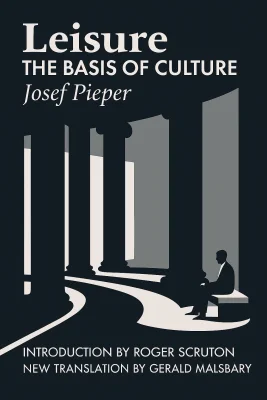
Leisure
The Basis of Culture
Categories
Nonfiction, Philosophy, History, Education, Religion, Sociology, Theology, Christianity, Cultural, Catholic
Content Type
Book
Binding
Paperback
Year
1998
Publisher
St. Augustine's Press
Language
English
ISBN13
9781890318352
File Download
PDF | EPUB
Leisure Plot Summary
Introduction
In an age dominated by constant productivity, efficiency metrics, and the glorification of work, we face a profound philosophical challenge: have we lost the capacity for genuine leisure? This question lies at the heart of our exploration into the nature and significance of leisure not merely as time off work, but as a foundational element of human flourishing. Through rigorous philosophical examination, we will uncover how contemporary society has reduced human existence to mere functionality, transforming even intellectual pursuits into "intellectual work" within a system that values productivity above all else. The investigation leads us beyond superficial understandings of leisure as idleness or entertainment, revealing instead its intimate connection to contemplation, celebration, and spiritual engagement. By contrasting the modern world of "total work" with classical and medieval conceptions of human activity, we gain crucial insights into how leisure enables us to transcend utilitarian constraints and access deeper dimensions of reality. This philosophical journey challenges us to reconsider fundamental questions about human nature, knowledge, wonder, and ultimately, our relationship to the divine—providing not just theoretical understanding but practical wisdom for recovering authentic human existence in our hyperactive age.
Chapter 1: The Crisis of Leisure in the World of Total Work
Modern society operates increasingly under the paradigm of "total work," where human existence is defined primarily through productivity and utility. This represents a profound inversion of the classical understanding, exemplified by Aristotle's assertion that "we are unleisurely in order to have leisure." For the Greeks, leisure was not what remained after work but rather the center around which life revolved. Today, however, this hierarchy has been completely reversed; we now believe that "one lives to work" rather than "works to live." This inversion signals not merely a shift in time management but a fundamental transformation in how we understand human purpose and fulfillment. The modern "worker" has emerged as what some philosophers call an "imperial figure" who dominates contemporary culture. This figure is characterized by three distinctive traits: extreme tension of active powers, readiness to suffer abstractly without relation to any meaningful end, and complete absorption into a social organism designed for utilitarian purposes. Within this framework, leisure appears suspicious—a form of laziness or unproductive idleness that must be eliminated or at least minimized. The transformation is so complete that even intellectual and spiritual activities must now justify themselves in terms of productivity and social function, as evidenced by terms like "intellectual worker" and "brain worker" that have entered common usage. This crisis extends beyond individual psychology into institutional structures. Universities, once centers of liberal arts and contemplation, increasingly function as training grounds for economic productivity. Academic freedom itself becomes endangered as the philosophical character of education diminishes in favor of specialized training for economic functions. The distinction between the "liberal arts" (pursued for their own sake) and "servile arts" (performed for utilitarian ends) has been collapsed, with nearly all human activity now evaluated through the lens of utility and economic contribution. The consequences of this shift are profound. When work becomes the exclusive meaning of life, human existence narrows dramatically. The ability to wonder, to contemplate reality for its own sake, to celebrate existence—all these essential human capacities atrophy. Most concerning is how this narrows our capacity for relationships, limiting them to functional exchanges rather than meaningful encounters. As Josef Pieper observes, the world of total work is "a poor, impoverished world, be it ever so rich in material goods," because it systematically eliminates anything superfluous or non-utilitarian. Perhaps most fundamentally, the crisis of leisure represents a spiritual crisis. Traditional societies understood leisure's connection to divine worship and celebration. The separation of leisure from its roots in worship has transformed it into mere idleness or entertainment, unable to fulfill its authentic function of opening human existence to transcendent meaning. Without this dimension, even rest becomes merely functional—we rest to work better, rather than work to enable the higher activity of contemplation and celebration.
Chapter 2: Knowledge Beyond Utility: Ratio, Intellectus, and Contemplation
The concept of "intellectual work" reveals a particular understanding of knowledge that has come to dominate modern thought. This conception maintains that human knowledge is exclusively active, discursive, and effortful—what medieval thinkers would have called ratio. Kant exemplifies this position when he asserts that "the reason cannot intuit anything" and that in philosophy "the law is that reason acquires its possessions through work." For Kant and his intellectual descendants, knowledge must be hard-won through discursive effort; anything that comes effortlessly is suspect. However, classical and medieval thinkers maintained a more complex understanding of human knowledge. They distinguished between ratio (discursive, logical thought) and intellectus (intuitive, receptive contemplation). Aquinas described intellectus as the capacity for simplex intuitus, a simple vision to which truth offers itself like a landscape to the eye. Human knowledge, in this traditional view, involves both active reasoning and receptive contemplation working together. While discursive reason is characteristically human, intellectus connects us to something beyond ordinary human capacities—what Aquinas called "superhuman" yet still proper to our nature at its highest. This distinction has profound implications. If knowledge is only work—active, discursive, and strenuous—then it becomes exclusively the fruit of our own unaided effort. Nothing in knowledge is gratuitous, nothing is "given" or "inspired." This conception eliminates receptivity and gratitude from the knowing process. Furthermore, the emphasis on difficulty as a measure of value—that hard work is intrinsically good because it is hard—distorts our understanding of virtue and knowledge alike. As Aquinas countered, "The essence of virtue consists in the good rather than in the difficult," and "not everything that is more difficult is necessarily more meritorious." The highest forms of knowledge, paradoxically, often come as gifts—moments of illumination that follow but are not caused by our intellectual efforts. The strain visible on the face of the "intellectual worker" reveals a metaphysical mistake: the inability to receive, to suffer in the sense of allowing reality to act upon us. This mistake extends into the ethical realm, where modern thought tends to value moral effort over moral goodness. Schiller captured this tendency ironically: "How willingly I'd serve my friends, but alas, I do so with pleasure, and so I am often worried by the fact that I am not virtuous." At the heart of this misunderstanding lies a mistrust of everything effortless, a refusal to accept anything as a gift. This stands in stark contrast to the Christian understanding that "in the beginning there is always a gift." Grace precedes effort; the unearned precedes what is earned. When intellectual activity is reconceived exclusively as work, as social service, it loses its freedom and becomes merely functional. Philosophy, traditionally the freest of the liberal arts, becomes subordinated to social utility. The philosopher becomes a functionary in the world of total work, a specialist serving predetermined ends rather than one who contemplates the whole. The stakes could not be higher: can human existence be contained within an exclusively workaday world? Is there still room for activities pursued for their own sake rather than for utilitarian ends? These questions challenge the fundamental assumptions of the "total work" society that increasingly defines our world.
Chapter 3: Leisure as Celebration: The Antithesis of Acedia
The medieval understanding of leisure stands in stark contrast to modern conceptions. Far from being synonymous with idleness, genuine leisure was understood as the opposite of acedia—a spiritual vice often mistranslated as "sloth." Acedia in its authentic meaning refers not to physical laziness but to a metaphysical sadness, what Kierkegaard later called "the despairing refusal to be oneself." It represents a rejection of one's own being, a refusal to consent to the divine goodness immanent in oneself. The medieval mind saw this as fundamentally opposed to leisure, not equivalent to it. Economic historians like Sombart have misinterpreted acedia as mere economic indolence or lack of industriousness. However, the medieval conception was far more profound. For Aquinas, acedia was an offense against the commandment calling us to have "the peace of the mind in God." Its opposite was not frantic activity but love—a joyful affirmation of being, an acquiescence in the world and in God. This love certainly brings energy and readiness for work, but cannot be confused with the tense restlessness of the fanatical "worker." Indeed, Aquinas and other medieval thinkers saw restlessness itself as flowing from acedia, not opposing it. Genuine leisure, therefore, involves a particular attitude of mind and spirit. Compared to the activity-focused world of work, leisure implies an attitude of non-activity, of inward calm, of silence—not as absence of sound but as receptivity to reality. It requires a contemplative attitude that allows for "steeping oneself in the whole of creation." Leisure contains a certain serenity born from recognizing the mysterious nature of the universe and accepting with confidence that which we cannot fully understand. It is not the attitude of those who actively intervene but of those who are open to everything. The festive character of leisure forms its essential core. While work strains forward with tension toward future goals, leisure celebrates the meaningfulness already present in reality. It affirms that existence itself is fundamentally good. The festival is both the origin of leisure and its ever-present meaning. Because celebration is at its heart, leisure is more than effortless—it is the direct opposite of effort. It stands at right angles to work, not as its continuation but as a qualitatively different mode of being. Importantly, leisure is not justified by its utility for work. It is not rest taken to restore working powers, though it may have that effect. The point of leisure is not that "the functionary should function faultlessly," but that the functionary should remain fully human—maintaining contact with the wholeness of existence beyond specialized functions. This is why leisure provides access to "superhuman, life-giving existential forces" that refresh us on a level deeper than mere recreation. In leisure, as Aristotle recognized, we touch something divine: "A man will live thus, not to the extent that he is a man, but to the extent that a divine principle dwells within him." Unlike the restless world of work where "work and unemployment are the two inescapable poles of existence," leisure opens a "gate to freedom." Through this gate, humans escape the latent anxiety of functional existence into a more authentic mode of being. Leisure thus represents not a luxury but a necessity for full human flourishing—preserving our capacity to exist as more than mere functionaries in a system of production and consumption.
Chapter 4: The Cultural and Spiritual Foundations of Leisure
The defense of leisure against the totalitarian claims of work faces significant challenges in our contemporary context. Various positions have emerged attempting to preserve spaces for non-utilitarian activity—from "art for art's sake" to humanistic education and the preservation of classical studies. However, these backward-looking interim solutions often lack the metaphysical grounding necessary to withstand the powerful momentum of the "world of total work." The crucial question becomes: Is humanism an adequate watchword—not merely as an effective rallying cry but as a metaphysically sound foundation capable of influencing history? This question connects directly to social considerations regarding class distinctions and educational opportunities. The apparent dichotomy between an educated class free to pursue knowledge for its own sake and the working class confined to utilitarian labor seems to reinforce social inequality. Plato himself contrasted the philosopher, "brought up in freedom and leisure," with the common working man who knows practical matters but lacks higher understanding. However, this does not mean that defending leisure necessarily perpetuates class divisions. Rather, the challenge is to overcome proletarianism itself—not by reducing everyone to proletarian status but by expanding access to genuine leisure. What constitutes proletarianism? Beyond economic definitions, a proletarian is fundamentally "a man who is fettered to the process of work." This fettering may result from three causes: lack of property (being forced to sell one's labor to survive), state coercion (being compelled to serve economic production), or inner impoverishment (when life contracts to nothing beyond work). All three factors mutually reinforce each other, creating a condition that can affect people across all social strata—even those not conventionally considered "working class." The executive whose identity is entirely wrapped in productivity is as proletarian, in this sense, as the factory worker. True deproletarianization would require addressing all three factors: providing opportunities for property ownership, limiting state power, and overcoming the spiritual impoverishment that reduces human existence to mere functionality. This approach recognizes the meaningful distinction between artes liberales (liberal arts) and artes serviles (servile arts)—not to denigrate necessary work but to insist that human life cannot be reduced to utility alone. Far from reinforcing inequality, this distinction actually humanizes work itself by recognizing that even "servile work" contains something incommensurable with material compensation because it is a human action. Central to this humanizing process is the role of rest and celebration. Religious traditions have historically provided institutional protection for leisure through sacred days withdrawn from utilitarian purposes. The Sabbath or Sunday creates a space where, as Proudhon observed, "servants regained the dignity of human beings, and stood again on a level with their masters." This withdrawal from utility is not merely negative but creates "a store of real wealth that cannot be consumed by the workaday world... where calculation is thrown to the winds and goods are deliberately squandered, where usefulness is forgotten and generosity reigns." Without this protected space for leisure, both work and rest become deformed. Separated from divine worship, leisure degenerates into mere entertainment or boredom—"the vacancy left by absence of worship." Similarly, work detached from higher purposes becomes "naked toil and effort without hope," comparable to the endless, fruitless labor of Sisyphus. The historical development from Carlyle's "to work means to pray" to modern work-as-religion represents not progress but a dangerous substitution that ultimately diminishes humanity. The defense of leisure, therefore, requires more than humanism—it needs reconnection to its deepest source in divine worship and celebration. Only from this foundation can leisure fulfill its essential role in preserving human wholeness against the fragmenting pressures of utilitarian existence.
Chapter 5: Philosophizing as Transcending the Workaday World
To philosophize means to take a step beyond the everyday world of work. This philosophical act represents a fundamental movement of human consciousness that transcends the utilitarian world of means and ends. The workaday world is dominated by a single purpose: satisfying the "common need." It operates through functional relationships, supply and demand, hunger and satiety. In contrast, philosophizing opens a space not defined by utility or practical achievement. This distinction has become especially urgent in our time when the "common need" and the "common good" are increasingly identified with each other. As the world of work expands its claims over human existence, the space for philosophy narrows. A world of "total work" leaves no room for activities that cannot be justified by their contribution to the satisfaction of needs. Yet the philosophical question pierces through this utilitarian framework. When someone suddenly asks, "Why should there be such a thing as being? Why not just nothing?"—the fundamental philosophical question of wonder—the incommensurability between philosophy and the workaday world becomes starkly evident. Philosophy shares this transcendent quality with other fundamental human experiences: genuine poetry, authentic prayer, love, and confrontation with death. All these experiences share the power to break through the everyday world of means and ends. As Thomas Aquinas observed, the philosopher resembles the poet in that both are concerned with mirandum—with wonder and with that which makes us marvel. Both operate beyond the boundaries of mere utility. This family resemblance explains why in totalitarian systems devoted to work, all forms of transcendence wither together—when religion is not tolerated, neither is poetry, authentic love, or philosophy. More dangerous than the outright rejection of these transcendent experiences is their transformation into pseudo-forms that appear to transcend everyday life while actually reinforcing it. Prayer can degenerate into magic that seeks to manipulate rather than worship the divine. Love can become a means of self-aggrandizement rather than self-transcendence. Poetry can be reduced to propaganda or entertainment that decorates the inner surface of everyday life rather than breaking through it. Philosophy too can be reduced to sophistry—what Protagoras offered: instruction on "how best to manage one's house and run one's estate, and... how best to be effective in speaking and in acting." This fundamental misunderstanding between philosophy and everyday utility is as old as philosophy itself. Plato captured it in the story of the Thracian maid who laughed when Thales fell into a well while gazing at the stars. This laughter represents the perpetual response of common sense to philosophy. Similarly, Plato portrays Apollodorus, an enthusiastic follower of Socrates, telling sophisticated but unphilosophical businessmen about the Symposium's profound discussions. The businessmen consider Apollodorus "crazy" while he considers them to be "doing nothing" despite their apparent busyness—a perfect illustration of the incommensurability between philosophical and utilitarian perspectives. The positive aspect of this incommensurability is freedom. Philosophy is "useless" for everyday practical matters, but this very uselessness constitutes its freedom. Unlike specialized knowledge that serves external ends, philosophy is "free knowledge" in the same sense as the artes liberales—not legitimized by utility or social function. Philosophy has always been regarded as the freest of the liberal arts precisely because it cannot be subordinated to purposes beyond itself. This freedom depends on philosophy's theoretical character—its capacity to look at reality receptively rather than with the intention to change or use it.
Chapter 6: Wonder and Contemplation: The Essence of Philosophy
The philosophical act carries us beyond the everyday workaday world but not into a separate realm of reality. Rather, philosophy approaches the same ordinary things of everyday life with a different attitude—questioning their ultimate nature and essence. When we philosophize, the familiar things before our eyes become transparent; they lose their density and apparent finality. We no longer take them for granted. The philosopher does not turn away from concrete reality to contemplate abstract essences but questions concrete reality more deeply. This transformation occurs through wonder—the wellspring of philosophical inquiry. As Socrates declares to the young mathematician Theaetetus: "Yes, that is the very frame of mind that constitutes the philosopher, that and nothing else is the beginning of philosophy." Wonder reveals the "unbourgeois" character of philosophy—its refusal to accept the environment defined by immediate needs as final and complete. The sense of wonder allows the deeper world of essences and universals to emerge through ordinary things, making the familiar suddenly strange and marvelous. True wonder differs fundamentally from the itch for sensation that seeks the enormous or spectacular. A person who needs the unusual to provoke wonder "shows that he has lost the capacity to find the true answer to the wonder of being." Genuine philosophical wonder perceives the extraordinary within the ordinary, the mysterious within the familiar. This explains the connection Aristotle and Aquinas observed between philosophy and poetry—both preserve a deep sense of wonder that can make one a stranger to conventional perspectives. The experience of wonder contains both negative and positive elements. Negatively, wonder acknowledges not knowing fully, not conceiving absolutely. As Aquinas noted, "the cause of that at which we wonder is hidden from us." Yet wonder is not mere ignorance or resignation to not knowing. It is an active desire for knowledge—what Aquinas called desiderium sciendi. Wonder combines ignorance with the search for truth, forming a structure similar to hope. It is this structure of hope that makes wonder distinctively human. Animals cannot wonder because they lack the desire for causal knowledge; God does not wonder because divine knowledge is perfect. Only humans occupy this middle position where wonder is possible. This distinctive human capacity for wonder gives philosophy its character. Unlike scientific questions that can in principle be definitively answered, philosophical questions—What is knowledge? What is illness? What is human nature?—can never be finally settled. Aquinas acknowledged that "no philosopher has ever been able to grasp the being of a single fly," yet the philosophical mind still strives toward the essence of things. The philosophical object is given "in hope"—never fully possessed but continually sought. While sciences eventually cease wondering as they attain results, the philosopher never stops wondering. This reveals both philosophy's greatness and its limitations. A question aimed at the universe as a whole and the ultimate essence of things ranks higher than any scientific question, yet its answer lies beyond complete human grasp. Philosophy has never claimed to be a superior form of knowledge but rather a form of humility—conscious of its limitations yet driven by love of wisdom. As expressed in the word "philosophy" itself—coined by Pythagoras to contrast with sophia (wisdom) and sophos (wise one)—no human is wise; God alone is wise. At most, humans can be lovers of wisdom, seekers after knowledge—philosophers. The original conception of philosophy acknowledges that it aims at a wisdom unattainable in its fullness yet genuinely sought. Philosophical knowledge exists in the seeking itself rather than in final possession. This understanding directly contradicts Hegel's ambition to transform philosophy from the love of wisdom into real knowledge—a claim that, as Goethe observed, attempts to "lord it over God, Soul and World." Authentic philosophy maintains its receptivity to mystery and its openness to what transcends human comprehension, making it essentially human precisely in its acknowledgment of human limitations.
Chapter 7: The Theological Roots of Genuine Philosophy
Long before formal philosophy emerged, humans possessed interpretations of the world and meaning. Every philosopher begins within a pre-existing tradition that provides an initial orientation toward reality as a whole. The great founders of Western philosophy—Plato and Aristotle—not only recognized these traditional interpretations but explicitly affirmed their value. Plato frequently referred to doctrines "handed down by the ancients" as worthy of respect and truth, while Aristotle acknowledged that "it has been handed down by our forefathers and the ancients, that the whole of nature is surrounded by the divine." This historical reality contradicts the common modernist narrative that portrays philosophy as beginning with rational rebellion against religious tradition. The actual record suggests that philosophy has always been preceded by and engaged with traditional interpretations of reality. Plato went further, suggesting that traditional wisdom ultimately derives from divine sources: "Knowledge came down to us like a flame of light, as a gift from the gods... and the ancients, being better than we are, and nearer to the gods, handed this tradition down to us." The relationship between philosophy and theology emerges as both intimate and distinctive. Theology chronologically precedes philosophy, providing the initial interpretive framework within which philosophical questioning begins. Yet this does not mean the theologian possesses what the philosopher seeks. The theologian preserves and interprets tradition, while the philosopher gains knowledge through direct engagement with the things of this world. When the philosopher reflects upon worldly things in light of revealed doctrines, unique insights emerge—not as theological knowledge but as philosophical understanding of reality itself. This complementary relationship challenges the modern insistence on separating philosophy from theology. Plato himself would have been astonished by any suggestion that he had overstepped the boundaries of "pure" philosophy in dialogues like the Symposium, where profound philosophical inquiry engages deeply with religious narratives. The philosophical exploration of questions like "what is love?" naturally incorporates traditional religious answers alongside rational inquiry. This integration gives Platonic dialogues their extraordinary resonance with the whole of human nature. Since the dissolution of the classical world, Christian theology has become the primary pre-philosophical tradition in Western civilization relevant to the world as a whole. This historical reality makes Christian philosophy not only possible but natural within the Platonic understanding of philosophical inquiry. However, this does not mean that merely accepting Christian tradition makes one a philosopher, nor that only Christian philosophy can be vital. One can philosophize vigorously against Christianity, but such opposition typically substitutes another belief system (often disguised as purely "rational") while maintaining philosophy's basic structure as counterpart to faith. Contrary to common misconception, Christian philosophy is not distinguished by having ready answers to all questions. Rather, as several prominent thinkers have observed, its characteristic mark is a heightened sense of mystery. Even revealed truths remain partially hidden—as Matthias Joseph Scheeben noted, "the truths of Christianity are in a very special way inconceivable; the truths of reason are generally inconceivable; but the distinguishing mark of the truths of Christianity is that 'in spite of being revealed, they still remain hidden.'" The Christian philosopher recognizes that reality is more truly apprehended when experienced as an unfathomable mystery than when reduced to transparent formulae or closed systems. This approach makes philosophical inquiry more challenging rather than simpler. The "ageless, silent, immovable rock of revealed truth" prevents philosophical thought from flowing smoothly through rationalistic channels, creating productive tensions that resist oversimplification. A Christian philosophy of history, for instance, must reckon with both apocalyptic culmination and meaningful human action—a complexity impossible for simple progress narratives that ignore eschatological dimensions. The foundation of authentic Christian philosophy lies not merely in intellectual agreement with doctrine but in existential participation in Christian reality. Thomas Aquinas distinguished between theoretical knowledge (per cognitionem) and knowledge through affinity (per connaturalitatem). The latter comes through direct participation and inner sympathy—knowing something as one's own rather than as foreign. This connects to Denys the Areopagite's insight that one can speak meaningfully of divine things only when "not only learned in the divine, but who has suffered it." Genuine Christian philosophy emerges when Christianity becomes real in the philosopher, informing not just conclusions but the entire approach to reality.
Summary
The philosophical exploration of leisure reveals a profound truth about human existence: we are not merely functional beings defined by productivity, but beings capable of receptive contemplation and celebration. By distinguishing between the world of "total work" and the realm of leisure, we discover that authentic human flourishing requires transcending utilitarian frameworks to engage with reality in its totality and mystery. The capacity for wonder—maintaining openness to the extraordinary within the ordinary—emerges as essential to our humanity, allowing us to participate in what exceeds merely practical concerns while acknowledging our limitations. This vision offers a transformative perspective for contemporary society. It challenges us to reconsider institutional structures and personal habits that reduce human existence to functionality and productivity. By recovering leisure's connection to celebration and contemplation, we create spaces where human beings can experience freedom from utilitarian demands—not as escape but as entry into fuller reality. Such recovery requires more than intellectual understanding; it demands practical cultivation of receptivity, wonder, and celebratory affirmation of existence. For those willing to step beyond the constraints of the workaday world, this philosophical journey promises not just theoretical insight but a path toward authentic human wholeness in an age increasingly defined by fragmentation and instrumental relationships.
Best Quote
“Leisure is only possible when we are at one with ourselves. We tend to overwork as a means of self-escape, as a way of trying to justify our existence.” ― Josef Pieper, Leisure: The Basis of Culture
Review Summary
Strengths: The review highlights Pieper's effective critique of society's obsession with productivity and his insightful exploration of leisure's true value. Pieper is praised for showing the detrimental effects of valuing difficulty over enjoyment and for redefining leisure as a state of learning, celebration, and worship, rather than idleness. The book is described as highly relevant and beneficial for modern readers, with a second part that expands on philosophical ideas.\nOverall Sentiment: Enthusiastic\nKey Takeaway: Josef Pieper's "Leisure: The Basis of Culture" offers a compelling critique of productivity idolization, advocating for a deeper appreciation of leisure as a source of joy and fulfillment, essential for engaging with life's wonders and mysteries.
About Author
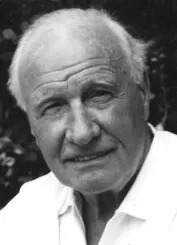
Josef Pieper
Pieper probes the moral underpinnings of culture and society through the lens of Thomistic philosophy, interweaving ancient insights with contemporary issues. His works, such as "Leisure: The Basis of Culture," argue that leisure is more than idleness; it is a contemplative state crucial for human fulfillment and societal flourishing. Meanwhile, in "The Four Cardinal Virtues," Pieper delves into prudence, justice, fortitude, and temperance, offering a nuanced analysis of these enduring ethical principles. His exploration into the integration of faith and reason underscores his commitment to bridging medieval philosophy with modern social concerns.\n\nThis author’s philosophical approach, marked by clarity and depth, appeals to both scholars and general readers who are drawn to his accessible style. Through writings like "Guide to Thomas Aquinas," Pieper provides an entry point into complex theological discussions, making them approachable and relevant for today’s audience. His philosophical inquiries not only resonate within Catholic intellectual circles but also offer valuable perspectives on virtue ethics and cultural values, thereby enriching the reader's understanding of the moral challenges in the modern world.\n\nPieper's contributions to philosophy have been recognized with honors such as the Balzan Prize for Philosophy and membership in various esteemed academic bodies. His collaboration with his wife Hildegard, including their translation of C.S. Lewis’s work, further exemplifies his dedication to engaging with broader intellectual communities. This bio highlights how Pieper's rigorous exploration of human nature and ethics continues to influence discussions on virtue and culture, making his work indispensable for those seeking to understand the intersection of tradition and modernity.
Read moreDownload PDF & EPUB
To save this Black List summary for later, download the free PDF and EPUB. You can print it out, or read offline at your convenience.
Leisure
by Josef Pieper
