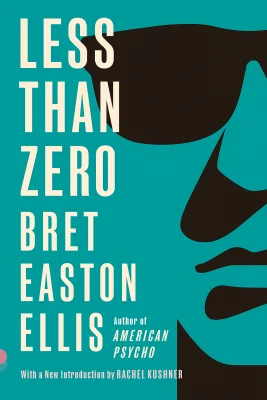
Less Than Zero
Categories
Fiction, Classics, Literature, American, The United States Of America, Contemporary, 20th Century, Novels, Coming Of Age, Literary Fiction
Content Type
Book
Binding
Paperback
Year
2010
Publisher
Vintage Books
Language
English
File Download
PDF | EPUB
Less Than Zero Plot Summary
Introduction
The warm California sun beats down mercilessly as eighteen-year-old Clay returns home from his New Hampshire prep school for Christmas break. But this isn't the homecoming he expected. Los Angeles stretches before him like a fever dream of neon lights and empty swimming pools, where his old friends drift through parties fueled by cocaine and meaningless sex, their tanned faces as hollow as the billboards that scream "Disappear Here" from every street corner. Clay finds himself pulled into a world where teenagers with trust funds inject heroin between their toes, where twelve-year-old girls are passed around like party favors, and where his childhood friend Julian has become something unrecognizable. As the weeks pass, Clay realizes he's witnessing the slow-motion collapse of his entire generation—beautiful, wealthy, and utterly lost. The question isn't whether he can save his friends from their self-destruction, but whether he can escape before Los Angeles devours him too.
Chapter 1: Homecoming to Hollowness
Clay's Mercedes glides off the freeway into a city that feels both familiar and alien. Four months at prep school in New Hampshire haven't prepared him for this return to Los Angeles, where the December heat shimmers off palm trees bent by Santa Ana winds. His girlfriend Blair picks him up at LAX, her blonde hair whipping around her face as she mutters something strange: "People are afraid to merge on freeways in Los Angeles." The words stick in Clay's mind like a splinter. His family's house in the hills sits empty except for a new maid who smiles without recognition. His mother and sisters are Christmas shopping, his father lives in a Century City penthouse since the separation. Clay's bedroom remains untouched—the same white walls, the same Elvis Costello poster with its mocking red and blue sunglasses, the same venetian blinds filtering the harsh sunlight into prison bars across his unmade bed. That night Blair drags him to a party in Beverly Hills. The Christmas trees glow with dark-red lights while teenagers from his high school drift between rooms like beautiful ghosts. Everyone looks the same—tan, blonde, expensively dressed, and desperately bored. Trent, a male model, hands Clay a card for a tanning salon. "Your skin's too pale," he says, as if this explains everything wrong with the world. The conversations blur together: talk of Jew.S.C. and U.C.R.A., of vacation homes and modeling contracts, of who's sleeping with whom and who's been hospitalized for anorexia. Clay watches his old friends through a haze of marijuana smoke and champagne, realizing that nothing has changed except his ability to see how empty it all is. At midnight, someone lights firecrackers that fizzle out in the hot wind, and Clay knows this isn't celebration—it's surrender.
Chapter 2: Disconnected Connections
Clay's psychiatrist has a beard, drives a Mercedes, and talks more about his own problems than Clay's. During their sessions in a Westwood office, Clay sits behind sunglasses and lies about bizarre sexual fantasies just to watch the doctor's eyes light up with professional interest. Sometimes Clay simply gets up and leaves mid-sentence, walking out into the blinding Los Angeles sunshine where nothing seems real. His mother takes him to lunch on Melrose, her hands shaking as she sips white wine behind dark glasses. They sit in uncomfortable silence, two strangers sharing DNA and nothing else. When she asks what he wants for Christmas, Clay can only answer "Nothing." She tells him he looks unhappy. He tells her she does too. The conversation dies there, murdered by honesty neither of them expected. At night Clay drives aimlessly through the city, watching the lights blur past like fallen stars. He stops at Du-par's in Studio City, sitting alone in a booth while the Santa Ana winds shake the windows. Two men in black suits harass the waitress, calling her a "fucking Valleyite" before throwing money on the table and disappearing into the night. Clay realizes he's become an observer of his own life, watching everything through glass—car windows, restaurant windows, the window of his childhood bedroom. The phone rings at odd hours with no one on the other end, just breathing and then silence. Clay begins to suspect the calls are meant for him, messages from a city that's trying to tell him something he doesn't want to hear. Outside his window, coyotes howl in the canyons, and palm trees shake like nervous fingers against the purple sky.
Chapter 3: Descent into Decadence
The parties blur together in a haze of cocaine and meaningless encounters. Clay finds himself in bedrooms with people whose names he forgets before morning, their bodies tan and perfect and utterly hollow. At Kim's house in the hills, he watches a sixteen-year-old girl named Muriel inject heroin between her toes while a photographer documents the moment. The flash blinds Clay for a second, and when his vision clears, Muriel is crying black mascara tears down her cheeks. Rip, Clay's dealer, operates from a penthouse on Wilshire with floor-to-ceiling windows that frame Century City like a postcard from hell. Young boys drift through Rip's apartment wearing nothing but swimming trunks, their eyes as empty as the swimming pools they never seem to use. Rip talks about trust funds and Temple of Doom bootlegs while serving up cocaine measured in grams and lives measured in heartbeats. At the Edge nightclub, Clay watches teenagers dance under strobe lights that make everyone look like they're already dead. The music pounds against his chest while he searches the crowd for familiar faces, finding only variations of the same person—beautiful, wealthy, and slowly dissolving. A fat girl sits alone at the bar, trying to talk to a shirtless bartender who ignores her completely. Clay imagines her waiting by a phone that never rings, and the thought makes his chest tighten. After a night at the clubs, Clay ends up in bed with a girl who hands him suntan lotion and sunglasses, orchestrating their encounter like a photo shoot. They never touch each other, just themselves, while MTV flickers soundlessly on the television. When it's over, Clay realizes he doesn't even know her name. She hands him tissues and turns up the volume on a Bowie video, and Clay understands that this is what intimacy looks like in Los Angeles—choreographed, mediated, and ultimately performed for an audience of none.
Chapter 4: Julian's Disintegration
Clay's childhood friend Julian has become something unrecognizable. Once a golden boy who played soccer after school and celebrated birthdays at Magic Mountain, Julian now appears at parties looking too thin, too pale beneath his artificial tan. His eyes dart constantly, never making contact, as if he's searching for escape routes from his own skin. When Clay tries to meet Julian at the Chinese Theater in Hollywood, Julian never shows. Phone calls go unanswered, and when Clay finally tracks him down at an arcade in Westwood, Julian's hands shake as he feeds quarters into Space Invaders machines. He talks about needing money for "some girl's abortion," but his story changes with each telling, and Clay realizes Julian is lying about something much darker. The truth emerges slowly, piece by piece. Julian owes money to dealers, serious money that his trust fund can't cover. But instead of bankruptcy, Julian has found another currency—his own body, sold by the hour to businessmen in hotel rooms and wealthy older men at parties in the hills. Clay follows Julian to Finn's penthouse, where teenagers are displayed like merchandise and innocence is bought and sold with the casual efficiency of a commodities exchange. Julian's parents have fled to Barbados, leaving their son to navigate this nightmare alone. His face shows purple bruises that sunglasses can't quite hide, and his arms bear track marks like a junkie's rosary. When Clay asks why Julian didn't tell him the truth, Julian's response cuts through the Los Angeles heat like a blade: "Who cares? Do you? Do you really care?" Clay realizes he doesn't, and this revelation terrifies him more than anything else he's witnessed.
Chapter 5: Witnessing the Abyss
The hotel room at the Saint Marquis becomes Clay's introduction to a horror beyond his imagination. He sits in a chair by the window while Julian services a businessman from Indiana, a man with pictures of his wife and children in his wallet and darkness in his eyes. For five hours Clay watches, unable to leave, unable to close his eyes, compelled by a need to "see the worst." The businessman talks casually about real estate while Julian performs mechanically, their transaction as routine as buying groceries. Clay studies the man's family photos—blonde boys with confident smiles who look disturbingly like Julian once did. Outside the window, Sunset Boulevard streams past in an endless flow of cars carrying people who don't know what's happening in room after room of hotels just like this one. Later, at a party in Bel Air, Clay discovers he's entered a marketplace where children are the primary commodity. In a bedroom filled with older men in expensive suits, he watches a snuff film featuring teenagers who might have attended his high school. The casual brutality of the images—a girl tortured with power tools, a boy castrated with surgical precision—provokes not horror but arousal in the watchers. Clay flees to the deck, but he can still hear the screams from the television mixing with the sound of waves and seagulls. Back at the penthouse, Finn explains the economics of exploitation with the bland efficiency of a business school lecture. Julian is his "best boy," generating revenue through a client list that includes studio executives, politicians, and respected members of the community. When Julian begs to stop, Finn injects him with heroin and leads him upstairs to another room, another client, another transaction in a ledger book written in human suffering.
Chapter 6: Moral Wasteland
Clay's final week in Los Angeles reveals a city where all boundaries have dissolved. At Rip's apartment, he discovers a twelve-year-old girl named Shandra tied to a bed, drugged and made available for anyone willing to pay. Her makeup is smeared clownishly across her face, and her eyes remain half-closed as Rip's friends take turns with her. Clay leaves but realizes his departure changes nothing—Shandra will still be there tomorrow, and the day after that. Behind a trendy clothing store on Melrose, Clay and his friends discover the body of an overdosed teenager, bloated and forgotten in an alley while moths circle overhead. They treat it like entertainment, taking photos and making jokes while the dead boy's eyes stare sightlessly at the Los Angeles sky. Rip sticks a cigarette in the corpse's mouth and they debate whether to call the police, ultimately deciding it's not worth the inconvenience. The coyotes have moved down from the hills, hunting pets in the suburban streets. Clay's sister's kitten disappears one night, leaving only blood and matted fur by the door. On Mulholland Drive, Clay sees shapes moving through the fog carrying red rags in their mouths—cats torn apart and devoured in a city that's lost the ability to distinguish between predator and prey. Even his family doctor has been corrupted, offering prescriptions for animal tranquilizers and Valium with the casual indifference of someone who's stopped caring about consequences. Clay realizes that every adult in his world has become complicit in its destruction, enabling the young to consume themselves with drugs and sex and violence because it's easier than admitting they've failed as guardians of civilization.
Chapter 7: Escape from Emptiness
Clay's final conversation with Blair takes place on a restaurant terrace in the shadow of a billboard that reads "Disappear Here." She asks if he ever loved her, and his honest answer—"No, I never did"—surprises them both. Blair tells him he was never really present, that he existed like a beautiful ghost haunting his own life. Her words sting because they're true. As his departure date approaches, Clay drives to his elementary school and finds it being torn down, the classrooms where he once felt safe now empty shells waiting for demolition. He sits in his old third-grade room and tries to play a Christmas song on the piano, but the notes echo hollowly through the abandoned building. Even his childhood has been sold for scrap. Julian calls one last time, his voice barely recognizable, asking Clay not to leave. But Clay realizes there's nothing left to save—Julian is already gone, dissolved into the same chemical haze that's consuming everyone else. The boy who once kicked soccer balls across green fields has become another commodity in Finn's stable, another entry in a ledger book that measures human worth in dollars per hour. On his last night, Clay drives to an abandoned carnival in Topanga Canyon, where rusted rides creak in the Santa Ana winds and empty tents flap like funeral shrouds. The ferris wheel tilts at a broken angle against the star-filled sky, and coyotes howl in the distance. He understands that Los Angeles isn't just a city but a state of mind, a collective hallucination where wealth and beauty mask an emptiness so profound it threatens to swallow everything in its path.
Summary
Clay returns to New Hampshire carrying images that will haunt him for years: parents eating their own children, teenagers blinded by the sun, a generation so hungry for meaning they've begun consuming themselves. He's witnessed the collapse of a society that mistook accumulation for achievement, that confused pleasure with happiness, that allowed its young to drift into darkness because the adults had already given up hope. The Los Angeles he leaves behind continues its slow-motion apocalypse, grinding up beautiful children and spitting out their bones while the palm trees sway and the billboards promise escape to anyone desperate enough to believe them. Clay has seen the worst, and survived to tell the story—not because he was brave or strong, but because he was lucky enough to have somewhere else to go. For those who remain, there is only the endless summer of their discontent, and the knowledge that in a city built on dreams, the only thing left to do is disappear.
Best Quote
“But this road doesn't go anywhere,” I told him.“That doesn't matter.”“What does?” I asked, after a little while.“Just that we're on it, dude,” he said.” ― Bret Easton Ellis, Less Than Zero
Review Summary
Strengths: The reviewer finds the book strangely mesmerizing despite its seemingly boring and shallow nature. They appreciate the book's ability to transcend its period-specific critique of 1980s materialism and hedonism, noting its skillful depiction of a hollow lifestyle. The flat, deadpan presentation is highlighted as effective in making the narrative both horrific and comprehensible. Weaknesses: The reviewer criticizes the book for being anesthetizing and detached, with a specific subplot involving a friend and a pimp described as maudlin and off-pitch. They also find the characterization of the book as "sexy and sassy" by others to be perplexing. Overall: The reviewer expresses a strong personal liking for the book, despite understanding why others might not. They recommend it for its unique portrayal of a soul-sucking lifestyle, though acknowledge it may not resonate with everyone.
About Author

Bret Easton Ellis
Ellis interrogates the undercurrents of modern American life through a lens of moral ambiguity and societal excess. With a distinctive minimalist style, he crafts narratives that juxtapose extreme acts with dispassionate prose, thereby amplifying their impact. His exploration of identity and consumerism, as evident in "American Psycho," uses the character of a Wall Street serial killer to challenge the intertwined notions of capitalism and brutality. This thematic focus reoccurs in works like "Glamorama" and "Lunar Park," where he blends elements of satire and horror to further critique celebrity culture and personal alienation.\n\nWhile Ellis's narratives often stir controversy, they serve as a catalyst for readers to question societal norms and the fragmentation of self in a media-dominated age. His books resonate particularly with those intrigued by the darker aspects of human nature, offering a mirror to the vacuous and morally ambiguous world of the affluent elite. For instance, "Less Than Zero" captures the ennui of privileged teenagers, painting a stark picture of moral decay that remains relevant. Therefore, readers engaged in cultural and philosophical discourse find Ellis's work a provocative addition to conversations about modernity and ethics.\n\nIn this bio, Ellis's role as both author and cultural critic emerges, illustrating his commitment to unearthing the complexities of contemporary society. Recognized as a seminal figure, his works—adapted into films and even a musical—extend his influence beyond literature, shaping both popular culture and academic inquiry. His unique narrative approach invites a deep reflection on the intersections of identity, morality, and societal excess, making his oeuvre essential for those seeking a profound understanding of the late 20th and early 21st centuries.
Read moreDownload PDF & EPUB
To save this Black List summary for later, download the free PDF and EPUB. You can print it out, or read offline at your convenience.
Less Than Zero
by Bret Easton Ellis
