Letting Go
The Pathway To Surrender
Categories
Nonfiction, Self Help, Psychology, Philosophy, Health, Spirituality, Mental Health, Unfinished, Audiobook, Personal Development
Content Type
Book
Binding
Hardcover
Year
2011
Publisher
Veritas Publishing
Language
English
ASIN
193388598X
ISBN
193388598X
ISBN13
9781933885988
File Download
PDF | EPUB
Letting Go Plot Summary
Introduction
# The Art of Letting Go: Your Path to Inner Freedom Have you ever felt trapped by your own emotions, watching helplessly as anger, fear, or sadness dictates your reactions and limits your potential? In a world that constantly demands more from us while offering little guidance on managing our inner landscape, millions find themselves prisoners of their own feelings. The weight of suppressed emotions creates an invisible burden that affects every aspect of our lives, from our relationships and career success to our physical health and spiritual well-being. What if there was a simple yet profound technique that could free you from this emotional prison? What if you could learn to release negative feelings as they arise, transforming your entire experience of life in the process? This book presents a revolutionary approach to emotional freedom through the mechanism of surrender, a natural ability we all possess but have forgotten how to use. Through practical wisdom and real-life transformations, you'll discover how letting go isn't about losing control, but about gaining the ultimate freedom to choose your response to life's challenges.
Chapter 1: Identify Your Emotional Chains
Understanding the nature of our emotional bondage is the first step toward liberation. Surrender is not what most people think it is. Rather than giving up or admitting defeat, true surrender is the conscious release of resistance to what we're feeling in the moment. It's like suddenly letting go of a heavy weight you didn't realize you were carrying, accompanied by an immediate sense of relief, lightness, and increased happiness. Consider Dr. Hawkins' own experience during his medical training. As a young intern, he was paralyzed by the fear of public speaking. When required to present a patient's case to his colleagues, his voice would literally fail him mid-sentence, leaving him humiliated and reinforcing his limiting belief that he simply "couldn't" speak publicly. For years, this fear controlled his choices, limiting his career opportunities and diminishing his self-esteem. The fear seemed insurmountable, a permanent part of his identity that dictated his professional trajectory. Years later, when faced with another speaking opportunity, Dr. Hawkins chose a different approach. Instead of fighting the fear or trying to overcome it through willpower, he surrendered to it completely. He acknowledged the worst possible outcome, accepting that he might indeed be boring, and let go of his pride and vanity around the performance. He wrote out his speech to accommodate the fear rather than battle it. When the moment came, though he read in a monotone voice and the presentation was indeed boring, something profound had shifted. He had faced the fear and acted despite it, earning his own self-respect and the respect of others. This breakthrough didn't happen through conquering fear but through surrendering to it. By accepting the feeling completely without resistance, the energy behind it began to dissipate. What followed was a remarkable transformation. Dr. Hawkins went from being too frightened to read a simple case history to eventually appearing on national television, speaking to millions of viewers with ease and enjoyment. To identify your own emotional chains, start by recognizing that feelings are just energy in motion. When we resist a feeling, we give it power over us. When we surrender to it completely, allowing it to be present without trying to change, fix, or escape it, the feeling naturally runs its course and dissolves. Begin by noticing when you're in resistance to a feeling. Ask yourself: "What am I feeling right now?" Then, instead of analyzing why you feel this way or trying to make it different, simply allow the feeling to be there. Remember that surrender is a moment-by-moment choice. Each time you choose to let go rather than hold on, you reclaim a piece of your inner freedom and move closer to your authentic self.
Chapter 2: Master the Courage to Let Go
Courage represents a pivotal shift in consciousness where we move from "I can't" to "I can handle this." This transformation occurs not by eliminating fear but by changing our relationship to it through surrender and acceptance. Fear is not the enemy we've been taught to believe it is. When approached with the right understanding, fear becomes a doorway to courage and ultimately to freedom. Dr. Hawkins' journey from fear to courage is beautifully illustrated in his experience with his terror of heights. This lifelong phobia had severely limited his activities and adventures, keeping him far from edges, high places, and scenic overlooks. The fear seemed permanent and insurmountable, a fixed part of his identity that he had learned to work around rather than address directly. During a trip to the Grand Canyon with a friend, he faced a moment of truth. Initially, he stood back six feet from the edge, which was already progress from years past when he wouldn't have gone near such a place. His friend, understanding the significance of the moment, took his hand and gently encouraged him to approach the edge. Instead of fighting the fear or trying to overcome it through willpower, Dr. Hawkins began surrendering to the feeling as it arose, letting go of the resistance while continuing to move forward. Step by step, breath by breath, he walked toward the edge while continuously releasing the fear energy. Though considerable discomfort remained, he was able to stand right at the precipice and take in the magnificent view. The fear hadn't disappeared entirely, but it no longer controlled his actions. His friend's words afterward captured the essence of the transformation: "I know how much courage that took." Even though the fear persisted, Dr. Hawkins had earned his own self-respect and the respect of others by acting despite the fear. This breakthrough illustrates that courage is not the absence of fear but the willingness to act in the presence of fear. When we surrender to fear rather than resist it, we discover that we can function effectively even while feeling afraid. The fear loses its power to paralyze us, and we reclaim our freedom to choose our actions based on our values rather than our fears. To transform fear into courage, start by acknowledging that fear is simply energy moving through your system. Instead of judging yourself for feeling afraid, recognize that fear often signals something important to you. Practice taking small actions in the presence of fear. If you're afraid of public speaking, start by speaking up in small groups. Each time you act despite fear, you build your courage muscle and prove to yourself that fear doesn't have to control your choices. Remember that the goal is not to become fearless but to become fear-friendly. When you stop seeing fear as the enemy and start seeing it as information, you can use its energy to fuel courageous action rather than paralyzed inaction.
Chapter 3: Transform Negative Feelings into Positive Energy
Negative emotions are not character flaws or permanent aspects of your personality. They are simply accumulated energy patterns that have been suppressed and stored in your system over time. Like pressure in a steam cooker, these suppressed feelings create internal stress that affects every area of your life. The good news is that what has been accumulated can be released through conscious surrender, transforming destructive patterns into healing energy. A powerful example of this transformation occurred with Betty, a thirty-four-year-old woman who had become completely paralyzed by fear. What began as a simple germ phobia had escalated into a comprehensive terror that controlled every aspect of her life. She carried fifty-six bottles of health supplements everywhere she went, wore only white clothes to avoid dyes, and refused to sit in chairs for fear of contamination. Her fears had multiplied exponentially, encompassing everything from cancer to air pollution to the possibility of losing her mind. Betty's condition had reached such severity that every therapeutic approach seemed blocked by her fears. She was afraid to take medication because of potential side effects, but equally afraid not to take it. She feared leaving her house but also feared staying home. Traditional therapy was impossible because she was too frightened to discuss psychological matters. Dr. Hawkins found himself completely baffled, unable to find any conventional way to help her. In a moment of surrender, Dr. Hawkins let go of trying to "fix" Betty and simply chose to love her unconditionally. He sent her loving thoughts during their phone sessions and surrounded her with as much loving energy as possible. Remarkably, this approach of pure love began to work where all other methods had failed. Over months and eventually years, Betty's fears gradually diminished. She was eventually able to come to the office and function normally, though she never developed psychological insight into her condition. This case illustrates a fundamental principle: love heals fear. When we stop fighting our negative emotions and instead approach them with acceptance and compassion, they begin to dissolve naturally. The energy we were using to suppress, resist, or battle these feelings becomes available for healing and growth. To break free from negative emotions, begin by acknowledging their presence without judgment. Instead of saying "I shouldn't feel this way," simply observe: "I notice anger arising" or "Fear is present right now." Practice the art of emotional aikido. Instead of meeting negative emotions with resistance, which only strengthens them, meet them with the soft power of surrender. Remember that you are not your emotions; you are the awareness that observes them coming and going. Each moment of surrender transforms destructive energy into healing power, freeing you to respond from wisdom rather than reactivity.
Chapter 4: Release Attachments That No Longer Serve You
Desire is often misunderstood as a necessary motivator for achievement, but in reality, strong desire frequently blocks us from getting what we want. The energy of desire literally means "I do not have," creating a psychic distance between ourselves and our goals. When we surrender the emotional charge around our wants while maintaining clear intention, we often find that our goals manifest more easily and effortlessly than ever before. Dr. Hawkins discovered this principle firsthand when searching for an apartment in New York City. For years, he had wanted a small pied-à-terre in Manhattan to avoid expensive hotel stays during work trips. He had a very specific vision: reasonably priced, on Fifth Avenue in the 70s, near Central Park, high enough to avoid street noise, and no larger than two and a half rooms. By conventional thinking, such an apartment would be nearly impossible to find in New York's competitive real estate market. Using the letting go technique, Dr. Hawkins wrote down his goal in complete detail, then spent the day surrendering his desire for the apartment. Each time the wanting feeling arose, he acknowledged it and let it go. By afternoon, he had actually forgotten about the apartment entirely, his mind occupied with patients and meetings. Then, seemingly out of nowhere, he felt an impulse to drive into the city despite the rush hour traffic. The drive took only thirty minutes instead of the usual hour, and he found a parking space directly in front of a real estate office. When he mentioned his interest in a Fifth Avenue apartment, the agent looked surprised and said, "You're in luck! Exactly one hour ago we listed the only apartment for rent on all of Fifth Avenue." The apartment matched his specifications perfectly: 76th Street, ninth floor, rear-facing, two and a half rooms, reasonably priced, freshly painted, and available immediately. He signed the lease on the spot. This manifestation occurred within twenty-four hours of surrendering his desire, demonstrating how letting go can remove the energetic blocks that prevent our goals from materializing. The key was reaching a state of total surrender where it was okay if the apartment happened and okay if it didn't. To move beyond limiting desires, first distinguish between preference and attachment. Preferences are light and flexible; attachments are heavy and rigid. You can prefer certain outcomes while remaining unattached to them. Practice holding your goals lightly, like a bird in your open palm rather than a possession in your closed fist. Cultivate gratitude for what you already have while maintaining openness to what might come. This combination of appreciation and non-attachment creates the ideal conditions for effortless manifestation. Remember that the universe is abundant and wants to give you what serves your highest good, often in ways better than you could have imagined.
Chapter 5: Heal Relationships Through Surrender
Our relationships serve as mirrors, reflecting back to us our own unhealed wounds and unconscious patterns. The very people who trigger us most intensely are often our greatest teachers, showing us exactly where we need to grow. Healing relationships through surrender means releasing our need to change others and instead focusing on transforming our own responses to challenging dynamics. The transformative power of unconditional love is beautifully illustrated in the story of a duck hunter whose heart was permanently changed by witnessing pure love in action. This man regularly hunted ducks for recreation, seeing it as a normal and enjoyable activity. One day, following his usual routine, he shot a duck and watched it fall to the ground, badly injured. What happened next changed his life forever. As the wounded duck lay helpless on the ground, its female mate immediately flew down and spread her wings over her companion, sheltering him with her own body. In that moment, the hunter witnessed such pure, selfless love that his heart was instantly transformed. The sight of this devoted creature protecting her mate with complete disregard for her own safety awakened something profound within him. He never hunted again, unable to cause harm to beings capable of such love. This story demonstrates how love has a transfiguring effect on everyone it touches. Once you become truly loving, there are certain things you can never do again, and certain things become possible that were impossible before. Love empowers both you and those around you to transcend previous limitations and express your highest nature. To practice healing relationships through surrender, begin by looking for opportunities to give without expectation of return. This might be as simple as offering genuine compliments, listening with full attention, or performing small acts of service. The key is giving from a full heart rather than from a sense of obligation or desire for recognition. Develop the practice of seeing the innocence behind people's behavior, even when they act in ways that seem harmful or misguided. Everyone is doing the best they can with their current level of understanding and consciousness. When you can see past their actions to their essential nature, you naturally respond with compassion rather than judgment. Remember that love is limitless and self-generating. The more you give, the more you have to give. Each act of love, no matter how small, contributes to the healing of the world and the elevation of human consciousness.
Chapter 6: Embrace Acceptance as Your Path to Peace
Acceptance is not resignation or passive submission to unwanted circumstances. True acceptance is an active state of inner harmony where you align with the flow of life rather than fighting against it. In acceptance, you discover that everything is perfect as it is, not because external conditions are ideal, but because you have stopped creating internal resistance to what exists. The power of acceptance becomes clear through understanding that our suffering comes not from events themselves but from our resistance to them. When we fight against what is happening, we create internal friction that manifests as stress, anxiety, and emotional turmoil. When we accept what is present while maintaining our ability to respond consciously, we find peace even in challenging circumstances. A profound example of this principle emerged during one of Dr. Hawkins' own spiritual breakthroughs. After three and a half years of continuous surrender work, he found himself in an intense eleven-day process of letting go at the deepest levels of ego identification. The process seemed endless and sometimes overwhelming, bringing up fundamental questions about the nature of existence and identity. Doubt arose about whether he was attempting the impossible, but he recognized this doubt as another defense mechanism and continued surrendering. On a cold, rainy Sunday afternoon, while sitting alone in a restaurant, a miraculous shift occurred. Suddenly, the world was transformed by a profound sense of inner stillness and peace beyond anything imaginable. Time became meaningless, space took on a different quality, and all things were revealed as interconnected expressions of one life. There was no longer identification with the body or personal story, just an awareness of being all things, timeless and eternal. In this state of profound acceptance, everything was perfect exactly as it was. There was nothing to want, nothing to change, nothing to become. The very essence of existence stood revealed as complete and whole. This wasn't a philosophical understanding but a direct, experiential knowing that transformed his relationship to life permanently. To cultivate acceptance in daily life, start by noticing when you're in resistance to present circumstances. Resistance often shows up as thoughts like "This shouldn't be happening" or "If only things were different." When you catch these thoughts, gently redirect your attention to accepting what is while maintaining your power to respond wisely. Practice the phrase "It's okay for this to be here right now" when facing difficult emotions or challenging situations. This doesn't mean you have to like what's happening or that you won't take appropriate action. It means you stop wasting energy fighting reality and instead use that energy for conscious response. Remember that acceptance is a practice, not a destination. Each moment offers a new opportunity to choose harmony over resistance, peace over struggle, and love over fear.
Chapter 7: Manifest Your Goals Through Inner Freedom
Paradoxically, the more we release our desperate attachment to specific outcomes, the more easily our genuine desires manifest in our lives. Inner freedom creates a state of allowing that enables opportunities, relationships, and resources to flow toward us naturally. When we operate from a place of wholeness rather than neediness, we become magnetic to the very things we seek. Stress is not primarily caused by external circumstances but by the pressure of suppressed and repressed emotions that we carry within us. These accumulated feelings create a constant internal tension that makes us vulnerable to stress-related illnesses and emotional overwhelm. By learning to release these stored emotions through surrender, we can dramatically reduce our stress levels and improve both our physical health and emotional well-being. The relationship between emotions and physical health becomes dramatically clear through the practice of muscle testing or kinesiology. This simple technique demonstrates that negative thoughts and feelings instantly weaken the body's muscle strength by approximately fifty percent, while positive thoughts and feelings strengthen it. This immediate physical response shows how our emotional state directly affects our body's energy systems and overall health. Dr. Hawkins observed this principle repeatedly in his clinical practice. In one study, participants' blood pressure was measured before and after they received instruction in letting go of negative emotions. Every person with hypertension showed significant drops in both systolic and diastolic blood pressure once they began releasing their accumulated emotional pressure. This demonstrates that much of what we call "stress" is actually the result of internal emotional pressure seeking release. The Stanford University Forgiveness Project provided additional confirmation of these principles. Parents of children killed in the Protestant-Catholic violence in Ireland learned techniques for releasing their bitterness and resentment toward their perceived enemies. As they let go of these toxic emotions, measurements of their cardiac health and physical stamina showed remarkable improvement. Forgiveness literally healed their hearts, both emotionally and physically. To manifest your goals through inner freedom, begin by examining your motivations. Are you pursuing your dreams from a place of love and inspiration, or from fear and neediness? Goals pursued from wholeness tend to manifest more easily and bring lasting satisfaction. Practice holding your desires lightly, like a bird in your open palm. You can want something deeply while simultaneously being okay with not getting it exactly as you envision. This paradoxical stance creates the optimal conditions for manifestation. Trust that when you are truly ready and aligned, the right opportunities will appear at the perfect time. Your job is to prepare yourself inwardly and remain open to possibilities you may not have considered.
Summary
The pathway of surrender offers a revolutionary approach to emotional freedom and personal transformation. Through the simple yet profound practice of letting go, you can release the accumulated emotional pressure that creates suffering and limitation in your life. As Dr. Hawkins discovered through decades of clinical practice and personal experience, "The willingness to let go of our inner negativity is the key to happiness, success, health, and spiritual growth." This journey from emotional bondage to inner freedom is available to everyone, regardless of background, beliefs, or current circumstances. The mechanism of surrender is a natural ability that requires no special training or complex techniques, only the willingness to release resistance and allow feelings to move through you without attachment. Each act of letting go brings you closer to your authentic self and contributes to the healing of the world around you. Begin today by choosing one area of your life where you're experiencing stress, conflict, or limitation. Instead of trying to fix or change the external situation, focus on surrendering your internal resistance to what is present. Allow yourself to feel whatever emotions arise without judgment, then consciously choose to let them go. This simple practice, applied consistently, will transform your life in ways you never imagined possible.
Best Quote
“The crucial point is: by changing ourselves, we change the world. As we become more loving on the inside, healing occurs on the outside. Much like the rising of the sea level lifts all ships, so the radiance of unconditional love within a human heart lifts all of life.” ― David R. Hawkins, Letting Go: The Pathway To Surrender
Review Summary
Strengths: The book is described as profound and life-changing, with the potential for lifelong re-reading. It offers valuable insights into managing negative emotions and understanding energy levels. The reviewer found the explanation of emotions and acquired traits particularly useful for personal growth. Weaknesses: The reviewer disagrees with parts of the book, particularly the notion of curing physical illnesses through emotional release and some treatments discussed in specific sections. Half of the book's content did not resonate with the reviewer. Overall: The reader holds a highly positive sentiment towards the book, considering it a significant spiritual and intellectual influence. Despite some disagreements, the book is recommended for its deep exploration of emotions and their impact on life.
About Author
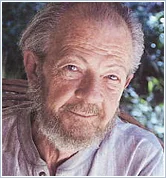
David R. Hawkins
Hawkins synthesizes the realms of science and spirituality through his exploration of human consciousness, offering insights into the profound nature of existence. Known for his innovative approach, he introduced the "Map of Consciousness" in his book "Power vs. Force: The Hidden Determinants of Human Behavior", where he applied muscle testing to probe human motivation and ethical behavior. This unique method allowed him to bridge scientific research with spiritual wisdom, making complex ideas accessible to a broad audience. In his works, Hawkins often examined themes of transcendence and integrity, providing a framework for understanding the nuances of spiritual enlightenment.\n\nIn his quest to expand human awareness, Hawkins' book "Letting Go: The Pathway of Surrender" delves into the process of relinquishing negative emotions to achieve inner peace. Through his writing, he addressed how individuals could attain a higher state of consciousness by exploring the differentiation between truth and falsehood. Hawkins' clear and profound style resonates with those seeking personal growth and spiritual insight, as he blends his psychiatric expertise with spiritual teachings. His contributions have had a lasting impact on health professionals, spiritual practitioners, and anyone interested in the integration of science and spirituality.\n\nAlthough Hawkins' work was not widely recognized with formal awards, his influence extends far beyond accolades, as he received praise from figures such as Mother Teresa. His collaboration with Linus Pauling in the development of orthomolecular psychiatry and his position as a pioneering figure in consciousness research underscore his contributions to both fields. Hawkins' bio is a testament to a life dedicated to exploring the depths of human consciousness, and his books continue to guide those on their paths to self-discovery and enlightenment.
Read moreDownload PDF & EPUB
To save this Black List summary for later, download the free PDF and EPUB. You can print it out, or read offline at your convenience.
Letting Go
by David R. Hawkins
