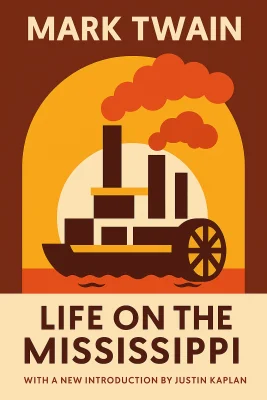
Life on the Mississippi
Categories
Nonfiction, Biography, History, Memoir, Classics, Travel, Literature, American, Humor, 19th Century
Content Type
Book
Binding
Mass Market Paperback
Year
2001
Publisher
Signet Classics
Language
English
ASIN
0451528174
ISBN
0451528174
ISBN13
9780451528179
File Download
PDF | EPUB
Life on the Mississippi Plot Summary
Introduction
# Mark Twain: From River Pilot to America's Voice In the summer of 1857, a young man named Samuel Clemens stood at the wheel of a Mississippi steamboat, his hands gripping the spokes as the great river stretched endlessly before him. The muddy waters held secrets that would take years to master, but in that moment, he was learning to read the language of America itself. This was Mark Twain in the making, though he didn't yet know it. The river would teach him not just navigation, but the art of storytelling that would make him the most beloved American writer of his generation. Mark Twain emerged from the heart of 19th-century America, a time when the nation was finding its voice and the Mississippi River served as its great highway of commerce and culture. His journey from riverboat pilot to literary giant reveals the transformation of both a man and a country. Through his experiences on the mighty Mississippi, readers will discover how a young pilot's apprenticeship shaped one of literature's greatest voices, how the demands of mastering a dangerous profession forged the discipline and observational skills that would serve his writing career, and how the river itself became both teacher and muse for America's most enduring storyteller.
Chapter 1: Hannibal Dreams: Early Life and River Fascination
Samuel Langhorne Clemens was born in 1835 in the small Missouri town of Florida, but it was in Hannibal, perched on the banks of the Mississippi, where his imagination truly took root. The river dominated everything in this frontier community, bringing news from distant cities, exotic strangers, and most importantly, the magnificent steamboats that would capture young Sam's heart forever. Every day, the arrival of a packet boat transformed the sleepy town into a hive of activity, with crowds gathering at the levee to witness the spectacle of these floating palaces. The boy who would become Mark Twain possessed what he called "one permanent ambition" shared by all his companions: to be a steamboatman. While other childhood dreams came and went like passing fancies, the desire to work aboard those majestic vessels never faded. The steamboat pilot represented the pinnacle of achievement in young Sam's world, a figure of romance and authority who commanded respect wherever he went. These men earned princely salaries and answered to no one while at the wheel, embodying a freedom that seemed almost magical to a boy from a small river town. When Sam's father died in 1847, leaving the family in financial straits, the twelve-year-old was forced to leave school and apprentice himself to a printer. Yet even as he learned the newspaper trade, working first in Hannibal and later in larger cities like St. Louis and New York, the river continued to call to him. The printing trade taught him valuable lessons about language and human nature, but it could never satisfy the deeper longing that the Mississippi had awakened in his soul. The young man's wanderlust eventually led him to contemplate an exotic journey to South America, where he planned to make his fortune in the coca trade. This grandiose scheme brought him to New Orleans in 1857, where he planned to catch a ship bound for Brazil. However, fate intervened in the form of Horace Bixby, a veteran pilot who agreed to teach Sam the river for five hundred dollars, payable from his future earnings. At twenty-one, Sam Clemens was finally embarking on the career he had dreamed of since childhood, though he had little idea of the challenges that lay ahead.
Chapter 2: Apprentice to Master: Learning the Mississippi's Secrets
Horace Bixby proved to be both mentor and tormentor to his eager young apprentice. From their first lesson, when Sam confidently took the wheel only to nearly collide with other vessels at the New Orleans levee, it became clear that piloting required skills far beyond what the novice had imagined. Bixby's teaching methods were harsh but effective, combining practical instruction with withering criticism designed to break down the student's overconfidence and rebuild it on a foundation of genuine knowledge and respect for the river's dangers. The education of a cub pilot demanded nothing less than perfect memory and absolute precision. Sam discovered that he needed to memorize not just the names and locations of every landmark along twelve hundred miles of river, but also their appearance under different conditions of light, weather, and water levels. A point that looked one way in daylight transformed completely in darkness or fog, and what seemed like solid ground during low water might be navigable during flood season. The river was constantly changing, cutting new channels and creating new hazards, making yesterday's knowledge potentially obsolete. Bixby's lessons extended far beyond mere navigation. He taught Sam to read the water itself, interpreting the subtle signs that revealed hidden dangers or safe passage. A slight ripple might indicate a deadly snag lurking just below the surface, while a smooth patch could signal deep water or treacherous shoals depending on the context. The apprentice learned that the river spoke in a complex language of currents, eddies, and surface patterns that took years to master and could never be fully conquered. The relationship between master and student was complicated by Bixby's demanding personality and Sam's own pride. The veteran pilot showed no patience for mistakes or hesitation, believing that only through rigorous discipline could a cub develop the split-second judgment necessary for safe navigation. Sam often felt overwhelmed by the sheer volume of information he was expected to absorb, but gradually he began to understand that piloting was indeed a science requiring both intellectual mastery and intuitive understanding of the river's moods and movements. The transformation from eager apprentice to competent pilot required not only technical mastery but also a fundamental change in perspective and personality. Young men who began their training as subordinates had to develop the authority and decisiveness necessary to command respect from seasoned rivermen. This metamorphosis often took years to complete, as cubs gradually absorbed not only the knowledge of the river but also the culture, traditions, and professional pride that defined the pilot fraternity.
Chapter 3: Golden Age Glory: Life as a Licensed Pilot
The Mississippi River during the 1850s represented the pinnacle of American steamboat culture, and licensed pilots stood at the apex of this floating society. Sam Clemens, having earned his pilot's license, found himself part of an exclusive brotherhood that commanded both enormous salaries and universal respect. Pilots earned between $250 and $400 per month when skilled workers on shore made perhaps $50, and their authority aboard ship was absolute. Once a pilot took the wheel, even the captain could not override his decisions, for federal law recognized that the pilot alone possessed the specialized knowledge necessary to navigate safely. The social status that came with piloting exceeded even the financial rewards. In river towns from St. Louis to New Orleans, pilots were treated like visiting royalty, sought after by the finest families and welcomed in the best establishments. Their distinctive dress, confident bearing, and tales of river adventures made them figures of romance and admiration. Young Sam reveled in this elevated position, enjoying the deference shown to his profession and the comfortable lifestyle it afforded. Life aboard the grand passenger steamers of the era was luxurious beyond anything Sam had previously experienced. The finest boats featured elegant saloons with crystal chandeliers, sumptuous dining rooms, and richly appointed staterooms that rivaled the best hotels. The pilothouses themselves were temples of brass and mahogany, equipped with every convenience and offering commanding views of the river ahead. During off-duty hours, pilots could relax in comfort while lesser crew members handled the mundane tasks of operating the vessel. The camaraderie among pilots created a unique professional culture built on shared experiences and mutual respect for the river's challenges. When boats met on the river, pilots would exchange vital information about changing conditions, new hazards, or the best routes through difficult passages. This informal network of communication was essential for safe navigation, as official charts and markers were virtually nonexistent on the ever-changing Mississippi. The pilot's lounge in major ports became centers of river intelligence, where the latest news and gossip were traded along with technical information about navigation. The art of piloting demanded skills that went far beyond simple boat handling, requiring pilots to become master interpreters of the river's constantly changing moods and conditions. Sam learned that the Mississippi was like a vast, living book that told a new story every day, its pages written in the subtle language of currents, colors, and surface patterns that revealed the hidden geography beneath the muddy waters. What appeared to be empty river to an untrained eye was actually filled with vital information about depth, obstacles, and safe passage routes.
Chapter 4: War's End and New Beginnings: From Pilot to Writer
The outbreak of the Civil War in 1861 brought an abrupt end to the golden age of Mississippi steamboating and forever changed the trajectory of Sam Clemens' life. The river that had been America's great commercial highway became a battleground, with Union and Confederate forces fighting for control of this vital transportation artery. Commercial traffic ceased almost overnight, leaving hundreds of pilots without work and forcing them to seek new careers in a rapidly changing world. Sam's own brief and inglorious military service with a Confederate militia unit lasted only a few weeks before he decided that warfare was not for him. Like many young men of his generation, he headed west to seek his fortune in the silver mines of Nevada Territory, leaving behind the river that had shaped his youth and early manhood. This westward journey marked the beginning of his transformation from Sam Clemens the pilot into Mark Twain the writer, though he could not have foreseen this evolution at the time. The mining camps and frontier towns of Nevada provided Sam with a new education in human nature and American character. Working as both prospector and newspaper reporter, he encountered a diverse cast of characters whose stories would later enrich his writing. The rough democracy of the frontier, where a man's worth was measured by his actions rather than his background, appealed to someone who had grown up in the relatively egalitarian world of the river. These experiences broadened his perspective beyond the Mississippi Valley and gave him material for his first successful books. It was during this period that Sam Clemens adopted the pen name "Mark Twain," borrowing the leadsman's call that indicated safe water on the river. This choice revealed how deeply his pilot years had influenced his identity, even as he embarked on a completely different career. The discipline, observational skills, and understanding of human nature that he had developed on the river would prove invaluable in his new profession, while his pilot's authority and confidence translated naturally into the commanding voice that would make him America's most popular lecturer and author. The transition from pilot to writer was not immediate or easy. Sam struggled to find his literary voice while supporting himself through journalism and occasional mining ventures. Yet the seeds of his future success had been planted during those formative years on the Mississippi, when he learned to read not just the river's surface but the deeper currents of American life and character that would flow through all his greatest works.
Chapter 5: Return Journey: Witnessing a Transformed River
When Mark Twain returned to the Mississippi in 1882 after a twenty-one-year absence, he found a river transformed almost beyond recognition. The grand steamboats that had once crowded the levees at St. Louis and New Orleans were largely gone, replaced by a handful of utilitarian vessels that bore little resemblance to the floating palaces of his youth. The railroad had conquered the passenger trade, while towboats pushing multiple barges had captured most of the freight business, making the traditional steamboat economically obsolete. The physical river itself had changed dramatically through both natural processes and human intervention. Cutoffs had shortened the Mississippi by hundreds of miles, eliminating familiar landmarks and creating new navigation challenges. Towns that had once thrived on riverboat traffic found themselves landlocked by these changes, while new communities had sprung up along the altered channels. The river that Twain had known by heart was now as foreign to him as any distant waterway. Most poignantly, the culture and society that had surrounded steamboating had vanished along with the boats themselves. The proud fraternity of pilots had been scattered to other occupations, their specialized knowledge no longer valued in an age of railroads and telegraphs. The romantic figure of the riverboat pilot, once the aristocrat of the western waters, had become as obsolete as the keelboatmen who had preceded him. Twain encountered former colleagues working in mundane shore jobs, their glory days nothing but memories. Yet this return journey also provided Twain with the material for one of his finest books, allowing him to contrast the vibrant river culture of his youth with the changed realities of the Gilded Age. His pilot's eye for detail and his writer's gift for capturing the essence of American life combined to create a masterpiece that preserved the memory of a vanished world while commenting on the costs and benefits of progress. The river that had made him a pilot ultimately made him a great writer, providing both the experiences and the perspective necessary for his literary achievement. The journey revealed not just the transformation of the river but also Twain's own evolution from a young man seeking adventure to a mature artist capable of finding profound meaning in the passage of time. His ability to mourn the loss of the old while appreciating the benefits of the new reflected the wisdom he had gained through decades of observing American life and character.
Chapter 6: Literary Legacy: How the River Shaped America's Storyteller
The four years that Sam Clemens spent as a Mississippi River pilot proved to be the most formative period of his life, providing him with the skills, experiences, and worldview that would define his career as Mark Twain. The rigorous mental discipline required for piloting, with its demands for perfect memory and instant decision-making, translated directly into the precision and authority that characterized his best writing. The pilot's need to observe and interpret subtle signs found its literary equivalent in Twain's ability to read human nature and social conditions with remarkable accuracy. The river years also gave Twain an unparalleled education in American democracy and character. The steamboat world brought together people from every social class and region, creating a floating microcosm of the nation itself. As a pilot, Twain occupied a unique position that allowed him to observe this society from a perspective of authority while remaining essentially democratic in his sympathies. This experience taught him to appreciate both the nobility and the folly of ordinary Americans, a balance that would become central to his literary voice. Perhaps most importantly, the river provided Twain with his distinctive narrative voice and storytelling techniques. The pilot's habit of spinning yarns during off-duty hours, the tradition of tall tales and humorous anecdotes that flourished in the steamboat culture, and the natural rhythm of river life all contributed to Twain's development as a storyteller. The confidence and authority that came with piloting gave him the assurance to speak as an equal to any audience, whether from a lecture platform or through his books. The Mississippi River remained a touchstone throughout Twain's literary career, providing settings for his greatest novels and serving as a symbol of American freedom and possibility. Even when writing about other subjects, he drew upon the lessons learned during his pilot years, using the river's constant change as a metaphor for the American experience itself. The boy who had dreamed of steamboat glory became the man who captured the soul of a nation, and the river that had taught him to navigate treacherous waters ultimately guided him to literary immortality. Twain's legacy extends far beyond his individual achievements to encompass his role in defining American literature and humor. His ability to find universal truths in distinctly American experiences, his mastery of vernacular speech, and his democratic vision of human dignity all trace their origins to those formative years on the Mississippi. The river that shaped a young pilot's character ultimately shaped the character of American letters, flowing through Twain's works like the great current that had first captured his imagination in the streets of Hannibal.
Summary
Mark Twain's journey from ambitious river pilot to America's greatest storyteller demonstrates how the most formative experiences often come disguised as mere career choices, revealing their true significance only in retrospect. His years on the Mississippi River provided him with far more than professional training; they gave him the observational skills, democratic sensibilities, and narrative confidence that would make him the voice of American literature. The river that demanded perfect memory and split-second judgment from its pilots ultimately produced a writer whose works continue to navigate the currents of human experience with unmatched skill and insight. From Twain's transformation, we can learn that mastery in any field requires not just technical knowledge but deep understanding of the human elements that give that knowledge meaning and purpose. His willingness to embrace new challenges when circumstances changed, moving from piloting to mining to journalism to literature, shows how adaptability and curiosity can turn apparent setbacks into opportunities for growth. For anyone seeking to understand American character or the art of storytelling, Twain's river years offer a masterclass in how careful observation, disciplined practice, and genuine respect for one's subject can transform experience into enduring art.
Best Quote
“Now and then we had a hope that if we lived and were good, God would permit us to be pirates.” ― Mark Twain, Life on the Mississippi
Review Summary
Strengths: The review highlights Twain's exceptional humor and style, particularly in the first third of the book, which vividly recounts his experiences as a young steamboat pilot. The initial section is praised for its engaging narrative and insightful depiction of the Mississippi River and steamboat piloting. Weaknesses: The latter two-thirds of the book are criticized for being a loosely organized travelogue with random anecdotes, lacking the power and cohesion of the beginning. The narrative becomes meandering and less engaging, leading to a sense of disappointment as the book progresses. Overall: The reader expresses mixed feelings, appreciating the strong start but feeling let down by the uneven and less impactful latter sections. The book is recommended with reservations, particularly for those interested in Twain's humor and style.
About Author
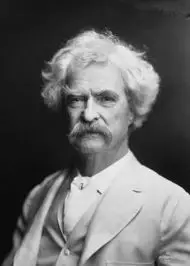
Mark Twain
Twain interrogates the complexities of American society through his incisive narratives that blend humor with social criticism. His purpose in writing extends beyond mere entertainment to provoke thought and challenge societal norms. Themes of childhood innocence, race, and societal hypocrisy are prevalent, and his use of vernacular speech adds authenticity and accessibility to his work. By weaving these elements into his storytelling, Twain effectively captures the regional culture of America while offering an insightful critique of its social mores.\n\nMark Twain's books, such as "The Adventures of Tom Sawyer" and "The Prince and the Pauper," exemplify his talent for crafting engaging stories with profound social messages. Meanwhile, his satirical work, "A Connecticut Yankee in King Arthur’s Court," highlights his ability to navigate historical contexts with a critical eye on contemporary issues. As an author, Twain utilized his experiences from various careers, including riverboat piloting and newspaper reporting, to infuse his writing with realism and authenticity. His mastery of language and narrative form earned him widespread acclaim, and his influence endures as a pivotal figure in American literature.\n\nReaders who engage with Twain's works gain more than just entertainment; they are invited to reflect on the moral complexities of society and the nature of human behavior. This exploration is relevant not only to literary scholars but also to anyone interested in understanding the cultural and social fabric of America. Twain's bio reveals a life committed to examining the world through a lens of wit and wisdom, making his contributions timeless and his narratives continually resonant with new generations.
Read moreDownload PDF & EPUB
To save this Black List summary for later, download the free PDF and EPUB. You can print it out, or read offline at your convenience.
Life on the Mississippi
by Mark Twain
