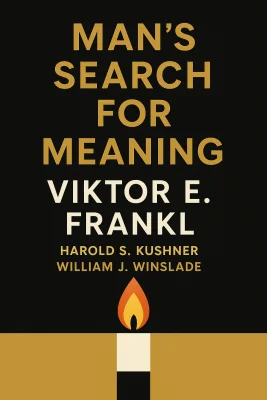
Man's Search for Meaning
Categories
Nonfiction, Self Help, Psychology, Philosophy, Biography, History, Memoir, Spirituality, Classics, Audiobook
Content Type
Book
Binding
Paperback
Year
2006
Publisher
Beacon Press
Language
English
ASIN
080701429X
ISBN
080701429X
ISBN13
9780807014295
File Download
PDF | EPUB
Man's Search for Meaning Plot Summary
Introduction
In the darkest corners of human history, where hope seemed extinguished and dignity stripped away, one man discovered that even suffering could serve a profound purpose. Viktor Frankl, an Austrian neurologist and psychiatrist, entered the Nazi concentration camps as a prisoner and emerged not only as a survivor, but as the founder of an entirely new school of psychotherapy that would reshape our understanding of human resilience and the search for meaning. Frankl's extraordinary journey from the gas chambers of Auschwitz to the lecture halls of Vienna represents more than a tale of survival. It embodies a revolutionary insight: that our ultimate freedom lies not in our circumstances, but in our ability to choose our attitude toward those circumstances. Through his experiences and subsequent work, readers will discover how extreme adversity can forge unshakeable wisdom, how love transcends physical presence, and how the human spirit's capacity for finding meaning can transform even the most desperate situations into opportunities for growth and purpose.
Chapter 1: The Psychiatrist Before the Camps
Before the Nazi occupation transformed his world, Viktor Frankl was already establishing himself as a promising young psychiatrist in Vienna. Born in 1905 to a middle-class Jewish family, he demonstrated an early fascination with psychology and philosophy that would shape his entire worldview. As a medical student and young doctor, he worked with suicidal patients and began developing theories about human motivation that differed significantly from the prevailing Freudian doctrine of his time. While Freud emphasized the pleasure principle and Adler focused on the will to power, Frankl was already formulating his belief that humans are primarily driven by a will to meaning. His early clinical work reinforced this conviction as he observed that patients who found purpose in their lives, even amid suffering, showed remarkable resilience. This period of his life was marked by intellectual curiosity and professional ambition, with Frankl conducting research and preparing to publish his first major work on psychotherapy. The approaching shadow of Nazism created an agonizing dilemma for the young psychiatrist. When offered an opportunity to escape to America with a visa already in hand, Frankl faced a choice that would define his character. His parents were too old and vulnerable to leave, and abandoning them felt like a betrayal of everything he valued. The decision crystallized when he discovered a fragment of stone from a destroyed synagogue in his father's possession, inscribed with the commandment to honor one's parents. This moment of clarity led him to choose loyalty and love over personal safety. His decision to remain in Vienna with his family demonstrated the very principles he would later teach: that meaning often emerges through our choices in difficult circumstances, and that love and responsibility to others can provide the strength to face even the gravest dangers. Little did he know that this choice would lead him to experiences that would validate and deepen his theories about human nature in ways he could never have imagined.
Chapter 2: Descent into Hell: Auschwitz and Survival
The cattle car journey to Auschwitz marked the beginning of Frankl's descent into what he would later describe as the ultimate test of human spirit. Packed with fifteen hundred prisoners in conditions designed to strip away dignity before they even reached the camp, Frankl witnessed the first psychological phase of camp life: shock. The initial disbelief gave way to a desperate clinging to hope, even as the reality of their destination became undeniable. Upon arrival, the infamous selection process began immediately. With a casual gesture of a finger pointing left or right, SS officers determined who would live to work and who would die within hours. Frankl found himself among the minority selected for labor, watching ninety percent of his transport disappear into the crematoriums. The brutal efficiency of this process introduced survivors to a world where human life had been reduced to mere numbers, where identity meant nothing and survival depended on avoiding attention at all costs. The systematic dehumanization that followed was methodical and complete. Prisoners were stripped of possessions, clothing, hair, and names, becoming numbers tattooed on skin and sewn onto rags. Frankl lost his most precious possession: the manuscript of his life's work, hidden in his coat. In its place, he found a prayer book page containing the central Jewish prayer, which he interpreted as a sign to live his thoughts rather than merely write them. This moment marked his transition from theorist to living embodiment of his beliefs about meaning and suffering. Daily existence in the camps tested every assumption about human endurance. The combination of starvation, brutal labor, arbitrary violence, and constant threat of death created conditions that seemed designed to break the human spirit. Yet Frankl observed that even in these circumstances, some prisoners maintained their inner dignity while others succumbed to despair. The difference, he realized, lay not in external circumstances but in each individual's chosen response to those circumstances. Through the endless days of digging trenches, laying railroad tracks, and enduring the capricious cruelty of guards and fellow prisoners, Frankl began to understand suffering as something that could either destroy or transform. The camps became his laboratory for testing theories about human resilience, revealing truths about the human condition that no academic study could have uncovered.
Chapter 3: The Psychology of Extreme Suffering
In the depths of the concentration camps, Frankl observed a phenomenon that would revolutionize his understanding of human psychology: even in the most extreme circumstances, people retained the capacity to choose their responses. This observation formed the foundation of what would become his greatest contribution to psychology, the recognition that our ultimate freedom lies in our ability to choose our attitude toward any situation. The camp experience revealed three distinct psychological phases among prisoners. The initial shock phase gave way to a necessary emotional numbing, what Frankl called apathy, which served as a protective mechanism against the daily horrors. Prisoners learned to witness brutality without flinching, to see death as commonplace, and to focus entirely on the basic requirements of survival. This dulling of emotions, while necessary for psychological survival, carried the danger of complete dehumanization. What fascinated Frankl most was the third phase: the recognition that despite all external pressures to conform to the degrading conditions, some individuals maintained their essential humanity. These prisoners, though few in number, proved that something in human nature remained inviolable even under the most extreme duress. They shared their meager rations, comforted others, and faced death with dignity, demonstrating that the human spirit possessed resources beyond what psychology had previously recognized. The camps also revealed the crucial role of future orientation in survival. Prisoners who maintained hope for reunion with loved ones or who believed they had important work to complete showed greater resilience than those who gave up on the future. Frankl himself sustained hope through his determination to reconstruct his lost manuscript and to reunite with his wife. This forward-looking orientation, he realized, was not merely helpful but essential for maintaining the will to live. Perhaps most importantly, the camp experience validated Frankl's emerging theory about the will to meaning. While basic drives for food, warmth, and safety dominated daily existence, those who survived with their spirits intact were those who found some deeper purpose in their suffering. Whether through love, responsibility to others, or belief in future contribution, meaning provided the psychological framework that made survival not just possible but purposeful.
Chapter 4: Finding Meaning in the Darkest Hour
In the frozen landscape of a Bavarian work camp, shuffling through snow toward another day of brutal labor, Frankl experienced one of the most profound revelations of his life. As he and his fellow prisoners marched in darkness, thoughts turned naturally to their wives and families. In that moment of connection across the void of separation, Frankl grasped what he would later identify as love's ultimate truth: it transcends physical presence and finds its deepest expression in the spiritual essence of the beloved. This revelation illuminated a path toward meaning that even the camps could not destroy. Love, Frankl realized, was not dependent on the physical presence of the loved one or even certainty of their survival. His wife's image, vivid in his mind, provided more luminous warmth than the rising sun. Whether she lived or had perished became irrelevant to the sustaining power of his love for her. This understanding freed him from dependence on external circumstances for inner fulfillment. The camps also taught Frankl that meaning could be discovered through the attitude one takes toward unavoidable suffering. Watching fellow prisoners face death, he observed that some met their fate with remarkable dignity, transforming their final moments into testimony to human courage. These individuals proved that when all possibilities for creative work or loving experience are stripped away, meaning can still emerge through the stance we take toward our existence. Beauty, too, revealed itself as a source of meaning even in the most desolate circumstances. A sunset viewed through barbed wire, the song of a bird perching on freshly dug earth, or a moment of unexpected camaraderie among prisoners could pierce through despair and reconnect individuals with the larger human experience. These moments of transcendence proved that meaning was not luxury dependent on favorable conditions but a fundamental human capacity that could assert itself anywhere. The search for meaning also manifested through responsibility to others. Frankl discovered that those who maintained concern for fellow prisoners, who refused to abandon their principles even when survival was at stake, preserved something essential about their humanity. The choice to help a struggling comrade, to share a piece of bread, or simply to offer encouragement became acts of profound meaning that affirmed the value of human dignity over mere survival.
Chapter 5: Birth of Logotherapy: The Third School
From the ashes of his camp experiences emerged a therapeutic approach that would challenge the fundamental assumptions of both Freudian psychoanalysis and Adlerian individual psychology. Logotherapy, Frankl's revolutionary method, positioned the search for meaning as the primary human drive, distinct from Freud's pleasure principle or Adler's will to power. This represented not merely another school of thought but a fundamental reorientation of how we understand human motivation and psychological healing. Central to logotherapy is the concept that psychological distress often stems from existential frustration rather than repressed drives or inferiority complexes. Frankl observed that many modern neuroses, which he termed noogenic neuroses, originated in the failure to find meaning rather than in unresolved childhood conflicts. This insight proved particularly relevant in treating what he identified as the existential vacuum, a widespread condition characterized by boredom, apathy, and a sense of inner emptiness that no amount of pleasure or success could fill. The therapeutic technique of logotherapy focuses on helping patients discover their unique meaning and mission rather than dwelling on past traumas or psychological mechanisms. Unlike traditional psychoanalysis, which often involves extensive exploration of unconscious conflicts, logotherapy is forward-looking and meaning-centered. The therapist's role resembles that of an eye doctor who helps patients see clearly rather than a painter who imposes a particular vision of reality. One of logotherapy's most innovative techniques, paradoxical intention, demonstrates its practical effectiveness. This method involves encouraging patients to deliberately intend the very symptoms they fear, thereby breaking the cycle of anticipatory anxiety that perpetuates many psychological disorders. A patient afraid of sweating is instructed to try to sweat as much as possible, while someone with insomnia is advised to stay awake rather than struggle to fall asleep. The technique's success lies in its ability to restore the patient's sense of choice and control over their symptoms. The effectiveness of logotherapy extends beyond individual treatment to address broader social issues. In an age characterized by unprecedented material prosperity yet increasing rates of depression and suicide, Frankl's emphasis on meaning offers a vital corrective to purely achievement-oriented or pleasure-seeking approaches to life. His work suggests that true psychological health depends not on the absence of tension but on the presence of purpose, creating what he calls noo-dynamics, the motivational force generated by the gap between what we are and what we ought to become.
Chapter 6: Love as Ultimate Human Purpose
Through his harrowing experiences and subsequent therapeutic work, Frankl discovered that love represents perhaps the most profound source of meaning available to human beings. His understanding of love, forged in the crucible of separation and suffering, transcended romantic sentiment to embrace love as a fundamental mode of human existence that enables us to grasp the deepest essence of another person and, through that grasp, to actualize both their potential and our own. Love, in Frankl's conception, differs radically from mere sexual attraction or emotional dependency. True love involves seeing beyond the external circumstances and temporary conditions that surround the beloved to perceive their innermost essence and unrealized potential. The loving person not only recognizes what the beloved is but also envisions what they could become, and through this recognition helps bring those possibilities to fruition. This transformative power of love makes it a creative force in human development. The camps taught Frankl that love's sustaining power operates independently of physical presence or even certainty about the beloved's continued existence. During his darkest moments, the image of his wife provided strength that no external source could match. This discovery revealed love's spiritual dimension, its capacity to transcend the limitations of time and space through the power of human consciousness to maintain connection across any barrier. Frankl's therapeutic work confirmed love's central role in psychological healing and human flourishing. Patients who discovered genuine love, whether for another person, for their work, or for a cause greater than themselves, showed remarkable resilience in facing life's challenges. Love provided both motivation for living and a framework for interpreting suffering as meaningful sacrifice rather than meaningless endurance. The implications of this understanding extend far beyond individual relationships to encompass our entire approach to living meaningfully. Love, whether expressed through marriage, parenthood, friendship, or service to humanity, offers a pathway to self-transcendence that enriches both the lover and the beloved. In choosing to love, we affirm the fundamental value of existence and our capacity to create meaning through our connections with others.
Chapter 7: Legacy of Tragic Optimism
The term "tragic optimism" captures the essence of Frankl's mature philosophy: the ability to maintain hope and find meaning despite life's inevitable encounters with suffering, guilt, and death. This perspective, born from his intimate acquaintance with the worst possibilities of human existence, offers a realistic yet hopeful approach to life's difficulties that neither denies their reality nor succumbs to despair in their presence. Frankl's concept challenges the prevailing cultural emphasis on happiness and success as life's ultimate goals. Instead, he proposes that authentic human fulfillment comes through engaging meaningfully with whatever circumstances we encounter, whether joyful or sorrowful. This approach acknowledges that pain is an inescapable part of human existence while insisting that such pain need not render life meaningless. Indeed, our response to unavoidable suffering can become our greatest source of dignity and meaning. The practical applications of tragic optimism extend to every area of human experience. In facing illness, loss, or failure, individuals can choose to view these experiences as opportunities for growth and self-transcendence rather than merely as obstacles to happiness. This shift in perspective often transforms the very nature of suffering, converting it from meaningless endurance into purposeful engagement with life's challenges. Frankl's influence on modern psychology and philosophy continues to grow as contemporary society grapples with rising rates of depression, anxiety, and suicide despite unprecedented material prosperity. His emphasis on meaning over pleasure and purpose over comfort offers valuable guidance for individuals and communities seeking authentic fulfillment in an age of existential confusion. Mental health professionals increasingly recognize that many modern psychological problems stem from meaninglessness rather than trauma or chemical imbalance. The enduring relevance of Frankl's work lies in its fundamental insight about human nature: that we possess an unconditional capacity to find meaning and maintain dignity regardless of our circumstances. This understanding offers hope not only to those facing extreme adversity but to anyone struggling with life's ordinary challenges. In choosing meaning over despair, purpose over pleasure, and love over self-interest, we access resources for resilience that no external force can destroy.
Summary
Viktor Frankl's extraordinary journey from concentration camp prisoner to pioneering psychotherapist demonstrates that even the most devastating experiences can become sources of wisdom and healing when approached with courage and purpose. His life stands as testament to the human capacity to transform suffering into service and to discover meaning in the most unlikely circumstances. From Frankl's legacy, we can extract profound guidance for navigating our own challenges: that meaning emerges not from avoiding difficulty but from choosing how we respond to it, and that love, responsibility, and service to others provide the most reliable foundations for a fulfilling life. His work reminds us that while we cannot always control what happens to us, we retain the ultimate freedom to choose our attitude toward whatever we encounter. This message speaks especially powerfully to anyone facing adversity, seeking deeper purpose, or working to help others find resilience in difficult times.
Best Quote
“Everything can be taken from a man but one thing: the last of the human freedoms—to choose one’s attitude in any given set of circumstances, to choose one’s own way.” ― Viktor E. Frankl, Man's Search for Meaning
Review Summary
Strengths: The review highlights the profound impact of Viktor Frankl's book, particularly its exploration of finding meaning in suffering, which resonated deeply with the reviewer. The book's structure, divided into Frankl's personal experiences and the development of logotherapy, is praised for its insightful psychological perspective. The reviewer's personal connection and repeated readings underscore the book's life-changing influence. Overall: The reader expresses a highly positive sentiment, recommending the book as a significant work on the Holocaust and human resilience. It is considered transformative and essential for understanding coping mechanisms in extreme adversity.
About Author

Viktor E. Frankl
Frankl investigates the depths of human suffering and the persistent quest for meaning through his pioneering work in existential analysis and logotherapy. His philosophy, grounded in personal experiences from concentration camps like Auschwitz, seeks to understand how individuals find purpose even in the most harrowing circumstances. His notable book, "Man’s Search for Meaning," not only details these experiences but also introduces logotherapy, a method positing that life's meaning can endure regardless of external conditions. This exploration of the existential quest for meaning amidst adversity offers readers a profound lens through which to view their own lives.\n\nCentral to Frankl's method is the idea that hope and resilience emerge when individuals actively pursue meaning. His works, including "The Doctor and the Soul" and "The Will to Meaning," delve into the existential dimensions of life, advocating for a purposeful existence. Frankl's literary style, characterized by clarity and depth, weaves personal narrative with philosophical inquiry, thereby highlighting the tension between despair and hope. His insights into the human capacity for finding purpose amidst suffering provide a framework that underscores the importance of meaning as a vital component of psychological well-being.\n\nFor readers, Frankl's contributions offer both solace and understanding, resonating particularly with those navigating personal or existential challenges. His works not only enrich the fields of psychology and psychotherapy but also inspire broader personal reflection and scholarly discourse. The impact of his philosophy extends beyond the academic, reaching individuals who seek to imbue their lives with meaning despite life's inherent challenges. Thus, his bio and books continue to inspire those who yearn for insight into the complexities of the human psyche.
Read moreDownload PDF & EPUB
To save this Black List summary for later, download the free PDF and EPUB. You can print it out, or read offline at your convenience.
Man's Search for Meaning
by Viktor E. Frankl
