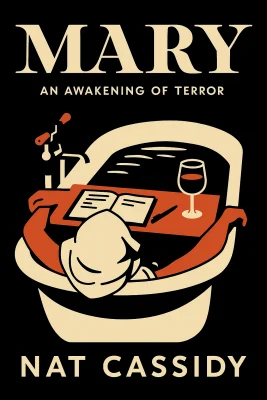
Mary
An Awakening of Terror
Categories
Fiction, Audiobook, Horror, Mystery, Thriller, Adult, Paranormal, Mystery Thriller, Supernatural, Horror Thriller
Content Type
Book
Binding
Kindle Edition
Year
2022
Publisher
Tor Nightfire
Language
English
ASIN
B09CNGNQN5
ISBN13
9781250265227
File Download
PDF | EPUB
Mary Plot Summary
Introduction
# Echoes in the Desert: A Woman's Bloody Awakening Mary Mudgett stands before her bathroom mirror in a cramped New York apartment, watching her face decompose before her eyes. Flesh sags and oozes in clotty rivulets, her lower lip pulls down to reveal black gums and gravestone teeth. At forty-nine, she has become invisible to the world—fired from her bookstore job, forgotten by her landlord, dismissed by doctors who see only textbook perimenopause. The hallucinations grow stronger each day, and her nights fill with exhausting dreams of running through dark corridors, hunting something she cannot name. Desperation drives Mary back to the Arizona desert town she fled thirty years ago. Her aunt Nadine, a bitter conspiracy theorist dying alone in squalor, has summoned her with promises of payment for caregiving. But Arroyo holds secrets that have been festering in the shadows for decades. The massive Cross House looms on the mountainside, now serving as hospital and town hall, yet Mary recognizes it from her recurring nightmares. As she takes a job organizing files in the building's basement, she discovers that some ghosts refuse to stay buried, and her return has awakened something that has been waiting fifty years for vengeance.
Chapter 1: The Invisible Woman: Return to the Forgotten Past
The bus deposits Mary at the edge of nowhere, dust swirling around her ankles as she drags her suitcase toward Nadine's house. The desert heat presses against her like a living thing, and the Cross House watches from its perch on the hill with windows like dead eyes. Nadine greets her with undisguised contempt, oxygen tank rattling behind her wheelchair as she surveys Mary's collection of porcelain figurines with disgust. The house reeks of cigarettes and decay. Chipotle, Nadine's vicious Chihuahua, leaves territorial markers throughout the rooms while his owner chain-smokes despite the oxygen tube in her nose. Mary arranges her ceramic Loved Ones on the dresser, each painted face offering silent companionship in this tomb of bitterness. These figurines have been her only friends through decades of invisible existence, and she whispers to them like old confidants. That first night, Mary pushes aside the moldy shower curtain and freezes. A woman stands in the empty bathtub, naked and mutilated, blood cascading down her chest in streams that never dry. Her head is wrapped in a blood-soaked pillowcase, and her fingers end in jagged claws of bone and sinew. Mary stumbles backward, heart hammering, but when she calls for Nadine, the old woman sees nothing but porcelain and rust stains. Sleep becomes impossible. Mary lies in the narrow bed listening to the house settle around her like old bones, while outside the Cross House keeps its silent vigil. The ceramic faces of her Loved Ones catch moonlight from the window, their painted smiles offering no comfort against the growing certainty that her return to Arroyo has awakened something that should have stayed buried.
Chapter 2: Ghosts in Glass: Encountering the Bloody Spirits
Mary takes a job at the Cross House hospital, desperate for both money and answers about what's happening to her mind. The basement becomes her domain, filing decades of medical records alongside Eleanor, a precocious teenager with ethereal beauty and an unsettling obsession with serial killers. Eleanor's knowledge is encyclopedic, delivered with casual enthusiasm as she tells Mary about Damon Cross, the Jane Doe Killer who terrorized the region fifty years ago. The killer removed all identifying features from his victims before covering their faces and abandoning their bodies across the desert. Eleanor's true crime podcasts fill the basement with cheerful discussions of dismemberment while they sort manila folders, the juxtaposition surreal yet somehow comforting. Mary finds herself drawn to the girl's friendship, the first genuine connection she's felt in decades. The ghost woman isn't confined to Nadine's bathroom. Mary begins seeing her throughout the town, standing in doorways and lurking in shadows, always motionless except for the slow flex of those terrible claws. Other figures join her—more women bearing the same mutilated faces hidden beneath makeshift shrouds, all watching Mary with hungry attention. They never speak, never approach, but their presence grows stronger each day. Eleanor shows Mary her sketch pad, and Mary gasps in recognition. The girl has been drawing the same bloodied, hooded women that Mary sees around town. When they match one ghost to a medical file—Jane Mayhew, a poet with a distinctive birthmark—the impossible becomes undeniable. Mary isn't losing her mind. She's seeing the victims of Damon Cross, and somehow, they're seeing her too.
Chapter 3: The Cross House Secrets: Uncovering a Killer's Legacy
Dr. Burton runs both the hospital and seems to hold sway over the entire town, treating Mary with polite suspicion that makes her skin crawl. His mother, the ancient schoolteacher Mrs. Burton, watches Mary with eyes that remember everything and forgive nothing. Even the children seem different here, too quiet and well-behaved, as if they've learned that drawing attention brings consequences. Mary discovers a hidden door in the basement wall, revealed when she follows one of the backward-walking ants that seem to lead her to specific files. Behind it lies a network of crawl spaces that run throughout the mansion, passages that Damon Cross once used to move unseen through his family home. The darkness beyond breathes with a presence that makes Mary's teeth ache, but she's drawn to it with compulsion she can't explain. Eleanor reveals her theory—what if Mary is the reincarnation of one of Cross's victims? The idea should sound absurd, but it explains too much. Mary's automatic writing, filled with strange phrases and names she doesn't recognize, might be memories from a previous life bleeding through. Her dreams of hunting through dark corridors could be memories of being trapped in these very walls. In the town's crystal shop, Mary encounters Anna-Louise, one of her childhood tormentors now grown into a woman with brain damage from a brutal beating. Anna-Louise's mother Barb runs the shop as a front for something darker—a desert cult that recognizes passages in Mary's journal, words that match their sacred texts exactly. The revelation hits like a physical blow: Mary hasn't been channeling the memories of a victim. She's been channeling the thoughts of the killer himself.
Chapter 4: Reincarnation and Recognition: Embracing Dark Identity
The town council gathers to test Mary's authenticity in Bonnie's living room, surrounded by the descendants of Arroyo's original settlers. Under Barb's hypnotic guidance, Mary slips into a trance state and finds herself running through darkness with a companion whose voice she recognizes as her own. When she emerges from the trance, she's laughing and grabbing for a broken mirror shard, slashing at anyone within reach. The attack should horrify them, but instead it convinces the doubters. Mary opens Anna-Louise's cheek to the bone, targeting the same victim she'd brutalized as a child fifty years earlier. Only Damon Cross would show such consistency across lifetimes. Dr. Burton offers Mary a room in the Cross House's preserved third floor, the family quarters kept exactly as they were when the killer lived there. Mary chooses Damon's own bedroom, a sparse space that feels more like home than anywhere she's ever lived. The mansion's ghost women no longer frighten her—she's learning to ignore them, to strip them of power through indifference. The town's gospel reveals itself as a twisted fusion of desert mysticism and serial killer worship, with Cross revered as a prophet who saw through civilization's illusions to the brutal truth beneath. But Mary's exploration of the hidden crawl spaces reveals Damon's greatest secret. His religious writings were fake, created as teenage rebellion against his abusive father's hatred of the family's fundamentalist heritage. The visions of angels, the divine justifications for murder, the entire theological framework that Arroyo's cult has built around him—all of it was lies written by a traumatized boy trying to hurt his abuser.
Chapter 5: The Desert Cult: Acceptance Among the Devoted
The revelation should shatter Mary's newfound sense of purpose, but instead it liberates her. If Damon's prophecies were fiction, then she's free to write her own story. The town expects her to resume his killing spree, to provide fresh sacrifices for their desert god. The FBI agent sniffing around town has them nervous, and they need someone to eliminate potential witnesses. Mary's first test comes when she encounters Carole, another childhood victim now grown into a bitter middle-aged woman. The urge to kill rises in her like a tide, and she follows it without resistance. Carole's face peels away under Mary's blade like old wallpaper, revealing the democracy of death that makes equals of everyone. The act feels like communion, a sacrament performed in the desert's harsh cathedral. The town prepares for its most sacred celebration—the Harvest, a ritual sacrifice that coincides with Mary's fiftieth birthday and the anniversary of Cross's death. Mary has proven herself worthy through Carole's murder and other acts that demonstrate her commitment to the desert's justice. Dr. Burton and his followers welcome her as their returned prophet, the vessel through which their god's will shall be enacted. But when Mary witnesses the cult's true nature during the ritual—a gathering of sadists who torture women to death in the name of spiritual purification—she rebels against their expectations. These aren't holy servants but broken people using religion to justify their cruelty. Dr. Burton, enraged by her defiance, drugs her and buries her alive in the desert, encasing her head in glass to cure her skin for removal.
Chapter 6: Buried Truth: Betrayal and Supernatural Liberation
As the sun beats down mercilessly on her glass prison, Mary faces the truth about the voice that has been whispering in her head since childhood. Damon Cross is no prophet, merely a broken man whose religious ravings were designed to anger his abusive father. The cult has built their faith on the fantasies of a traumatized child who grew into a killer, and Cross has been using Mary, manipulating her memories and actions while she remained unconscious of his presence. Jane, one of the ghostly Furies, appears in the desert as Mary's strength fails. For the first time, the specter removes her bloody shroud, revealing a face carved away by Cross's blade but eyes that shine with terrible beauty. Jane begins digging frantically at the earth around Mary's buried body, her claws tearing through dirt and stone with supernatural strength. When Mary's body temperature spikes in a menopausal hot flash, the moisture loosens the packed earth enough for her to break free. She emerges from her desert grave transformed, no longer the invisible woman who arrived in Arroyo weeks ago. The Furies gather around her like an army awaiting orders, their razored claws gleaming in the starlight. Mary leads them back to the Cross House, where she confronts Damon Cross in the mansion's hidden chambers. She forces him to look upon her aging body without the distortion of mirrors or self-hatred, and when he tries to possess her completely, she allows the Furies to carve his spectral face away. The voice that has tormented her since childhood falls silent at last, leaving only the sound of her own breathing in the darkness.
Chapter 7: Fury Unleashed: Leading the Spirits to Vengeance
Eleanor reveals herself as the true killer of several recent victims, a teenage psychopath who murdered to prove her worth to the cult. She attacks Mary with a box cutter, slashing her throat, but the wound is too shallow to kill. Mary turns the blade on her young tormentor, carving words into her flesh as a message to any who would doubt her newfound strength. The porcelain figurines that once comforted Mary lie shattered across Nadine's floor—she no longer needs their silent companionship. When Nadine destroys them in a final act of spite, Mary responds with violence that surprises them both, forcing porcelain shards down the old woman's throat until she chokes on the fragments of Mary's childhood treasures. The Furies sweep through the mansion and down into the town, settling scores that have festered for fifty years. They tear apart the cult members with surgical precision, reducing bodies to component parts and leaving no trace of their passage. Mary watches from the mansion's playground as screams echo through the night, feeling neither guilt nor satisfaction—only the profound relief of a woman who has finally learned to see herself clearly. Dawn finds Arroyo empty save for the dead. The Furies have learned to exist independently, no longer requiring Mary's attention to manifest in the world. They scatter across the country like seeds on the wind, carrying their hunger for justice to new hunting grounds where other invisible women wait for someone to see their pain.
Chapter 8: Beyond the Mirror: A New Predator Emerges
Mary stands before a mirror without fear, seeing her own face reflected back—scarred, bloodied, but undeniably real. An FBI agent named Arliss arrives to investigate the massacre, finding only Nancy Ruiz, a local nurse, cowering in the mansion's crawl spaces with a traumatized child. He shoots her down as she flees, convinced he has killed the monster responsible for the carnage. The media celebrates his heroism while the truth remains buried in the desert sand. Mary's name never appears in any report—she has achieved the ultimate invisibility. She boards a bus bound for New York, carrying nothing but the clothes on her back and the knowledge of what she has become. The city welcomes her with its familiar indifference, another unremarkable middle-aged woman lost in the crowd. In her empty apartment, surrounded by invisible companions, Mary reads the FBI agent's bestselling book about his supposed victory. His author photo reveals his address in Virginia, and she smiles as she plans her next journey. The desert has taught her that some hungers can never be satisfied, only redirected toward more deserving prey. The mirror that once showed her only distortion now reflects a woman who has finally awakened to her own terrible potential. She has learned the most dangerous truth of all—that the world renders certain women so thoroughly unseen that they can commit atrocities without consequence. Her transformation from invisible woman to avenging angel is complete, and the world will never be safe from those it chooses to ignore.
Summary
Mary Mudgett's journey through the desert becomes a reckoning with the violence that shapes women's lives, revealing how trauma echoes across generations in different forms. Her supernatural encounters force her to confront not just the literal ghosts of murder victims, but the metaphorical ghosts of her own unlived life. The harsh beauty of the desert landscape becomes both a place of exile and potential redemption, where even the most invisible women might finally demand to be seen. The story's true terror lies not in its supernatural elements but in its unflinching examination of how society discards women past their perceived usefulness. Mary's invisibility becomes her greatest weapon, allowing her to move through the world as an agent of retribution that no one sees coming. In learning to look at herself without flinching, she discovers a power that transcends the limitations others have placed upon her, transforming from victim to predator in a world that created both roles through its systematic cruelty.
Best Quote
“Abuse is its own kind of reincarnation, isn’t it? We become the ones who made us.” ― Nat Cassidy, Mary: An Awakening of Terror
Review Summary
Strengths: The review highlights the book's clever balance between horror and comedy, with a skilled storytelling voice capable of delivering intense, graphic imagery alongside humor. The characters, particularly Aunt Nadine, are described as larger-than-life, and the dialogue is noted for its intensity. The book is praised for its originality and the unique experience it offers each reader. Weaknesses: The review mentions that the middle of the book could have been more concise, as it occasionally loses momentum, prompting the reader to skim through some details. Overall: The reader expresses a positive sentiment, recommending the book as an original and quirky read that is both exciting and thrilling, appealing to fans of horror and psychological narratives.
About Author

Nat Cassidy
Cassidy crafts unsettling narratives that delve into psychological horror and existential dread, reflecting on the fragility of the human condition. Through his novels and plays, such as "Mary: An Awakening of Terror" and "Nestlings," he creates a fusion of suspense, dark humor, and unease. His versatility in storytelling extends across media, often transforming a book into a screenplay or audio drama, which highlights his innovative approach. Influenced by literary giants like Stephen King and Haruki Murakami, Cassidy's work resonates with themes of transformation and the eerie aspects of everyday life.\n\nFor readers seeking a deep dive into horror's next golden age, Cassidy's works provide an immersive experience. His ability to adapt stories into different formats—be it stage, screen, or audio—enhances their impact, engaging a diverse audience. His latest work, "When the Wolf Comes Home," exemplifies this adaptability, offering readers a fresh perspective on classic horror tropes. As a Bram Stoker Award nominee and a celebrated figure in contemporary horror literature, Cassidy continues to shape the genre with his dynamic storytelling and keen insight into human fears.\n\nNat Cassidy's acclaimed career spans multiple creative fields, including playwriting and screenwriting. Recognized with awards such as the New York Innovative Theatre Award, his contributions to theater and literature are significant. His bio reveals a commitment to arts education, as seen in his involvement with the Shakespeare Theatre of DC's "WILL ON THE HILL" event. With a rich background in theater and Shakespearean studies, Cassidy remains a formidable force in horror literature, captivating audiences with his compelling narratives and innovative methods.
Read moreDownload PDF & EPUB
To save this Black List summary for later, download the free PDF and EPUB. You can print it out, or read offline at your convenience.
Mary
by Nat Cassidy
