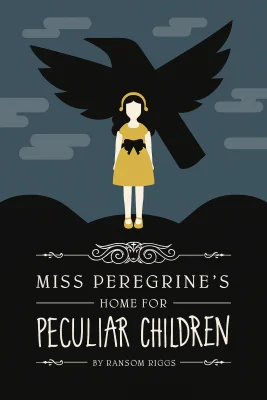
Miss Peregrine's Home for Peculiar Children
Categories
Fiction, Horror, Mystery, Historical Fiction, Young Adult, Fantasy, Book Club, Time Travel, Paranormal, Supernatural
Content Type
Book
Binding
Hardcover
Year
2011
Publisher
Quirk
Language
English
ISBN13
9781594744761
File Download
PDF | EPUB
Miss Peregrine's Home for Peculiar Children Plot Summary
Introduction
The monsters were real. They had always been real, waiting in the shadows with their tentacled mouths and hollow eyes, hunting those who could see them. Jacob Portman discovered this truth the night his grandfather died in a Florida swamp, torn apart by something that shouldn't exist—something that looked exactly like the creatures from his grandfather's impossible childhood stories. For years, Jacob had dismissed those tales as fairy stories: the enchanted island, the peculiar children with miraculous gifts, the woman who could turn into a bird. But when his grandfather's final words sent him to a windswept Welsh island called Cairnholm, Jacob found himself stepping through time itself, into September 3rd, 1940—a single day trapped in an endless loop, where children with extraordinary abilities lived under the protection of Miss Peregrine, their shape-shifting guardian. Yet even in this hidden sanctuary, the monsters were closing in, and Jacob would discover that his grandfather's greatest secret wasn't the existence of the peculiar world, but Jacob's own place within it.
Chapter 1: Grandfather's Final Warning: Seeds of an Impossible Truth
The call came while Jacob stocked shelves at his family's drugstore, breaking through the mundane rhythm of his summer job like a gunshot. His grandfather's voice crackled through the phone, desperate and fragmented. "They're coming for me. I need my key. Your father put you up to this." Jacob had heard this paranoid rambling before. At sixteen, he understood that his grandfather was losing his mind, that the fantastic stories of his childhood—monsters with rotting skin and children who could fly—were symptoms of advancing dementia. Abraham Portman had been Jacob's hero once, the only adult who seemed to have lived a truly extraordinary life. A Jewish refugee who'd escaped Poland before the Holocaust, he'd fought in wars and crossed oceans, carrying with him mysterious photographs of impossible children and tales of an enchanted island where he'd found safety. But heroes, Jacob had learned, were just old men with fading memories and locked gun cabinets. When his father couldn't leave work to check on grandfather, Jacob borrowed his friend Ricky's battered Crown Victoria and drove to the retirement community where Abraham Portman lived alone. The house was in chaos—furniture overturned, cabinets emptied, the refrigerator door hanging open like a scream. Jacob found the back door torn open, a flashlight abandoned in the yard, pointing toward the dark woods. He followed the beam into the Florida swamp, calling his grandfather's name into the pressing darkness. Spanish moss hung like funeral shrouds, and the air thrummed with insects and unseen dangers. When he found Abraham Portman lying broken in a bed of ferns, Jacob's first thought was that wild dogs had gotten him. His grandfather's clothes were shredded, his body torn open, but his eyes still held a terrible clarity. "Go to the island, Yakob," his grandfather whispered, his Polish accent emerging as life fled from him. "Find the bird. In the loop. On the other side of the old man's grave. September third, 1940. Emerson—the letter." Then Jacob saw it: a shadow moving in the trees, something with tentacles writhing from its mouth and eyes that swam in liquid darkness. He screamed, and the creature vanished, leaving only the echo of his terror and his grandfather's cooling corpse.
Chapter 2: Crossing to Cairnholm: The Island of Hidden Secrets
The psychiatrist convinced everyone that Jacob had hallucinated the monster. Dr. Golan explained it clinically: acute stress reaction, the traumatized mind creating horrors to process grief. Jacob wanted to believe him. It was easier than accepting that his grandfather's fairy tales might be true. But the letter changed everything. Hidden in a book of Emerson's writings that his aunt found among his grandfather's belongings, Jacob discovered correspondence from someone called Miss Alma LeFay Peregrine, postmarked from Cairnholm Island, Wales. The letter spoke of peculiar children and mentioned Abraham by name, as if he were still expected to return. Attached was a photograph of a woman smoking a pipe, her face shadowed but unmistakably real. Dr. Golan encouraged the trip, seeing it as therapy. "Visiting this mythologized place will demystify it," he told Jacob's parents. "Reality will combat fantasy." Jacob's father, an amateur ornithologist, jumped at the chance to study the island's bird populations. His mother saw an opportunity for her "two men" to bond. The ferry to Cairnholm cut through fog thick as blindness, revealing the island like a fortress rising from ancient seas. Cliffs towered into mist while millions of seabirds wheeled overhead, their cries mixing with the distant rumble of shipwrecks lurking beneath the surface. The island's small town huddled around a harbor, its whitewashed cottages trimmed with satellite dishes and connected by muddy gravel roads where diesel generators growled like mechanical beasts. They stayed at the Priest Hole, a pub that doubled as the island's only accommodation. The proprietor, Kev, explained the building's name while showing them a hidden compartment in the floor where Catholic priests had once hidden from Queen Elizabeth's persecution. "May she always be our rock of refuge," the locals toasted, raising glasses to an island that had sheltered outcasts for centuries. Jacob's first attempt to find the children's home led him through a vast bog where ancient bodies slept in peat graves, past stone cairns that marked Neolithic tombs. The house, when he finally found it, was a ruin. Vines strangled its walls, trees burst through broken windows, and the roof had collapsed in places, leaving jagged teeth of sky visible through the wounds. Inside, rooms filled with decades of decay told the story of sudden abandonment—toys scattered in dust, furniture rotted beyond recognition, the smell of time's passing thick in the stagnant air. But in the basement, Jacob discovered something that changed everything: a trunk filled with photographs identical to those his grandfather had shown him as a child. The same impossible images—invisible children, levitating girls, boys who lifted boulders. Only now Jacob understood they weren't tricks of light and shadow. They were evidence.
Chapter 3: The Loop Revealed: Children Frozen in September 1940
The girl with fire in her hands found Jacob in the ruined house, demanding to know what he was doing there. Emma Bloom moved with deadly grace, pressing a knife to his throat while her other palm blazed with supernatural flame. When Jacob claimed to be Abraham Portman's grandson, she called him a liar. The children Jacob had seen in the photographs, she insisted, were long dead. But something in Jacob's face made her hesitate. She led him captive through the town, where horse-drawn carts replaced modern vehicles and the air raid sirens wailed their nightly warning. As German bombers filled the sky with death, Jacob realized the impossible truth: he had stepped backward through time, into September 3rd, 1940—the night the children's home was destroyed. Except it wasn't destroyed. Not here, not in this pocket of frozen time that Miss Peregrine had created to protect her peculiar charges. The house stood pristine and welcoming, its windows glowing with warm light. In its parlor, the headmistress waited—a woman who could shift between human and bird form, whose peculiar gift allowed her to manipulate time itself. Miss Peregrine had been expecting Jacob. His grandfather had written about him, she explained, describing a boy who shared Abraham's rare ability to see the hollowgast—the monsters that hunted peculiar children. These creatures were once peculiar themselves, transformed by a catastrophic experiment in 1908 when renegade time-manipulators tried to achieve immortality. Instead, they became hollow shells of their former selves, driven by insatiable hunger for peculiar flesh. The loop protected the children from these horrors, trapping them in a single day that reset each evening at the moment of the bombing. Here, Olive levitated toward the ceiling during meals, her shoes weighted with lead to keep her grounded. Millard Nullings, invisible since birth, narrated the town's daily routines with scholarly precision. Hugh carried a hive of bees in his stomach, while Fiona could make entire forests grow with a gesture. Emma herself commanded fire, though her true talent lay in the fierce protectiveness that had kept her heart faithful to Jacob's grandfather for seventy years. Each night, they gathered on the lawn to watch the bombing, singing songs as tracers lit the sky and the house shook with concussions. At the climax, a single bomb would hang frozen above a topiary of Michelangelo's Adam, balanced on the statue's outstretched finger like a deadly fruit. Then time would reset, the destruction would unweave itself, and September 3rd, 1940 would begin again.
Chapter 4: Peculiar Gifts and Monster Hunters: Jacob's Inheritance
Jacob's first weeks in the loop passed like a fever dream of summer days that never ended. He swam with Emma in underwater chambers filled with bioluminescent fish, their bodies moving through liquid starlight. He watched theatrical performances where the children displayed their gifts like carnival acts, Bronwyn lifting boulders with casual strength while Enoch animated clay soldiers with the hearts of dead mice. But Jacob struggled with his place in this perfect prison. The children spoke of staying forever, of lives measured not in years but in repeated moments. Emma especially pressed him to remain, seeing in Jacob an echo of the grandfather she'd never stopped loving. "You belong here," she insisted, though Jacob felt the weight of the ordinary world he'd left behind—his parents, his incomplete life, the future he'd never chosen but couldn't abandon. Miss Peregrine revealed the truth that changed everything: Jacob's grandfather had been more than a refugee who'd found sanctuary on Cairnholm. After the war, Abraham Portman had become a hunter, using his ability to see hollows to track and kill them across America. The hunting trips Jacob remembered, the mysterious absences, the collection of weapons—all of it served a greater purpose. His grandfather had been a knight errant in a secret war, protecting both peculiar and common people from monsters that most couldn't even perceive. The revelation came with a price. Miss Avocet, an elder ymbryne and Miss Peregrine's former teacher, arrived at the house broken and traumatized. Her loop had been attacked, her children taken as bait to lure out the ymbrynes themselves. The hollows weren't hunting randomly anymore. They had evolved, become organized, and they were systematically capturing time-manipulators for some greater design. Jacob's presence on the island had drawn them closer. The peculiar children were no longer safe in their hidden sanctuary. The loop that had protected them for seventy years was becoming their trap. In the town beyond the loop, signs of the hollow presence multiplied. Martin, the museum curator, was found torn apart near the cliffs, his body bearing the distinctive wounds of hollow claws. Sheep were slaughtered in their pens, drained of blood with surgical precision. Most disturbing of all, a mysterious ornithologist had been asking questions, watching Jacob's movements with eyes that never seemed to blink.
Chapter 5: Wights and Hollowgasts: The Hunt for Ymbrynes Begins
The revelation struck Jacob like ice water: Dr. Golan, his trusted psychiatrist, was the enemy he'd feared all along. The bearded stranger camping on Cairnholm, the bus driver from Jacob's middle school, the yard worker who'd maintained his family's lawn—they were all the same person, a shapeshifting wight who'd spent years positioning himself to manipulate Jacob's life. "Did you forget me so quick?" Golan taunted in the freezing fish storage shed where he'd cornered Jacob and his friends over Martin's mutilated corpse. His voice shifted through accents and identities like a radio searching for signal. "End of the line, Portman!"—the words Jacob's bus driver had said every afternoon, now revealed as prophecy rather than routine dismissal. Wights retained their human appearance but lost their pupils, their blank eyes reflecting a soul consumed by hollow purpose. They served the hollowgast as scouts and procurers, living in the normal world to identify and track peculiar children. Golan had orchestrated everything—Jacob's therapy, his trip to Cairnholm, even his grandfather's death. Abraham Portman had been eliminated not by random hollow attack, but by calculated murder designed to traumatize Jacob into revealing the location of Miss Peregrine's loop. The trap was closing. While Jacob and his friends fought for survival in the town, Golan infiltrated the children's home with a gun and simple threats. Miss Peregrine and Miss Avocet, faced with a choice between their own safety and their children's lives, transformed into their bird shapes and allowed themselves to be caged like common pets. But Jacob had learned to fight. In the collapsing fish shed, when the hollow burst free from the wreckage with tentacles seeking his throat, he drove rusted shears into the creature's eyes and watched black blood paint the rain. The boy who'd once needed a bodyguard in high school had become a killer of monsters, discovering the warrior inheritance his grandfather had tried to protect him from. The hollow's death was only the beginning. Through the storm-lashed night, Jacob and Emma pursued their captured guardian to the lighthouse, where the final confrontation would determine not just the fate of the peculiar children, but the future of the secret war between the normal and impossible worlds.
Chapter 6: The Lighthouse Battle: Between Two Worlds
The lighthouse rose from churning seas like a finger pointing toward judgment, its beam sweeping across a night torn between worlds. Golan waited at the top with his caged ymbrynes, backed by a German U-boat whose crew served hollow masters. The children's desperate assault up the swaying iron staircase became a dance with death, each step threatening to cast them into the void. Emma's flames turned the narrow platform into a crucible of fire and shadow while Bronwyn's strength shattered doors and bent metal like paper. Jacob found himself holding his grandfather's legacy—not just the ability to see monsters, but the will to destroy them. When Golan offered him safety, money, a return to normal life in exchange for betraying his friends, Jacob understood that some choices carved grooves too deep in the soul to ever smooth over. The gun bucked in Jacob's hands with a sound like the world cracking open. Golan's surprise as he fell backward into darkness was almost comical—the expression of a man who'd orchestrated everything except his own mortality. But victory tasted like ashes when the ymbryne cage plummeted toward the waves, Miss Peregrine trapped inside while her sister Miss Avocet was dragged away by the submarine's wight crew. They saved one and lost the other, pulling Miss Peregrine from the ocean while enemy engines faded into undersea darkness. The rescued ymbryne couldn't shift back to human form, remaining locked in her bird shape by some trauma inflicted during captivity. Without her conscious control, the loop began to slip—September 3rd, 1940 bleeding into September 4th like a wound that wouldn't close. The house bomb found its true target at last, splitting Adam's topiary body and collapsing the rooms where the children had lived their endless summer. The crater where their protector once stood became Victor's grave, the strongest of them finally laid to rest in earth that could hold his bones. The paradise was ending, not in flame and noise, but in the quiet devastation of time resuming its merciless advance. Standing in the smoking ruins, the children faced a choice their caretaker could no longer make for them: remain in the ashes of safety, or step forward into a world that had declared war on everything they represented.
Chapter 7: Beyond the Loop: A New Journey Beckons
The Map of Days spread across Emma's lap like a chart of all possible worlds, its leather binding worn smooth by ymbryne fingers tracing routes through time and space. Each spiral marked a loop, each symbol a sanctuary now potentially compromised. Horace's prophetic dreams had shown them snow and iron bars, a prison where captured ymbrynes would be forced to recreate the catastrophic experiment that first birthed the hollows. But this time the reaction would be bigger, more devastating. The wights had learned from their failure in 1908—they would succeed in their transformation to godhood or burn the world trying. Miss Avocet was already in their hands, along with ymbrynes from a dozen other raided loops. Time itself was under siege. The children loaded their possessions into stolen fishing boats as the real September 4th dawned over Cairnholm. They were refugees now, driven from the only home most of them remembered. But Emma's hands still held fire, Bronwyn could still shatter steel, and Jacob carried his grandfather's gift for seeing the monsters that others couldn't perceive. They had weapons the enemy couldn't steal or corrupt. Jacob made his choice at the harbor, watching his friends prepare for a journey into unknown dangers. His father would wake to find only a letter and a photograph—Emma unchanged from the day she'd loved Abraham Portman, proof that some loves transcend the normal flow of years. The ordinary world would have to manage without Jacob Portman. He belonged to the war between yesterday and tomorrow now. Miss Peregrine rode in Fiona's wild hair like a living compass, her bird eyes fixed on horizons that might hold salvation or destruction. The children sang as they rowed toward the rising sun, their voices carrying across waters where warships prowled like mechanical sharks. Behind them, Cairnholm shrank to a memory. Ahead lay the vast ocean of possibility, dangerous and beautiful and absolutely uncertain.
Summary
The peculiar children's exodus from their shattered sanctuary marked more than an ending—it was the beginning of a larger war. Jacob Portman had found his place not in the safe illusion of normal life, but in the terrible clarity of purpose that comes from seeing monsters for what they truly are. His grandfather's death was revealed as sacrifice rather than senseless tragedy, the first move in a campaign that would determine whether peculiar children remained hidden refugees or emerged as guardians of a world that had forgotten how to believe in magic. The loop's destruction freed the children from their beautiful prison, but it also stripped away the last barriers between the secret world and the one that would destroy it. With Miss Peregrine wounded and Miss Avocet captured, the balance of power had shifted toward hollow hands. Yet in rowing away from Cairnholm's protective shores, Emma and her companions chose hope over safety, motion over stagnation. They carried with them not just their extraordinary gifts, but the possibility that children could save adults from the monsters adults had created. The war between time's guardians and its devourers was far from over—it had only just begun.
Best Quote
“I used to dream about escaping my ordinary life, but my life was never ordinary. I had simply failed to notice how extraordinary it was.” ― Ransom Riggs, Miss Peregrine's Home for Peculiar Children
About Author

Ransom Riggs
Riggs reframes the art of storytelling by blending visual elements with written narrative, creating a unique approach that captivates readers. His work primarily delves into the interplay between fantasy and reality, where young protagonists often find themselves navigating secret worlds. This exploration allows readers to reflect on themes of identity, belonging, and the power of imagination. His integration of vintage photographs into his novels, such as in "Miss Peregrine’s Home for Peculiar Children", showcases his distinctive style, enriching the narrative with haunting imagery. \n\nThe author’s background in film informs his writing style, characterized by action-driven prose and vivid scene-setting. Riggs’s books often appeal to a wide audience due to their accessible yet evocative language, which attracts both young adult and adult readers. Beyond the "Miss Peregrine" series, works like "Talking Pictures" and "Sunderworld, Vol. I: The Extraordinary Disappointments of Leopold Berry" demonstrate his commitment to visual storytelling. These methods benefit readers who appreciate narratives that challenge the boundaries of traditional storytelling, offering a multifaceted reading experience. \n\nRansom Riggs's literary contributions have gained significant recognition, with "Miss Peregrine’s Home for Peculiar Children" becoming a New York Times bestseller and adapted into a film by Tim Burton. This book, along with his broader body of work, not only captivates audiences but also highlights his innovative blend of text and imagery. Such achievements underline Riggs's impact in contemporary young adult literature, ensuring his place as a notable figure in the literary world.
Read moreDownload PDF & EPUB
To save this Black List summary for later, download the free PDF and EPUB. You can print it out, or read offline at your convenience.
Miss Peregrine's Home for Peculiar Children
by Ransom Riggs
