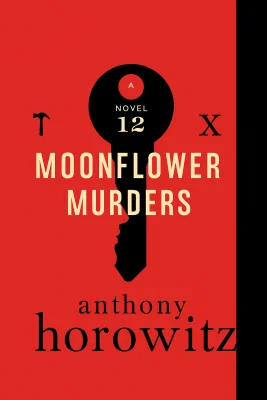
Moonflower Murders
Categories
Fiction, Audiobook, Mystery, Thriller, Adult, British Literature, Books About Books, Crime, Mystery Thriller, Murder Mystery
Content Type
Book
Binding
Paperback
Year
2021
Publisher
Harper Perennial
Language
English
ASIN
0062955462
ISBN
0062955462
ISBN13
9780062955463
File Download
PDF | EPUB
Moonflower Murders Plot Summary
Introduction
# Moonflower Murders: When Fiction Conceals Truth Susan Ryeland thought she had escaped the world of murder mysteries forever. The former London editor now ran a small hotel on the Greek island of Crete, trading manuscript deadlines for Mediterranean sunsets. But when Lawrence and Pauline Treherne arrived at her hotel with desperate eyes and a missing daughter, Susan found herself pulled back into a darkness she'd tried to leave behind. Their daughter Cecily had vanished without a trace from the family's Suffolk hotel, Branlow Hall. Eight years earlier, a guest named Frank Parris had been brutally murdered there, his skull crushed with a hammer in room twelve. A Romanian maintenance worker, Stefan Codrescu, had confessed and received a life sentence. But two weeks before her disappearance, Cecily had read an old Atticus Pünd mystery novel and called her parents, voice trembling with revelation. "They got the wrong man," she'd whispered. The next morning, she took her dog for a walk and never returned. What the Trehernes didn't know was that the author of that novel, Alan Conway, had visited their hotel weeks after the original murder, weaving real secrets into fictional mysteries. Now those buried truths were demanding to surface, and someone was willing to kill to keep them hidden.
Chapter 1: The Call from Paradise: A Missing Daughter and Buried Secrets
The gray Suffolk morning matched Susan's mood as she arrived at Branlow Hall, the Victorian mansion looming like something from a Gothic novel. Lawrence Treherne, silver-haired and distinguished, met her in the circular entrance hall where a stone owl perched ominously on the mantelpiece. His wife Pauline clutched a tissue, her eyes red from weeks of sleepless nights. The story they told chilled Susan more than the English weather. Frank Parris had been an advertising executive from Australia, visiting for a wedding weekend eight years ago. He'd requested a room change at the last minute, moving to room twelve in the hotel's Moonflower Wing. That decision had cost him his life. Someone had entered his room in the dead of night and beaten him to death with such savage fury that blood spattered the walls like abstract art. Stefan Codrescu seemed the perfect suspect. Young, foreign, with a criminal record for burglary. The police found stolen money hidden under his mattress and traces of Frank's blood in his room. Under pressure from Detective Chief Superintendent Locke, a man who wore his prejudices like a badge, Stefan confessed. The case was closed within days, another foreign criminal removed from decent society. But Cecily had never believed in Stefan's guilt. She'd hired him as part of her father's rehabilitation program, seen the gentleness beneath his rough exterior. When she read Atticus Pünd Takes the Case weeks before her disappearance, something clicked into place. The author, Alan Conway, had visited Branlow Hall after the murder, interviewing staff and guests. He'd woven their stories into his fiction, but hidden within the pages was something more dangerous than entertainment. The truth about who really killed Frank Parris. The revelation had cost Cecily her life. Someone at Branlow Hall couldn't afford to let her expose the lies that had sent an innocent man to prison. As Susan stood in the hotel's faded grandeur, she realized she was hunting a killer who had already murdered twice to protect their secret.
Chapter 2: Fiction as Evidence: Decoding Conway's Deadly Game
Susan found herself holding a paperback copy of Atticus Pünd Takes the Case, its cover showing a quaint seaside hotel that bore an uncomfortable resemblance to Branlow Hall. Alan Conway had been her most successful author before his death two years earlier, a man whose brilliance was matched only by his capacity for cruelty. He delighted in hiding clues and messages in his work, literary puzzles that only the most observant readers would discover. The novel told the story of Melissa James, a fading Hollywood actress strangled in her bedroom at the fictional Moonflower Hotel. The investigation revealed a web of secrets involving affairs, blackmail, financial fraud, and revenge. But Conway had done more than simply create entertainment. He'd embedded the solution to the real murder within his fictional framework, a message meant for one person alone. Characters shared initials with real people from Branlow Hall. Lawrence and Maureen Treherne became Lance and Maureen Gardner, hotel managers depicted as petty criminals. Derek Endicott, the night manager, appeared as Eric Chandler, a disturbed man with a club foot who spied on female guests. Even the victims matched in their essence, if not their names. James Fraser, Conway's former lover and research assistant, provided Susan with the author's original research materials from his visit to Branlow Hall. Notebooks, photographs, recorded interviews with staff and guests. Among them was a recording of Conway's conversation with Cecily herself, conducted just weeks after the murder. Her young voice, preserved in digital amber, spoke of her doubts about Stefan's guilt and her unease about the investigation. But it was another interview that proved most revealing. Conway had tried to speak with Aiden MacNeil, Cecily's husband-to-be, but Aiden had refused to be recorded. His hostility had been immediate and absolute. At the time, it had seemed like simple caution. Now, with Cecily missing, it felt like something far more sinister. Conway had seen through Aiden's performance from the beginning, recognizing the signs of a man living a carefully constructed lie.
Chapter 3: Parallel Investigations: Two Hotels, Two Murders, One Truth
Susan's investigation led her through Suffolk's quiet villages and hidden secrets. She met Martin and Joanne Williams, Frank Parris's sister and brother-in-law, who lived in the house they'd inherited jointly with Frank. Their motive was clear enough. Frank's return from Australia meant forced sale of their family home to fund his failed business ventures. Martin seemed almost eager to be suspected, playing dangerous games that made him appear guilty while his wife watched with growing horror. At the hotel, Susan encountered the cast of characters Conway had immortalized in print. Derek Endicott, the night manager, lived with his dying mother in a cottage that reeked of medicine and desperation. He'd been bullied mercilessly at school by the same headmaster who'd been staying at the hotel the night of the murder. Lisa Treherne, Cecily's sister, ran the hotel with cold efficiency, her face marked by a scar from childhood when Cecily had thrown a knife at her in a moment of jealous rage. The most intriguing figure was Aiden MacNeil himself. Handsome and charming, he'd swept Cecily off her feet with talk of astrological compatibility. She was Sagittarius to his Leo, fire signs destined for each other. They'd married in a lavish ceremony at Branlow Hall, but Susan sensed something hollow in their relationship. Aiden spoke of his missing wife with the right words, but his eyes remained cold, calculating. Each interview revealed new layers of deception. Sexual affairs, financial crimes, old grudges festering like infected wounds. But none of it seemed to connect to Frank Parris, a stranger passing through their lives for a single weekend. The answer lay buried in Conway's novel, waiting for someone clever enough to decode his final, deadly puzzle. Susan began to understand that Conway had been telling two stories simultaneously. The fictional murder at the Moonflower Hotel provided the framework, but the real solution lay in the parallels he'd drawn between his characters and the people at Branlow Hall. The killer wasn't hiding in the shadows. They were standing in plain sight, protected by eight years of successful deception.
Chapter 4: The Leo Connection: Unmasking Hidden Identities
The breakthrough came when Susan realized Conway's obsession with a single word scattered throughout his novel like breadcrumbs leading to the truth. Leo. The fictional Tawleigh-on-the-Water was populated with lions. The Red Lion pub, St. Daniel's church with its stained glass depicting the prophet in the lions' den, even Melissa James's dog named Kimba after a cartoon lion. Conway had embedded leonine references throughout the text with deliberate precision. Leo was more than a symbol. It was an identity. Someone at Branlow Hall had once worked under that name in London's underground sex trade. Frank Parris, with his taste for young men and dangerous games, would have known Leo intimately. When he arrived at the hotel and recognized a face from his past, he saw an opportunity for one final, twisted pleasure. Susan's investigation led her to HMP Wayland, where Stefan Codrescu had spent eight years of his life for a crime he didn't commit. The young Romanian had aged in prison, but his eyes still burned with the injustice of his situation. He showed Susan a letter from Cecily, written the day before her disappearance. In it, she promised to visit him, to explain what she'd discovered in Conway's book. She knew who the real killer was, had known it from the very first page. The letter revealed another secret that shattered Susan's assumptions. Stefan was the father of Cecily's daughter, Roxana. The child's dark hair and features bore no resemblance to fair-haired Aiden, but perfectly matched the man sitting across from Susan in the prison visiting room. Cecily had named her daughter after the Romanian word for dawn, the one brightness that gave Stefan hope in his concrete cell. The pieces were falling into place with horrible inevitability. Aiden MacNeil was Leo, the rent boy who'd serviced London's wealthy and powerful in expensive Mayfair flats. He'd used his position as an estate agent to access empty properties, turning them into venues for his lucrative sideline. Frank Parris had been one of his regular clients, a man who paid well for the privilege of humiliation and control.
Chapter 5: Frames Within Frames: How the Innocent Became Guilty
When Aiden met Cecily Treherne, he saw his escape route. She was naive, wealthy, and utterly convinced by his charm. Her belief in astrology made her easy to manipulate. He simply had to be her perfect Leo to her trusting Sagittarius. The wedding at Branlow Hall would mark his transformation from London prostitute to respectable country gentleman. But Frank Parris's arrival threatened everything. The older man recognized his former plaything and couldn't resist one final game. He demanded Aiden visit his room on the wedding night, a twisted recreation of their old dynamic. The Marriage of Figaro, Frank's supposed favorite opera, told the story of a nobleman claiming his right to bed a servant on his wedding night. Frank planned to exercise his own droit de seigneur. Instead of submission, Aiden brought a hammer. The violence was personal, intimate, the rage of someone who'd been used and degraded finally finding its target. Frank's skull cracked like an eggshell, blood spraying across the walls of room twelve in arterial patterns that spoke of fury unleashed. Framing Stefan was almost an afterthought. The Romanian was perfect for the role. Foreign, criminal, friendless. Aiden planted money and blood evidence while Stefan lay drugged in his bed, then watched as Detective Chief Superintendent Locke's prejudices did the rest. The case was closed before it had properly begun, another immigrant taking the blame for crimes committed by those who belonged. For eight years, the plan had worked perfectly. Stefan rotted in prison while Aiden built a new life on the foundation of his lies. He married Cecily, became a father to her child, played the role of devoted husband and family man. But when Cecily began reading Conway's novel, the carefully constructed facade began to crumble. She was too intelligent, too persistent. Her natural sense of justice wouldn't let her ignore the inconsistencies in the official story. Conway had hidden the truth in plain sight, even including an anagram that spelled out the killer's identity. Madeline Cain, the murderer in his fictional story, was a perfect anagram of Aiden MacNeil. The author had been taunting the real killer from beyond the grave, daring him to reveal himself.
Chapter 6: The Final Revelation: When Past and Present Collide
Susan gathered the suspects in Branlow Hall's lounge for a final confrontation that would have made Atticus Pünd proud. The Treherne family sat in stunned silence as she laid out the evidence piece by piece. Aiden's true identity as Leo, his motive for murder, the elaborate frame-up that had destroyed Stefan's life. Even the anagram Conway had hidden in plain sight, mocking the killer with his own cleverness. The revelation of Roxana's true parentage hit like a physical blow. Lawrence and Pauline Treherne stared at the man they'd welcomed as a son, seeing him clearly for the first time. Lisa Treherne's face went white as she understood how completely they'd all been deceived. Detective Chief Superintendent Locke, called to witness the confession, sat frozen as his career crumbled around him. But Aiden wasn't finished. The mask had slipped completely now, revealing the cold calculation beneath years of careful performance. When Locke moved to arrest him, Aiden grabbed an antique brooch from the table, driving its sharp pin deep into the detective's throat. Blood cascaded down Locke's neck as he collapsed, and in the chaos that followed, Aiden smashed through the French windows and fled into the Suffolk countryside. The confession he left behind revealed the full extent of his planning. He'd always intended to kill Cecily eventually, along with her sister, claiming the hotel and its wealth for himself. Her discovery of Conway's hidden message had simply accelerated his timeline. She'd confronted him in their cottage that final morning, presenting her evidence calmly, giving him a chance to explain. Instead, he'd strangled her with his bare hands, just as he'd killed Frank Parris eight years before. The manhunt was brief. Aiden drove to Manningtree station and threw himself under the London train, choosing death over the exposure of his crimes. His body was scattered across the tracks, finally paying the price for eight years of successful deception. The truth had demanded its due, and Conway's final puzzle was solved at last.
Chapter 7: Justice and Consequences: The Price of Buried Truth
In the aftermath, justice moved with unusual swiftness. Stefan Codrescu was released from prison after eight years of wrongful imprisonment, his conviction overturned and his name cleared. The Treherne family welcomed him as Roxana's true father, trying to make amends for the years stolen by prejudice and incompetence. Detective Chief Superintendent Locke survived his injuries but faced an investigation into his handling of the original case, his career effectively over. The hotel industry buzzed with the scandal, but Branlow Hall somehow survived. The Trehernes threw themselves into rebuilding, determined to create something positive from the wreckage of their lives. Stefan took over as head of maintenance, finally able to provide for his daughter openly. Roxana, now old enough to understand some of what had happened, began visiting her real father regularly, slowly building the relationship that Aiden's lies had stolen from them. Susan returned to Crete with Andreas, carrying the weight of revelations that had destroyed lives and exposed the rot beneath England's genteel surface. The case had shown her the power of stories to both conceal and reveal truth, the way fiction could become a weapon in the wrong hands. Alan Conway's final puzzle had been solved, but at a cost that made victory feel hollow. The Moonflower murders had claimed three lives in the end. Frank Parris, killed for threatening to expose a secret. Cecily Treherne, murdered for discovering the truth. And Aiden MacNeil himself, destroyed by the lies he'd built his life upon. Conway's novel had been both prophecy and confession, a literary time bomb that had finally exploded eight years after its creation.
Summary
On a warm evening in the mountains above Agios Nikolaos, Susan and Andreas built a fire outside the Cave of Zeus. She fed Conway's books to the flames one by one, watching the pages curl and blacken as smoke carried the words away. The Atticus Pünd mysteries had brought her success and recognition, but they'd also brought death and deception into her life. Some stories, she realized, were too dangerous to keep telling. The Moonflower murders had taught her that fiction and reality could intertwine in deadly ways, that buried secrets had a way of demanding resurrection. Conway had possessed the key to justice but had chosen to keep it locked away in his novels, more concerned with his literary reputation than with the innocent man suffering in prison. His death had nearly taken those secrets to the grave, leaving Susan to piece together the fragments he'd left behind. In the darkness above them, the stars wheeled in their ancient patterns, indifferent to human schemes and the price of uncovering buried truths. The echoes of deception could reverberate for years, but in the end, the truth had a way of demanding to be heard.
Best Quote
“Everything in life has a pattern and a coincidence is simply the moment when the pattern becomes briefly visible.” ― Anthony Horowitz, Moonflower Murders
Review Summary
Strengths: The review highlights the book's engaging dual-mystery format, with a modern mystery intertwined with a Golden Age-style novel. The reviewer praises the book's ability to surprise, its cleverness, and its satisfying nature. The writing style is compared favorably to Agatha Christie, and the author is commended for not misleading readers, providing all necessary clues. Overall: The reader expresses high enthusiasm for "Moonflower Murders," finding it as impressive as its predecessor, "Magpie Murders." The book is recommended for its substantial and clever storytelling, with hopes for a continuation of the series. The review indicates a strong recommendation for fans of the mystery genre.
About Author

Anthony Horowitz
Horowitz investigates the boundaries of children's literature by integrating suspense and espionage, which has positioned him alongside renowned authors like Enid Blyton and Mark A. Cooper. His early interest in writing matured into a professional career at twenty, where he skillfully created narratives that captivated young readers, notably through his Alex Rider series. In his exploration of crime and mystery, Horowitz extends his storytelling prowess to television, contributing to series such as "Foyle's War" and "Collision," thus bridging the gap between literature and screenwriting.\n\nIn blending fast-paced action with intricate plotlines, Horowitz connects deeply with readers who appreciate the thrill of mystery woven with youthful adventure. His role as the writer of the officially endorsed Sherlock Holmes novel, "The House of Silk," showcases his ability to adapt classic detective themes for a modern audience, while maintaining the essence of the original works. His engagement with children's charities, such as his patronage of East Anglia Children’s Hospices, reflects his commitment to using his influence beyond the page, thereby resonating with those who value social impact alongside literary accomplishments.\n\nReaders seeking a bio that encapsulates an author who redefines children's espionage tales will find Horowitz's career both inspiring and multifaceted. His diverse body of work appeals to a wide audience, from young readers diving into their first spy adventure to adults seeking intricate crime dramas. As his books and television series continue to garner acclaim, Horowitz's legacy as a storyteller who melds action with empathy remains impactful and enduring.
Read moreDownload PDF & EPUB
To save this Black List summary for later, download the free PDF and EPUB. You can print it out, or read offline at your convenience.
Moonflower Murders
by Anthony Horowitz
