
Never Let Me Go
Categories
Fiction, Classics, Science Fiction, Audiobook, Romance, Book Club, Contemporary, Novels, Literary Fiction, Dystopia
Content Type
Book
Binding
Paperback
Year
2010
Publisher
Vintage Books
Language
English
ISBN13
9781400078776
File Download
PDF | EPUB
Never Let Me Go Plot Summary
Introduction
Kathy H. sits in her car at thirty-one, a carer for over eleven years, watching the grey English countryside roll past her windshield. She has spent more than a decade tending to donors—young people like herself who give their organs until they "complete." The sterile euphemism masks a brutal reality: they are clones, created solely to provide spare parts for the original humans they were copied from. Her mind drifts to Hailsham, the boarding school where she grew up with her closest friends Ruth and Tommy. They had believed it was a sanctuary, a place where they learned art and literature, played sports, and fell in love. The guardians who raised them spoke of their futures in careful abstractions, never quite explaining what awaited them. Now Kathy understands the truth—Hailsham was an experiment, a humane farm designed to prove that clones could develop souls worth preserving, even as their bodies were harvested piece by piece.
Chapter 1: Sheltered Beginnings: Life Behind Hailsham's Walls
The first memory comes sharp and clear: thirteen-year-old Kathy standing at the pavilion window, watching Tommy rage in the muddy field below. His face was scarlet with fury, his precious polo shirt already ruined. The other boys had tricked him again, pretending to pick him for football before abandoning him to his tantrum. Kathy slipped away from her friends and walked toward him. Tommy was a walking target—poor at art in a place that prized creativity, given to explosive fits that made him an easy mark for cruelty. When she reached him, his flailing arm caught her cheek. Not hard, but enough to shock him back to awareness. "Your shirt," she said simply. "It'll come off." This small kindness marked the beginning of something deeper between them. Tommy had been isolated for years, mocked for his childish drawings and terrible temper. But Kathy saw past the fury to the bewildered boy beneath. Their world was Hailsham—a sprawling estate in the English countryside where students lived in dormitories, attended classes, and created art with obsessive dedication. The guardians, led by the stern Miss Emily, cultivated their talents with mysterious urgency. Every few months, a cold woman they called Madame would arrive to select the best works for her Gallery. She treated the students like dangerous specimens, never speaking to them directly, her face rigid with barely concealed revulsion. The students learned to navigate unspoken rules. They collected personal treasures in boxes beneath their beds, trading artwork and possessions at monthly Exchanges. They whispered about the world beyond Hailsham's boundaries—a place they would someday enter but could barely imagine. Most unsettling of all, they heard fragments about their futures: donations, carers, completion. The words hung in the air like half-remembered nightmares.
Chapter 2: Coming of Age: The Cottages and Emerging Truth
At eighteen, Kathy and her friends left Hailsham for the Cottages—a collection of converted farm buildings where students waited before beginning their adult roles. Here they encountered veterans, older students who had spent years in this liminal space, and who spoke more openly about what lay ahead. The Cottages felt like freedom at first. Students could stay up late, explore the surrounding countryside, and conduct relationships with less supervision. But the veterans carried themselves differently—they moved like people marking time, their conversations threaded with resignation. Ruth and Tommy had become a couple during their final year at Hailsham, though their relationship was more performance than passion. Ruth desperately wanted to fit in with the veteran couples, copying their mannerisms from television shows. She would tap Tommy's elbow when they parted, mimicking a gesture she had observed without understanding its artificial origin. During these months, the students began to grasp the shape of their futures. They would become carers first, looking after donors through their surgical procedures. Then they would become donors themselves, giving up their organs one by one until they completed. It was a system as elegant as it was horrifying—they would tend to each other until the very end. Kathy found herself caught between Ruth and Tommy as their relationship grew strained. She could see what they could not—that Ruth was performing love while Tommy waited for something real. The tension built through long summer days, erupting finally in small cruelties that would echo for years to come.
Chapter 3: Bonds That Endure: Kathy, Tommy, and Ruth's Complex Relationship
The friendship between Kathy, Ruth, and Tommy was built on shared history and maintained through mutual dependency. Ruth possessed a fierce charisma that had always made her the center of their group. She could spin fantasies so compelling that others forgot they were lies—claiming guardians as personal friends, inventing elaborate backstories about her future. At the Cottages, Ruth became obsessed with the idea of working in a modern office after glimpsing a magazine advertisement. She described her future workplace in vivid detail—gleaming computers, potted plants, colleagues sharing coffee and jokes. The veteran students listened with fascination, believing that Hailsham students might indeed escape the donation program. Tommy, meanwhile, struggled with his creative failures. A guardian named Miss Lucy had once told him not to worry about his poor artwork, but now he suspected this advice had been catastrophically wrong. He began drawing again in secret—intricate imaginary animals rendered in obsessive detail. Each creature was a desperate attempt to prove he possessed the soul that art was meant to reveal. Kathy watched both friends with growing unease. Ruth's fantasies were becoming more elaborate and dangerous. Tommy's hope was both touching and futile. She found herself taking long walks alone, driving past shops and churches, collecting glimpses of the world that would never truly belong to them. The breaking point came during a bitter argument about Ruth's imagined romance with a guardian. Kathy challenged her friend's lies, and Ruth struck back by mocking Tommy's artwork. The words hung in the air like poison. Something fundamental had shifted between them—the easy cruelty of children giving way to the calculated wounds that only adults could inflict.
Chapter 4: The Search for Deferrals: Hope in the Shadows of Fate
Rumors had always circulated about couples who had won deferrals—extensions of life granted to those who could prove they were truly in love. The stories were vague but persistent: two students somewhere had been given three extra years together before beginning their donations. They had presented evidence to Madame, somehow convincing her their love was genuine and deserving of mercy. The veterans at the Cottages were obsessed with these rumors. Chrissie and Rodney, an older couple, pumped the Hailsham students for information about the process. They believed the prestigious school's graduates would know the secret procedures, the proper channels for appeal. Tommy developed a theory that connected these rumors to Hailsham's obsession with creativity. Perhaps Madame's Gallery wasn't just a collection but an archive of souls. When couples claimed to be in love, she could examine their collected artwork to verify the authenticity of their bond. The theory was both logical and desperate—a way to make sense of years of forced artistic production. Ruth listened to these discussions with growing excitement. She began to speak as though she possessed inside knowledge, hinting at procedures only Hailsham students understood. The performance was convincing enough to maintain the others' attention, but Kathy recognized the familiar signs of Ruth constructing another elaborate fantasy. As their time at the Cottages drew to a close, the rumors took on greater urgency. Students were beginning to leave for their training as carers. The future was no longer abstract but immediate. Soon they would enter the adult world of donations and completions, and any chance for deferrals would begin ticking away like a countdown timer toward death.
Chapter 5: Norfolk and Lost Things: Symbols of Recovery and Loss
The expedition to Norfolk began as a search for Ruth's "possible"—the original person from whom she had been cloned. Chrissie and Rodney claimed to have spotted her working in an office in a seaside town. The description matched Ruth's fantasies so perfectly that Kathy suspected deliberate manipulation, but Ruth was determined to investigate. They drove through empty countryside to the coast, tension building in the cramped car. Ruth positioned herself between Kathy and Tommy, effectively isolating them from each other as she chattered nervously with the veterans. The group dynamics were shifting, friendships straining under the weight of unspoken truths. The possible turned out to be a middle-aged office worker with only superficial resemblance to Ruth. They followed her through the town to an art gallery, where her ordinariness became undeniable. She was simply a woman living her life—working, socializing, aging naturally. Everything Ruth could never become. The revelation shattered Ruth's composure. She lashed out with bitter honesty, describing their origins in the crude terms she had always avoided: they were copied from the dregs of society, from criminals and addicts and prostitutes. No one like the elegant office worker would ever have volunteered for the cloning program. Their models were society's discards, people whose lives were deemed worthless enough to replicate. The truth hung over them like a toxic cloud. They drove home in strained silence, each lost in private reckonings with their diminished expectations. But Norfolk had offered one small gift—Tommy had found Kathy's lost cassette tape in a second-hand shop, a childhood treasure she had mourned for years. In this lost corner of England, some things could still be recovered.
Chapter 6: The Final Revelation: Confronting Their Purpose
Years passed. Kathy became a carer, tending to donors with professional competence and hidden grief. Ruth completed after her second donation, dying in a hospital bed while Kathy held her hand. But before her death, Ruth had given them Madame's address—a final gift to repair the damage she had caused. Kathy and Tommy, now lovers at last, drove to the seaside town where Madame lived in retirement. The woman who had collected their artwork for decades greeted them with familiar coldness, but she led them inside to meet the true architect of their fate. Miss Emily sat in a wheelchair, aged and frail but still commanding. Her revelation was both simpler and more devastating than they had imagined. There had never been deferrals. The rumors were wishful thinking, stories students told themselves to make their fate bearable. The Gallery had served a different purpose entirely. In the early days after the war, when science had made cloning possible, society preferred not to think about the source of their miracle cures. Clones were kept in shadows, treated as less than human. Hailsham had been an experiment in proving otherwise—that clones could be cultivated to possess souls indistinguishable from their originals. For a brief period, the experiment had succeeded. Miss Emily and Madame had organized exhibitions displaying the students' artwork, demonstrating their capacity for creativity and emotion. They had won supporters, funding, public sympathy. But the climate had changed. A scandal involving genetic enhancement had frightened the public, reminding them of their deepest fears about created life. The support had evaporated, the funding had disappeared, and places like Hailsham had been shuttered. Tommy and Kathy left the meeting with nothing but understanding. They had been pawns in a larger game, their lives shaped by political currents they could never control. The art, the education, the careful cultivation of their humanity—all of it had been designed to prove they deserved the mercy they would never receive.
Chapter 7: Completion: Accepting the Inevitable Path
Tommy's fourth donation was approaching. The relationship between him and Kathy had grown complicated, shadowed by the knowledge that their time was running out. He began to distance himself from her, identifying more strongly with the other donors at his recovery center. The boundary between carer and donor had become a chasm neither could cross. He asked for a different carer, someone who would understand what he was facing in ways Kathy never could. The request was both reasonable and heartbreaking. She had become Tommy's lover too late to become his companion in death. Some experiences could not be shared across the divide that separated their roles. Kathy accepted his decision with grace she had learned over years of professional caregiving. She arranged for his replacement and spent their final weeks together in careful tenderness, avoiding the larger questions that had no answers. They made love quietly in his narrow room, read books together, talked about memories from Hailsham that seemed to belong to different people. The last time she saw him, Tommy told her about his secret ritual from their school days. After scoring in football, he would imagine himself splashing through shallow water as he ran back to his teammates. It was a small fantasy, private and meaningless, but it had brought him joy. In a life designed entirely by others, it was something that had belonged only to him. Kathy drove away from the recovery center for the final time. She would never see Tommy complete, never know the exact moment when his fourth donation would claim him. Some mercies were built into the system—carers were spared the sight of their donors' final moments, protected from the knowledge that would make their own futures unbearable.
Summary
Kathy H. continues her work as a carer, driving the empty roads between recovery centers, tending to donors with practiced efficiency and private grief. She has lost everyone she loved—Ruth to resignation, Tommy to necessity, Hailsham to politics. But she carries their memories with perfect clarity, treasures that no one can harvest from her. The revelation that their lives were designed as a political statement rather than a humanitarian gesture has changed nothing practical about their fate. Donors still donate, carers still tend them, the system continues its elegant brutality. But understanding the purpose behind their creation has brought a strange kind of peace. They were never meant to escape—only to prove that escape might have been possible, in a different world, under different circumstances. In the end, Kathy finds herself grateful for the childhood they were given, the years of ignorance and hope that allowed them to love each other before learning what love would cost them. Soon she too will receive her notice and begin donating. When that time comes, she will carry Hailsham with her safely in her head, a perfect world that existed just long enough to prove that even the condemned can learn to dream.
Best Quote
“Memories, even your most precious ones, fade surprisingly quickly. But I don’t go along with that. The memories I value most, I don’t ever see them fading.” ― Kazuo Ishiguro, Never Let Me Go
Review Summary
Strengths: The review highlights the book's ability to evoke strong emotions, describing it as unsettling and thought-provoking. The narrative structure is praised for mirroring the complex process of memory, with Kathy's methodical approach to recalling her past adding depth. The themes of memory, stigma, and oppression are effectively explored, creating a poignant and intimate reading experience. Overall: The reviewer expresses a deeply emotional and reflective response to "Never Let Me Go," recommending it for readers interested in exploring intricate themes of memory and identity. The narrative's introspective nature and its handling of silence and vulnerability are particularly impactful.
About Author
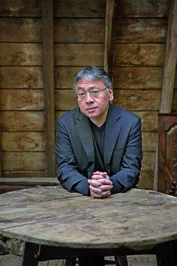
Kazuo Ishiguro
Ishiguro interrogates the intricate interplay of memory and identity in his novels, drawing deeply from his cross-cultural experiences as a Japanese-born British author. Through narratives that often feature introspective first-person perspectives, Ishiguro reflects on themes of memory, loss, and the passage of time. His works, such as "The Remains of the Day," engage readers with their exploration of the silent regrets and unfulfilled duties that haunt the human experience, which can prompt readers to reconsider their understanding of history and personal connections. This reflective approach enables readers to explore the delicate constructs of human relationships and the often-unreliable nature of memory.\n\nThe author’s method involves setting his stories against varied historical and speculative backdrops, for which his restrained prose enhances the emotional depth of the narrative. For instance, "Never Let Me Go" blends science fiction elements with a poignant meditation on human mortality and the ethics of scientific advancement, whereas "Klara and the Sun" extends this exploration into the realm of artificial intelligence and emotional companionship. Such thematic diversity allows readers to immerse themselves in different facets of the human condition, offering a multifaceted view that resonates across genres. Therefore, Ishiguro's books serve not only as compelling stories but also as tools for introspection, urging readers to grapple with their own notions of identity and belonging.\n\nReaders of Ishiguro's work benefit significantly from his nuanced portrayal of complex emotions and societal dynamics, offering insights that are particularly valuable for those interested in the intersections of cultural and personal identity. This approach has garnered him numerous accolades, including the Nobel Prize in Literature, which recognized his ability to unearth the profound emotional forces behind human connections. Through his novels, Ishiguro crafts narratives that continue to influence and inspire, solidifying his place in the contemporary literary canon.
Read moreDownload PDF & EPUB
To save this Black List summary for later, download the free PDF and EPUB. You can print it out, or read offline at your convenience.

Never Let Me Go
by Kazuo Ishiguro
