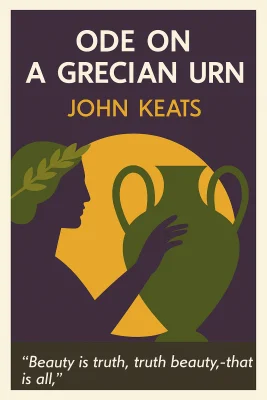
Ode on a Grecian Urn
Categories
Classics, Poetry, Literature, Academic, School, 19th Century, British Literature, College, Read For School, Romanticism
Content Type
Book
Binding
Unknown Binding
Year
0
Publisher
Language
English
ASIN
B0DTTHFW9T
File Download
PDF | EPUB
Ode on a Grecian Urn Plot Summary
Introduction
# John Keats: A Poet's Brief Journey to Immortality On a February morning in 1820, twenty-four-year-old John Keats coughed into his handkerchief and saw bright arterial blood staining the white cloth. With the clinical detachment of his medical training, he turned to his friend and declared, "That drop of blood is my death-warrant. I must die." Yet in that moment of stark recognition, Keats had already achieved something extraordinary: in just four years of serious poetic endeavor, he had transformed from an unknown apothecary's apprentice into one of England's most gifted poets, creating verses of such luminous beauty that they would outlive empires. Keats lived during the golden age of English Romanticism, when poetry was experiencing a revolutionary transformation in both form and philosophy. Born into the modest circumstances of a stable-keeper's family, he possessed neither wealth nor aristocratic connections, yet he carried within himself an almost mystical sensitivity to beauty and an unquenchable passion for poetic expression. Through his remarkable journey, readers will discover how raw talent combined with unwavering dedication can overcome any obstacle of birth or circumstance, how the pursuit of beauty becomes a pathway to profound truth, and how a life lived with complete artistic integrity, however brief, can achieve a form of immortality that transcends the boundaries of time and mortality itself.
Chapter 1: Early Life and the Making of a Poet
John Keats was born on October 31, 1795, in the bustling London borough of Moorgate, where his father Thomas managed a prosperous livery stable. The family's circumstances were comfortable but decidedly middle-class, positioning young John in that precarious space between the working poor and the landed gentry. His early childhood was marked by warmth and security, with parents who valued both practical skills and intellectual curiosity, and a household that buzzed with the energy of London's commercial life. Tragedy struck early and repeatedly, forging the emotional depth that would later distinguish Keats's poetry. When he was just eight years old, his father died in a riding accident, leaving the family financially vulnerable and emotionally shattered. His mother Frances's hasty remarriage to William Rawlings proved disastrous, ending in separation within months and creating a pattern of instability that would haunt the family for years. These early losses taught young Keats profound lessons about the fragility of happiness and the swift reversals that life could bring. Despite these upheavals, Keats found refuge and inspiration at John Clarke's progressive school in Enfield, where he encountered his first literary mentor. Charles Cowden Clarke, the headmaster's son, recognized something extraordinary in the stocky, combative boy who initially showed more interest in fighting than reading. Under Clarke's patient guidance, Keats discovered the transformative power of literature, particularly Edmund Spenser's Faerie Queene, which opened up new worlds of imagination and beauty that would forever change his understanding of what life could offer. The death of his mother from tuberculosis in 1810 marked another devastating loss, but it also catalyzed a remarkable transformation in the fifteen-year-old's character. Almost overnight, the boy who had shown little interest in books became voracious in his appetite for learning, working before dawn and through every break with an intensity that amazed his teachers. It was as if he sensed, even then, that time might be precious and limited, and that knowledge and beauty were treasures to be gathered while opportunity remained. His grandmother, recognizing both his intelligence and the family's practical needs, arranged for him to be apprenticed to Thomas Hammond, an apothecary-surgeon in Edmonton. This decision seemed to close the door on any literary ambitions, yet it proved formative in unexpected ways. His medical training provided intimate knowledge of human suffering and mortality that would later infuse his poetry with unusual authenticity and depth, while the tension between his practical education and his growing poetic sensibilities created the internal struggle that would define his early adulthood.
Chapter 2: Literary Awakening and First Poetic Endeavors
The year 1816 marked Keats's emergence as a serious poet, though the decision to abandon medicine for literature required tremendous courage and sacrifice. Through his friend Cowden Clarke, he was introduced to Leigh Hunt, the influential editor and critic who had recently been released from prison for his liberal political views. Hunt's cottage in Hampstead became a gathering place for writers, artists, and free-thinkers who shared a revolutionary vision of poetry as a force for beauty, truth, and social progress. Hunt immediately recognized the extraordinary quality of Keats's early verses and welcomed him into a circle that included some of the most innovative minds of the age. Here Keats encountered the painter Benjamin Robert Haydon, whose passionate advocacy for classical art would profoundly influence the young poet's understanding of beauty, and Percy Bysshe Shelley, though the two poets, despite mutual respect, never developed the close friendship that might have been expected between such kindred spirits. The intellectual atmosphere of Hunt's circle proved intoxicating for someone of Keats's background and temperament. These men spoke of poetry not as mere entertainment but as a sacred calling, capable of revealing truths that philosophy and science could not reach. They discussed the relationship between beauty and truth, the role of imagination in human understanding, and the poet's responsibility to capture and convey the deepest experiences of human existence. Under Hunt's encouragement, Keats began to take his own poetic efforts with new seriousness. His sonnet "On First Looking into Chapman's Homer," written after a night spent reading the Elizabethan translation with Clarke, announced the arrival of a major new voice in English poetry. The poem's famous closing image of explorers standing "silent, upon a peak in Darien" captured both the wonder of literary discovery and the profound solitude of the creative mind encountering beauty for the first time. His first volume, "Poems," published in 1817, received mixed reviews but established his reputation among discerning readers as a poet of unusual promise. The collection showcased his gift for sensuous imagery and musical language, though it also revealed his struggle to find an authentic voice distinct from his literary influences. More importantly, it demonstrated Keats's unique ability to find profound meaning in aesthetic experience, treating beauty not as mere decoration but as a pathway to fundamental truths about existence. The volume's relative commercial failure taught him harsh lessons about the literary marketplace and the challenges facing any poet who refused to compromise his artistic vision for popular appeal. Yet rather than discouraging him, this experience strengthened his resolve to pursue excellence regardless of immediate recognition, understanding that true artistic achievement required patience, dedication, and an unwavering commitment to one's highest aspirations.
Chapter 3: Creative Maturity and the Great Odes
The spring of 1819 marked the culmination of Keats's artistic development, when personal grief, romantic passion, and creative maturity combined to produce his greatest works. Living at Wentworth Place in Hampstead after his brother Tom's death from tuberculosis, Keats found himself in a state of heightened emotional intensity that proved extraordinarily fertile for his art. The great odes written during this period represent not only the peak of his individual achievement but also some of the finest lyric poetry in the English language. The "Ode to a Nightingale" emerged from a moment of pure inspiration when Keats, sitting under a plum tree in his garden, was moved by a nightingale's song to contemplate the contrast between the bird's seemingly immortal music and human mortality. The poem's opening lines immediately establish the tension between aesthetic rapture and existential anguish that drives the entire work, as the poet seeks to transcend the limitations of human consciousness through identification with the bird's eternal song. In the "Ode on a Grecian Urn," Keats demonstrated his ability to find profound philosophical meaning in aesthetic contemplation. Addressing an ancient Greek vase as if it were a living presence, he meditated on the relationship between art and life, permanence and change, beauty and truth. The urn's frozen figures represent art's power to preserve perfect moments outside the flow of time, while the poem's famous conclusion that "Beauty is truth, truth beauty" encapsulates his mature understanding of the fundamental unity underlying all genuine aesthetic and intellectual experience. "To Autumn," written later that year, shows Keats at his most serene and accomplished. Unlike the earlier odes, which often express tension between opposing forces, this poem achieves perfect harmony between observation and reflection, the natural world and human consciousness. Its three stanzas trace the season's progression from ripening abundance through harvest to the melancholy beauty of decline, creating a meditation on time, mortality, and acceptance that many consider his finest single achievement. The technical mastery displayed in these odes was the result of years of careful study and experimentation with poetic form and language. Keats had developed a distinctive voice that combined the sensuous richness of Romantic poetry with classical restraint and precision. His use of imagery was particularly remarkable, creating pictures so vivid and immediate that they seemed to engage all the senses simultaneously while suggesting deeper symbolic meanings. Beyond their technical excellence, the odes revealed a philosophical maturity extraordinary in a poet not yet twenty-four years old. Keats had developed a sophisticated understanding of the paradoxes inherent in human existence: the simultaneous attraction to and fear of death, the desire for permanence in a world of constant change, the complex relationship between pleasure and pain, joy and sorrow. His concept of "negative capability" found its fullest expression in these works, as he explored complex emotions and ideas without attempting to resolve them into simple formulas or easy answers.
Chapter 4: Love, Illness, and Artistic Vision
The period following Keats's greatest poetic triumphs was marked by intense personal struggles that would ultimately prove insurmountable. His passionate love affair with Fanny Brawne, which began in late 1818, became both his greatest source of joy and his most profound torment. The eighteen-year-old daughter of his Hampstead neighbors possessed a vivacious personality and fashionable interests that initially seemed incompatible with Keats's serious artistic temperament, yet their attraction proved irresistible and transformative for both. Keats's letters to Fanny reveal the full complexity of his emotional nature, displaying tender devotion alongside jealous desperation, ecstatic happiness alternating with bitter anguish. His financial insecurity made marriage seem impossible, while his growing awareness of his own mortality added desperate urgency to every moment they spent together. The intensity of his feelings both energized his creative work and exhausted his already fragile constitution, creating a cycle of artistic achievement and personal suffering that would characterize his final years. Meanwhile, his health was deteriorating in ways that he, with his medical training, understood all too clearly. The symptoms of tuberculosis were becoming increasingly apparent: the persistent cough, the periodic fevers, the gradual loss of weight and strength. Having nursed his brother Tom through the final stages of the same disease, Keats knew exactly what lay ahead, and this knowledge cast a shadow over everything he attempted to accomplish. The literary establishment continued to treat him with hostility, dismissing his work as the product of an untrained mind and vulgar sensibility. The savage attack in Blackwood's Edinburgh Magazine, which suggested he should return to his "gallipots" and abandon poetry altogether, was particularly wounding because it attacked not just his artistic efforts but his social origins and fundamental right to aspire to literary greatness. These criticisms added to his burden of anxiety and self-doubt during an already overwhelming period. Despite these mounting pressures, Keats continued working on ambitious projects, including his narrative poems "Lamia" and "The Eve of St. Agnes," and his unfinished epic "Hyperion." These works demonstrated his continuing development as a poet while revealing the enormous strain under which he was laboring. His abandonment of "Hyperion," despite its obvious merits, reflected his growing understanding that he needed to find a more authentically personal voice rather than attempting to write in the grand Miltonic style. His letters from this period reveal a mind grappling with fundamental questions about the nature and purpose of art, the relationship between suffering and creativity, and the meaning of human existence in the face of mortality. His famous concept of the world as a "vale of soul-making," where individual consciousness is refined and strengthened through experience and suffering, shows him attempting to find philosophical meaning in his own increasingly difficult circumstances while maintaining his commitment to artistic excellence and personal integrity.
Chapter 5: Final Journey and Death in Rome
As Keats's health continued its relentless decline through 1820, his doctors advised that only a warmer climate might offer hope of recovery or at least temporary relief. The damp English weather was considered particularly harmful to consumptive patients, and Italy, with its dry Mediterranean air, represented the best available chance for healing. This medical advice, combined with the desperate hopes of his friends and his own desire to escape the painful associations of England, led to the decision that would separate him forever from everything he loved. The journey to Italy proved an ordeal that tested his failing strength to its limits. Accompanied by his devoted friend Joseph Severn, a young painter who sacrificed his own career prospects to care for the dying poet, Keats sailed from London in September 1820. The voyage was marked by storms, delays, and the gradual worsening of his condition, while his letters reveal a man caught between flickering hope and growing despair, sometimes believing in the possibility of recovery, sometimes accepting the inevitability of approaching death. After a frustrating ten-day quarantine in Naples harbor, they finally reached Rome and took lodgings in a house at the foot of the Spanish Steps, overlooking the bustling Piazza di Spagna. Initially, there seemed to be some improvement in Keats's condition, and both he and Severn allowed themselves to hope that the change of climate might indeed prove beneficial. Keats was able to take short walks around the city and even showed interest in Rome's artistic treasures, though he lacked the strength to fully appreciate them. However, this improvement proved cruelly temporary. By December, Keats's condition had worsened dramatically, and he began experiencing the severe hemorrhages that marked the final stage of tuberculosis. The Roman winter, contrary to all expectations, proved cold and damp, offering none of the relief that had been so desperately hoped for. His suffering became intense, both physical and mental, as he realized with absolute clarity that he would never see England, never marry Fanny Brawne, never fulfill his artistic potential. The final months were a testament to both Keats's extraordinary courage and Severn's selfless devotion. Severn nursed his friend through the worst stages of the disease, reading to him, playing music to soothe his pain, and providing the constant companionship that Keats desperately needed. Their isolation was almost complete, as few people in Rome were willing to risk contact with a consumptive patient, and local authorities maintained strict quarantine procedures. Keats faced his approaching death with a mixture of philosophical resignation and profound anguish. He was tormented by thoughts of all the poetry he would never write, all the experiences he would never have, and above all by his permanent separation from Fanny Brawne. Yet he also showed remarkable composure and consideration for others, particularly Severn, whose sacrifice he deeply appreciated. John Keats died peacefully on February 23, 1821, at the age of twenty-five, and was buried in Rome's Protestant Cemetery under a gravestone bearing his own requested inscription: "Here lies one whose name was writ in water."
Chapter 6: Critical Reception and Enduring Legacy
The immediate response to Keats's death revealed the complex and often contradictory nature of his contemporary reputation. While his small circle of devoted friends mourned the loss of a genius cut down in his prime, the broader literary world remained largely indifferent or even hostile to his memory. The same critics who had attacked him during his lifetime continued their assault after his death, dismissing him as a minor talent whose early demise perhaps spared the world from more inferior verse. Percy Bysshe Shelley's magnificent elegy "Adonais" helped establish the romantic myth that would surround Keats for decades, portraying him as a sensitive flower crushed by brutal criticism. While emotionally powerful and beautifully crafted, this image of the delicate poet destroyed by harsh reviews obscured the true strength and resilience of Keats's character, creating misconceptions that would take generations to correct. The process of rehabilitation began slowly, driven by the efforts of devoted friends and a growing number of perceptive readers who recognized the extraordinary quality of his work. Richard Monckton Milnes played a crucial role by publishing the first comprehensive biography and collection of Keats's letters in 1848, revealing for the first time the full scope of his intelligence, robust humor, deep philosophical thinking, and essential strength of character. The letters proved almost as important as the poetry in establishing Keats's lasting reputation. They demonstrated a mind of remarkable sophistication grappling with fundamental questions about art, beauty, truth, and human existence. His concept of "negative capability," his thoughts on the nature of poetry, and his philosophical reflections revealed a thinker of genuine depth and originality whose ideas would influence countless later writers and artists. As the Victorian era progressed, Keats's reputation grew steadily among both critics and fellow poets. The Pre-Raphaelite Brotherhood found in his work a kindred spirit and source of inspiration, while poets as diverse as Tennyson, Browning, and Hopkins acknowledged their debt to his example. His influence on the development of English poetry became increasingly apparent and undeniable. The twentieth century witnessed Keats's elevation to the very highest rank of English poets. Modern critics began to appreciate not only the sensuous beauty of his verse but also its intellectual sophistication and technical mastery. His exploration of the relationship between beauty and truth, his understanding of human psychological complexity, and his ability to find profound meaning in aesthetic experience were recognized as contributions of permanent value to human understanding and artistic achievement.
Summary
John Keats's extraordinary life demonstrates that true greatness is measured not in years but in the depth and authenticity of one's contribution to human understanding and beauty. In just twenty-five years, he transformed himself from an unknown medical student into one of the greatest poets in the English language, creating works of such enduring power that they continue to inspire and console readers across cultures and centuries. His achievement stands as proof that genius combined with unwavering dedication can transcend any limitation of birth, circumstance, or time. From Keats's remarkable journey, we can learn the importance of pursuing our deepest passions with complete integrity, regardless of external obstacles or criticism. His willingness to abandon financial security for the uncertain path of poetry, his persistence in the face of harsh reviews and personal tragedy, and his unwavering commitment to artistic excellence demonstrate that meaningful achievement requires not just talent but also courage, discipline, and absolute faith in one's calling. For anyone seeking to understand the relationship between art and life, the nature of creative dedication, or the eternal human quest for beauty and meaning, Keats's life and work offer profound insights and enduring inspiration that speak directly to the highest aspirations of the human spirit.
Best Quote
“Beauty is truth, truth beauty, that is all ye know on earth, and all ye need to know.” ― John Keats, Ode on a Grecian Urn
Review Summary
Strengths: The review highlights the poem's ability to convey extraordinary beauty through ordinary subjects, showcasing John Keats' skill in making readers feel the extraordinariness in his words and composition. The reviewer appreciates the themes of truth and beauty, and the poem's impact on personal beliefs. Weaknesses: The review notes a lack of understanding from one reader, indicating that the poem's depth and transcendental nature might be challenging for some. Another comment suggests that Keats' attempt to connect the earthly with the celestial results in a jarring experience. Overall: The general sentiment is positive, with admiration for Keats' poetic prowess and thematic exploration. However, the poem's complexity may not resonate with all readers, suggesting a mixed recommendation level depending on the reader's familiarity with poetic analysis.
About Author

John Keats
Keats investigates the intricacies of human emotion and nature through a richly imagistic style, grounding his work in the ethos of the Romantic movement. His use of vivid and sensual imagery creates a tapestry of feeling and thought, exemplified in his acclaimed odes such as "Ode on a Grecian Urn" and "To Autumn." These works, alongside his exploration of "negative capability," showcase his unique approach to expressing philosophical concepts through classical legend and nature. Despite financial struggles and health challenges, Keats's dedication to poetry's perfection rendered his output influential, impacting the Romantic tradition and inspiring poets like Alfred Tennyson.\n\nKeats's literary journey reflects a fusion of medical training and poetic innovation, initially setting aside a potential career in medicine for the allure of verse. His first book, "Poems, by John Keats", marks the beginning of a brief yet prolific career, producing notable works such as "On First Looking into Chapman's Homer" and the ambitious "Endymion". The intertwining of personal adversity with creative aspiration underscores his bio, wherein his deep affection for Fanny Brawne and his battle with tuberculosis add layers of poignancy to his narrative. Keats's legacy, unmarred by formal accolades during his lifetime, has since flourished, affirming his position as a seminal figure in English Romantic poetry, celebrated for its emotional depth and technical mastery.
Read moreDownload PDF & EPUB
To save this Black List summary for later, download the free PDF and EPUB. You can print it out, or read offline at your convenience.
Ode on a Grecian Urn
by John Keats
