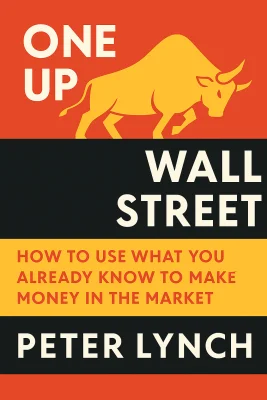
One Up On Wall Street
How to Use What You Already Know to Make Money in the Market
Categories
Business, Nonfiction, Self Help, Finance, Economics, Audiobook, Money, Personal Development, Buisness, Personal Finance
Content Type
Book
Binding
Paperback
Year
2000
Publisher
Simon & Schuster
Language
English
ASIN
0743200403
ISBN
0743200403
ISBN13
9780743200400
File Download
PDF | EPUB
One Up On Wall Street Plot Summary
Introduction
# Turn Your Natural Edge Into Investment Success Have you ever wondered why professional investors, with all their resources and expertise, often fail to outperform the market? The answer might surprise you. The very advantages that seem to give Wall Street professionals an edge often become their greatest handicaps. They're bound by institutional constraints, pressured by quarterly performance reviews, and forced to follow the crowd to protect their careers. Meanwhile, individual investors possess unique advantages that professionals can only dream of. You can spot winning companies in your daily life months or years before Wall Street discovers them. You can hold stocks for as long as you want without explaining your decisions to committees. You can invest in small, overlooked companies that institutions ignore. The key is learning to recognize and leverage these natural advantages while avoiding the common pitfalls that trap amateur investors.
Chapter 1: Discover Your Hidden Advantages Over Wall Street Pros
The greatest myth in investing is that professionals always know better. In reality, the investment industry is filled with contradictory forces that work against success. Professional fund managers face enormous pressure to conform, follow approved stock lists, and avoid career-threatening mistakes. They'd rather lose money in IBM than make money in an unknown company, because losing in IBM is explainable while missing out on an unknown winner is not. Consider the story of a fireman from New England who noticed something interesting in the 1950s. He observed that a local Tambrands plant was expanding rapidly, adding new buildings and hiring more workers. Instead of dismissing this as irrelevant to his investment decisions, he reasoned that such expansion must indicate strong business growth. He invested $2,000 in the company and continued adding $2,000 each year for five years. By 1972, this observant fireman had become a millionaire, simply by paying attention to what was happening in his own backyard. While Wall Street analysts were busy studying complex financial models and industry reports, this amateur investor used his eyes and common sense to identify a winner. He didn't need an MBA or access to insider information, he just needed to notice what was obvious to anyone willing to look. Professional investors face structural disadvantages that amateurs don't. They must diversify across hundreds of stocks, limiting their ability to concentrate on their best ideas. They're evaluated quarterly, creating pressure for short-term performance. They can't invest in companies below certain size thresholds, missing many of the fastest-growing opportunities. Most importantly, they're often the last to learn about promising developments because they're removed from the front lines of business and consumer activity. Your advantage lies in your proximity to real business activity. You shop in stores, use products, work in industries, and observe trends before they become Wall Street darlings. You can hold a stock for years without justifying your decision to anyone. You can invest your entire portfolio in three great companies if you want, rather than spreading your money across dozens of mediocre ones. The key is learning to trust your observations while doing proper homework. When you notice a restaurant chain expanding rapidly and consistently packed with customers, that's valuable intelligence. When you see a new product flying off store shelves, that's a potential investment opportunity. The trick is following up on these observations with solid research rather than dismissing them as irrelevant to serious investing.
Chapter 2: Spot Tomorrow's Winners in Your Daily Life
The most profitable investment opportunities often appear first in your daily life, not in Wall Street research reports. Every tenbagger, a stock that increases ten times in value, starts somewhere, and that somewhere is usually a store, office, or neighborhood where ordinary people first encounter an extraordinary business. The challenge isn't finding these opportunities, it's recognizing them when they appear. This principle was discovered through Carolyn's shopping habits. She came home from the grocery store excited about a new product called L'eggs pantyhose, sold in colorful plastic eggs near the checkout counter. These stockings were higher quality than regular pantyhose, fit better, and were incredibly convenient to buy. Carolyn didn't need to make a special trip to a department store, she could pick up L'eggs during her regular grocery shopping. The convenience factor was revolutionary. While women typically visited department stores every six weeks, they went grocery shopping twice a week, giving them twelve opportunities to buy L'eggs for every one chance to buy regular pantyhose. The product was test-marketed in several cities, including suburban Boston, and customer response was overwhelmingly positive. When Hanes interviewed women leaving test supermarkets, a high percentage had bought pantyhose, though most couldn't remember the brand name. This was actually great news, if the product was selling well without brand recognition, imagine how it would perform once the name became familiar. Following up on Carolyn's discovery by researching Hanes Corporation revealed fundamentals that were even better than expected. The company had found a way to revolutionize pantyhose distribution while creating a superior product. Hanes became a sixbagger before being acquired by Consolidated Foods. Had it remained independent, it could have been a fifty-bagger. To find your own L'eggs, start paying attention to your daily experiences with an investor's eye. Notice which stores are always crowded, which products you and your friends can't stop talking about, which services make your life noticeably better. Ask yourself: Is this company public? Is this success being replicated in other locations? Are the fundamentals strong enough to support rapid growth? The key is moving beyond casual observation to serious investigation. When something catches your attention, find out who makes it, whether they're publicly traded, and how their business model works. Visit multiple locations if it's a retail concept. Talk to employees, customers, and suppliers. Check whether the company is expanding and how they're financing that growth. Remember that timing matters less than you might think. You don't need to catch these opportunities at the very beginning. Many great stocks continue rising for years after their initial discovery. The important thing is recognizing genuine business success and investing before Wall Street fully appreciates the opportunity.
Chapter 3: Master Stock Categories to Set Smart Expectations
Not all stocks are created equal, and treating them the same way is a recipe for disappointment. Understanding which category your stock belongs to is crucial for setting appropriate expectations and developing the right investment strategy. Each type of stock has different characteristics, different potential returns, and different risks that require different approaches. This lesson was learned through experience with various investments. When buying stalwarts like Procter & Gamble, the expectation was steady, moderate growth, perhaps doubling money over several years. These large, established companies couldn't grow fast enough to become tenbaggers, but they offered reliability and decent returns. Fast growers like Taco Bell, on the other hand, had the potential for explosive gains but carried higher risks of failure or deceleration. The six categories each serve different purposes in a portfolio. Slow growers, typically large utilities or mature industrial companies, provide steady dividends but limited price appreciation. Stalwarts like Coca-Cola and Bristol-Myers offer moderate growth with less volatility than smaller companies. Fast growers represent the best opportunity for dramatic gains but require careful monitoring as they can quickly lose momentum. Cyclicals like auto and steel companies can provide excellent returns when bought at the right point in their cycle but can devastate portfolios when purchased at the wrong time. Turnarounds offer some of the most exciting opportunities, as companies emerging from serious difficulties can generate enormous returns. Chrysler exemplified this category when purchased at six dollars per share in early 1982. The company was on the brink of bankruptcy, but government loan guarantees provided a safety net while management implemented dramatic cost-cutting measures. The stock rose fifteenfold over five years, making it one of the most successful investments. Asset plays represent companies sitting on valuable resources that the market hasn't recognized. These might be real estate holdings, natural resources, or even tax-loss carryforwards that provide future benefits. The key with asset plays is patience, it can take years for the market to recognize and properly value these hidden assets. Understanding categories helps you avoid common mistakes like expecting utility-like stability from a fast-growing technology company or hoping for tenbagger returns from a mature stalwart. It also guides your selling decisions, you might hold a stalwart for decades but should be ready to sell a fast grower when growth slows or a cyclical when the cycle turns. Match your expectations to reality by properly categorizing your holdings, and you'll make better decisions about when to buy, when to hold, and when to sell.
Chapter 4: Research Companies Like a Seasoned Professional
At its core, investing is about one thing: earnings. Everything else, market trends, economic forecasts, technical analysis, is secondary to a company's ability to generate profits. Stock prices may fluctuate wildly in the short term, but over time they inevitably follow the direction of earnings. Understanding this relationship is fundamental to successful investing. This truth was discovered through countless examples in portfolios. When examining stock charts alongside earnings growth, the correlation was unmistakable. Masco Corporation, which developed the single-handle ball faucet, enjoyed thirty consecutive years of rising earnings through wars, recessions, and economic upheavals. The stock price followed faithfully, rising 1,300-fold between 1958 and 1987. Conversely, when Avon's earnings collapsed in the 1970s after years of spectacular growth, the stock price plummeted from $140 to under $20. The price-to-earnings ratio provides a crucial tool for evaluating whether a stock is fairly valued. This simple calculation, stock price divided by annual earnings per share, tells you how many years it would take to earn back your investment at current profit levels. A P/E of 10 means you'd recoup your investment in ten years; a P/E of 40 means forty years. While growth companies deserve higher P/E ratios than slow growers, extremely high ratios often signal danger. This danger was witnessed firsthand with companies like Electronic Data Systems, which traded at a P/E ratio of 500 in the late 1960s. Even though EDS performed brilliantly as a business, the stock price collapsed because no company could possibly grow fast enough to justify such an extreme valuation. Similarly, McDonald's fell from $75 to $25 in the early 1970s not because the business deteriorated, but because the stock had been priced for impossible growth. The key insight is that earnings growth drives stock prices, but the relationship isn't always immediate. Sometimes stock prices get ahead of earnings, creating dangerous overvaluation. Other times, stock prices lag behind earnings improvement, creating attractive opportunities. The most successful investors learn to spot these disconnects and position themselves accordingly. Focus on companies that can grow earnings through identifiable means: reducing costs, raising prices, expanding into new markets, increasing market share, or disposing of losing operations. Avoid companies where earnings growth depends on factors beyond management's control or requires unrealistic assumptions about market expansion. Remember that a share of stock represents ownership in a real business, not a lottery ticket. The value of that business ultimately depends on its ability to generate profits for shareholders.
Chapter 5: Build a Winning Portfolio That Works for You
Thorough research separates successful investors from gamblers, yet most people spend more time choosing a microwave oven than investigating a stock purchase. Developing a systematic approach to research doesn't require professional training or expensive resources, just curiosity, persistence, and the right questions. The information you need is readily available; the challenge is knowing where to look and what to ask. The research process began with developing a clear investment thesis, a two-minute explanation of why there was interest in a company and what needed to happen for it to succeed. When investigating La Quinta Motor Inns, the thesis was simple: the company had found a way to offer Holiday Inn quality at 30% lower prices by eliminating costly but unprofitable amenities like restaurants and conference rooms. Instead of operating restaurants that typically lost money, La Quinta partnered with established chains like Denny's to provide food service next door. The beauty of La Quinta's model became clear through research. By building smaller, more efficient properties and targeting business travelers rather than vacationers, the company achieved higher occupancy rates and lower operating costs. Insurance companies provided favorable financing in exchange for profit participation, eliminating the crushing debt burden that often destroys growing hotel chains. Most importantly, the concept was proven and replicable, it was clear exactly how La Quinta planned to expand and their progress could be tracked. Your research should start with understanding the business model. How does the company make money? What are its competitive advantages? How does it plan to grow? These questions often have straightforward answers that don't require financial expertise. A restaurant chain grows by opening new locations; a software company grows by developing new products or acquiring customers; a retailer grows by expanding into new markets or taking market share from competitors. Use multiple sources to verify your thesis. Read annual reports and quarterly statements, but don't stop there. Call the company's investor relations department with specific questions. Visit stores or facilities if possible. Talk to customers, employees, suppliers, and competitors. Check whether insiders are buying or selling shares. Look at the company's track record of meeting its own projections. Pay special attention to the numbers that matter most for your particular investment. For retailers, focus on same-store sales growth and expansion plans. For manufacturers, examine profit margins and capacity utilization. For service companies, look at customer retention and pricing power. Don't get overwhelmed by financial complexity, concentrate on the factors that drive success in that specific business. The goal isn't to become a professional analyst but to develop enough understanding to make informed decisions and recognize when your investment thesis is working or failing.
Chapter 6: Time Your Trades for Maximum Profit Potential
Building a successful portfolio requires more than picking good stocks, it demands understanding how different investments work together and matching your strategy to your personal situation. The perfect portfolio doesn't exist, but the right portfolio for your circumstances and temperament certainly does. The key is honest self-assessment combined with realistic expectations about what different types of stocks can deliver. This approach evolved from early mistakes and successes. Concentration often beats diversification for individual investors who do their homework. While professional funds eventually held over 1,400 stocks due to their enormous size, smaller investors could achieve better results by focusing on their best ideas. The amateur investor's advantage lies partly in this ability to concentrate on a few well-researched opportunities rather than spreading money across dozens of mediocre choices. The foundation of any portfolio should match your personal circumstances. If you need money within two or three years for college tuition or other major expenses, stocks are inappropriate regardless of their quality. Even blue-chip companies can lose half their value and stay depressed for years. Your investment timeline determines your risk tolerance, and your risk tolerance should determine your stock selection. Consider different investor profiles. A young professional with steady income and decades until retirement can afford to emphasize fast-growing companies that might double or triple over several years. The potential for occasional losses is offset by time to recover and the power of compound growth. A retiree living on investment income needs dividend-paying stalwarts that provide steady cash flow and preserve capital. A middle-aged investor might blend both approaches, using stalwarts for stability and fast growers for wealth building. Geographic and industry diversification matter less than most people think, but diversification across stock categories can be valuable. Owning cyclicals, fast growers, and stalwarts provides different sources of return that don't always move together. When fast growers are struggling, cyclicals might be recovering. When growth stocks are expensive, value opportunities might emerge in turnarounds or asset plays. The most important portfolio principle is staying within your circle of competence. Own companies you understand in industries you can follow. It's better to own three stocks you know well than thirty you know nothing about. Your edge comes from knowledge, not diversification. Size your positions based on conviction and risk. Your best ideas deserve larger allocations, but no single stock should represent more than you can afford to lose. Remember that even great companies can stumble, and even careful research can miss important risks.
Chapter 7: Avoid Costly Mistakes That Destroy Wealth
Knowing when to buy and sell stocks separates successful investors from those who achieve mediocre results despite picking good companies. Perfect timing is impossible, but understanding the principles of intelligent buying and selling can dramatically improve your returns. The key is focusing on business fundamentals rather than stock price movements or market predictions. The most successful investments often came during periods of market pessimism when great companies traded at discount prices. Chrysler was bought while most investors feared the company would go bankrupt, purchasing shares at six dollars when the business turnaround was already underway but not yet reflected in the stock price. Similarly, positions were accumulated in other quality companies during the 1973-74 bear market when excellent businesses sold at bargain valuations. The best buying opportunities typically arise when temporary problems create permanent-looking price declines. A restaurant chain might report disappointing quarterly results due to weather or one-time costs, sending the stock down sharply even though the long-term business prospects remain intact. A retailer might face inventory problems that depress earnings for a quarter or two but don't change the company's competitive position. These situations require distinguishing between temporary setbacks and fundamental deterioration. Selling decisions prove even more challenging than buying decisions because they involve giving up future gains. Different selling strategies were developed for different types of stocks. With fast growers, watch for signs that growth was slowing or that the company was running out of expansion opportunities. With cyclicals, sell when business conditions peaked and the cycle was ready to turn down. With stalwarts, typically sell after achieving reasonable gains of 30-50% and reinvest in other undervalued opportunities. The most dangerous selling mistake is letting emotions drive decisions. Fear causes investors to sell at market bottoms when they should be buying. Greed causes them to hold overvalued stocks hoping for even greater gains. Pride prevents them from admitting mistakes and cutting losses on failing investments. Successful selling requires discipline and objectivity about business fundamentals. Consider developing selling rules based on your investment thesis rather than arbitrary price targets. If you bought a retailer because of its expansion plans, sell when expansion slows or becomes unprofitable. If you bought a turnaround because of cost-cutting efforts, sell when the easy savings have been achieved and margins stop improving. If you bought a cyclical because of improving business conditions, sell when conditions peak. Remember that selling winners to buy more winners often produces better results than holding forever. The stock market constantly creates new opportunities, and capital deployed in undervalued situations typically outperforms capital left in fairly valued ones.
Summary
The path to investment success isn't found in complex theories or sophisticated strategies, but in recognizing and leveraging the natural advantages that individual investors possess over Wall Street professionals. Your proximity to real business activity, freedom from institutional constraints, and ability to think independently provide powerful tools for identifying winning investments before they become widely recognized. As observed throughout successful careers, "The person that turns over the most rocks wins the game." This simple truth captures the essence of successful investing, it's about curiosity, persistence, and the willingness to look where others haven't looked. Whether you discover the next great opportunity in your workplace, at the shopping mall, or through careful analysis of overlooked companies, the key is combining observation with thorough research and patient execution. The most important step you can take today is to start paying attention to the business world around you with an investor's mindset. Notice which companies are thriving, which products are gaining popularity, and which services are solving real problems for customers. Then do your homework, invest with conviction, and give your ideas time to work. The amateur's advantage is real, but only if you choose to use it.
Best Quote
“The trick is not to learn to trust your gut feelings, but rather to discipline yourself to ignore them. Stand by your stocks as long as the fundamental story of the company hasn’t changed.” ― Peter Lynch, One Up On Wall Street: How To Use What You Already Know To Make Money In
Review Summary
Strengths: The review highlights the book's engaging and humorous writing style, making complex investment concepts accessible. It emphasizes the unique approach of finding one's edge in stock investing, which is often overlooked by other classics. The book provides practical insights by categorizing stocks and explaining relevant financial statement indices. Real-life examples from Peter Lynch's career add depth and practical understanding for novice investors. Overall: The reader expresses a highly positive sentiment, considering it the best investment book read so far. The book is recommended for its informative content, practical advice, and engaging style, making it a valuable resource for both novice and experienced investors.
About Author

Peter Lynch
Lynch reframes investing as an approachable endeavor for individual investors by advocating for practical strategies rooted in personal experiences. His philosophy encourages leveraging everyday encounters to identify promising investment opportunities, which he elaborates in his seminal book, "One Up on Wall Street". Lynch popularizes the concept of the "ten bagger," a stock that increases tenfold in value, emphasizing how familiarity with consumer habits can guide successful stock picks. This method not only demystifies investing but also empowers readers to apply their insights to the stock market, making complex financial concepts accessible and engaging.\n\nFor readers, Lynch's approach offers a unique blend of simplicity and depth. His clear, conversational style breaks down investment strategies in a manner that is both educational and relatable. This positions his books as essential resources for those new to investing, as well as for seasoned investors seeking to refine their approach. Beyond his written works, Lynch’s career exemplifies the principles he advocates; during his tenure at the Magellan Fund, he achieved extraordinary returns, thereby cementing his legacy as a leading figure in finance. His continued commitment to philanthropy underscores his belief in investment as a tool for broader societal impact, further enriching his bio with contributions to education and community support.\n\nLynch’s influence extends beyond his role as an author; his enduring impact is reflected in his recognition as one of Wall Street's most successful money managers. Through his books, such as "Beating the Street" and "Learn to Earn", he provides case studies and insights that have shaped the way individuals think about investing. His legacy is defined not only by financial success but also by his efforts to mentor and inspire new generations of investors, ensuring that his methodologies remain relevant and impactful in the evolving landscape of finance.
Read moreDownload PDF & EPUB
To save this Black List summary for later, download the free PDF and EPUB. You can print it out, or read offline at your convenience.
One Up On Wall Street
by Peter Lynch
