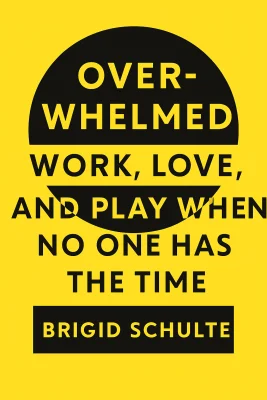
Overwhelmed
Work, Love and Play When No One Has the Time
Categories
Business, Nonfiction, Self Help, Psychology, Parenting, Productivity, Feminism, Sociology, Personal Development, Book Club
Content Type
Book
Binding
Hardcover
Year
2014
Publisher
Sarah Crichton Books
Language
English
ASIN
0374228442
ISBN
0374228442
ISBN13
9780374228446
File Download
PDF | EPUB
Overwhelmed Plot Summary
Introduction
The alarm blares at 6 a.m. Sarah jolts awake, immediately reaching for her phone to check emails that arrived overnight. As she brushes her teeth, she's mentally planning her day while listening to a podcast. Breakfast is eaten standing up while helping her son find his homework. At work, her attention bounces between meetings, messages, and mounting deadlines. By evening, exhausted yet unable to relax, she wonders where the day went—and why, despite being constantly busy, she feels like she accomplished nothing meaningful. This fragmentation of our attention and time—what we might call "time confetti"—has become the defining experience of modern life. Our days are no longer divided into clear periods of work, rest, and play, but rather shattered into countless tiny fragments as we constantly switch between tasks, roles, and responsibilities. The result is a pervasive feeling of overwhelm, a sense that we're always behind, always rushing, yet never fully present for any part of our lives. This book explores how we arrived at this state of chronic time poverty, examines its costs to our wellbeing and relationships, and offers a path toward what researchers call "time serenity"—a way of experiencing time that feels spacious rather than scarce, meaningful rather than merely productive.
Chapter 1: The Overwhelm: How Time Became Fragmented
It's just after 10 a.m. on a Tuesday, and I'm racing down Route 1 in College Park, Maryland. The Check Engine light glows ominously on my dashboard. My cell phone has disappeared into the seat crack during an important call with my child's teacher. My parking permit expired weeks ago. And I'm late—so very late—for my appointment with a man known as "Father Time." John Robinson, a sociologist who has studied how people spend their most precious resource—time—for half a century, has challenged me to keep a time diary. Even more unsettling, he claims his research proves that I, a working mother juggling a demanding job and family responsibilities, have thirty hours of leisure time each week. Thirty hours! The very suggestion feels like an insult when my life resembles what I've come to call "time confetti"—one big, chaotic burst of exploding slivers, bits, and scraps. My days are scattered, fragmented, and exhausting. I'm always doing more than one thing at once and feel I never do any one particularly well. I'm perpetually behind, rushing from one obligation to the next, with entire hours evaporating while doing stuff that needs to get done. But once completed, I can't even remember what it was or why it seemed so important. As I hurry across campus to meet Robinson, I'm filled with dread. I know he'll dissect the mess of my time diaries and show me where all that supposed leisure time is hiding. I feel like a specimen about to be examined and found wanting. But this meeting represents something deeper—a chance to understand why modern life feels so overwhelming, why we're always rushing yet never arriving. Perhaps most importantly, this journey might reveal how we can find a path toward what researchers call "time serenity." Because time isn't just money, as the saying goes. Time is life itself, and how we spend it ultimately defines who we are. The fragmentation of our time reflects a deeper fragmentation of our attention, our relationships, and even our sense of self—a modern condition that affects nearly everyone, regardless of profession, income, or family status.
Chapter 2: The Cult of Busyness: Status Through Exhaustion
"Life is stressful in Fargo," Ann Burnett tells me, and she doesn't mean the occasional life-threatening stress of the Red River overflowing its banks. She means ordinary, everyday life. I had turned to rural America assuming life would be less chaotic there, the breathing a little easier. Instead, I found myself sitting in the bar of an eighteen-story Radisson Hotel—the tallest building in Fargo, North Dakota—listening to a focus group describe lives just as frantic as those in major metropolitan areas. Jane Vangsness Frisch, 28, is getting her Ph.D. while working full-time at a state agency that prizes face time. She's on the road 80 percent of the time. "My husband and I have chosen not to have kids, because there's no time," she says matter-of-factly. Across the table, Josh Malnourie, an IT worker whose company routinely expects 70-hour workweeks, has just had a baby. "I never get everything done that I need to do," he says, adding that he's double-booked at the moment. "I guess I could sleep less." Betsy Birmingham, an associate dean and professor raising five children, says the last moment she had to herself was "last week, when I went to my doctor's office for my annual mammogram." Burnett, a professor of communication at North Dakota State University, began studying busyness after noticing a trend in holiday letters. She collected thousands dating back to the 1960s, creating an archive of America's relationship with time. The letters reveal how previous heartfelt "blessings of the season" have been replaced by breathless accounts of overscheduled lives: "Our schedules have always been crazy, but now they're even crazier!" "We've had an action-packed year!" "I don't know where my time goes, but it seems that I work hard all the time and never seem to accomplish anything." What Burnett discovered was that people weren't just describing their busyness—they were competing about it, using it as a badge of honor and status symbol. "If you're busy, you're important. You're leading a full and worthy life," she explains. "There's a real 'busier than thou' attitude, that if you're not as busy as the Joneses, you'd better get cracking." Time hasn't changed—there are still 24 hours in a day. What's changed is the cultural imperative to pack those hours until life feels like what one researcher called an exhausting "everydayathon." The glorification of busyness represents a profound shift from earlier eras. In the 1950s, economists and politicians predicted that by 1990, Americans would enjoy a 22-hour workweek, a six-month work year, or a standard retirement age of 38. Instead, we've created a society where being too busy to take vacation, too busy to eat lunch, too busy to vote, and even too busy for sex has become the norm. We've transformed busyness from a necessary evil into a virtue, a status symbol, and perhaps most disturbingly, an addiction that keeps us from facing deeper questions about what truly matters in our lives.
Chapter 3: The Ideal Worker Myth: Workplace Expectations and Reality
Renate Rivelli loved her job at the Brown Palace Hotel in Denver. For seven years, she gave "150 percent," sometimes braving snow and ice to return to work after tucking her children into bed. When her kids got sick, she couldn't take sick days to care for them. Once, she was so ill she wound up in the emergency room at 3 a.m., but was back at work by 7 a.m. to run an employee orientation. This dedication earned her consistently high performance reviews and recognition as Manager of the Year. So it came as a shock when hotel managers announced they'd created a new position above hers and given it to her younger, less experienced coworker. When Rivelli protested that she hadn't been given a chance to apply, they told her the position would require 50-60 hours weekly, lots of travel, and possibly relocation—something "simply not possible" for her because she "had a full-time job at home with her children." She was a mother. "I felt like I'd been kicked in the face," Rivelli says. "They obviously didn't realize I worked those kinds of hours anyway. I wasn't even given an opportunity to say, 'No, it sounds like too much work' or 'Let me talk to my family.' They decided for me, based on their assumptions about my life as a mother." Rivelli called a lawyer and lodged a complaint with the Equal Opportunity Employment Commission, eventually winning a $105,000 settlement in a groundbreaking case of family responsibilities discrimination. Rivelli's experience illuminates the powerful grip of what scholars call the "ideal worker" norm—a workplace expectation that employees should be available anytime, anywhere, with no competing responsibilities. The ideal worker doesn't take parental leave, doesn't need flexibility for family emergencies, and never has to think about researching assisted care facilities for aging parents. Instead, freed from all home duties, the ideal worker devotes himself completely to the workplace—first in, last out, rarely sick, never taking vacation. This ideal worker norm is behind the all-too-familiar statistics showing a dearth of women in leadership positions and the persistent wage gap. Michelle Budig, a sociologist at the University of Massachusetts, found that while childless women earn 94 cents of a childless man's dollar, mothers earn only 60 cents of a father's dollar. Fathers, in contrast, get a "fatherhood bonus," earning as much as $5,000 more than men without children. The ideal worker is also why some educated mothers simply disappear from the workplace, more so in the United States than in any other industrialized country. The tragedy of the ideal worker myth is that it harms everyone—not just women and parents. It creates workplaces where presence is valued over performance, where burnout is considered a badge of honor, and where human needs for rest, connection, and meaning are systematically denied. The result is not just fragmented time, but fragmented lives, as we struggle to meet impossible expectations in both our professional and personal spheres.
Chapter 4: The Stalled Revolution: Gender Imbalance at Home
It is 2 p.m. on Thanksgiving Day. In three hours, eighteen friends will arrive for the feast I've been hosting for years. While working full-time, I'd planned the menu, shopped multiple times, baked pies with the children, and stayed up late several nights prepping elaborate dishes. That morning, I'd made breakfast for friends before we all ran the neighborhood Turkey Trot. I'm still in my sweaty running clothes. The twenty-pound turkey is still raw, the table not set, and the kitchen looks like a bomb has gone off. My husband strolls over to the refrigerator, pulls out a six-pack of beer, and announces, "I'm going to go over and help Peter cook his turkey." When I raise an eyebrow and ask if "help" means sitting on the patio drinking beer while watching Peter's smoker, he smiles sheepishly and walks out the door. I can't move. All week, I hadn't complained because I love hosting Thanksgiving. I hadn't nagged for help because after nearly twenty years of marriage, it had never done much good. As I slam the raw turkey into the oven and scurry around with my sister's help—just us "womenfolk" in the kitchen—I reflect on how Tom and I had divided chores fairly when it was just the two of us. But once we had kids, the scales tipped dramatically. This imbalance isn't unique to my marriage. Time-use studies consistently show that even when both partners work full-time, women still do twice the housework and childcare as men. Though men have nearly tripled the amount of time they spend caring for children since the 1960s, mothers still put in twice the hours. And mothers today spend more time taking care of their children than mothers did in the 1960s, even though so many more are working outside the home. What's particularly striking is how women's leisure differs from men's. While men tend to enjoy longer, unbroken stretches of time for relaxation, women's leisure is typically fragmented into small, often unsatisfying bits of ten minutes here, twenty minutes there. Researchers call this "contaminated time"—even during supposed leisure moments, women's minds are often preoccupied with mental to-do lists, monitoring children's emotional temperatures, or planning the next family logistics. This persistent imbalance reveals how the gender revolution has stalled halfway. Women have entered the workforce in massive numbers, but domestic responsibilities haven't been redistributed accordingly. The result is what sociologists call "the second shift"—the unpaid work of running a household that disproportionately falls to women, regardless of their professional status. This creates not just time poverty but time inequality, with profound implications for wellbeing, career advancement, and the quality of family relationships for everyone involved.
Chapter 5: The Danish Way: Lessons from the Happiest People
It's 3:25 on a rainy Friday afternoon in Copenhagen. Vibeke Koushede leaves her office at the National Institute of Public Health and expertly steers one of the few small minivans in sight through the narrow medieval streets to pick up her five-year-old twins. The two go to a public kindergarten in the country about twenty miles outside of the city, where the children play all day in the forest and fields. Although the kindergarten after-care program is open until 5 p.m., most Danes work flexible schedules, as she does, and pick up their children between 3:30 and 4. "I'm sure, as an American, this seems pretty weird to you," Vibeke says as she leaves her twins in the car to dash into her seven-year-old son's school. Images from the evening news flash before my eyes: carjackings, kidnappings, forlorn kids on milk cartons. Vibeke smiles. "It's okay. In Denmark, everyone does it all the time." Danish mothers have the most leisure time of mothers in any country studied by Australian sociologist Lyn Craig—as much as an hour more leisure a day than mothers in the United States, Australia, and France. At six hours and twelve minutes of leisure a day, Danish mothers have nearly the seven hours that Danish fathers have. One and a half hours of a Danish mother's leisure time every day is spent in "pure" or child-free time to themselves. American mothers, in contrast, have about thirty-six minutes a day to themselves. What's their secret? First, Danes don't live to work. They work hard, but they work in a very focused way. Most Danes work the standard thirty-seven hours a week, from 9 to 4:24 every day. Long hours are actually outlawed for most workers under the European Union's Working Time Directive. There isn't a lot of joking around the watercooler or Facebook checking in the office. You do your work and you go home. "Some of my colleagues who are the highest achieving and most productive pick up their children at 4 or 4:30 every day," says Søren, Vibeke's husband. "No one works at the office until 6, 7, or 8 o'clock just to show they're there." The Danish approach to time isn't just about working fewer hours—it's about a fundamentally different relationship with time itself. The concept of hygge (pronounced "hoo-ga"), which roughly translates to coziness or comfortable conviviality, emphasizes being fully present in simple moments of togetherness. This cultural value creates a counterbalance to the productivity-obsessed mindset that dominates American life. Danes understand that time isn't just something to be filled, maximized, or optimized—it's something to be experienced, savored, and shared. Their example shows that a society can be both productive and humane, creating space for both meaningful work and meaningful life.
Chapter 6: Finding Time Serenity: Practical Strategies for Better Living
When Michèle Flournoy was asked to become the under secretary of defense for policy in 2009—the first woman to serve in the number-three spot at the Pentagon—she had a candid discussion with Secretary Robert Gates about time. "In my interview, I said, 'I'm the mom of three school-age children. I will work my ass off for you and do my best. But I need flexibility,'" she told me over breakfast. "'And more nights than not, I need to be home to see them before they go to bed. I need touchstone time with them.'" Gates said, "Absolutely." He made sure Flournoy had secure systems set up in her home so she could work there as effectively as in the Pentagon. Most nights, she went back to work after getting the kids to bed. Gates himself often tried to leave by 6 p.m. to send the message to others to go home and have a life. Flournoy soon realized that political appointees like herself often work to death the military and civilian workers who were there before and will stay long after the appointees leave. Not only do people's personal lives suffer, but the work suffers too. "In policy, your only asset is people," she explained. "If they're exhausted, spent, and demoralized, they're not going to be able to do the thinking that will really help." She brought in consultants and began rewiring the culture by creating a top-to-bottom Alternative Work Schedule. For the culture change to work, everyone participated in developing a new Human Capital Strategy. Employees and managers worked together to clarify expectations, goals, and mission. Employees were held accountable for quality work by certain deadlines but given more control over their schedules. With work time more manageable, family time could be scheduled in without penalty. Unlike in the past, where one person was assigned responsibility for a certain subject, Flournoy asked managers to ensure people could work on a variety of portfolios so workloads could be shared. Workers were no longer seen as more valued if they were first in and last to leave. Instead, performance reviews evaluated output, not hours of face time. Pretty quickly, surveys showed that morale was way up—and so was the quality of work. "We created an environment where people were better rested and could bring a freshness and perspective to their work," Flournoy said. The experience left her convinced that if the two busiest offices in one of the most demanding work environments in the country could successfully shift to make time for life, so could everyone else. This story illustrates a profound truth about finding time serenity: it's not primarily about individual time management techniques, but about transforming the systems and cultures that shape how we experience time. While personal strategies matter—working in focused pulses rather than marathon sessions, creating clear boundaries between work and rest, practicing mindful presence—lasting change requires collective action to challenge the norms that keep us trapped in time poverty. The good news is that when we do so, everyone benefits—not just in terms of wellbeing, but in the quality of our work, relationships, and communities.
Summary
Time confetti—the fragmentation of our attention and hours into ever-smaller pieces—isn't just a personal problem but a cultural phenomenon with profound implications for our wellbeing. Throughout this exploration, we've seen how the cult of busyness has transformed exhaustion into a status symbol, how workplace expectations have created impossible standards that harm everyone, how gender imbalances persist in our homes despite decades of progress, and how alternative approaches like the Danish model offer glimpses of a more humane relationship with time. The path to time serenity doesn't lie in squeezing more productivity from each minute or finding the perfect time management system. Rather, it begins with questioning the cultural narratives that equate busyness with importance and presence with commitment. It continues with reimagining our workplaces to value outcomes over hours and our homes to distribute care work more equitably. And it culminates in reclaiming our right to be fully present in our lives—not just efficient, but engaged; not just productive, but alive to the moment. As Michèle Flournoy's Pentagon transformation shows, even the most demanding environments can be redesigned to honor our humanity. The question isn't whether we have enough time—we all have the same 24 hours—but whether we have the courage to use it differently, to create lives that feel not just full, but fulfilling.
Best Quote
“What if not just women, but both men and women, worked smart, more flexible schedules? What if the workplace itself was more fluid than the rigid and narrow ladder to success of the ideal worker? And what if both men and women became responsible for raising children and managing the home, sharing work, love, and play? Could everyone then live whole lives?” ― Brigid Schulte, Overwhelmed: Work, Love, and Play When No One Has the Time
Review Summary
Strengths: The book is well-researched and well-written, appealing to its target audience with an engaging cover and relatable title.\nWeaknesses: The book's marketing may mislead potential readers who are not mothers, as it primarily caters to "super moms" seeking work-life balance. It is repetitive and lacks content for non-mothers, single individuals, or those outside the upper-middle class demographic.\nOverall Sentiment: Critical\nKey Takeaway: While the book is crafted with quality, its content is narrowly focused on mothers striving for balance, which may disappoint readers misled by its broader marketing appeal.
About Author

Brigid Schulte
Schulte probes the intricate pressures of modern life through her writing, focusing on time scarcity, gender inequities, and the quest for balance and fulfillment. Her work skillfully combines investigative journalism, personal narrative, and social analysis to shed light on the systemic issues shaping contemporary work and family dynamics. As the author of "Overwhelmed: Work, Love & Play When No One Has the Time," Schulte delves into the pervasive time pressure and societal expectations that challenge individuals in achieving a balanced life. This book, along with her role at the Better Life Lab at New America, highlights her commitment to exploring and advocating for work-life balance and gender equity.\n\nReaders benefit from Schulte's ability to weave together cultural critique and personal anecdotes, prompting a reevaluation of how time is prioritized and valued. Her concept of "time confetti" articulates the fragmented and pressured nature of daily life, offering a new lens through which to view and address these challenges. This approach not only informs but also empowers individuals to reconsider their perceptions of productivity and leisure. Her writing has earned recognition, including a Virginia Library Association award for her contributions to literary nonfiction, and her insights have been featured in leading publications and media programs.\n\nThrough her role as director of the Better Life Lab and her journalistic endeavors, Schulte situates herself as a thought leader in the discourse on workplace reform and gender equity. Her bio highlights a career dedicated to advancing these critical conversations, thereby impacting readers who seek to navigate the complexities of work and family life. By addressing these pressing issues, Schulte inspires a broader dialogue on how society can move toward a more equitable and fulfilling future.
Read moreDownload PDF & EPUB
To save this Black List summary for later, download the free PDF and EPUB. You can print it out, or read offline at your convenience.
Overwhelmed
by Brigid Schulte
