
Perfect Match
Categories
Fiction, Audiobook, Mystery, Adult, Family, Contemporary, Adult Fiction, Chick Lit, Crime, Drama
Content Type
Book
Binding
Paperback
Year
2003
Publisher
Washington Square Press
Language
English
ASIN
0743418735
ISBN
0743418735
ISBN13
9780743418737
File Download
PDF | EPUB
Perfect Match Plot Summary
Introduction
# When Justice Wears a Mother's Face The courtroom fell silent as Nina Frost rose from her seat, her hand sliding into her purse with deadly precision. The monster she'd been hunting wore the face of Father Glen Szyszynski, sitting calmly at the defense table, his silver hair catching the fluorescent light. For weeks, her five-year-old son Nathaniel had been trapped in silence, unable to speak after what this man had done to him. The system Nina had served faithfully as a prosecutor was about to fail her child, just as it had failed so many others. In that crystalline moment, Nina understood that sometimes justice doesn't come from courtrooms or juries. Sometimes it comes from a mother's hand and a loaded gun. The bailiffs flanked the priest, stepping back to give him privacy with his attorney. Nina had prosecuted hundreds of cases, sent dozens of predators to prison. She knew exactly how this would end—with Nathaniel on the witness stand, traumatized again, while his abuser walked free on a technicality. Not today. Not her son.
Chapter 1: The Silence That Shattered Everything
The morning everything changed started like any other in the Frost household. Nina stood in their kitchen, watching five-year-old Nathaniel stare at his cereal bowl as if it contained poison. The boy who once chattered endlessly about dinosaurs and superheroes hadn't spoken a word in three days. His amber eyes, so much like her own, held secrets too heavy for such a small frame. Nina knelt beside his chair, her prosecutor's instincts already cataloging the signs she'd seen in countless other children. The way Nathaniel flinched when touched. How he'd started wetting the bed again. The nightmares that sent him screaming into their bedroom at three in the morning, his small body rigid with terror he couldn't name. She'd prosecuted enough child abuse cases to recognize the symptoms, but acknowledging them in her own son felt like swallowing glass. When Dr. Robichaud, the child psychiatrist, confirmed what Nina already knew in her bones, the world tilted off its axis. Someone had hurt Nathaniel. Someone had stolen his voice, his innocence, his trust in the world. The clinical terms—anal penetration, sexual trauma, selective mutism—buzzed in Nina's ears like wasps as she gripped her husband Caleb's hand in the sterile office, watching their son build towers with blocks in the corner, silent as a ghost. The investigation began with painful questions and gentle probing. Dr. Robichaud taught Nathaniel basic sign language, desperate for any form of communication. His small hands formed words that would haunt Nina forever: "Father hurt me." But which father? The confusion would nearly destroy their family before the truth emerged, dark and twisted as a cancer growing in the heart of their church.
Chapter 2: Blood Evidence and Broken Trust
Detective Patrick Ducharme had been Nina's closest friend since childhood, but even he struggled to meet her eyes as he delivered the news that would shatter what remained of her composure. They'd found Nathaniel's underwear hidden in the boiler room at St. Anne's Church. The DNA evidence was conclusive—a perfect match to Father Glen Szyszynski, the beloved parish priest who'd comforted Nina through her darkest moments. The betrayal cut deeper than the crime itself. Nina had confided in Father Szyszynski about her fears for Nathaniel, had trusted him with her family's pain. Now she understood why Nathaniel had bitten her hand that last Sunday at church, why he'd clung to her legs when she tried to send him downstairs for story time. Her son had been trying to tell her, and she'd failed to listen. The legal machinery ground into motion with mechanical precision. Arrest warrants. Arraignments. The slow, inexorable march toward a trial that would force Nathaniel to relive his trauma in front of strangers. Nina knew the statistics by heart—she'd prosecuted hundreds of these cases. Even with DNA evidence, conviction rates hovered around sixty percent. Child witnesses were fragile, unreliable in the eyes of juries. As she sat in the courthouse parking lot on the morning of Father Szyszynski's arraignment, Nina's hands shook as she gripped the steering wheel. Inside that building, the man who'd destroyed her son's innocence would plead not guilty. The speedy trial clock would start ticking. And somewhere in the distance, she could already hear the sound of her little boy's heart breaking all over again. The Beretta in her purse felt heavier than it should, its weight a promise of the justice the courts would never deliver.
Chapter 3: Four Shots in Open Court
The gun felt heavier than Nina expected as she walked past the metal detectors at Biddeford District Court. Seven years as a prosecutor had earned her the privilege of bypassing security—a courtesy that would prove fatal. The bailiffs nodded respectfully as she passed, unaware that death rode in her purse alongside breath mints and car keys. She took her seat in the gallery next to Caleb, her husband's worried glances barely registering through the roaring in her ears. When the door to the holding cell opened and Father Szyszynski emerged in his orange jumpsuit, time crystallized into a single, perfect moment of clarity. The priest's eyes found hers across the courtroom, and in them she saw not guilt or fear, but something that looked almost like forgiveness. The gun seemed to move of its own accord, rising from her purse with dream-like inevitability. Four shots echoed through the courtroom like thunder, each one punctuated by screams and the wet sound of brain matter hitting wood. Father Szyszynski's head exploded in a spray of blood and bone, his body crumpling to the floor as bailiffs swarmed over Nina, wrestling her to the ground. "Did I get him?" she asked Patrick as he snapped handcuffs around her wrists, her voice eerily calm in the chaos. "Is he dead?" The news cameras had captured it all—the execution of what everyone believed was a child molester by a mother driven beyond reason. But Nina wouldn't learn the truth about her terrible mistake until weeks later, when the real monster's identity would emerge from the shadows, leaving her to face the weight of innocent blood on her hands.
Chapter 4: The Innocent Man's Grave
The revelation came like a thunderbolt from Marcella Wentworth, a former state lab technician now working in Virginia. Father Szyszynski had received a bone marrow transplant years earlier to treat leukemia. The DNA in his blood—the sample used to match the semen found on Nathaniel's underwear—belonged not to him, but to his donor. Nina had killed an innocent man. The priest she'd executed in cold blood had never touched her son. Somewhere out there, the real predator walked free while she sat in jail for murdering a man whose only crime had been surviving cancer and trying to comfort a troubled family. The public sympathy that had sustained her evaporated overnight. She wasn't a hero anymore—she was a cautionary tale about the dangers of vigilante justice. Patrick's investigation revealed the devastating truth. The bone marrow donor was Father Arthur Gwynne, Szyszynski's half-brother and a visiting priest who'd been at St. Anne's during the time of Nathaniel's abuse. When Nathaniel had signed "Father Glen," his child's pronunciation had been misunderstood. He'd been trying to say "Father Gwynne." The weight of her error crushed down on Nina like a physical force. She'd not only killed an innocent man but allowed the real monster to escape justice. Every day Gwynne remained free was another day he might hurt another child. The system she'd tried to circumvent would now have to slowly, methodically build a case against him while she sat powerless in prison, haunted by the ghost of the man she'd murdered in her rage.
Chapter 5: Finding the Real Monster
Patrick tracked Father Arthur Gwynne to Belle Chasse, Louisiana, where he served at Our Lady of Mercy Church. The real predator was still out there, still had access to children, still posed a threat. Patrick offered to handle it himself, to spare Nina from making another terrible mistake, but the damage was already done. Her marriage to Caleb crumbled under the weight of her choices, her son retreated further into silence, and the innocent priest lay cold in his grave. The media narrative shifted like sand in a hurricane. Nina went from heroic mother to deranged killer overnight. The courtroom video played on endless loop—her face a mask of grief and determination as she pressed the gun to an innocent man's temple, her voice asking if he was dead with chilling matter-of-factness. The public that had once cheered her vigilante justice now saw her as a monster herself. In her jail cell, Nina faced the cruelest irony of all. The trial she'd killed to prevent would happen anyway. Nathaniel would have to testify—not against his abuser, but to establish why his mother had committed murder. The competency hearing would determine whether a traumatized five-year-old could handle cross-examination about the worst experience of his life, all to explain his mother's catastrophic mistake. Father Gwynne died alone in his rectory three days before Patrick could arrange his arrest. The housekeeper found him in his easy chair, a cup of cocoa cooling on the table beside him, his beloved cat curled lifeless at his feet. The coroner ruled it a stroke, but Nina would later discover airline tickets in Caleb's luggage—Boston to New Orleans and back—and clothes stained with antifreeze, sweet and deadly as the cocoa that had killed a priest and his cat.
Chapter 6: A Husband's Quiet Vengeance
The jury deliberated for twenty-six hours before declaring themselves hopelessly deadlocked. Nina made the decision that surprised everyone—she waived her right to a new trial and let Judge Neal decide her fate. It was a gamble that could have cost her everything, but she was tired of fighting, tired of dragging her family through the endless machinery of justice. Judge Neal's verdict split the difference between mercy and law. Guilty of manslaughter, not murder. Twenty years suspended, probation instead of prison. Nina walked out of the courthouse a free woman, the electronic bracelet falling from her wrist like a shackle from a slave. The reporters screamed questions at her back, but she had no answers left to give. Home felt different now, charged with secrets and second chances. Nina found the boarding passes in Caleb's luggage, the antifreeze stains on his clothes, the evidence of a husband who'd crossed his own moral lines to protect their family. When she confronted him, he didn't deny it. Arthur Gwynne had died from ethylene glycol poisoning, sweet as sugar and just as deadly. "I finished what you started," Caleb said simply, and Nina understood that their marriage had been forged anew in the crucible of shared guilt. They were bound now not just by love but by the terrible knowledge of what they were capable of when pushed beyond endurance. The law would never touch Caleb—spousal privilege protected their secrets—but they would carry the weight of two deaths between them for the rest of their lives.
Chapter 7: Living with the Weight of Truth
Nina surrendered her law license on a cold February morning, dropping the letter in their mailbox like a funeral shroud over her former life. The prosecutor who'd sent hundreds of criminals to prison was now a convicted felon herself, stripped of the authority she'd wielded like a sword for seven years. But as she watched Nathaniel build snow forts in their yard, his laughter ringing clear in the winter air, she felt something she hadn't expected—peace. Nathaniel was healing, slowly but surely. His voice had returned, bright and clear as a bell, full of questions about castles and dragons and why the snow was melting so early this year. He built elaborate structures with his Legos, towers that reached toward the ceiling before crashing down in magnificent ruin. Sometimes he built like his father, careful and methodical. Sometimes like his mother, reaching for the sky until gravity claimed its due. The thaw came early that year, melting the snow into rivers that ran down their driveway like tears of absolution. Caleb tapped the maple trees, boiling sap into syrup with the patience of a man who understood that sweetness came only through careful transformation. They were learning to live with their choices, to find grace in the spaces between guilt and redemption. Patrick left for the Pacific Northwest without saying goodbye, carrying his own burden of compromised principles and unrequited love. The system they'd all served had failed them in the end, forcing them to become the very thing they'd sworn to fight against. But in the wreckage of their former lives, they'd found something precious—the knowledge that love could drive ordinary people to extraordinary acts, both terrible and beautiful in their desperate humanity.
Summary
Nina Frost's journey from prosecutor to defendant reveals the terrible mathematics of justice—how one moment of rage can cascade into infinite loss. Her execution of Father Szyszynski wasn't just the murder of an innocent man; it was the destruction of everything she'd built her identity upon. The prosecutor became the defendant, the protector became the destroyer, the mother became the architect of her own child's trauma. Yet in the ashes of her former life, she discovered that love—terrible, desperate, all-consuming love—could somehow see them through. The real tragedy lies not in Nina's fall from grace, but in the recognition that her impulse was fundamentally human. Every parent harbors that dark fantasy of perfect justice, of being able to eliminate the monsters that threaten their children. Nina simply possessed the means and the moment to act on what others only imagine. In trying to spare her son from testifying against his abuser, she ensured he would testify against her instead. The system she'd tried to circumvent claimed them all as casualties, leaving Nina to face the terrible arithmetic of unintended consequences—where the sum of good intentions and decisive action equals a lifetime of regret, measured in the silence of a traumatized child who learned that sometimes the people we trust most are the ones who hurt us deepest.
Best Quote
“Sometimes when you pick up your child you can feel the map of your own bones beneath your hands, or smell the scent of your skin in the nape of his neck. This is the most extraordinary thing about motherhood - finding a piece of yourself separate and apart that all the same you could not live without.” ― Jodi Picoult, Perfect Match
Review Summary
Strengths: The review acknowledges Jodi Picoult's capability in handling controversial and sensitive topics with grace and refinement, describing the book as "exceptional" in this regard. Weaknesses: The reviewer criticizes the book for lacking originality in its handling of legal, child molestation, and motherhood themes. The characters, particularly Nina, are described as one-dimensional, with the protagonist making illogical choices. The writing style is deemed basic, with unsuccessful attempts at poetic expression. Overall: The review reflects a negative sentiment towards the book, likening it to a Lifetime movie and expressing dissatisfaction with its execution. The reviewer does not recommend the book, citing boredom and a lack of depth in characters and themes.
About Author
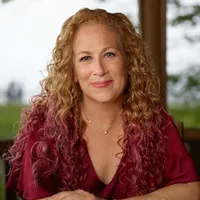
Jodi Picoult
Picoult interrogates the moral complexities and emotional depth of human relationships, drawing from the rich tapestry of real-life experiences to inspire her work. Her writing delves into pressing social issues, such as medical ethics in "My Sister's Keeper" and racial prejudice in "Small Great Things," inviting readers to explore and challenge their own beliefs. By crafting stories that blend narrative with social critique, she offers a unique lens through which to view the human condition.\n\nThrough eloquent prose and emotional resonance, Picoult's books serve as a conduit for understanding multifaceted themes like justice, inequality, and familial love. Her collaborative effort with Jennifer Finney Boylan on "Mad Honey" exemplifies her skill in addressing contemporary social topics with nuanced storytelling. As a bestselling author, she continues to captivate a global audience by transcending cultural and geographical boundaries.\n\nReaders of Picoult's work benefit from her ability to engage with complex issues in a manner that is both thought-provoking and accessible. Her stories not only entertain but also encourage introspection, providing a mirror through which individuals can examine their own values. This bio highlights her enduring impact on contemporary fiction, as she continues to leave a lasting mark on the literary landscape.
Read moreDownload PDF & EPUB
To save this Black List summary for later, download the free PDF and EPUB. You can print it out, or read offline at your convenience.

Perfect Match
by Jodi Picoult
