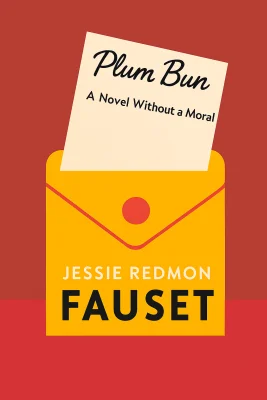
Plum Bun
A Novel Without a Moral
Categories
Fiction, Classics, Feminism, Historical Fiction, Womens, African American, Novels, Race, Literary Fiction, African American Literature
Content Type
Book
Binding
Paperback
Year
1999
Publisher
Beacon Press
Language
English
ASIN
0807009199
ISBN
0807009199
ISBN13
9780807009192
File Download
PDF | EPUB
Plum Bun Plot Summary
Introduction
# The Weight of Whiteness: A Journey Through Identity's Masquerade The mirror doesn't lie, but Angela Murray has learned to make it tell different stories. In the stifling heat of 1920s Philadelphia, she stands before the glass watching her reflection shift between two worlds—one where her pale skin opens every door, another where her Negro blood slams them shut. Her sister Virginia, darker and content with their heritage, watches from the doorway as Angela practices the art of transformation. With each careful adjustment of posture and expression, Angela moves closer to a decision that will shatter her family and reshape her soul. When opportunity beckons from New York's glittering art scene, Angela makes the ultimate gamble. She abandons her name, her history, and everyone who truly knows her to become Angèle Mory—a white woman with artistic dreams and no inconvenient past. But in a world built on the fiction of racial superiority, even the most carefully constructed lies have a way of demanding payment. What begins as a simple deception becomes a labyrinth of love, betrayal, and the brutal mathematics of identity in Jazz Age America, where the price of freedom might be everything worth living for.
Chapter 1: Mirrors and Masks: The Origins of Passing
The trolley car rattled through Philadelphia's segregated streets, carrying Angela Murray toward her first taste of forbidden fruit. Beside her, Mattie Murray sat with the practiced ease of a woman who had learned to navigate two worlds. Light enough to pass for white, mother and daughter played their dangerous game in department stores and tea rooms that would have ejected them violently if the truth were known. Angela absorbed these lessons with the hunger of someone born to want more than life seemed willing to offer. At seventeen, she possessed her mother's pale complexion and delicate features, while her sister Virginia bore their father's darker skin and the warm bronze glow that marked her unmistakably as colored. The contrast between them was a daily reminder of the arbitrary nature of American racial boundaries. The breaking point came during her senior year when Mary Hastings, a refined white classmate, chose Angela as her assistant on the school magazine. Their friendship bloomed into something precious and rare until another student revealed Angela's secret. Mary's face transformed with shock and betrayal. "Coloured! Angela, you never told me that you were coloured!" The words cut deeper than any blade, not because of their cruelty but because of their truth. The friendship withered immediately, leaving Angela to confront a brutal reality. She was the same person she had been moments before the revelation, yet everything had changed. The lesson burned itself into her consciousness like a brand. It was not being colored that mattered, but letting it be known. In that moment of rejection, the seeds of her future were planted in soil made fertile by humiliation and rage. Years passed, but the wound never healed. When Matthew Henson, an earnest young man from their neighborhood, began courting her with gentle persistence, Angela felt the walls of her predetermined life closing in. He was kind, steady, everything a sensible girl should want. But he was also unmistakably colored, and with him came a future mapped out in the narrow streets of their segregated world. On a sweltering August day when Matthew proposed, his face shining with hope and love, Angela looked at him and saw not a man but a chain. Her refusal was gentle but absolute, and in Matthew's wounded eyes, she glimpsed the first casualty of her ambitions.
Chapter 2: Reinvention in the City: Becoming Angèle Mory
The train pulled into Pennsylvania Station like a great iron beast exhaling steam and possibility. Angela Murray stepped onto the platform carrying three thousand dollars and a plan as audacious as it was simple. She would kill her old self and be reborn as someone the world could love without reservation. The furnished room on Jayne Street in Greenwich Village was tiny but perfect—a stage set for her metamorphosis. Angela Murray died that first night, and Angèle Mory emerged with the dawn. French ancestry would explain any exotic features. Her carefully crafted story contained just enough truth to be believable and just enough lies to be liberating. The Art Students League welcomed her with open arms. Her talent was undeniable, her manner charming, her background unquestioned. For the first time in her life, Angela moved through the world without the constant weight of racial calculation. She was simply another young artist pursuing her dreams, no different from dozens of others seeking their fortunes in the great metropolis. Her classmates became unwitting accomplices in her deception. Anthony Cross, a dark-eyed young man with an air of mystery, seemed drawn to her from the start. There was something in his gaze that made her nervous, a recognition she couldn't quite place. But when he spoke to her, it was with the easy familiarity of one white person to another. Miss Powell, the only colored student in their class, presented a different challenge. The young woman was talented but isolated, treated with polite distance by the other students. Angela found herself in the peculiar position of being expected to share in the casual prejudice of her white classmates while watching someone who could have been her sister endure their subtle cruelties. Each day brought new tests of her resolve. When Miss Powell struggled with a difficult assignment, Angela wanted to help but dared not show too much sympathy. When the other students made casually racist remarks, she had to nod along or risk exposure. Each small betrayal of her true self carved away another piece of her soul, but the rewards seemed worth the price. Gallery owners took her seriously, wealthy patrons invited her to their homes, opportunities multiplied like flowers in spring. She was becoming everything she had dreamed of being, and the cost seemed almost manageable.
Chapter 3: Gilded Chains: Love, Betrayal, and Roger's False Promises
Roger Fielding entered Angela's life like sunlight breaking through storm clouds—golden, warm, and utterly transformative. Heir to a mining fortune, blessed with classical good looks and the casual confidence that came from inherited wealth, he represented everything her new identity was meant to achieve. When he began pursuing her with the focused intensity of a man accustomed to getting what he wanted, Angela felt the intoxicating rush of victory. Their courtship unfolded in the glittering venues of New York society. Opera boxes and exclusive restaurants, weekend drives in his blue touring car, intimate dinners where Roger spoke casually of wealth that exceeded Angela's wildest dreams. He was everything Matthew Henson was not—sophisticated, worldly, connected to a universe of privilege that seemed designed for her enjoyment. But Roger's intentions, when they finally became clear, struck Angela like a physical blow. Marriage was not on offer. What he proposed instead was an arrangement—a comfortable apartment, an allowance, the status of a kept woman dressed in the language of romance. "Think of it as free love," he said, his blue eyes earnest with self-deception. "The most honest relationship possible between a man and woman." The negotiations that followed were a masterclass in manipulation disguised as seduction. Roger deployed every weapon in his arsenal—flowers, gifts, passionate declarations, and always the subtle threat that his interest might wane if she proved too difficult. He spoke of other women who had been grateful for his attention, of the loneliness that awaited her if she insisted on outdated conventions. Angela found herself caught between desire and disgust, ambition and integrity. The decision, when it came, felt less like choice than surrender. On a rainy autumn evening, with Roger's arms around her and his promises whispering in her ear, Angela let herself fall. The apartment on Seventy-second Street became her gilded cage, and Roger's visits the highlight and torment of her existence. For a while, she convinced herself it was love. Roger could be tender, passionate, seemingly devoted. But gradually, the truth revealed itself in small cruelties and casual dismissals. She was his possession, not his partner. Her opinions mattered only when they agreed with his, her presence was welcome only when it suited his convenience. The golden chains were still chains, and they grew heavier with each passing day.
Chapter 4: Hearts Divided: The Triangle of Deception with Anthony and Virginia
Virginia's letter arrived on a Tuesday morning like a bomb wrapped in familiar handwriting. Her sister was in New York, had been for months, living in Harlem and teaching school. But more shocking still was the casual mention of a new man in her life—Anthony Cross, the artist she'd met by chance and was now seeing regularly. The world tilted sideways as Angela read the words again. Anthony Cross—the same man who had been watching her from the shadows of their art classes, whose dark eyes held secrets that matched her own. The same Anthony who had kissed her with desperate passion just days before, whispering promises neither dared voice. The meeting between the sisters, arranged hastily in a Harlem tearoom, was a masterpiece of polite deception. Virginia, glowing with happiness and health, chattered about her new life while Angela sat frozen, watching her sister's face for any sign of recognition. But Angèle Mory bore little resemblance to the Angela Murray who had fled Philadelphia years before. "He's wonderful," Virginia said, stirring sugar into her tea with unconscious grace. "Different from the boys back home. There's something almost tragic about him, as if he's carrying some great sorrow. But he's kind to me, Angela. So very kind." Angela's throat closed around words she couldn't speak. The cruel mathematics of the situation became clear as Virginia continued talking. Anthony, believing himself in love with a white woman, was slowly allowing himself to care for Virginia as a way of forgetting his impossible passion. Virginia, innocent of the larger drama, was opening her heart to a man who saw her as a consolation prize. The confrontation with Anthony came on a rain-soaked evening in his cramped studio apartment. When Angela revealed she knew about Virginia, his confession poured out like blood from a wound. He spoke of his father's murder in Georgia, his mother's flight, his own years of hiding and shame. He had vowed never to love a white woman, never to betray his father's memory, and meeting Angela had shattered his resolve like glass against stone. "I thought I could forget you," he said, his voice breaking. "Virginia is sweet, innocent, everything good in this world. I thought if I could love her, I could save myself from wanting what I could never have." The moment of revelation came like a thunderclap. "Anthony," Angela whispered, "I'm colored too." The silence that followed was deafening. Understanding dawned in his eyes—not relief, but something far more terrible. Three people caught in a web of deception and misunderstanding, each believing themselves the victim of fate when they were actually the architects of their own destruction.
Chapter 5: The Station: Denying Blood for Borrowed Privilege
Pennsylvania Station buzzed with the chaos of a thousand journeys beginning and ending. Angela waited for Virginia, who was arriving for a teaching examination, when Roger appeared unexpectedly. He had returned early from a business trip and spotted her in the crowd, his delight genuine and overwhelming. Before Angela could explain or escape, Virginia emerged from the train and approached with their old childhood greeting: "I beg your pardon, but isn't this Mrs. Henrietta Jones?" It was meant as playful recognition, a moment of joy between sisters who had been separated too long. But Angela, paralyzed by Roger's presence and his obvious hatred of black people, could only stammer the ritual response: "Really you have the advantage of me. No, I'm not Mrs. Jones." Virginia's face transformed as she realized what was happening. The hurt and bewilderment in her eyes gave way to a dignity that made her seem suddenly older and infinitely distant. Without another word, she turned and walked away, disappearing into the crowd with her head held high. Roger, oblivious to the drama he had witnessed, made crude comments about the "damned cheek" of the colored girl who had dared approach them. His casual racism, combined with Angela's betrayal of her own sister, created a moment of such moral ugliness that it seemed to poison the very air around them. That night, Angela tried to call Virginia to explain, but her sister was coldly polite and utterly unreachable. The damage had been done, and both sisters understood that something fundamental had broken between them. Virginia had seen Angela choose whiteness over family, safety over love, and the knowledge changed them both forever. The incident marked the beginning of the end for Angela's relationship with Roger as well. Having witnessed her capacity for betrayal, even of her own blood, he began to see her differently. The mystery and charm that had initially attracted him faded as he realized the depths of her desperation and calculation. Their affair continued, but it was poisoned by mutual disrespect and the knowledge that neither truly valued the other as a complete human being.
Chapter 6: Shattered Illusions: The Price of Living a Lie
The end came with the casual cruelty that marked all of Roger's dealings with those he considered beneath him. After months of growing indifference and increasing absence, he arrived at Angela's apartment one evening in a mood of cold determination. The passionate lover who had once pleaded for her attention had been replaced by a man who saw her as an inconvenience to be discarded. His words were chosen to wound: "You knew perfectly well what you were letting yourself in for. Any woman would know it." The phrase echoed in Angela's mind long after Roger had gone, carrying with it the weight of countless similar scenes played out between powerful men and vulnerable women throughout history. She realized that she had been nothing more than a temporary amusement, a pretty toy to be enjoyed and then cast aside when novelty wore thin. All his promises of lasting affection and golden memories had been lies designed to secure her compliance. She had sacrificed her integrity, her family, and her self-respect for a man who had never seen her as anything more than a convenient pleasure. The practical consequences of Roger's abandonment were almost as devastating as the emotional ones. Angela's small savings were nearly exhausted, and without his financial support, she faced the prospect of genuine poverty. The glamorous life she had built in New York began to crumble as she was forced to take whatever work she could find. Loneliness settled over her like a shroud. The friends she had made during her time with Roger proved to be fair-weather companions who disappeared when her circumstances changed. Martha Burden remained cordial but distant, absorbed in her own complex relationships. Even her upstairs neighbor seemed to inhabit a different world of simple happiness that Angela could no longer imagine for herself. Her art, once a source of joy and hope, became merely another tool for survival as she accepted commercial assignments that paid the bills but offered no creative satisfaction. The mirror that had once shown her a white woman capable of claiming any prize now reflected someone who had lost the capacity to recognize herself. The price of passing had been not just the loss of family and identity, but the loss of the very self that might have been worth loving.
Chapter 7: Truth Unveiled: The Courage to Confess
The newspaper headlines would scream her shame across New York, but in that moment of revelation, Angela felt only the strange liberation that comes with the end of pretense. She stood before the reporters who had been harassing Miss Powell about her exclusion from an art scholarship, and the words came without conscious decision. "If Miss Powell isn't wanted because she's colored," Angela heard herself saying, "then I'm not wanted either. I'm colored too." The words hung in the air like a bell that could never be unrung. Years of deception evaporated in an instant, leaving behind only truth—raw, uncompromising, and strangely freeing. The reporters scrambled for their notebooks, sensing a story that would sell papers and destroy lives with equal efficiency. The aftermath was swift and merciless. Her job vanished overnight, her white friends melted away like snow in spring, and the art scholarship that had promised escape to Europe was withdrawn with bureaucratic politeness. The carefully constructed world of Angèle Mory collapsed in a single afternoon, leaving Angela Murray standing in the wreckage of her own making. But in the destruction, she found something unexpected—peace. The constant vigilance was over, the exhausting performance finally ended. She no longer had to calculate every word, every gesture, every relationship for its potential to expose her secret. The weight she had carried for so long lifted from her shoulders, leaving her lighter than she had been in years. Virginia's reaction was the opposite of what Angela had feared. Instead of anger or recrimination, her sister welcomed her home with tears of joy and fierce embraces. "I knew you'd come back to me," Virginia whispered. "I've been waiting." The reunion was bittersweet, shadowed by the knowledge of what had been lost and what could never be recovered. Anthony, freed from his impossible position but wounded by the deception, struggled to find his footing in a world where love and truth had proven to be such fragile things. The engagement to Virginia continued, but both sisters could see the careful distance he maintained, the way he looked at Angela when he thought no one was watching. Some wounds, they all understood, would take time to heal.
Chapter 8: Homecoming: Embracing Heritage and Authentic Freedom
From the ashes of her old life, Angela began to build something new and true. The prize money from her art remained intact, and with it came the possibility of genuine freedom—not the false freedom of passing, but the harder, truer freedom of living authentically. She would go to Paris after all, not as Angèle Mory fleeing her heritage, but as Angela Murray embracing it. The night before her departure, she sat with Virginia in their small apartment, two sisters finally able to speak without secrets between them. The years of separation had changed them both, but the bond of blood and shared history proved stronger than the lies that had divided them. "Do you think I'm a fool?" Angela asked, remembering the words that had haunted her for so long. Virginia smiled, the same radiant smile that had lit their childhood home. "You're the bravest person I know," she said. "It takes courage to live a lie, but it takes even more courage to live the truth." The work of rebuilding had already begun. Angela threw herself into her commercial art with a dedication that surprised her employers and gradually began to restore her reputation. Her portraits, informed now by genuine suffering and hard-won wisdom, took on a depth and power they had never possessed before. She painted not just faces but souls, capturing the hidden pain and secret hopes of her subjects with an empathy born from her own struggles. Slowly, carefully, Angela began to reach out to the black community she had abandoned. She attended lectures by prominent black intellectuals, sat in Harlem theaters, and gradually began to understand what she had lost when she chose to pass. The richness and complexity of black American culture, the bonds of shared struggle and mutual support, the fierce pride and determination that characterized the best of her people—all of this had been available to her if she had only been brave enough to claim it. As the ship pulled away from New York harbor, Angela stood at the rail watching the city recede into memory. She was twenty-seven years old, alone, and uncertain of what the future held. But for the first time in years, she was truly free—free to succeed or fail as herself, free to love and be loved without deception, free to discover who Angela Murray might become when she stopped trying to be someone else.
Summary
Angela Murray's journey through the labyrinth of racial identity in Jazz Age America becomes a meditation on the true cost of freedom and the price of authenticity. Her story traces the arc of a woman learning that no external validation can compensate for the loss of internal integrity, that the sweetest fruit often conceals the most bitter seeds. The plum bun of the title—beautiful on the surface but requiring careful handling—becomes a perfect metaphor for the complex negotiations of identity that defined her generation and continue to resonate today. In choosing truth over comfort, heritage over privilege, Angela discovered that the most profound freedom comes not from escaping who we are, but from having the courage to become who we were always meant to be. Her final voyage to Paris represents not flight but homecoming—a return to the self she had abandoned in pursuit of a dream that was always an illusion. The weight of whiteness, she learned, was heavier than the burden of blackness, because it demanded the sacrifice of everything that made life worth living. In the end, Angela's greatest victory was not in passing for white, but in finding the strength to stop.
Best Quote
“We've all of us got to make up our minds to the sacrifice of some thing. I mean something more than just the ordinary sacrifices in life, not so much for the sake of the next generation as for the sake of some principle, for the sake of some immaterial quality like pride or intense self-respect or even a saving complacency; a spiritual tonic which the race needs perhaps just as much as the body might need iron or whatever it does need to give the proper kind of resistance. There are some things which an individual might want, but which he'd just have to give up forever for the sake of the more important whole.” ― Jessie Redmon Fauset, Plum Bun: A Novel Without A Moral
Review Summary
Strengths: The review highlights Jessie Redmon Fauset's thematic exploration of racial identity and societal norms, drawing a parallel to Theodore Dreiser's focus on single women striving for independence. The book's engagement with the concept of "passing" during the Harlem Renaissance is noted as a significant and historically relevant theme. Weaknesses: The review criticizes Fauset's writing style as lacking skill and being overly moralistic, despite the book's title suggesting otherwise. The narrative is described as less powerful and more prone to Victorian plot twists compared to Dreiser's work. Overall: The reviewer appreciates the thematic depth of "Plum Bun" but finds the execution lacking in literary finesse. The book is recommended for its historical and cultural insights, though with reservations about its narrative style.
About Author

Jessie Redmon Fauset
Fauset reflects on the complexities of African American identity and the middle class through her writing, connecting readers with themes of racial discrimination, feminism, and the phenomenon of "passing." As a key figure in the Harlem Renaissance, she leveraged her role as literary editor of "The Crisis" to spotlight emerging voices such as Langston Hughes and Jean Toomer. Her own literary work, including "Plum Bun" and "Comedy, American Style", portrays middle-class Black characters who navigate societal challenges while striving for authenticity in a prejudiced world. This exploration of nuanced identity and societal barriers showcases Fauset's deep commitment to reshaping narratives around African American life.\n\nWhile Fauset's editorial work nurtured a generation of Harlem Renaissance writers, her books offer enduring insights into the Black experience. Her commitment to authentic representation was not only evident in her writing but also in her contributions to "The Brownies' Book", which aimed to educate African American children about their heritage. Readers of Fauset's work benefit from a rich understanding of historical and cultural contexts, allowing for a deeper appreciation of the ongoing dialogue around race and identity. As an author and educator, her legacy continues to inform discussions on race, class, and gender, making her bio a compelling study for those interested in African American literature and history.
Read moreDownload PDF & EPUB
To save this Black List summary for later, download the free PDF and EPUB. You can print it out, or read offline at your convenience.
Plum Bun
by Jessie Redmon Fauset
