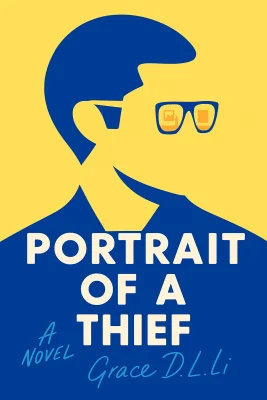
Portrait of a Thief
Categories
Fiction, Audiobook, Mystery, Thriller, Adult, Book Club, Contemporary, LGBT, Crime, Mystery Thriller
Content Type
Book
Binding
Hardcover
Year
2022
Publisher
Tiny Reparations Books
Language
English
ASIN
0593184734
ISBN
0593184734
ISBN13
9780593184738
File Download
PDF | EPUB
Portrait of a Thief Plot Summary
Introduction
# Reclaiming Heritage: Art Thieves and Cultural Identity The jade tiger felt warm against Will Chen's palm as Harvard's Sackler Museum erupted in chaos around him. Alarms shrieked through marble halls while three figures in black swept past, their backpacks heavy with stolen Chinese art. Glass crunched beneath their boots. Emergency lights painted everything blood red. One thief paused, dropped something at Will's feet—a business card that would change everything. China Poly Group. Wang Yuling, CEO. On the back, elegant script: "What is ours is not ours." Three months later, that card led Will to a Beijing penthouse where Wang Yuling waited like a spider in her web of reclaimed treasures. The billionaire CEO offered him tea and an impossible proposition: steal back five bronze zodiac heads from the world's most secure museums. Fifty million dollars. A crew of five Chinese American college students. And a chance to reclaim what the West had taken during the burning of China's Old Summer Palace in 1860. Will stared at the bronze snake head on her mantle, its ancient eyes seeming to judge him. He was an art history student, not a thief. But some stories could only be told through action.
Chapter 1: The Invitation: A Museum Theft and an Impossible Proposition
Detective Meyers leaned forward across the interrogation table, his fingertips touching like a prayer. "Tell me if this sounds suspicious: A Chinese student writes about looted art, and weeks later, Harvard's largest Asian collection gets robbed." Will's recent Harvard Crimson article lay between them like evidence—"What Is Ours Is Not Ours: Chinese Art and Western Imperialism." The detective's eyes held the casual racism Will had learned to recognize, the assumption that heritage equaled guilt. But Will had been born in California, raised on dreams of belonging nowhere and everywhere. He knew his rights. More importantly, he knew opportunity when it knocked. As Meyers pressed him about theft and ownership, Will's hand closed around the jade tiger he'd palmed during the chaos. One of a pair, now separated. Like so much of China's stolen history. The business card led to silence for weeks. Then five first-class tickets to Beijing appeared under his name, impossible and undeniable. Will knew he couldn't go alone. This felt bigger than one person, bigger than one theft, bigger than anything he'd imagined when he wrote about museums as monuments to cultural conquest. In his Harvard dorm room, surrounded by art history textbooks and stolen jade, Will made a choice that would define everything that followed. He booked the flight. Some invitations demanded answers in person, especially when they came wrapped in the promise of fifty million dollars and the chance to rewrite history itself. The plane lifted off from Logan International, carrying Will toward a future he couldn't yet imagine. Below, Boston's lights blurred into memory. Ahead lay Beijing, Wang Yuling, and a proposition that would transform five college students into international art thieves. The jade tiger in his pocket felt heavier with each mile, as if it knew it was finally going home.
Chapter 2: Assembly of Outsiders: Five Chinese Americans with Something to Prove
The Beijing hotel suite overlooked a city of ten million heartbeats, all glass and ambition reaching toward heaven. Will studied his assembled crew, wondering if Wang Yuling was brilliant or insane. Four faces stared back at him, each carrying their own reasons for accepting an impossible invitation. Irene Chen sat with perfect posture, his younger sister's Duke University composure hiding razor-sharp intelligence. She could talk her way out of anything, had spent a semester in Beijing mastering Mandarin and political maneuvering. But she looked at this job like a chess problem to be solved, not a dream to be chased. Her presence both comforted and unnerved Will—family meant everything, but it also meant everything to lose. Daniel Liang sprawled in his chair, tattoo curling around his throat like smoke. UCLA pre-med, son of an FBI agent specializing in art crimes. The irony wasn't lost on anyone. He'd grown up in Beijing before his mother's death brought him and his father to America, leaving behind everything that felt like home. His dark eyes held the weight of inherited grief and the desperate hunger for redemption. Alex Huang hunched over her laptop, fingers dancing across keys with surgical precision. MIT dropout turned Silicon Valley coder, she'd traded dreams for a steady paycheck and hated every line of code she wrote. Her brief college romance with Will had fizzled, but their friendship endured, built on shared understanding of what it meant to want more than you were supposed to have. Lily Wu leaned against the window, watching Beijing's traffic flow like blood through arteries. Texas-born to Chinese parents, she'd never seen the country of her heritage until now. A mechanical engineering student who could hotwire anything with an engine, she raced cars in Durham's underground scene, chasing speed and belonging in equal measure. Her presence completed their unlikely quintet—five Chinese Americans who'd grown up between worlds, never fully belonging to either. Wang Yuling spread photos across the table like tarot cards revealing fate. Museums in Sweden, France, Britain, Norway, New York. Each held a piece of China's stolen soul, bronze animals that had once marked time in the fountain of the Old Summer Palace before British and French forces burned paradise to ash in 1860.
Chapter 3: Stockholm Success: First Strike Under Nordic Moonlight
October in Stockholm painted the world in shades of amber and rust. Drottningholm Palace rose from Lake Mälaren like something from a fairy tale, its baroque towers piercing the mist. Inside the Chinese Pavilion, their first target waited—a bronze snake head, stolen over a century ago, now displayed behind glass like a conquered trophy. Their plan abandoned Hollywood glamour for brutal efficiency. No laser grids or silent infiltration, just three figures in black masks moving through darkness with desperate precision. Alex orchestrated chaos from across the city, her Molotov cocktails painting Stockholm's wealthy district in flames while police sirens screamed toward the wrong emergency. The diversion bought them precious minutes. Daniel's bat shattered the pavilion's glass doors like thunder in the night. Inside, emergency lighting cast everything in hellish red as they smashed display cases with methodical violence. Will lifted the bronze snake head, feeling its weight—twelve hundred years of Chinese history, finally coming home. The sculpture's fanged mouth seemed to smile in the darkness, as if it had been waiting for this moment. Their escape played out like a fever dream. Police blocked the main road, rifles gleaming, but Lily waited at the lake's edge in a stolen speedboat, engine roaring against the night. They abandoned their mopeds and ran, backpacks heavy with reclaimed treasure, leaping into the boat as searchlights swept the shore. Stockholm fell away behind them, and for the first time in his life, Will Chen had made history instead of merely studying it. At the airport, customs barely glanced at Irene's forged documentation. The snake head, wrapped in newspaper and declared as a tourist souvenir, passed through security like a ghost returning home. They had done it. One zodiac head liberated, four to go. But as their plane lifted off Swedish soil, none of them knew that other hunters were already stalking the same prey.
Chapter 4: Parisian Complications: Rival Thieves and Empty Cases
Paris in November wore winter like a funeral shroud. The Château de Fontainebleau should have been their masterpiece—Napoleon's former residence housed a Chinese Museum filled with Old Summer Palace artifacts, including the bronze rooster head they desperately needed. But when Daniel's bat shattered the display cases in the pre-dawn darkness, they found only empty space and broken glass. Someone had beaten them to it. Professional thieves who moved like shadows, taking everything from the collection with surgical precision. Will stared at the vacant pedestals where priceless art should have rested, feeling the weight of failure crushing down. They had planned for security systems and police response, but never for competition. Alex's voice crackled through their earpieces, urgent with warning. Police cars were converging faster than expected, sirens growing louder by the second. The team had minutes, maybe less, before capture became inevitable. Irene grabbed Will's wrist, her voice cutting through his shock: "We're leaving. Before we can't." Lily's yellow getaway car—a ridiculous Kia Soul that had been their only option—carried them through Paris streets as dawn broke over the city. The irony wasn't lost on any of them: they had executed a perfect heist on an already-robbed museum. Somewhere in the city, another crew was celebrating with their stolen rooster head while Will's team faced the devastating reality of returning to China empty-handed. The meeting at the Louvre came two days later. Zhao Min and Liu Siqi approached across the courtyard—Beijing's fuerdai, wealthy second-generation heirs who treated the world as their playground. Min was the driver Lily had raced in the underground Paris scene. Siqi had been their tour guide at Fontainebleau, leading them through Napoleon's former residence hours before the robbery. They weren't desperate college students stealing for survival, but Chinese socialites playing at revolution with inherited fortunes. What emerged from their negotiation was unprecedented: two crews with identical goals but vastly different resources. Competition could become collaboration. The remaining zodiac heads were scattered across three continents, hidden in museums with increasingly sophisticated security. Perhaps five college students and two wealthy socialites could accomplish what neither group could manage alone.
Chapter 5: Family Fractures: When FBI Investigations Hit Home
The investigation struck like lightning, precise and devastating. Agent Liang arrived in Stockholm within days of the heist, his weathered face a mask of professional calm. But when he reviewed the security footage, when he heard the soft Chinese voices caught on backup audio, recognition flickered in his eyes like a dying flame. Back in California, Daniel sat in his childhood kitchen, watching his father's hands shake as he poured jasmine tea. The silence between them stretched like a chasm, filled with ten years of grief and misunderstanding since his mother's death had brought them to America. The house felt smaller now, crowded with unspoken accusations and the weight of inherited disappointment. "I know it was you," Agent Liang said finally, his voice barely above a whisper. "All of you. Will, Irene, Alex, Lily. My son." The words hung in the air like smoke from incense at his wife's grave, bitter and inescapable. Daniel's throat closed. He thought of his mother's funeral in Beijing, of the life they'd left behind, of all the ways love could become a wound that never healed. "Ba," he whispered, the Mandarin word for father feeling foreign on his tongue after years of American assimilation. "I'm sorry." His father's eyes were wet with tears that had been building for a decade. "I should arrest you. I should end this now before it destroys what's left of our family." He set down his cup with trembling fingers, the porcelain clicking against the wooden table like dice being cast. "But you're all I have left of her. Of home." Meanwhile, Irene worked through the night in her Duke dorm room, her face lit by laptop screens as she methodically destroyed evidence of their impossible dream. The crew's encrypted files began disappearing one by one, digital footprints erased with surgical precision. She was cutting the threads that connected them to their crimes, but also severing the bonds that had made them feel invincible. The confrontation with Will came at dawn, harsh sunlight streaming through their family kitchen in Santa Clara. Years of sibling rivalry boiled over into something uglier as Will accused her of sabotaging their mission, of never believing they could succeed. Irene's composure cracked like ice in spring as she shot back that she'd spent her whole life cleaning up his messes, that she was saving them from their own recklessness. The argument shattered the morning quiet, their parents' wedding photo watching from the mantle like a silent jury.
Chapter 6: Metropolitan Gambit: The Final Heist and Digital Revelation
New York in December was all sharp edges and bitter wind. The Metropolitan Museum rose before them like a temple to Western civilization, its neoclassical columns holding court over Fifth Avenue. Inside, the bronze dragon head waited in the Chinese art gallery, the final piece of their impossible puzzle and the most heavily guarded treasure they'd ever attempted to steal. Will straightened his tie, preparing for his job interview at the very museum they planned to rob. The irony wasn't lost on him—he genuinely wanted to work here, to change things from within, to make museums acknowledge their colonial past. But first, he had to steal from them. His enthusiasm for Chinese art, his knowledge of provenance and repatriation, his Harvard credentials—everything aligned like stars in a constellation of deception. "Could I see the restoration rooms?" he asked his interviewer, smile bright as polished brass. She badged him through security doors, led him through climate-controlled chambers where conservators bent over ancient scrolls. Will memorized every camera angle, every locked door, every weakness in the museum's armor while discussing his passion for cultural preservation. That night, Alex's code turned the Met's security system inside out. Cameras went dark, alarms fell silent, electronic locks clicked open like mechanical sighs. The museum became a tomb, filled with stolen treasures and sleeping ghosts. They moved through the galleries like shadows, their footsteps muffled by Persian carpets worth more than most people's houses. The dragon head sat in its case, bronze eyes reflecting their flashlight beams. Will reached for it, his hand trembling with the weight of everything they'd risked, everything they'd lost, everything they might still become. The metal was warm beneath his fingers, as if it remembered the Chinese sun that had first kissed it into being. "Freeze." The lights blazed on. FBI agents surrounded them, weapons drawn, faces grim with professional satisfaction. Agent Liang stepped forward, his expression unreadable as he looked at his son's crew, his son's friends, his son's chosen family. But even as the handcuffs clicked shut, even as their dreams seemed to crumble, the real heist was just beginning. In a Chinatown restaurant, Lily and Daniel worked with surgical precision, uploading terabytes of data from the Met's servers to encrypted networks. Email correspondence revealing institutional knowledge of looted artifacts. Purchase records of art illegally smuggled from China, Greece, Italy, everywhere the West had planted its flags and claimed its prizes. The news broke like a thunderclap across international media.
Chapter 7: Cultural Reckoning: Museums Confront Their Colonial Past
The scandal erupted across front pages worldwide. Museums Trafficking in Stolen Art. Decades of institutional knowledge about looted artifacts exposed in leaked emails and purchase records. The Metropolitan Museum's directors had bigger problems than a few college kids wandering their halls after hours—they faced congressional hearings, international lawsuits, and the collapse of their carefully constructed narrative about cultural preservation. Within hours, the crew was released, their trespassing charges lost in the chaos of international outrage. What had begun as a heist became a reckoning, forcing Western institutions to confront their colonial past. The British Museum, the KODE, the Met—all announced their intention to repatriate Chinese artifacts, bowing to public pressure that their leaked communications had made impossible to ignore. Wang Yuling's plan had succeeded beyond even her ambitious dreams. The zodiac heads came home not through theft but through shame, not through violence but through the simple act of revealing truth. Museums that had spent centuries claiming moral authority as cultural guardians found themselves exposed as repositories of systematic looting, their marble halls echoing with the ghosts of conquered civilizations. Will stood in Harvard's Sackler Museum, surrounded by his own paintings in an exhibit called "Reclaiming History." The same museum where their journey began now displayed his art—portraits of his crew rendered in Renaissance style, Asian faces claiming European artistic traditions. His answer to the question of what belonged to whom hung on walls that had once displayed stolen treasures, now returned to their rightful homes. The bronze animals sat in Beijing's Poly Art Museum, their long exile finally ended. Twelve zodiac heads reunited after 160 years of separation, their bronze faces reflecting the lights of a city that had never stopped waiting for their return. They had witnessed the burning of palaces, the rise and fall of empires, the long journey of diaspora children learning that home was not a place but a choice. Fifty million dollars changed everything and nothing. Alex quit Silicon Valley, returned to MIT to finish what she'd started, her code now serving justice instead of corporate profits. Daniel reconciled with his father over jasmine tea and shared grief, their love finally stronger than their pain. Irene abandoned her consulting internship for political campaigns, chasing power that could reshape the world rather than merely preserve it.
Chapter 8: Finding Home: Art, Identity, and Belonging Between Worlds
Lily drove through Texas backroads in her restored Mustang, the engine purring beneath summer stars as she finally found the courage to ask her parents about the China they'd left behind. The Gulf of Mexico stretched to the horizon, vast as possibility, no longer a barrier but a bridge to understanding. Her parents spoke of villages by the Yellow River, of families scattered by war and revolution, of dreams that had carried them across an ocean to give their daughter a future they could barely imagine. Will painted in studios from Boston to Beijing, capturing light and shadow, memory and dream, the faces of diaspora children learning to call two worlds home. His art hung in galleries now, no longer stolen but freely given, speaking truths that museums had spent centuries trying to hide. Each canvas was a conversation between East and West, between past and future, between the child he had been and the man he was becoming. The crew gathered one last time in Wang Yuling's Beijing penthouse, the city sprawling beneath them like a circuit board of infinite possibility. The zodiac heads were home, the museums were changing, and five college students had become something larger than themselves—symbols of a generation that refused to accept the world as it was handed to them. "What now?" Alex asked, her laptop closed for once, her attention focused on the present rather than the code that had defined her past. Will looked at his friends, his chosen family, his partners in the impossible crime that had changed everything. They had started as strangers united only by heritage and hunger, but they had become something more—proof that identity was not inheritance but choice, not blood but bond, not where you came from but where you decided to go.
Summary
The bronze zodiac heads had returned to Beijing, but their real journey was just beginning. In museums across the world, curators opened storage rooms and confronted centuries of systematic looting, their institutions finally forced to reckon with the colonial violence that had filled their halls. The five Chinese American college students who had started this revolution found themselves transformed by their own actions, no longer caught between worlds but building bridges across the spaces that had once seemed impossible to cross. Will Chen's paintings now hung where stolen art had once resided, his vision of cultural reclamation made manifest in galleries that had learned to tell new stories about ownership and belonging. The jade tiger that had started everything sat on his studio windowsill, no longer alone but part of a collection that spoke to the possibility of home existing not in any single place but in the connections we choose to make, the stories we decide to tell, and the courage to claim what has always been ours to claim. The heist was over, but the real work of building a world where heritage meant healing rather than theft had only just begun.
Best Quote
“Loss was the hesitation in his voice when he spoke his mother tongue, the myths he did not know, a childhood that felt so vast andalien from his parents' that he did not know how to cross it.” ― Grace D. Li, Portrait of a Thief
Review Summary
Strengths: The book's concept is praised for its originality, drawing inspiration from classic heist stories and addressing the complex history of looted art. The emotional impact on readers, particularly those connected to the diaspora experience, is highlighted. Weaknesses: The execution of the premise is criticized, with the narrative described as a "snoozefest." The characters are seen as underdeveloped, and the plot is considered unrealistic, particularly the use of unprofessional methods for organizing a heist. The writing style is also critiqued for lacking depth and nuance. Overall: The reviewer expresses disappointment, feeling the book fails to live up to its promising concept. While acknowledging its potential impact on some readers, the recommendation level is low due to perceived shortcomings in character development and plot execution.
About Author

Grace D. Li
Li interrogates the nuances of identity through her literary works, particularly within the context of the Chinese American and broader Asian diaspora experience. Her debut novel, "Portrait of a Thief", exemplifies this approach by blending the fast-paced action of a heist thriller with thoughtful examinations of cultural heritage and belonging. The book also highlights diverse representation, including LGBTQ+ characters, and is a testament to Li's ability to merge suspenseful storytelling with social commentary. Her forthcoming work, "Anatomy of a Betrayal", promises to continue exploring these intricate themes.\n\nBalancing a dual career as a physician and author, Li leverages her diverse background to enrich her narratives. Her educational journey at Duke University and Stanford School of Medicine underpins her commitment to integrating arts and humanities with medical education. This unique perspective allows her to craft multi-dimensional protagonists and intricate plots that resonate with a wide audience. Meanwhile, her teaching experience in New York through Teach for America reflects her dedication to nurturing creativity, evidenced by her efforts in founding a high school creative writing program.\n\nReaders benefit from Li's works not only through engaging storylines but also through the depth of social themes explored. Her novels have received critical acclaim and mainstream recognition, such as "Portrait of a Thief" being developed as a series at Netflix, with Li serving as an executive producer. Her impact extends beyond literature, as she is recognized for her contributions to Asian American representation and has been invited to speak at cultural institutions. Her work continues to offer valuable insights into cultural identity and belonging, enriching the literary landscape with each new book.
Read moreDownload PDF & EPUB
To save this Black List summary for later, download the free PDF and EPUB. You can print it out, or read offline at your convenience.
Portrait of a Thief
by Grace D. Li
