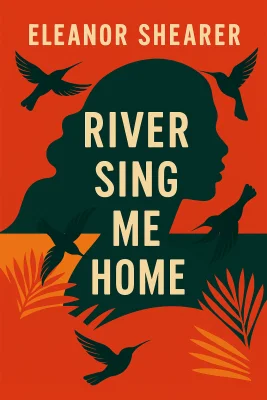
River Sing Me Home
Categories
Fiction, Audiobook, Historical Fiction, Adult, Family, Book Club, Historical, Contemporary, Race, Literary Fiction
Content Type
Book
Binding
Hardcover
Year
2023
Publisher
Berkley
Language
English
ASIN
0593548043
ISBN
0593548043
ISBN13
9780593548042
File Download
PDF | EPUB
River Sing Me Home Plot Summary
Introduction
# Rivers Sing of Memory: A Mother's Journey Through Broken Chains The night Rachel ran from Providence plantation, her bare feet pounding against muddy earth as branches tore at her skin, she carried the weight of eleven lost children in her chest. Freedom had come to Barbados that August day in 1834, but it tasted like ash in her mouth. Six more years of apprenticeship, the master had declared. Six more years of the same endless toil that had already stolen her babies, sold them across the Caribbean like cargo. Behind her, the plantation's windmill cut angry crosses against the sky, marking her betrayal. Ahead lay darkness and uncertainty, but somewhere in that vast unknown, her children waited. Micah, her eldest, torn away at sixteen. Mary Grace, silent as stone since the day they took her. Thomas Augustus, Mercy, Cherry Jane—scattered like seeds on barren ground. What was freedom to a mother whose family had been shattered by slavery's machinery? Rachel would cross oceans to find out, following trails of blood and memory through a world that had never intended her to be whole.
Chapter 1: The Hollow Promise: Rachel's Awakening to Freedom's Truth
The dancing flames called to Rachel first through the forest darkness. She stumbled toward the flickering light, terror still clawing at her throat from her flight from Providence. In the clearing, dozens of freed slaves moved around a crackling fire with unencumbered grace, their bodies finally dancing without white eyes watching from windows. Someone seized her wrist and pulled her into the chain of hands that seemed to climb toward heaven itself. When dawn broke and the magic faded, Rachel found herself alone again, wandering eastward until she crested a hill and saw the sea. Vast, defiant, unowned—it made her feel small in a good way for the first time in her life. But rough hands seized her from behind before she could savor the moment. A sack smelling of smoke and earth was stuffed over her head, and calloused palms dragged her away. The woman who faced her when the sack was ripped away had hair shorn tight to her skull and eyes that seemed to see straight through to Rachel's bones. This was Mama B, keeper of a settlement for those with nowhere else to go. She had inherited the name from her mother, who bore twenty children to the plantation before the master fled years ago. "Me know why you here," Mama B said, grinding herbs in her mortar. "Your pickney. You want to find them." She pressed a small bag of healing plants into Rachel's hands. "The white men keep records. Ships' manifests, plantation ledgers, sale receipts. Your children left traces, like footprints in mud." That night, Rachel stood at the edge of everything she had ever known. The darkness beyond seemed infinite, full of dangers she could barely imagine. But somewhere in that vast unknown, her children waited. She thought of Micah's laugh, Mary Grace's gentle touch, the way Thomas Augustus had clung to her skirts as a toddler. Fear and hope warred in her chest as she took her first step into the world beyond slavery's walls.
Chapter 2: First Light: Reunion with Mary Grace in Bridgetown
Bridgetown's crowded streets assaulted Rachel's senses after a lifetime confined to plantation boundaries. Merchants hawked their wares in a dozen languages while ships' masts swayed like a forest of dead trees. The smell of salt air mixed with human sweat and rotting fish as Rachel moved through it all like a ghost, asking anyone who would listen about a girl named Mary Grace. Her breakthrough came through the kindness of strangers. A dock worker directed her to the Armstrong household, where wealthy free blacks employed house servants. Mrs. Elvira Armstrong, a woman of mixed heritage who had bought her own freedom years before, listened to Rachel's story with growing amazement. "Mary Grace," she whispered. "Yes, she works for us. But she hasn't spoken a word in all the years she's been here." The young woman who walked through the dress shop door had lips that quivered in shock when she saw Rachel. Her shopping basket tumbled to the floor as mother and daughter bounded across the years that separated them. They embraced and Mary Grace felt like water, pouring into every crevice of Rachel, filling her, quenching her thirst. They knitted their limbs together and tears ran down Rachel's skin. "Her name is Mary Grace," Rachel said loudly when Mr. Armstrong called her daughter Eliza. Mary Grace's lip trembled, and tears threatened to spill from her eyes. How many years had it been since she had heard her own name? The Armstrongs offered Rachel work, and she found herself living in their house, watching Elvira's nimble fingers create beautiful dresses from mere cloth. But the foreman from Providence was hunting for her—she saw his shock of orange hair in the streets and pressed herself against abandoned timber in an alleyway until he passed. Mr. Armstrong knew what she was, he told her one day. He could write to Barbados, have them send the runaway notices. The threat hung between them like a blade, but Rachel had tasted reunion now. Nothing would stop her from finding the rest of her children.
Chapter 3: Blood and Rebellion: Discovering Micah's Sacrifice in Demerara
The slave registers held the truth in their yellowing pages. Mr. Armstrong's friend consulted the books and found mention of all Rachel's children. Micah and Thomas Augustus had been sold overseas to the colony of Demerara. Mercy was in Trinidad. Cherry Jane had disappeared from the records entirely, her trail ending with a white businessman named Lancing. The sea journey to Demerara nearly killed Rachel. Her body rejected the ship violently, and she lay in the dark hold retching and shivering, the putrid air pressing down on her throat like the limbs of corpses. A sailor named Nobody gave her ginger to chew and told her stories of his many voyages. He had been at sea since he was ten, when his mother faked his death to help him escape slavery in Antigua. In Georgetown, Captain Grafton remembered selling a shipload of slaves to a flashy planter named Braithwaite at Bellevue plantation. When Rachel finally walked the seven miles to Bellevue, she found Orion tending his garden plot. As soon as she spoke Micah's name, pure grief seeped into every pore of his face. His spade fell to the ground and they embraced, Rachel clinging to him tightly, trying to absorb what little was left of her son. Orion's story unfolded like a wound being opened. Micah had grown into a man but never lost the fire in his eyes. He dreamed of freedom, of finding his family, of having children who would never work in the fields. When rumors of emancipation reached them, Micah believed England would set them free. But the planters in Demerara wanted to keep their slaves, so the enslaved would have to take their freedom instead. The uprising began with hope—hundreds of slaves laying down their tools, capturing their masters, seizing weapons. But it ended in blood at Bachelor's Adventure, where two thousand slaves faced the militia's guns. Micah was among those who charged screaming into the gunfire, believing they could win. When the soldiers came for retribution, they shot him right in front of Orion. He was just sixteen, dying with his mother's name on his lips.
Chapter 4: Forest Sanctuary: Finding Thomas Augustus Among the Maroons
The Demerara River wound through the heart of the colony like a brown serpent. Rachel, Mary Grace, Nobody, and a native boy named Nuno pushed their canoe against the current, leaving the plantations behind for wild country where trees grew thick and untamed. Nuno's people had once lived along these banks before sickness drove them away or deeper into the forest. The river tested them with its creatures. A caiman surfaced beside their boat, its yellow eye fixed on Rachel with lazy curiosity. Death lived in that gaze—not the hot rage of an angry man, but something cold and patient and inevitable. The beast lunged not at them but at an animal drinking on the bank, dragging its squealing prey into the red-stained water. Days passed in the rhythm of paddle strokes and the whisper of water against their hull. The current grew gentler as they moved inland, and the forest closed around them like a green cathedral. At night they camped on muddy banks and shared their provisions while Nuno gathered fruit from the trees. Rachel told them Micah's story by firelight, passing on Orion's memories so her son could live on in other hearts. Deep in the wilderness, they found the runaway village—a hidden sanctuary where escaped slaves had created their own version of freedom. Here, impossibly, Rachel discovered Thomas Augustus. Her youngest son had grown into a man who had escaped his plantation and found refuge among the maroons, but the years had hardened him. He had learned to survive by forgetting the past, by refusing to hope for things that seemed impossible. The reunion shattered the careful walls Thomas had built around his heart. He had made peace with never seeing his family again, and Rachel's sudden appearance reopened wounds he thought had healed. They embraced in the green darkness while Mary Grace and Nobody found their own happiness, marrying in a ceremony blessed by the forest itself. But even in paradise, Rachel felt the incompleteness. Two daughters remained lost, and she could not rest while they wandered somewhere beyond the trees.
Chapter 5: Masks and Mirrors: Cherry Jane's Price of Reinvention
Port of Spain, Trinidad, struck Rachel like a physical blow with its heat and humidity. The city squatted between swamps and mountains, a place where desperate people came to reinvent themselves or disappear entirely. Rachel's search led her through markets and streets, asking the same questions she had asked on every island. But here, the answer came through a window, where she glimpsed a young woman in an elegant pink dress, laughing at some gentleman's joke. The woman was Cherry Jane, but transformed beyond recognition. Gone was the field slave who had picked cotton and cut cane. In her place stood a lady of society, her light skin and refined manners opening doors that remained forever closed to darker faces. When they finally met in secret before dawn, Cherry Jane's beauty was like armor, protecting her from a world that would destroy her if it knew the truth of her origins. Cherry Jane had created an elaborate fiction about her past, claiming to be the daughter of prominent free mulattoes rather than the child of a plantation slave. She spoke with the precise diction of the educated elite, her every gesture calculated to maintain the illusion that had become her life. When Rachel reached out to touch her, Cherry Jane flinched as if her mother's dark skin might contaminate the careful construction of her new identity. Yet beneath the performance, Rachel glimpsed the child she had once known. When she spoke of Micah's death, Cherry Jane's composure cracked, and tears fell down her perfect cheeks. She had seen Mercy once, working in the fields outside Port of Spain, but had not approached her sister for fear of exposure. The revelation was both a gift and a curse—Rachel now knew where to search, but she also understood the price her daughter had paid for her freedom. Cherry Jane had saved herself by erasing her family, and Rachel could not bring herself to condemn the choice, even as it shattered her heart. Some children could only survive by forgetting where they came from, and love sometimes meant letting them go.
Chapter 6: Chains Unbroken: Mercy's Captivity and the Persistence of Bondage
The eastern plantations of Trinidad revealed the persistence of slavery's cruelties even after emancipation. Perseverance plantation was ruled by Mr. Thornhill, a pale, sadistic overseer who treated the apprenticed workers like property he owned rather than people he employed. Rachel, Mary Grace, and Nobody took work there, knowing it was dangerous but driven by the certainty that Mercy was somewhere in those fields of dying cane. They found her in the slave village, pregnant and broken by recent tragedy. Mercy had tried to escape with her lover Cato, seeking freedom for themselves and their unborn child. Thornhill had hunted them down and shot Cato dead, forcing Mercy to watch as the man she loved bled out in the dirt. Now she carried their child alone, her spirit crushed but not destroyed, waiting for a chance to honor Cato's dream of a life beyond the plantation's boundaries. The violence that had defined slavery continued under the apprenticeship system. When Mercy fell asleep at her post, Thornhill tied her to a tree and whipped her pregnant body until blood ran down her back. Rachel watched in horror, remembering her own beatings, the way overseers had used pain to break the spirits of those they could not legally own. But something had changed in Rachel during her long journey. When she stepped forward to stop the beating, she was no longer the silent, enduring slave she had once been. Thornhill's whip opened wounds that would never fully heal, but it also awakened something fierce in both mother and daughter. That night, as Rachel tended Mercy's injuries, they planned their escape. They would not wait for darkness, as Thornhill expected. Instead, they would run during the day, when the overseer's attention was focused on the harvest. It was a desperate gamble, but desperation had become their greatest strength. They had nothing left to lose except each other, and that was a loss they would not accept.
Chapter 7: River of Liberation: Escape and the Birth of New Hope
The escape from Perseverance plantation became a race between life and death. Rachel, Mary Grace, Nobody, and Mercy fled through the cane fields as gunshots echoed behind them, Thornhill's voice roaring commands to his hunting party. They reached the forest as the sun climbed toward its zenith, but safety remained elusive. The sound of dogs baying in the distance told them their pursuers were closing in, following their scent through the green maze of trees and vines. Mercy's labor began as they huddled by a rushing river, her body choosing the worst possible moment to bring new life into the world. Rachel found herself delivering her grandson while Nobody stood watch for Thornhill's men, the sound of approaching voices growing louder with each contraction. The baby emerged into a world of danger and uncertainty, but his first cry was a declaration of freedom—he would never know the chains that had bound his ancestors. When the hunters finally found them, Rachel made a choice that would have seemed impossible to the woman she had once been. She grabbed the newborn and plunged into the raging river, trusting the current to carry them to safety or death—anything was better than returning to Thornhill's plantation. The others followed, clinging to a fallen tree as bullets whistled overhead and the water swept them downstream toward an unknown fate. The river became their salvation, carrying them east toward the coast and the free villages Mercy had heard about in whispered conversations. They emerged battered and exhausted but alive, the baby somehow surviving the ordeal that had nearly killed them all. As they walked toward the sea, Mary Grace began to sing—her voice breaking years of silence to welcome her nephew into the world. Rachel joined her, then Nobody, then Mercy, their voices blending in songs their ancestors had sung, songs that had survived the middle passage and the plantation and all the cruelties designed to break their spirits. They had found each other again, not all of them but enough, and in their singing was the promise that love could triumph over any force that tried to tear families apart.
Summary
Rachel's journey across the Caribbean had transformed her from a broken woman into something harder and more precious than diamond. She had not found all her children—Micah lay dead in Demerara soil, Cherry Jane had chosen a new identity that required forgetting her family, Thomas Augustus remained in his forest sanctuary. But she had proven that the bonds between mother and child could survive any distance, any cruelty, any attempt to sever them. The free village by the eastern shore of Trinidad welcomed them as it had welcomed countless others seeking refuge from the plantation system. Here, former slaves and their descendants had created something unprecedented—a community based on choice rather than bondage, where families could stay together and children could grow up knowing their parents' names. The baby in Rachel's arms carried the blood of slaves and the dreams of the free, a new generation that would grow up knowing the stories of those who had suffered to give him life. In the end, Rachel had found what she had been searching for all along—not just her children, but the knowledge that love was stronger than the forces that had tried to destroy it, and that even the most broken families could be made whole again through the simple act of refusing to surrender hope.
Best Quote
“And yet, love did not wait. Love was there in the beginning—even before the beginning. Love needed no words, no introduction. Existence was enough.” ― Eleanor Shearer, River Sing Me Home
Review Summary
Strengths: The review highlights the novel's educational value in historic fiction, effectively teaching readers about post-emancipation struggles in the Caribbean. The story is praised for its emotional depth, focusing on a mother's relentless quest to reunite with her children. The author, Eleanor Shearer, is commended for her thorough research and personal connection to the subject matter, which enriches the narrative. The audiobook's narration is also noted as enhancing the listening experience. Overall: The review conveys a highly positive sentiment, recommending the novel for its compelling storytelling and historical insight. It is particularly recommended for those interested in Caribbean history and narratives of maternal love and resilience.
About Author

Eleanor Shearer
Shearer reflects on the complexities of freedom and identity through her storytelling, focusing on the historical legacies of slavery in the Caribbean. Her debut book, "River Sing Me Home," draws from the true stories of Caribbean women who searched for their children after the abolition of slavery in 1834. Shearer's narrative method combines meticulous historical research with a human touch, reflecting her academic background in politics and her personal connection to the Caribbean as the granddaughter of Windrush immigrants. Her fieldwork and interviews on the islands enrich her writing with authenticity and emotional depth.\n\nThrough her work, Shearer challenges readers to engage with themes of resilience, family, and freedom's true meaning. She utilizes her educational background, having earned a Master's degree in Politics from Oxford, to delve into the complex legacy of slavery and its present-day implications. This exploration is evident in her novel, where the protagonist Rachel's journey across the Caribbean resonates with the ongoing struggle for identity and justice. Her approach benefits readers who seek literature that not only tells a story but also enlightens and provokes thought on historical injustices.\n\n"River Sing Me Home" has received significant recognition, becoming a Good Morning America Book Club Pick and listed among TIME's 100 Must-Read Books of 2023. The novel's acclaim underscores Shearer's ability to create engaging and meaningful narratives that resonate with a wide audience. Through her writing, Shearer invites readers to reflect on the past while considering the broader implications of freedom and identity, making her work an essential addition to contemporary discussions on these enduring themes.
Read moreDownload PDF & EPUB
To save this Black List summary for later, download the free PDF and EPUB. You can print it out, or read offline at your convenience.
River Sing Me Home
by Eleanor Shearer
