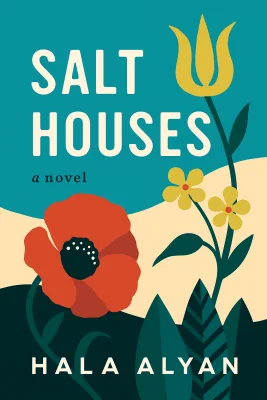
Salt Houses
Categories
Fiction, Audiobook, Historical Fiction, Family, Book Club, Historical, Contemporary, War, Literary Fiction, Middle East
Content Type
Book
Binding
Hardcover
Year
2017
Publisher
Harper
Language
English
ASIN
0544912586
ISBN
0544912586
ISBN13
9780544912588
File Download
PDF | EPUB
Salt Houses Plot Summary
Introduction
# Salt Houses: A Palestinian Family's Journey Through Exile and Memory The coffee grounds swirl in the bottom of the porcelain cup like dark prophecy. Salma's weathered fingers trace the rim as she peers into the dregs, searching for her daughter's future in the bitter residue. What she sees makes her blood freeze—a zebra, clear as daylight, its stripes marking an unsettled life ahead. Houses that will crumble. A family scattered like seeds on hostile ground. Tomorrow, Alia will marry in Nablus, far from the orange groves of Jaffa they fled fifteen years ago. But Salma forces a smile and lies about love and pregnancy, swallowing the truth like poison. The year is 1963, and the Yacoub family has already learned that home burns faster than memory. From their peach-colored villa overlooking the Mediterranean to the borrowed rooms of exile, they carry displacement in their bones like a genetic curse. What Salma cannot know as she sets down the cursed cup is that the zebra's prophecy will chase her children and grandchildren across decades and continents, through wars that will scatter them like ash on the wind. This is the story of a Palestinian family learning that survival requires more than just staying alive—it demands the courage to build home again and again, even as the ground shifts beneath their feet.
Chapter 1: The Prophecy in Coffee Grounds: Origins of Displacement
The gunfire starts before dawn in 1948, shattering the orange-scented air of Jaffa. Three-year-old Alia claps her hands at the explosions while her sister Widad carries her from room to room, making a desperate game of terror. Outside their villa, Israeli tanks roll through streets that have known only Arabic prayers for centuries. The Mediterranean crashes against the shore as if trying to wash away what's coming. Hussam refuses to leave at first, shaking his fist at the sea that has fed his family for generations. His orange groves stretch toward the horizon like a promise he cannot bear to break. But when burning rags arc through the night into his trees, when the sweet smell of charred fruit fills their bedroom, even his stubbornness crumbles. They pack what they can carry and join the exodus, leaving behind walls that held their laughter, their arguments, their dreams of permanence. In Nablus, they inherit a ghost house from other refugees who fled to Jordan. The previous owners left everything—nightgowns in drawers, sugar in jars, mathematical equations scrawled in notebooks like abandoned prayers. Salma throws it all away but cannot exorcise the phantom life that haunts their new rooms. She tears up the marble courtyard with her bare hands, desperate to plant something in soil that has forgotten how to nurture. The first green shoot that breaks through the gray earth makes her weep. She falls to her knees and strokes it like a newborn's head, understanding that some victories are too precious to share. Around her, the family adapts with the terrible resilience of the displaced. Hussam grows bitter, his lungs already beginning their slow rebellion against exile. Only little Alia speaks of Jaffa, remembering pomegranates as big as the moon, and Salma loves her for refusing to forget what they have lost.
Chapter 2: From Jaffa to Nablus: The First Exodus and Lost Paradise
Twenty years later, Alia stands in her own kitchen in Nablus, married to Atef and mother to three children who know Palestine only as a word their parents whisper like a prayer. The house feels smaller each day, filled with the restless energy of young lives pressing against the walls of exile. Her mother Salma has moved to Amman, leaving behind the garden she coaxed from hostile soil, the one victory she could claim in a life of losses. Atef teaches mathematics at the local school, his gentle voice explaining equations to children who dream of futures beyond these hills. In the evenings, he walks the valley between their house and the school, rehearsing lessons and swallowing the words he cannot say about the friends who disappeared, the dreams that died with the Nakba. His students see only their patient teacher, not the young man who once believed education could build bridges across hatred. Their eldest son Mustafa burns with a different fire. At twenty, he walks these same valleys rehearsing speeches that taste of revolution, his footsteps echoing with the rhythm of resistance. The mosque draws him like a magnet, where Imam Bakri weaves sermons that set men's souls ablaze. The imam speaks of land stolen, of fathers who died watching soldiers violate their daughters, of a generation that must choose between surrender and sacrifice. When a rainstorm traps Mustafa and the imam together in the mosque office, Bakri finally tells his story—how Israeli soldiers broke into his family's house by the sea, how they held guns to his father's throat while they violated his golden-haired sister. The words lodge in Mustafa's chest like shrapnel, and that night, as lightning splits the sky over Nablus, he makes his choice. The boy who loved his mother's garden will disappear into the maw of war, leaving only echoes of his voice calling for resistance.
Chapter 3: Revolutionary Dreams: Mustafa's Sacrifice and the Six-Day War
June 1967 finds Alia trapped in Kuwait's blazing heat, visiting her sister Widad while war erupts across the radio waves. She watches the conflict unfold on television in Ghazi's air-conditioned living room, her packed suitcase waiting upright like an eager child for a return to Nablus that will never come. The phone lines ring endlessly, connecting to nothing but static and fear. President Nasser's face fills the screen, drawn and defeated, as he announces the Arab surrender. Israeli soldiers point rifles at truckloads of captured men who look like children without their weapons. Alia searches each face for her brother Mustafa, for her husband Atef, finding only strangers with bowed heads and empty eyes. The heat presses against her like a living thing, stealing her breath while Widad fusses with knitting needles and pretends normalcy can be stitched together with yarn. When Atef finally returns months later, he is a hollow man carrying secrets that bleed through his skin. Alia finds him in the bathtub one night, methodically tearing scabs from his chest, letting blood bloom in the pink water. His body is a map of systematic cruelty—electric burns, cigarette marks, the geography of torture written in scar tissue. She wants to run, to disappear into the desert night, but shame composes her. She moves toward her husband instead, closing the bathroom door behind her. Mustafa never comes home. The news arrives like a bureaucratic afterthought—he died in an Israeli prison, somewhere, somehow, the details lost in the machinery of war. Alia carries his death like a stone in her chest, feeling it shift and settle with each breath. That night, as Atef sleeps his medicated sleep, she walks to the sea and lets the waves crash over her dress, salt mixing with tears until she cannot tell where her grief ends and the ocean begins. Kuwait becomes their accidental home, a desert city blooming with oil money and the dreams of the displaced.
Chapter 4: Kuwait Years: Rebuilding Home on Foreign Soil
Kuwait becomes their refuge by default, a desert city where Palestinian teachers are welcome and the future seems negotiable. Atef finds work at the university while Alia tends their growing family—Riham born in the shadow of war, then Karam, finally Souad arriving like a thunderclap of will and fury. The children speak English and Arabic with equal fluency, their identities as fluid as the heat mirages that dance on Kuwait's highways. In his study, Atef writes letters to the dead. Every morning before dawn, he pulls out a brown-spined book and fills pages with words meant for Mustafa. He tells his vanished friend about Riham's spelling contests, Souad's tantrums, the way Alia moves through their house like a sleepwalker remembering another life. The letters are his confession, his lifeline, his way of keeping the past alive in a country that erases history with each sandstorm. Alia dreams of Amman, of her mother's garden and the cousins who gather for tea and gossip. Every summer she takes the children north, leaving Atef behind with his books and his guilt. In her mother's apartment, she becomes someone else—Aloush, the girl who laughed at school, who danced at weddings, who believed the world would bend to her will. The women tease her about Kuwait's heat, its terrible restaurants, and she joins their laughter while her heart breaks a little more. The children sense their mother's restlessness, her perpetual elsewhere. They orbit around Atef instead, seeking his steady presence, his patient answers to their questions about books and birds and the mathematics of growing up. Only Riham, serious and bookish, seems to understand that their family is built on absence, that the empty chair at every meal belongs to someone they will never meet but can never forget. The house fills with the sound of children learning to be Kuwaiti Palestinians, a hyphenated existence that will follow them across continents.
Chapter 5: Generational Divide: Faith, Rebellion, and Growing Apart
The 1980s bring new tensions to the Yacoub household as the children grow into strangers. Riham wraps herself in faith like armor, rising before dawn for prayer, fasting with the devotion of a mystic. At nineteen, she nearly drowns in the Red Sea during a family trip, pulled from the waves by a stranger while her grandmother whispers prayers of gratitude. The experience deepens her belief that God has plans for her, purposes beyond her understanding. Souad blazes in the opposite direction, all tight jeans and defiant laughter. She stays out past midnight, smokes cigarettes with boys, argues with Alia until their voices shake the walls. At eighteen, she is beautiful and knows it, using her smile like a weapon against anyone who tries to contain her. The sisters exist in parallel universes, one seeking heaven, the other claiming earth as her birthright. When Riham announces her engagement to a widowed doctor twice her age, the family fractures along predictable lines. Atef supports her choice with reluctant respect, understanding that survival sometimes requires compromise. Alia rages about wasted youth and settling for less, seeing in her daughter's decision an echo of her own sacrificed dreams. Souad calls her sister crazy for choosing duty over desire, unable to comprehend faith as a form of freedom. The wedding becomes a study in contrasts—Riham glowing in white silk while Souad scandalizes the guests in a red dress that clings to every curve. As the bride and groom exchange vows, Alia weeps for reasons she cannot name. Perhaps for the daughter she is losing, or the girl she once was, or the dreams that die quietly in the space between what we want and what we accept. The family photographs capture smiles that hide the growing distances between them, the fault lines that will soon crack open under the pressure of history.
Chapter 6: Gulf War Scattering: The Family Dispersed Across Continents
August 1990 shatters their carefully constructed peace like glass hitting concrete. Souad is in Paris, studying art and falling in love with Elie, a Lebanese writer with revolutionary dreams and whiskey breath. She wakes to news reports of tanks rolling through Kuwait City, of palaces burning and airports closing. The phone calls from home grow frantic, then stop altogether, leaving her stranded in a foreign city with nothing but her French vocabulary and her father's stubbornness. Alia and Atef pack what they can carry, joining the exodus to Amman with thousands of other Palestinians learning once again that home is temporary, that safety is an illusion sold by governments that can revoke it without notice. They leave behind twenty-three years of accumulated life—photographs, furniture, the garden where Atef buried his letters to Mustafa. Karam's architectural drawings remain scattered on his desk, blueprints for a future that no longer exists. In Paris, Souad faces an impossible choice between loyalty and love. Return to her family's uncertain exile or marry Elie and claim a European life built on wine and art and the luxury of choosing your own suffering. She thinks of her mother's restless pacing, her father's quiet desperation, the way displacement follows their family like a genetic curse. When Elie proposes in the shadow of Notre Dame, she says yes with the recklessness of youth and the wisdom of the perpetually uprooted. The family scatters like dandelion seeds on hostile wind, each member finding their own patch of foreign soil to take root. Atef and Alia settle into a small apartment in Amman, their dreams downsized to match their circumstances. Karam wins a scholarship to Boston, where he will study architecture and learn to build homes for other people. Riham remains in Amman with her doctor husband, tending his son and her own growing faith. Only Souad chooses love over loyalty, staying in Paris while her family rebuilds their lives without her, the ocean between them growing wider with each passing year.
Chapter 7: Letters to the Dead: Preserving Memory Through Written Words
The letters surface during a Beirut summer when teenage cousins Zain and Linah, bored by another family gathering, explore the storage room of their grandmother's apartment. Hidden in an old botany book, they discover their grandfather's decades-long correspondence with the dead—pages and pages of Arabic script that reveal a man they never knew existed. Atef had been writing to Mustafa, his childhood friend who died in an Israeli prison, pouring out his guilt and grief and love onto paper that no one was meant to read. The letters speak of dreams and nightmares, of the house in Nablus where they grew up, of the morning when everything changed. In one passage, Atef writes of the day Mustafa wanted to flee, suitcase packed, fear finally overcoming pride. Atef had called him a coward, and those words became the last thing he ever said to his friend. The guilt has been eating him alive for forty years, fed by every news report of Palestinian deaths, every photograph of destroyed homes. The grandchildren—Zain, Linah, Manar, and Abdullah—become the keepers of these secrets. They translate the Arabic, piece together the story, understand finally why their grandfather sometimes stares into space with such profound sadness. The letters become their inheritance, more valuable than money or property because they contain the truth of who they are and where they come from, the stories that shaped their parents' silences. But knowledge carries its own weight like stones in deep water. Abdullah, already radicalized by years of witnessing suffering, sees in his grandfather's story confirmation that the world is divided into victims and oppressors, that justice is a luxury the powerful deny the weak. Manar, growing up American, struggles to reconcile the grandfather she knows—gentle, quiet, always offering peppermint candies—with the young man who lost everything and everyone he loved. The letters reveal that memory is not just personal but political, that the stories families tell themselves are often the only things that survive when everything else is destroyed.
Chapter 8: The Next Generation: Identity and Belonging in the Diaspora
Manar arrives in Palestine pregnant and alone, carrying her grandfather's letters like a talisman against the weight of inherited trauma. At twenty-four, she has never seen the land that supposedly defines her, never walked the streets her grandparents fled decades ago. The Israeli security officer at the airport eyes her American passport suspiciously, asks questions about family she barely knows, searches through her belongings until she vomits from morning sickness and fear. She finds Nablus smaller than her imagination painted it, the hills more barren, the house where her great-grandmother once lived now painted blue and occupied by strangers. Standing outside with an old photograph in her hand, she waits for some profound connection to the soil, some ancestral recognition that will make sense of her family's obsession with return. Instead, she feels like a tourist, an interloper in someone else's story, her American accent marking her as foreign in her supposed homeland. The letters that seemed so important in New York feel inadequate here, where real Palestinians live with the daily consequences of the occupation her grandfather escaped. She meets aid workers and activists, drinks tea with families who never left, listens to stories of checkpoints and settlements and children who throw stones at tanks because they have nothing else to throw. Their struggles make her own identity crisis seem trivial, her search for belonging a luxury they cannot afford. In Jaffa, sitting by the Mediterranean where her great-great-grandparents might once have lived, Manar finally understands something her grandfather wrote in his letters: that exile is not just about losing a place but about losing the right to belong anywhere completely. She will return to New York and marry Gabriel, will raise their daughter to be American with Palestinian roots, will build a life from the fragments of other people's memories. The letters remain with her, not as a map back to some imagined homeland but as proof that love persists across time and distance, that the dead continue to speak to those willing to listen.
Summary
The Yacoub family's century-long journey from Jaffa to the far corners of the world maps the Palestinian diaspora in all its complexity and contradiction. Each generation carries the trauma of displacement differently—Salma's generation mourns what was lost, Alia's generation rages against what was stolen, and their children adapt with the fluid resilience of those born into exile. They become doctors and teachers, artists and architects, building new lives from the fragments of old ones while carrying the salt of their ancestors' tears. Yet for all their success and assimilation, they remain haunted by the zebra in Salma's coffee cup, that ancient prophecy of unsettled lives and crumbling houses. Home becomes not a place but a feeling, carried in the taste of za'atar, the sound of Arabic prayers, the stories passed down like heirlooms from mother to daughter, father to son. They learn that identity is not geography but memory, that belonging is not about where you live but who you love and what you choose to remember. In the end, their salt houses may crumble, but the salt itself endures, seasoning new dishes, preserving new stories, ensuring that nothing beloved is ever truly lost to the tides of history.
Best Quote
“What is a life? A series of yeses and noes, photographs you shove in a drawer somewhere, loves you think will save you but that cannot. Continuing to move, enduring, not stopping even when there is pain. That's all life is, he wants to tell her. It's continuing.” ― Hala Alyan, Salt Houses
Review Summary
Strengths: The review highlights the author's ability to vividly depict the emotional and physical challenges of displacement, offering a rich and colorful portrayal of a Palestinian family's saga across generations. The narrative effectively intertwines personal and historical events, providing insight into the cruelty of war and the resilience of the human spirit. The characters, particularly Alia's husband Atef, are well-developed and evoke strong emotional connections with the reader. Overall: The review conveys a deeply positive sentiment, praising the book's insightful and heartbreaking depiction of displacement and war. The reader highly recommends the book, awarding it 4.5 stars, and appreciates the blend of personal and historical narratives, as well as the evocative descriptions of unfamiliar settings.
About Author

Hala Alyan
Alyan reframes narratives of displacement and identity by delving into the intricate experiences of diaspora communities, especially within the Palestinian context. Her work intricately connects personal and communal histories, creating a profound exploration of belonging and trauma. With a strong academic background in psychology, having earned a BA from the American University of Beirut, an MA from Columbia University, and a PsyD from Rutgers University, Alyan effectively weaves psychological depth into her literary work. This expertise enriches her narratives, allowing her to explore the emotional complexities of her characters with authenticity and nuance.\n\nIn her novels, "Salt Houses" and "The Arsonists' City," Alyan considers the multifaceted nature of identity and the lasting impacts of displacement on families. "Salt Houses," in particular, has been recognized with awards such as the Dayton Literary Peace Prize and the Arab American Book Award, underscoring its impact and resonance. Meanwhile, her poetry collections like "Atrium" and "Hijra" further highlight her ability to capture the nuances of cultural and emotional landscapes, with "Atrium" winning the Arab American Book Award in Poetry. Her diverse literary output benefits readers seeking to understand the intricate interplay between personal identity and larger social narratives.\n\nAlyan's contributions extend beyond literature, as she works as a clinical psychologist, specializing in trauma and addiction. This dual focus on writing and clinical practice allows her to address cross-cultural issues with a depth that benefits both her literary audience and the communities she serves in a therapeutic capacity. By navigating themes of psychological and emotional complexity, Alyan's work provides readers with an insightful lens into the experiences of displacement and identity, while also engaging with broader social and cultural conversations.
Read moreDownload PDF & EPUB
To save this Black List summary for later, download the free PDF and EPUB. You can print it out, or read offline at your convenience.
Salt Houses
by Hala Alyan
