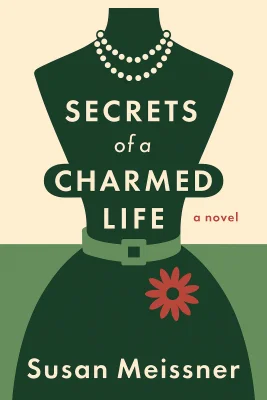
Secrets of a Charmed Life
Categories
Fiction, Audiobook, Historical Fiction, Adult, Book Club, Historical, British Literature, World War II, Adult Fiction, War
Content Type
Book
Binding
Paperback
Year
2015
Publisher
NAL
Language
English
File Download
PDF | EPUB
Secrets of a Charmed Life Plot Summary
Introduction
# When Dreams Became Ashes: A War-Torn Sister's Journey Home London, September 1940. Fifteen-year-old Emmy Downtree stands before the shattered window of Primrose Bridal, clutching her sketches of wedding gowns like sacred relics. The glass sparkles around a pristine dress like fallen stars, and Emmy sees not destruction but destiny. She has spent years drawing these gowns in secret, each line a prayer for escape from her mother's bitter silences and their cramped Whitechapel flat. When Mrs. Crofton offers her a chance to meet Graham Dabney, a renowned costume designer who might take her as apprentice, Emmy makes a choice that will echo through the flames of the Blitz. But dreams collide with history when the evacuation order comes. Emmy and seven-year-old Julia are swept away to the golden countryside of the Cotswolds, where kind Charlotte Havelock offers them sanctuary at Thistle House. Yet Emmy's heart remains tethered to London and the opportunity that could transform her from a seamstress's daughter into an artist. When she returns to the city with Julia in tow, neither sister knows they are walking into the night that will tear them apart forever, forcing them to rebuild themselves from whatever fragments survive the fire.
Chapter 1: The Seamstress's Dream: Emmy's Fatal Choice
The letter arrives at Thistle House like lightning splitting Emmy's carefully constructed patience. Mrs. Crofton has arranged the meeting Emmy has dreamed of her entire life. Graham Dabney wants to see her sketches, wants to consider her for apprenticeship in Edinburgh. The appointment is set for September 7th at four o'clock sharp. Emmy packs her precious drawings into the wooden box she calls her "brides box," each sketch wrapped in tissue paper thin as hope. Charlotte Havelock finds her in the golden morning light, her face tight with worry. The Germans are massing across the Channel, everyone knows what's coming, but Emmy is seventeen in her heart though only fifteen by the calendar. She has watched her mother Annie scrub other people's floors until her hands cracked and bled, has seen the defeat settle into those tired eyes like sediment in still water. Julia watches from the doorway, her blonde hair catching the light like spun gold. At seven, she possesses an unsettling wisdom about the adult world, perhaps because she learned early that love could be withdrawn without warning. Their father Neville vanished into the war months ago, leaving behind only promises that grew thinner with each unanswered letter. "Take me with you," Julia whispers, and Emmy's resolve crumbles. She had planned to slip away alone, to spare her sister the disappointment if her dreams shattered in London's harsh light. But Julia's eyes hold a desperation Emmy recognizes, the terror of being left behind by everyone who matters. The train carries them through countryside that seems to hold its breath, familiar fields giving way to the smoke-stained sprawl of a city preparing for war. The meeting with Graham Dabney unfolds like a scene from Emmy's most fevered dreams. His Belgravia townhouse speaks of refined taste and artistic success, everything she has imagined for herself. Mrs. Crofton introduces her as a promising young designer, and Dabney examines her sketches with the careful attention of a jeweler appraising diamonds. His fingers hover over a drawing of a gown with illusion sleeves, and Emmy's heart hammers against her ribs like a caged bird. But when she opens her satchel to show him more drawings, she finds only Julia's fairy tale book. Her sister has switched the contents, terrified that Emmy will disappear forever if she succeeds. The substitution feels like a physical blow, all her carefully laid plans crumbling in an instant. As Emmy races back through London's darkening streets, the air raid sirens begin their mournful wail, and she realizes with crushing clarity that her choices have set in motion a chain of events that will scatter her family to the four winds.
Chapter 2: Night of Fire: When London Burned and Sisters Were Lost
The sirens cut through London like a blade, sending people scurrying for shelter like insects before a storm. Emmy runs through streets that taste of fear and diesel fumes, her mind reeling from the disaster at the Dabney house. She has promised to return Monday with her mother and the sketches, but first she must reach Julia and somehow salvage this catastrophe. Then the sky fills with the drone of engines, more planes than anyone has ever seen, a black sheet of metal and malice streaming across the Channel. The first bombs fall on the docks with sounds like the world cracking open. Emmy is thrown to the ground by the concussion, her head striking brick, consciousness fleeing as London begins its transformation into hell. She wakes in the basement shelter of St. Paul's Cathedral, surrounded by strangers who have become family in the democracy of terror. A kind woman tends the gash on her forehead while outside the city burns with fires that will rage for days. For seven hours, the Luftwaffe pounds London's East End, turning warehouses into furnaces and homes into rubble. Emmy huddles in the darkness, clutching Julia's fairy tale book and praying to gods she's not sure exist. Dawn reveals a London transformed beyond recognition. The sky glows orange with fires that refuse to die, and the air tastes of ash and destruction. Emmy limps through streets choked with debris, past rescue workers digging through ruins and bodies laid out like broken dolls. The closer she gets to home, the more her heart pounds with dread that feels like ice in her veins. The flat still stands, but its windows are blown out and debris litters every room like the remnants of someone else's life. Emmy calls for Julia and her mother until her voice cracks, but only silence answers. The neighbors have fled, their homes damaged or destroyed. When her mother finally returns, Annie Downtree's face tells the story before words can form. Annie spent the night at a hotel in Covent Garden, a hotel that took a direct hit, killing everyone in the basement shelter. But she is not dead, only hollow-eyed with a different kind of loss. Julia has vanished without a trace, swallowed by London's chaos as completely as if the earth had opened and consumed her whole. Emmy stares at her mother's face and realizes that while she was chasing dreams in Belgravia, her sister disappeared into the fire that has remade their world.
Chapter 3: Becoming Isabel: A New Identity Born from Ashes
Emmy stares at the casualty list until the letters blur together, but one name remains stark and final: Anne Louise Downtree. Her mother is dead, buried in a mass grave with other unclaimed victims of the Blitz. The woman who returned to their flat was already dying from injuries sustained in the hotel collapse, clinging to life just long enough to tell Emmy that Julia was gone. The bridal shop becomes Emmy's sanctuary and prison. She sleeps under the sewing machine, wrapped in wedding dresses that smell of smoke and dreams deferred. The gowns that once represented hope now serve as armor against the bombs that fall nightly, their silk and satin offering fragile protection against a world gone mad. Mrs. Crofton's personal papers lie scattered on her desk like breadcrumbs leading to salvation. Emmy studies the documents with the calculating eye of someone who has learned that survival requires flexibility with truth. Isabel Crofton, Mrs. Crofton's daughter, died at age six from scarlet fever. She would have been eighteen this year, the perfect age for someone who needs to disappear into plain sight. The transformation happens gradually, like a snake shedding skin. Emmy practices Isabel's signature until her hand moves without conscious thought. She memorizes the details of Mrs. Crofton's life, weaving them into a new identity that feels more real than her abandoned childhood. Isabel Crofton has no missing sister, no dead mother, no dreams of wedding dress design. She has only the burning need to find Julia Downtree, a half-sister whose disappearance has become her obsession. The Women's Voluntary Service welcomes Isabel with the desperate gratitude of an organization overwhelmed by tragedy. Her passion for finding lost children seems admirable rather than suspicious, and her willingness to work endless hours marks her as dedicated rather than someone with nowhere else to go. She haunts hospitals and shelters, questioning officials and searching faces with the intensity of someone who knows that failure means more than professional disappointment. At night, wrapped in her cocoon of wedding dresses while bombs fall like deadly rain, Isabel allows herself moments of grief for Emmy Downtree. That girl died in the rubble of September 7th, leaving behind only this harder creature who understands that love sometimes requires the complete destruction of the self. The sketches in the brides box mock her now, reminders of innocence that feels as distant as childhood itself.
Chapter 4: The Endless Search: Hunting Ghosts in War's Aftermath
The search consumes Isabel like fever, driving her through London's wounded streets with relentless purpose. She memorizes the faces of every orphaned child brought to the WVS offices, studies casualty lists with the dedication of a scholar, and haunts the places where lost children might surface. Julia's name appears on no official records, not among the dead, not among the rescued, not among the evacuated. The journalists at the Savoy Hotel become her unlikely allies, these men who document London's agony for audiences safe across oceans. Isabel cultivates them with single-minded focus, understanding that information is currency in wartime. She trades her passion for their attention, becoming known as "Isabel the Crusader" among reporters who find her dedication both admirable and slightly unnerving. Mac MacFarland enters her life like sunlight through smoke, his American optimism a stark contrast to the grim determination that has become Isabel's default expression. He offers her coffee and pastries, small kindnesses that feel revolutionary after months of surviving on scraps and stubbornness. When she finally tells him about Julia, carefully edited to fit Isabel's story, his genuine concern nearly breaks through the walls she has built around her heart. The revelation comes like lightning striking twice. Perhaps Julia found her way back to Charlotte Havelock, back to the safety of Thistle House and the golden countryside that seems untouched by war's madness. Isabel races through the bureaucratic maze of evacuation records, her heart pounding with hope that feels dangerous after so much disappointment. But the records tell a different story. Charlotte reported the girls missing on September 7th, but there is no notation of their return. The billeting official in Moreton-in-Marsh confirms what Isabel fears most. Julia Downtree never made it back to the Cotswolds. She vanished into London's chaos as completely as if she had never existed at all. Standing in the WVS office with useless paperwork scattered before her, Isabel feels the last of Emmy's hope drain away like water through broken stone. Julia is not safe in Charlotte's care, not tucked into one of those four-poster beds with fairy tale books and polka-dot umbrellas. She is somewhere in London's ruins, alive or dead, lost in a city that has forgotten how to protect its children. The search must continue, but now Isabel understands she is not looking for reunion but for closure, not for salvation but for the simple knowledge of what became of the little girl who loved fairy tale endings.
Chapter 5: Parallel Lives: Two Sisters, Two Worlds Apart
Years pass like pages torn from a book. The war ends, but Isabel remains, too afraid to reclaim a life that brought her nothing but loss. She marries Mac MacFarland, follows him to Minnesota, carries her secrets across an ocean like stones in her chest. The woman who paints cheerful Umbrella Girls for children's books bears no resemblance to the girl who once sketched wedding gowns with desperate hope. But Julia survived. While Isabel searched London's ruins, her sister was already crossing the Atlantic, rescued by their neighbor Thea and sent to grandparents she never knew existed. Professor and Mrs. Waverly in Connecticut welcomed this silent, traumatized child who counted everything, steps and tiles and books, as if by cataloguing her new world she could somehow control it. Julia stopped speaking for months at a time, her voice locked away with her memories of home. The war years in America blurred together in silence and counting, her grandparents kind but bewildered by this child thrust into their lives. They found her therapists and tutors, gave her love and stability, but they couldn't give her back the sister she had lost. When the war ended and they returned to England, Julia was twelve years old and spoke with an American accent that marked her as different. She struggled through adolescence haunted by guilt, convinced that her moment of childish selfishness had cost Emmy everything. The fairy tale book she had substituted for the brides box became a symbol of her shame, a reminder of the choice that tore their family apart. Both sisters carried the weight of that September night, each believing herself responsible for the other's fate. Isabel painted her Umbrella Girls with fierce determination, as if bright colors could somehow balance the darkness she had witnessed. Julia wrote letters to a sister she thought was dead, filling journals with words that would never be read, apologies that would never be heard. Neither knew that the other had survived, that love had endured even when its object seemed lost forever. They lived parallel lives separated by an ocean and a lie, both shaped by the same tragedy, both carrying guilt that wasn't entirely theirs to bear. The war had taken everything from them, but it had also given them something unexpected: the knowledge that identity is not fixed but fluid, that survival sometimes requires becoming someone entirely new.
Chapter 6: The Reunion: When the Past Reclaims the Present
The letter arrives in 1958 like a message from beyond the grave. Charlotte Havelock has died, leaving Thistle House to the woman she knew as Emmy Downtree. But more shocking than the inheritance is what Isabel finds in Charlotte's bedside table: another letter, this one from a young woman named Julia Waverly, written to a sister she believes is dead. Julia's words leap from the page with desperate hope and crushing guilt. She has spent years searching every bridal shop in London, hoping to find gowns that bear her sister's unmistakable touch. She has written journal after journal, letters to Emmy that chronicle her journey from traumatized child to accomplished woman. The fairy tale book sits on her mantelpiece like a monument to shame, the symbol of the choice that she believes destroyed everything. Isabel reads with trembling hands, recognizing in Julia's words the same self-recrimination that drove her own transformation. Both sisters have spent decades punishing themselves for choices made in desperation, neither knowing that the other survived the night that tore them apart. The reunion, when it finally comes, feels like waking from a nightmare that has lasted eighteen years. Julia is tall and elegant now, her face bearing traces of the child Isabel remembered but transformed by years of experience. She has married Simon, a gentle accountant who understands her silences, and built a life that honors both her losses and her hopes. When she sees Isabel, really sees her, the years collapse like paper walls. The brides box sits between them on Charlotte's kitchen table, its contents faded but intact. Julia has carried it across oceans and decades, preserving Emmy's dreams even when she believed Emmy was gone. The sketches look different now, artifacts from another life, but they still shimmer with possibility. Isabel touches the drawings with fingers that remember every line, every hope they once represented. They have found each other again, but they are not the same people who were separated by war. Emmy Downtree and little Julia are gone, replaced by women who have learned that love can survive even when its object is lost, that hope can endure even when its original form has been burned away. The circle broken by war has finally been made whole, but it is a different circle now, tempered by loss and strengthened by survival.
Chapter 7: Forgiveness and Redemption: Finding Peace in Truth
Isabel MacFarland lived to be ninety-three, long enough to see the world transform beyond recognition, long enough to understand that the dreams of youth are often less important than the love we discover along the way. The wedding gowns she sketched as Emmy Downtree never made her famous, but the Umbrella Girls she painted as Isabel MacFarland brought joy to thousands of children who needed bright colors in dark times. She and Julia had twenty years together before cancer claimed her sister, twenty years to build the relationship that war had stolen from them. They were different people than they would have been if September 7th had never happened, but they were still sisters, still bound by love that had survived separation and time itself. Julia's journal became Isabel's most treasured possession, proof that love had endured even in the darkness. The story Isabel finally told to young historian Kendra was not just her own but a testament to all the ordinary people who had their lives shattered by war and somehow found the strength to rebuild. Emmy and Isabel, Julia and Annie, even the grandparents who saved a silent child, all of them were casualties of forces beyond their control, all of them made choices that seemed right at the time but carried consequences they could never have foreseen. In the end, Isabel understood what had taken her a lifetime to learn. Forgiveness was not about forgetting the past but about refusing to let it define the future. She had spent decades punishing herself for choices made in desperation, never realizing that the war itself was the true destroyer of dreams. Her mother Annie had made the best choices she could with the options available. Julia had acted out of love and fear, not malice. Even Isabel's desperate flight back to London had been motivated by hope, not selfishness. The secrets of a charmed life, Isabel finally realized, were not secrets at all. There was no magic formula for happiness, no guaranteed path to success. There was only the simple truth that we must forgive ourselves for being human, for making choices based on incomplete information, for doing our best in circumstances beyond our control. The real charm lay not in getting everything we wanted but in learning to love what we had, in finding meaning in the connections we made and the lives we touched along the way.
Summary
As Isabel sat in the garden of Thistle House on her final birthday, surrounded by the family she had built from the fragments of her broken past, she felt the presence of all those she had loved and lost. Annie was there in the strength that had carried her through the darkest times. Julia lived on in every Umbrella Girl painting, in every story of survival and hope. Even the dreams of Emmy Downtree had found their fulfillment, not in the wedding gowns that were never made but in the life that was fully lived despite everything that tried to destroy it. The war had taken everything from two sisters and given them back to each other transformed. They learned that identity is not fixed but fluid, that love can endure even when its object seems lost forever, that hope can survive even when its original form has been burned away. In the ashes of their childhood dreams, they discovered something more valuable than success or fame: the knowledge that we are not defined by what happens to us but by how we choose to rebuild ourselves from whatever fragments remain. The brides box sat empty now, its contents transformed into something far more precious than sketches, a testament to the truth that love, once kindled, can never truly be extinguished.
Best Quote
“Fear is worse than pain, I think. Pain is centralized, identifiable, and wanes as you wait. Fear is a heaviness you can’t wriggle out from under. You must simply find the will to stand with it and start walking. Fear does not start to fade until you take the step that you think you can’t.” ― Susan Meissner, Secrets of a Charmed Life
Review Summary
Strengths: The book captivates readers with its engaging storytelling, particularly in its depiction of the London Blitz, and successfully develops characters like Emmy and Julia. The reviewer highly recommends the book despite its flaws. Weaknesses: The narrative loses momentum in the final section presented as journal entries, which detracts from the climactic experience. The portrayal of characters and historical context is criticized for being unrealistic, likened to a modern American teenager's perspective. The character Emmy is particularly disliked for her unrealistic ambitions and behavior during wartime. Overall: The reader expresses mixed feelings, appreciating the book's initial impact but disappointed by its conclusion and character portrayal. Despite these criticisms, the book is still recommended for its compelling narrative.
About Author

Susan Meissner
Meissner investigates the intricate tapestry of human experiences through her deeply researched historical fiction. Her novels, translated into eighteen languages, often intertwine past and present narratives, aiming to illuminate the enduring nature of love and resilience. By delving into diverse historical settings, Meissner connects readers to the emotional truths within these stories, thereby fostering a deeper understanding of the human condition. Her book "The Last Year of the War," for example, situates personal transformation against the backdrop of World War II, highlighting the universal struggle for identity amidst chaos.\n\nIn her writing, Meissner skillfully balances meticulous historical detail with engaging storytelling, which has earned her recognition on numerous prestigious lists, including the Goodreads Readers’ Choice awards and Publishers Weekly’s annual roster of 100 best books. This attention to authenticity and narrative depth ensures that her work resonates well with book clubs and literary enthusiasts. Readers are drawn not only to the historical richness but also to the relatable human emotions depicted in her stories. Beyond the page, Meissner extends her passion for storytelling by conducting writing workshops, further enriching her audience's appreciation for crafted narratives. Her ability to articulate complex emotions in her books makes them a valuable addition to any reader's library and a captivating subject for literary discussions.
Read moreDownload PDF & EPUB
To save this Black List summary for later, download the free PDF and EPUB. You can print it out, or read offline at your convenience.
Secrets of a Charmed Life
by Susan Meissner
