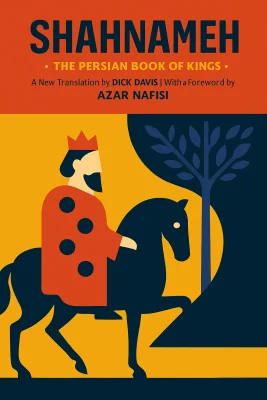
Shahnameh
The Persian Book of Kings
Categories
History, Classics, Poetry, Literature, Mythology, Historical, Epic, Iran, Medieval, Middle East
Content Type
Book
Binding
Hardcover
Year
2005
Publisher
Viking
Language
English
ASIN
0670034851
ISBN
0670034851
ISBN13
9780670034857
File Download
PDF | EPUB
Shahnameh Plot Summary
Introduction
# The Eternal Champions: Heroes, Kings, and Destiny in Ancient Persia Blood pools beneath the dying prince's armor as his father kneels in the dust, tears cutting tracks through the grime of battle. Rostam the Invincible, champion of champions, has just driven his dagger through the heart of his own son—a boy he never knew existed, a warrior whose strength matched his own. The tamarisk wood pierces flesh like divine judgment, and with Sohrab's final breath, the golden age of heroes begins its inexorable slide toward darkness. This is the world of the Shahnameh, where kings rise from divine light and fall to human folly, where champions stride across demon-haunted landscapes with the weight of destiny on their shoulders. From the first king Kayumars, who ruled over beasts and men with leopard skin as his crown, to the final transformations of empire under foreign conquest, these tales span a thousand years of glory and grief. Here, every throne is built on bones, every crown purchased with blood, and every hero must eventually face the one enemy that conquers all—the turning wheel of fate itself.
Chapter 1: The Dawn of Heroes: From First Kings to Legendary Champions
Light blazed from the mountain peaks as Kayumars descended to claim dominion over the world. The first king wore leopard skin like royal robes, his face shining with divine glory that made wild beasts bow and the earth itself pulse with righteousness. But even in this golden dawn, shadows stirred in the depths. The black demon came like a plague wind, its claws finding the throat of Prince Siamak. Kayumars wept until the mountains echoed his grief, but from tragedy came vengeance. Young Hushang led lions and leopards against the demon host, his grandfather's mace crushing skulls like eggshells. When stone struck flint in the heat of battle, sparks flew—humanity's first gift of fire. Generations passed like seasons. Tahmures bound demons with spells, forcing them to teach the arts of writing. Jamshid raised civilization to impossible heights, separating mankind into castes, building palaces that scraped the belly of heaven. For seven hundred years he reigned in glory, until pride poisoned his heart like wine turned to vinegar. "I know of no one in the world who is my equal," Jamshid declared, and with those words, the divine light fled from his face. Into this darkness slithered Zahhak, the Arab king whose shoulders sprouted serpents that fed on human brains. For a thousand years this demon-king ruled through terror, until a blacksmith named Kaveh raised his leather apron as a banner of rebellion. Feraydun's mace, crowned with an ox's head, shattered Zahhak's power like thunder splitting stone. The demon-king was chained within Mount Damavand, there to writhe until the end of days. But victory's wine turned bitter when Feraydun divided the world among his three sons. Jealousy bloomed like a poisonous flower. In a pavilion perfumed with treachery, Tur struck down his brother Iraj, splitting him from crown to heel with a golden dagger. The royal seed endured. From Iraj's blood came Manuchehr, burning with vengeance like a forge-fire. His sword sang justice as it severed the heads of his father's murderers, watering the earth with the blood of kinslayers.
Chapter 2: The Simorgh's Blessing: Rostam's Rise and Divine Protection
In the fortress of Sistan, Sam the hero gazed upon his newborn son and despaired. The child was perfect save for hair white as mountain snow. Shame drove the great warrior to abandon his infant on the peaks of Alborz, leaving him for eagles and wolves. But the Simorgh, that legendary bird whose nest crowned the world's highest crag, looked down with eyes older than time itself. She saw the crying child among the thorns and felt her heart stir with maternal fire. Instead of feeding him to her young, she raised him as her own, naming him Zal for his silver hair. Years passed in the high places. The boy grew tall and strong on the choicest game, learning the language of wind and stone. When Sam's dreams finally drove him to reclaim his abandoned son, the Simorgh spoke words that rang like prophecy: "This child will father a hero whose name will never die." Zal descended to claim his birthright, but his greatest trial lay ahead. In Kabul, he glimpsed Rudabeh, daughter of Mehrab, whose beauty could stop the sun in its course. Their love defied kingdoms and bloodlines—she was descended from the demon-king Zahhak himself. When their time came, Rudabeh's labor threatened to kill both mother and child. Only the Simorgh's magic could save them. The great bird's talons cut the child from his mother's womb like a sword from its sheath. They named him Rostam, and the earth trembled at his first cry. The hero's path began with choosing a horse—Rakhsh, rose-colored as dawn, with strength to match mountains and speed to outrun wind. Seven trials awaited in the demon-haunted desert of Mazandaran. A lion stalked his camp by night, only to die beneath Rakhsh's iron hooves. Thirst nearly claimed the hero until a ram led him to hidden springs. A dragon emerged from darkness, breathing liquid fire, but Rostam's sword found its heart. At last came the White Demon, massive as a mountain, dwelling in a pit that yawned like hell's mouth. Their battle shook the earth, but Rostam tore out the monster's heart and liver, using demon blood to restore sight to the blinded King Kavus.
Chapter 3: Blood and Honor: The Tragic Duel Between Father and Son
In the distant city of Samangan, Princess Tahmineh gazed at stars and dreamed of heroes. When Rostam came seeking his stolen horse, she saw in him the answer to every maiden's prayer. Their love burned bright as a comet in the darkness of a single night. From their union came Sohrab, a son whose very birth shook fate's foundations. The boy grew like a young lion, his strength doubling with each season. By ten, no warrior could match him. By fifteen, he towered over grown men like a cypress among reeds. When his mother revealed the secret she had guarded—"You are Rostam's son"—the young warrior's heart blazed with ambition. "I will gather an army and march on Iran," Sohrab declared. "I will cast down Kay Kavus and place my father on the throne." His words reached Afrasyab, king of Turan, who smiled like a wolf scenting prey. The Turkish king sent twelve thousand warriors under Sohrab's banner, but his secret orders were dark as midnight: "Let father and son meet in battle, neither knowing the other." Sohrab's army swept toward the White Fortress like wildfire. The young hero's lance pierced armor and flesh like a needle through silk. When the fortress fell, one defender fought with lioness courage—Gordafarid, daughter of Gazhdaham, who donned male armor and challenged Sohrab to single combat. Her arrows sang through air, her sword rang against his lance, until he caught her in his lariat and saw her true face revealed. News reached Kay Kavus like thunder in clear sky: a new champion had risen in the east, young as spring but terrible as winter's storm. "Send for Rostam," the king commanded. "Only the world's greatest hero can face this threat." But when Rostam arrived, the king's rage boiled over like wine in a cracked cup. "You dare delay when Iran faces destruction? Hang him alive!" Rostam's fury answered like lightning meeting lightning. "I am slave to none but God alone. My helmet is my crown, Rakhsh is my throne!" Only desperate pleas from the nobles prevented the kingdom from tearing itself apart.
Chapter 4: Love Across Battle Lines: Romance and War in Enemy Lands
The final confrontation stretched across three days, each more terrible than the last. Father and son met like colliding mountains, their weapons ringing like thunder, their horses dancing on eternity's edge. Neither could claim victory, and they parted with mutual respect burning in their hearts. On the second day, Sohrab's youth matched Rostam's experience, his speed countered the champion's power. Again they fought to a draw, but suspicion began gnawing at Rostam's mind. This boy fought like one of his own blood, moved with the grace of Sam's house. The third day brought treachery. Rostam invoked God's name and found strength beyond mortal limits. His dagger found its mark beneath Sohrab's armor, piercing the young warrior's side like a key turning in fate's lock. As life ebbed from the boy's eyes, he whispered words that would haunt Rostam forever: "My father Rostam will avenge my death." The champion's world shattered like glass. He tore open the boy's armor and found there his own seal, the token he had given Tahmineh years ago. The truth struck him with more force than any weapon ever could—he had killed his own son, the heir he had never known, the future he had destroyed with his own hands. Rostam's grief shook the earth and darkened the sky. He carried Sohrab's body back to Zabulistan, where Zal wept to see his grandson's face. They built a tomb of marble and gold, but no monument could contain the magnitude of this loss. In the palace gardens of Turan, Princess Manizheh first glimpsed the face that would damn her soul. Bizhan lay sleeping beneath a cypress tree, his Persian features noble even in repose. She was Afrasyab's daughter, raised in luxury behind silk curtains, yet when she saw this enemy prince, all thoughts of duty crumbled like sand. For three days they lived in stolen paradise, drinking wine that tasted of starlight, making love while musicians played behind silk screens. On the fourth day, Manizheh's servants drugged Bizhan's wine. As he slumped unconscious, she had him carried to her father's palace. Love had made her mad, and madness had made her bold.
Chapter 5: The Weight of Crowns: Kings, Champions, and the Burden of Power
Afrasyab's rage shook his palace foundations when he learned of his daughter's betrayal. The Turkish king was a man who had bathed in enemy blood, who had made widows of a thousand Persian women. Yet this insult cut deeper than any sword—his own daughter had taken an enemy to her bed. Piran, wisest of the Turkish nobles, fell to his knees before the throne. This grizzled veteran had served three kings and seen dynasties rise and fall. "Great king, remember what came of Seyavash's death. Do you wish to see Rostam's sword drinking Turkish blood again?" Afrasyab's fury found crueler outlet. Bizhan was dragged to a pit deep as a well, loaded with chains heavy enough to bind an elephant. They lowered him head-down into darkness and sealed the opening with a stone once hurled by demons. Above ground, Manizheh was stripped of royal robes and cast out to wander as a beggar. Each day she scratched at earth around the stone until her fingers bled, creating a gap just wide enough to pass scraps of bread. Each night she listened to Bizhan's voice growing weaker, his spirit slowly crushed by iron and stone. Love had brought them together, but only death seemed likely to part them. In Kay Khosrow's court, Giv wept tears of blood for his lost son. Seven years had passed since Bizhan vanished, seven years of searching every road. The king took pity and summoned the world-revealing cup, that mystical chalice showing all things hidden beneath heaven's dome. In its crystal depths, Khosrow saw Bizhan hanging in chains, saw Manizheh keeping her lonely vigil. "Only Rostam can accomplish this rescue," the king declared. When the summons reached him, Rostam did not hesitate. Disguised as merchants, he and seven Persian heroes entered Turan with a caravan of jewels and silk. Their true wealth lay hidden—swords sharp enough to split mountains, armor blessed by ancient kings, hearts burning with righteous fury. The rescue came at midnight. Rostam grasped the demon-stone with both hands and hurled it into the forest like a child's toy. From the pit's depths came a voice weak as autumn wind—Bizhan, more dead than alive after seven years of torment. They pulled him from that living grave, his body wasted to skin and bone, his chains eating into flesh like hungry serpents.
Chapter 6: Twilight of Legends: The Passing of the Heroic Age
The wind howled across battlefields where Seyavash's blood had soaked into earth, crying for vengeance that would shake two empires' foundations. In Turan's palace, young Kay Khosrow—grandson of the tyrant Afrasyab who had murdered his father—prepared to claim his birthright through fire and sword. Kay Khosrow was no ordinary prince. Born of Persian royal blood through his father and Turanian nobility through his mother, he carried within him the divine farr that marked true kings. When he finally escaped Turan's court and reached Iran, aging King Kavus recognized in him destiny's instrument. The war that followed consumed both empires like wildfire. Kay Khosrow led his armies across the Oxus River, where waters ran red with countless battles' blood. At Golzaryun, earth trembled as two armies clashed like colliding mountains. The young king fought with divine justice's fury, his sword cutting through enemy ranks as lightning splits sky. When dust settled, forty thousand of Afrasyab's finest warriors lay dead. Years passed in pursuit of the fugitive king. When at last a hermit captured Afrasyab by a remote lake, the moment of reckoning arrived. Kay Khosrow's sword, guided by divine justice, severed his grandfather's head in a single stroke. The blood of Seyavash was avenged, but victory brought no peace to the king's troubled soul. In the years that followed, Kay Khosrow ruled with wisdom and justice, but his heart grew heavy with power's weight. He had seen too much of war's cruelty, had wielded too much authority over life and death. The throne that had once seemed his destiny now felt like a golden cage. One winter morning, Kay Khosrow gathered his closest companions and led them into the mountains. As snow began falling like a white shroud, the king simply vanished, leaving only footprints in the drifts. In the wake of Kay Khosrow's mysterious departure, a new dynasty rose. King Goshtasp ruled from his throne, but his greatest treasure was his son Esfandyar—a prince of such valor that his name was whispered with awe across the known world. But Goshtasp feared his son's growing power. When courtiers whispered that Esfandyar deserved the crown more than his aging father, the king's paranoia bloomed like a poisonous flower.
Chapter 7: Exile and Return: The Final Transformations of Empire
Goshtasp devised a task that would either humble his son or destroy him: Esfandyar must travel to distant Sistan and bring back the legendary hero Rostam in chains. The two greatest warriors in the world faced each other across a field of honor, each knowing only one would leave alive. Esfandyar fought with youth's fury and righteousness, his armor blessed by holy fire and impervious to mortal weapons. Rostam battled with ages' wisdom and a cornered lion's desperate strength. Their combat shook earth itself, but neither could gain advantage. In desperation, Rostam sought aid from the Simorgh. The mythical creature revealed a terrible secret: only an arrow made from tamarisk wood could pierce Esfandyar's blessed armor, but whoever used such a weapon would be cursed by fate itself. Rostam accepted the burden, knowing his own doom was victory's price. The arrow found its mark in Esfandyar's eyes, the one place where divine protection was weakest. As the young prince lay dying, he spoke words of forgiveness and entrusted his son Bahman to Rostam's care. The old hero wept bitter tears, knowing he had killed not just a man, but Iran's future itself. Years later, fate claimed its due. Rostam's half-brother Shaghad, consumed by jealousy and ambition, lured the aging hero into a trap. In Kabol's hunting grounds, concealed pits filled with spears awaited the great champion. When Rakhsh stepped into the snare, both horse and rider were pierced by countless blades. Even as he died, Rostam's final arrow found Shaghad's treacherous heart. The death of Rostam sent shockwaves across the world. The hero who had been Persia's pillar for six centuries was gone, leaving only legends and betrayal's bitter taste. From the ashes of the old order, new powers began stirring. Bahman, son of the slain Esfandyar, ascended to the throne with vengeance burning in his heart. He led armies against Sistan, destroying Rostam's family and scattering their legacy to the winds. In a palace chamber, Queen Homay gave birth to a son whose destiny would reshape the world. Fearing for the child's safety in a court riven by intrigue, she placed the infant in a waterproof chest and set him adrift on the Euphrates River. The current carried the royal child to where a humble fuller discovered the precious cargo. They raised the boy as their own, naming him Darab for the waters that had brought him to them.
Summary
In this sweeping epic of ancient Persia, we witness fate's wheel turning inexorably through the lives of legendary kings and heroes. From Kayumars's divine light to Rostam's tragic end, each generation pays the price of glory in blood and tears. The greatest champions rise like stars in the night sky, blazing with supernatural strength and divine purpose, only to fall when pride, duty, or destiny demands their sacrifice. The cycle never breaks—only transforms. Kay Khosrow's righteous quest for vengeance elevates him to wise ruler, yet the burden of power drives him to mysterious disappearance. Rostam's invincible strength cannot save him from killing his own son or dying by treachery's hand. Esfandyar's divine protection crumbles before a father's impossible commands and an old hero's desperate gambit. Each death waters the ground from which new dynasties spring, each ending becomes another beginning in the eternal dance of power and fate. The stories endure long after the heroes have turned to dust, reminding us that even legends must bow before time's passage, but their echoes shape the world forever.
Best Quote
“I turn to right and left, in all the earthI see no signs of justice, sense or worth:A man does evil deeds, and all his daysAre filled with luck and universal praise;Another's good in all he does - he diesA wretched, broken man whom all despise.” ― Abolghasem Ferdowsi, Shahnameh: The Persian Book of Kings
Review Summary
Strengths: The review highlights the Shahnameh's special place in Persian literature, emphasizing its rich mythological and historical narratives, particularly praising the stories of Siavash and Farud. The reviewer appreciates the comprehensive four-volume edition by Khalqi Motlaq and suggests it as a valuable resource. The review also provides practical reading strategies, recommending starting with familiar stories and using supplementary materials like a glossary. Weaknesses: The review notes that the historical section can be tedious, particularly the philosophical discourses of kings. Additionally, it mentions that some podcast narrations fail to convey the epic's heroic and battle scenes effectively. Overall: The review is overwhelmingly positive, recommending the Shahnameh as an essential read for understanding Persian culture and history. It suggests a methodical approach to reading and highlights the importance of Ferdowsi's work in preserving Iranian heritage.
About Author

Abolqasem Ferdowsi
Ferdowsi crafts a monumental exploration of Persian identity and cultural revival through his epic work, the "Shahnameh" ("Book of Kings"). This legendary book, comprised of about 50,000 rhymed couplets, serves as a linguistic and cultural bulwark that chronicles the mythical, heroic, and historical past of pre-Islamic Persia. In writing this book, Ferdowsi not only captures the essence of Iranian mythology and history but also counters the dominant Arabic influences of his time, thus ensuring the preservation of the Persian language. His work reflects a deep commitment to justice, morality, and the cyclical nature of empires, while emphasizing the enduring struggle between good and evil. \n\nThroughout his career, Ferdowsi faced challenges under different dynasties, moving from the Samanid to the Ghaznavid rule, where his contributions were met with varying degrees of recognition. Despite the neglect he experienced from Sultan Mahmud of the Ghaznavid Empire, Ferdowsi's "Shahnameh" has left a lasting impact on Iranian national identity and has ensured his legacy as a pivotal figure in Persian literature. Readers and scholars alike benefit from Ferdowsi's profound influence on Persian cultural preservation and the celebration of pre-Islamic traditions, as his work continues to be a cornerstone of Iranian literary heritage.\n\nThis bio highlights Ferdowsi as an author whose single surviving work has garnered posthumous acclaim, becoming central to Iranian culture. The "Shahnameh" not only immortalizes its characters and stories but also serves as a testament to Ferdowsi's unwavering dedication to his cultural roots, providing an enduring source of inspiration for future generations who seek to understand the complexities of Persian history and identity.
Read moreDownload PDF & EPUB
To save this Black List summary for later, download the free PDF and EPUB. You can print it out, or read offline at your convenience.
Shahnameh
by Abolqasem Ferdowsi
