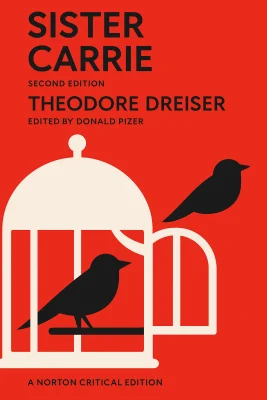
Sister Carrie
Categories
Fiction, Classics, Historical Fiction, Literature, American, School, 20th Century, Novels, Classic Literature, Literary Fiction
Content Type
Book
Binding
Paperback
Year
1990
Publisher
W W Norton & Co Inc
Language
English
ASIN
0393960420
ISBN
0393960420
ISBN13
9780393960426
File Download
PDF | EPUB
Sister Carrie Plot Summary
Introduction
# Sister Carrie: The Price of Dreams in the Gilded City The train wheels clatter against steel rails as eighteen-year-old Caroline Meeber steps onto the platform at Union Station, Chicago sprawling before her like a glittering beast of smoke and promise. In her worn coat pocket, four dollars and her sister's address represent the sum total of her preparation for conquest of America's second city. What she cannot foresee is how swiftly the urban wilderness will strip away her small-town innocence, replacing it with harder truths about survival, desire, and the terrible mathematics of a woman's choices in 1889. Two men will reshape her destiny in ways that lead from hope to heartbreak, from comfort to catastrophe. Charles Drouet, a traveling salesman whose easy charm masks fundamental weakness, and George Hurstwood, a respected saloon manager whose polished exterior conceals a married man's dangerous obsessions. As these three lives intertwine, they set in motion events that will reveal the brutal cost of ambition in a world where appearances matter more than substance, where every step toward material comfort demands a corresponding sacrifice of moral certainty.
Chapter 1: Chapter 1: The Country Girl's Urban Awakening
The stranger's voice cuts through the train's rhythmic thunder. "That's one of the prettiest little resorts in Wisconsin." Charles Drouet has been watching the young woman for miles, studying her mass of brown hair and the nervous way she clutches her cardboard suitcase. His tan shoes gleam like mirrors, his vest displays a double row of mother-of-pearl buttons, and gold rings catch the afternoon light as he gestures toward the window. Carrie feels his magnetism immediately. This is no mill worker or farmer's son. This man belongs to the world she glimpses in shop windows and theater advertisements. When he speaks of Chicago's theaters and fine boulevards, her heart quickens with possibilities she has never dared name. "You'll find it a lively place," he says, his eyes holding hers with practiced ease. "Lots of young people your age making their way in the world." By journey's end, he has secured her address and a promise that he might call. As the great train shed swallows them in shadow and gaslight, Carrie feels the threads binding her to girlhood snap forever. Her sister Minnie waits on the platform, but it is Drouet's retreating figure that holds her gaze, his confident stride promising adventures beyond her sister's narrow world. The flat on Van Buren Street strikes her like a physical blow. Three cramped rooms, discordant wallpaper, and the smell of boiled cabbage. Minnie has hardened into a woman of careful economies and suspicious glances. Her husband Hanson speaks in grunts about work prospects, his Swedish accent thick with disapproval of anything that doesn't contribute to the household coffers. "It's a big place," he says of Chicago. "You can get in somewhere in a few days." But his eyes suggest she had better, and quickly. The city beyond their windows pulses with electric life. Carriages clatter past carrying women in silk dresses, their faces bright with the confidence that money brings. Carrie presses her nose to the glass and watches this parade of prosperity, feeling the first sharp pangs of want that will drive everything that follows.
Chapter 2: Chapter 2: Drouet's Bargain - Comfort for Virtue
The shoe factory floor reeks of leather and machine oil. Carrie bends over her station, punching eyelet holes while the foreman's shadow falls across her work. "Start your machine. Don't keep the line waiting." Her back aches, her fingers cramp, and the crude jokes of her fellow workers make her cheeks burn with shame she cannot name. The other girls seem content with their lot, chattering about dance halls and young men while Carrie counts the hours until escape. When illness forces her to miss work, she loses her position. Winter approaches, she has no warm clothes, and Hanson's disapproval grows heavier each day like a stone pressing on her chest. Then Drouet appears like salvation on a downtown street corner. His face lights up at the sight of her, and suddenly the gray October afternoon seems touched with gold. "You're looking a little pale," he says, his voice warm with concern. "Come, let me buy you lunch." At the Windsor dining room, he orders sirloin with mushrooms while she marvels at the white napery and silver, at being treated like someone who matters. "You oughtn't to be working for those people," he says, pressing twenty dollars into her palm. The money feels like power itself, soft and green and transformative. "Let me help you. Get yourself some clothes." When he suggests she take rooms of her own, the impropriety seems less important than the alternative of returning to Columbia City in defeat. The furnished rooms on Ogden Place overlook Union Park. Brussels carpet, plush furniture, and gas lighting create a cocoon of comfort she never imagined possible. Drouet fills her wardrobe with becoming dresses and her evenings with theater visits. She is no longer Carrie Meeber, factory girl. She is someone worth caring for, someone who belongs in this world of silk and gaslight. But even as she revels in her transformation, something whispers that this comfort comes with invisible chains. Drouet's easy generosity carries expectations he has not yet voiced, and Carrie begins to understand that in this glittering city, nothing comes without a price.
Chapter 3: Chapter 3: The Theater's Call and Hurstwood's Temptation
"I've invited my friend Hurstwood to come out some evening," Drouet announces casually over breakfast. "He's manager of Fitzgerald and Moy's, the finest resort in town." George Hurstwood arrives like a different species of man entirely. Where Drouet is hearty and obvious, Hurstwood moves with subtle assurance. His clothes whisper quality rather than shouting it, and his manner suggests depths that Drouet could never fathom. He treats Carrie with a deference that makes her feel genuinely valued. "You ought to have a piano here," he tells Drouet, "so that your wife could play." The word 'wife' hangs in the air like smoke. Drouet's casual lie has become their necessary fiction, but Hurstwood's eyes hold secrets, and when they meet hers across the card table, something electric passes between them. Meanwhile, Drouet's lodge needs a young woman for their theatrical production of "Under the Gaslight." "You can act better than most of those people down there," he insists when Carrie protests her inexperience. The part of Laura, the suffering heroine, calls to something deep within her. She has always been drawn to the stage, practicing expressions in her mirror, feeling the pull of dramatic emotion. At rehearsals, she discovers she possesses something the other amateur actors lack. The director notices immediately. "Were you ever on the stage?" he asks, studying her with professional interest. When she delivers Laura's lines about love being all a woman has to give, the room falls silent. Even the cynical professionals stop their chatter to listen. The night of the performance, Hurstwood fills the theater with his influential friends. Flowers arrive at her dressing room with cards bearing unfamiliar names. As the curtain rises, Carrie feels terror and exhilaration war within her chest, not knowing that this moment will awaken hungers that will reshape all their lives.
Chapter 4: Chapter 4: Deception Unveiled - The Married Man's Web
The stage lights blaze down as Carrie makes her entrance. Fear nearly paralyzes her at first, her lines coming out flat and lifeless. But as the play progresses, something awakens within her. When the society ladies turn their backs on Laura, Carrie feels the genuine sting of rejection. Her voice finds its power, her movements their natural grace. "Poor Pearl," she says, gazing out at the imagined sea, "it is a sad thing to want for happiness, but it is a terrible thing to see another groping about blindly for it." The audience leans forward, caught by the sincerity in her voice. In the box seats, both Drouet and Hurstwood feel their hearts constrict with possessive pride and something darker. The applause thunders through the theater. Flowers cascade onto the stage. For the first time in her life, Carrie tastes the intoxication of public adoration, the sense that she has found her true calling. But backstage, the two men circle her like rival predators. Drouet babbles with excitement, claiming credit for her discovery. Hurstwood's congratulations are more measured, but his eyes burn with an intensity that makes her pulse quicken. Hurstwood's courtship begins immediately, a masterpiece of subtle pressure. He meets her in Jefferson Park, speaking of his loneliness, his need for someone who could understand him. "I am practically alone," he confides, his voice heavy with manufactured sorrow. "There is nothing in my life that is pleasant or delightful." His words paint him as a man of substance trapped by circumstances beyond his control. When he takes her driving along the new Boulevard, away from prying eyes, she allows herself to imagine a different future. "Tell me that you love me," he whispers, and she finds herself unable to resist. The kiss that follows seals her fate, though she does not yet know the full cost of her surrender. What Hurstwood conceals behind vague references to complications is the brutal truth: he is married. His wife Julia has begun to notice her husband's absences, and her suspicions sharpen with each unexplained evening. The comfortable fiction of his availability will soon crumble, taking all their dreams with it.
Chapter 5: Chapter 5: The Desperate Flight - Theft and New Beginnings
The knock comes at midnight, sharp and urgent against Carrie's door. She opens it to find Hurstwood, his face pale with desperation, his usual composure completely shattered. "Drouet's been hurt," he says, the lie rolling off his tongue with practiced ease. "He's in the hospital and wants to see you. We have to go now." In her confusion and concern, Carrie doesn't question the urgency. She dresses quickly and follows him into the waiting cab, unaware that she is stepping into a trap that will change both their lives forever. The city rushes past in a blur of gaslight and shadow as they make their way not to any hospital, but to the train station where their old lives will end. Only when the train begins to move does Hurstwood reveal the truth. There is no accident, no injured Drouet waiting in some hospital bed. Instead, there is theft, flight, and the desperate gamble of a man who has lost everything in a moment of wine-fueled weakness. He has stolen ten thousand dollars from his employers' safe, money that was never meant to be taken. "I couldn't help it," he pleads as Carrie realizes the magnitude of what has happened. "I couldn't stay away from you. My wife was going to ruin me anyway." His words carry the hollow ring of a man trying to convince himself as much as her. The train carries them through the darkness toward an uncertain future, leaving behind the wreckage of Hurstwood's respectable life. Carrie finds herself torn between outrage at the deception and a strange sympathy for this man who has risked everything for her. As the miles roll past, she begins to understand that there is no going back. When Hurstwood asks if she will stay with him, her whispered "yes" seals both their fates. By morning they are in Montreal, registered as Mr. and Mrs. Wheeler, their old lives left behind like discarded clothes. But even as they try to build something new from the ashes of the old, the weight of what they have done hangs over them like a storm cloud, promising that the reckoning is yet to come.
Chapter 6: Chapter 6: Fortunes Reversed - Her Rise and His Fall
New York swallows them like a hungry beast. Hurstwood uses his remaining money to buy into a small saloon on Warren Street, far removed from the elegant establishments he once managed. The place is respectable enough, but it lacks the glamour that once defined his life. The customers are working men and clerks who come for a quick drink and leave without ceremony. At first, the change seems manageable. They rent a modest flat and try to recreate the comfortable domesticity they knew in Chicago. But the city is different, harder, and success comes grudgingly. Money becomes a constant worry. The saloon generates enough income to cover expenses, but there is little left over for luxuries that once seemed natural. When the building owner sells the property, Hurstwood's lease will not be renewed. His thousand-dollar investment vanishes with the wrecking ball. They move to a smaller flat on Thirteenth Street, a cramped affair that feels like a step backward into the poverty Carrie once knew. Hurstwood tries to maintain his dignity, but the daily humiliations wear him down like water on stone. His job search proves futile. At forty-three, he is too old to start over and too proud to accept menial positions. He dresses carefully each morning and ventures into the city, but the interviews lead nowhere. Gradually, the expeditions become shorter and less frequent, until he spends entire days in the flat, reading newspapers and avoiding Carrie's increasingly pointed questions. Meanwhile, Carrie discovers an unexpected lifeline in the theater. A chance encounter leads to auditions for chorus positions. Her natural beauty and stage presence catch the attention of directors looking for fresh faces. She starts small, earning a few dollars a week, but it gives her hope and a sense of independence she had almost forgotten. As Carrie's confidence grows, so do her opportunities. She graduates from the chorus to small speaking parts, then to featured roles that showcase her natural talent. Audiences respond to her vulnerability and authenticity. Her name begins to appear in theatrical columns, and other actors treat her with growing respect. The money she earns becomes increasingly important to their survival, creating a reversal that would have been unthinkable just years before.
Chapter 7: Chapter 7: The Final Separation - Success and Desolation
The winter of their fourth year in New York brings the final collapse. Hurstwood has stopped looking for work entirely, spending his days in a threadbare bathrobe, reading newspapers and waiting for Carrie to return from the theater. His appearance has deteriorated along with his prospects. He shaves infrequently, his clothes are shabby, and his eyes hold the hollow look of a man who has surrendered to defeat. Carrie, meanwhile, has achieved modest success that feels like triumph after years of struggle. She has steady work, a growing reputation, and the respect of her peers. But success comes with its own burdens, particularly the knowledge that she is supporting a man who was once her protector and is now little more than dead weight she can neither carry nor abandon. Their conversations, when they occur at all, are exercises in mutual resentment. Hurstwood makes bitter comments about the theater people Carrie works with, while she responds with cutting remarks about his refusal to even try. The love that once sustained them has been replaced by a toxic mixture of guilt, anger, and contempt. The final break comes not with dramatic confrontation but with quiet resignation. Carrie begins spending more nights away from the flat, claiming rehearsals run late. Hurstwood accepts these explanations without question, perhaps relieved to be alone with his newspapers and memories of better times. On a cold February morning, Carrie packs her belongings and leaves a note explaining that she can no longer live as they have been living. She promises to send money when she can, but they both know it is over. Hurstwood reads the note without surprise, folds it carefully, and returns to his chair by the window. The man who once commanded respect in Chicago's finest establishments now faces eviction and homelessness. The woman who once depended on him for everything is building a new life in which he has no place. Their great romance, born of deception and sustained by desperation, has finally exhausted itself, leaving behind only the bitter taste of dreams that turned to ash.
Chapter 8: Chapter 8: The Hollow Crown - Fame Without Fulfillment
Carrie's name blazes in electric letters above Broadway, but the light feels cold against her skin. Success has brought her everything she thought she wanted—money, fame, admiration—yet happiness remains as elusive as smoke. In her luxurious hotel suite, she sits by the window and watches the endless parade of carriages below, feeling more isolated than she ever did in her small-town poverty. The newspapers call her a star, but she knows the truth. Her performances, while popular, lack the depth and meaning she once dreamed of bringing to the stage. She plays for laughs and applause, not to elevate the human spirit. The memory of grander possibilities haunts her, a reminder of talents wasted on mere entertainment. Meanwhile, Hurstwood's decline accelerates like a stone rolling downhill. He haunts the theater district, hoping for a glimpse of the woman who was once his salvation. When he finally sees her, stepping from a carriage in furs and jewels, the distance between them seems vast as an ocean. He approaches her one night after a performance, his appearance so changed that she barely recognizes him. "Can you spare something?" he asks, his voice barely a whisper. Carrie's heart breaks at the sight of him, this proud man reduced to begging from his former lover. She gives him what money she has, but they both know it is not enough to bridge the chasm that has opened between their lives. As he shuffles away into the night, Carrie realizes that success and failure are often separated by nothing more than luck and timing. In the end, the city claims them both, though in different ways. Hurstwood's story concludes in a dingy lodging house room, where the gas jet offers final escape from shame and hunger. The newspapers barely notice his passing—just another nameless casualty of urban indifference, his body carried away with the other forgotten souls. Carrie survives and even prospers, but prosperity brings its own form of imprisonment. She has achieved everything she thought she wanted, only to discover that wanting itself was the only thing that gave her life meaning. The pursuit continues, but the destination remains forever beyond reach, a shimmering mirage that recedes with every step forward.
Summary
Carrie's journey from provincial innocence to urban sophistication reveals the brutal mathematics of survival in America's gilded age. Each step toward material comfort demanded a corresponding sacrifice of moral certainty, each door opened only by closing another. The stage showed her a glimpse of what she might become, but the price of transformation was steep. The same forces that lifted her from factory drudgery also trapped her in webs of deception and desire, making her complicit in the destruction of the man who had once been her salvation. Their intertwined fates become a meditation on the cost of ambition and the weight of choices that, once made, can never be unmade. In the end, both Carrie and Hurstwood discover that the pursuit of happiness can become its own form of damnation, that the glittering promises of the city are built on foundations of human wreckage. Dreams and desire, the twin engines of American ambition, carry them far from their origins, but the destination is not the paradise they imagined. The wheel of fortune spins for everyone, and in its turning, it reveals that success and failure are often separated by nothing more than a moment's decision, a single choice that echoes through eternity.
Best Quote
“How true it is that words are but the vague shadows of the volumes we mean. Little audible links, they are, chaining together great inaudible feelings and purposes.” ― Theodore Dreiser, Sister Carrie
Review Summary
Strengths: The review highlights Dreiser's boldness in addressing controversial themes for his time, such as the immorality and risqué nature of the storyline. The book is praised for its unflinching portrayal of the American Dream's unattractive side and its candid depiction of poverty without preachiness or squeamishness. Overall: The reviewer reflects on their personal journey with "Sister Carrie," noting its initial complexity for a young reader and later appreciation as an adult. The book is seen as a daring critique of societal norms, with an engaging narrative that challenges moral standards. The reader's sentiment is positive, recommending it for its honest and provocative storytelling.
About Author

Theodore Dreiser
Dreiser reflects on the tension between individual ambitions and the deterministic forces of environment and society, crafting narratives where characters strive against overwhelming odds. His works, including the seminal "Sister Carrie", showcase protagonists whose value lies not in their adherence to moral codes but in their persistence in the face of adversity. This approach positions Dreiser within the naturalist school, emphasizing how socio-economic factors shape human behavior. His portrayal of urban life and class conflict mirrors the realities of industrial America, while also critiquing capitalism's allure and dangers.\n\nReaders can gain profound insights from Dreiser's exploration of social struggles and the human condition. His journalistic background lent a sense of realism to his novels, making them both compelling and educational. As the author of "An American Tragedy", Dreiser masterfully intertwines personal drama with broader societal critiques, which remain relevant to contemporary discussions on poverty and social justice. Through his politically charged nonfiction and fiction, he challenges readers to consider the impact of socio-political systems on individual lives.\n\nThe impact of Dreiser's work extends beyond mere storytelling; his commitment to social realism invites readers to reflect on the complexities of modernity. This brief bio touches on Dreiser's dedication to unveiling the socio-economic forces that govern human existence, positioning him as a key figure in American literature. His literary legacy continues to influence writers and scholars who seek to understand the interplay between individual agency and societal constraints.
Read moreDownload PDF & EPUB
To save this Black List summary for later, download the free PDF and EPUB. You can print it out, or read offline at your convenience.

Sister Carrie
by Theodore Dreiser
