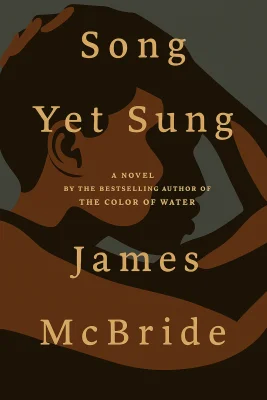
Song Yet Sung
Categories
Fiction, Audiobook, Historical Fiction, Book Club, 19th Century, Historical, African American, Novels, Adult Fiction, Literary Fiction
Content Type
Book
Binding
Hardcover
Year
2008
Publisher
Riverhead Hardcover
Language
English
ISBN13
9781594489723
File Download
PDF | EPUB
Song Yet Sung Plot Summary
Introduction
# Song Yet Sung: Visions of Freedom on the Eastern Shore The musket ball that cracked Liz Spocott's skull should have killed her. Instead, it gave her visions of tomorrow—terrible glimpses of a future where her people would be free but still trapped, wealthy but still hungry, celebrated but still lost. In the fetid attic of Patty Cannon's slave-catching operation on Maryland's eastern shore, nineteen-year-old Liz lay chained among thirteen other captured souls, her head wound seeping blood and prophecy in equal measure. The year was 1850, and freedom lay just eighty miles north, but it might as well have been on the moon. When the dying woman beside her whispered the secrets of an underground code—cryptic phrases about coach wrenches and wagon wheels, about songs yet unsung—Liz understood that her visions were more than fever dreams. They were warnings. As slave catchers like the notorious Patty Cannon and the legendary Gimp prowled the marshlands of the Chesapeake Bay, and as the Underground Railroad's secret network pulsed with coded messages, Liz found herself at the center of a deadly game where dreams of freedom collided with the brutal reality of human bondage. In the shadows lurked the Woolman, a mythical figure who had escaped slavery years ago and now lived wild in the swamps, while the disappearance of a white child would soon set forces in motion that would test whether tomorrow's visions could survive today's violence.
Chapter 1: The Dreamer's Awakening: Visions Born from Violence
The attic reeked of human misery and broken dreams. Liz pressed her fingers against the wound on her scalp, feeling the musket ball shift beneath torn flesh like a marble under wet cloth. Around her, thirteen other captured slaves huddled in chains, their eyes reflecting the dim light filtering through gaps in the wooden planks. But Liz saw more than shadows and suffering—she saw tomorrow. The visions came in waves that left her gasping. Fat children with skin like hers, crying from hunger while gorging themselves on abundance. Young men in horseless carriages, shooting each other for gold chains and empty respect. Women with fake blue eyes, trading their heritage for hollow beauty. The future she glimpsed was freedom's bitter fruit, sweet on the tongue but poison in the belly. An old woman without a name lay dying beside her, humming a tune that seemed older than slavery itself. "Every truth you been told is a lie," she whispered, her voice like autumn leaves. "Every lie is truth. The coach wrench turns the wagon wheel, child. Remember that when the time comes." Her fingers pressed something into Liz's palm—a knotted rope that felt warm despite the cold air. When Little George, Patty Cannon's beautiful young overseer, unchained Liz's ankle that morning, he expected gratitude. Instead, he found a metal spike driven deep into his throat. The sight of his blood spurting across the attic floor awakened something primal in the other prisoners. Big Linus, the giant who had cowered in corners for weeks, rose like a mountain given life and twisted the dying man's neck until bones cracked like kindling. Fourteen souls walked out of that attic into the gray March morning, but freedom proved as elusive as morning mist. The old woman died by the creek where Liz left her, but not before pressing the code deeper into the young woman's mind. "Keep dreaming, two-headed girl," she breathed with her last breath. "There's a tomorrow in it." Liz stumbled into the Maryland wilderness carrying visions that felt more like curses, wondering if the future she'd glimpsed was worth the blood on her hands.
Chapter 2: Codes and Chains: The Underground Network Stirs
The blacksmith's hammer rang out across Cambridge City in rhythms that seemed random to white ears but carried urgent meaning to those who knew how to listen. Five strikes, pause, three strikes, pause—the code that meant runaways were loose and the network must awaken. Behind the Tin Teacup tavern, the free black smith worked his anvil while his eyes watched the door, waiting for trouble to arrive wearing a badge or carrying chains. Amber Sullivan had been hiding the Dreamer for five days now, bringing her food and supplies to the old Indian burial ground beyond Sinking Creek. The young slave had never felt anything like what he experienced when he looked at Liz—a mixture of desire, fear, and something that felt like destiny calling his name. Each night he slipped away from his mistress Kathleen Sullivan's farm, each morning he returned with his heart pounding and his mind racing. The codes were changing, becoming more urgent. Old Clarence from the general store arranged his deliveries in patterns of three and five, stacking barrels to face west while the blacksmith's hammer spoke its iron language. The message was clear as church bells: the hunters were coming, and they were closing in fast. Every free black and sympathetic white in the county felt the tension building like a storm front moving in from the Chesapeake. Kathleen Sullivan noticed her slave's distraction but said nothing. The widow had her own troubles—her husband Boyd had died in a storm the previous fall, leaving her alone with three children and a failing farm. She trusted Amber completely, perhaps too much, never suspecting that he was part of an invisible network that stretched from the bay to the Canadian border. When Patty Cannon herself rode onto Sullivan land, her cold eyes scanning the property like a hawk searching for prey, Kathleen met her at the door with a loaded rifle. The confrontation was brief but electric—two strong women facing each other across a divide that ran deeper than the Chesapeake itself. Patty's horse danced nervously as she leaned forward in the saddle, her voice honey-sweet and poison-sharp. "I'm looking for stolen property, Mrs. Sullivan. A young woman, very beautiful, very valuable. Surely you'd want to help return what belongs to its rightful owner." Kathleen's rifle never wavered. "I don't harbor thieves or their property, Miss Cannon. Now get off my land." Patty rode away, but her promise hung in the air like smoke: she would return, and next time she wouldn't come alone.
Chapter 3: The Hunt Begins: Predators Circle Their Prey
Denwood Long had earned his nickname "the Gimp" from a leg wound that never healed properly, but his reputation as a slave catcher was legendary throughout Maryland. Retired for five years after his son died—cursed, the islanders said, for touching a six-legged dog—he emerged from his self-imposed exile for one final job. Captain Spocott's money spoke louder than his ghosts, and the price on Liz's head could buy three good slaves or a small farm. The eastern shore buzzed with tension as word spread that both Patty Cannon and the Gimp were hunting the same quarry. Patty's crew had been decimated in the tavern fire that followed Liz's escape, leaving her with only her son-in-law Joe Johnson and a handful of desperate men. But Patty was like a wounded animal now, more dangerous than ever, her beautiful face twisted by rage and the promise of revenge. Denwood approached his hunt methodically, following leads through the network of watermen, merchants, and free blacks who made their living on the Chesapeake. His investigation led him to the blacksmith, where a tense conversation revealed nothing but confirmed everything. The man's eyes were too careful, his answers too quick. The codes were real, the network was active, and the Dreamer was somewhere close. Joe Johnson had no patience for subtlety. Patty's son-in-law tracked leads with the enthusiasm of a man who enjoyed his work too much, his hand never far from the Colt Paterson revolver at his hip. When he spotted Amber in Cambridge City, purchasing supplies that suggested he was feeding someone in hiding, Joe followed him from the blacksmith's shop like a wolf tracking wounded prey. The pursuit intensified when Amber was seen again near the old burial ground, his movements too purposeful for casual wandering. Behind them all, Denwood Long watched and waited, playing a longer game than anyone suspected. He had learned patience in his years of retirement, and patience was what separated successful hunters from dead ones. The Dreamer would surface eventually—they always did. And when she did, he would be ready.
Chapter 4: Blood in the Swamps: When Legends Come Alive
In the deepest part of the eastern shore's wilderness, where Sinking Creek wound through cypress swamps and forgotten burial grounds, lived a figure that existed somewhere between myth and reality. The Woolman had escaped slavery fifteen years earlier, taking his infant son into the marshlands where he learned to live like the animals—silent, invisible, and deadly when cornered. His wild hair was crowned with leaves, his body sculpted by years of hunting and hiding, his eyes holding the particular madness of a man who had rejected civilization entirely. Eight-year-old Jeff Boy Sullivan was playing near the cornfield when the earth seemed to open up and swallow him. His dog Lucky was found with its throat cut, and a man-sized hole in the ground showed where someone had waited in ambush for hours. Wiley, Amber's teenage nephew, gave chase through the swamps but lost the trail in the maze of creeks and cypress groves that made up the Woolman's domain. The Woolman had watched the white men's world from his hiding place for years, seeing how they used his people as property while claiming to worship a God of love. His son had grown wild in the swamps, speaking no English, knowing only the harsh lessons of survival that his father had taught him. But the boy was sick now, dying from some wasting disease that no amount of swamp medicine could cure, and the Woolman's grief had transformed into a rage that demanded payment in blood. Jeff Boy's disappearance sent shockwaves through the community like ripples from a stone dropped in still water. Constable Travis organized search parties while Kathleen Sullivan paced her farmhouse like a caged animal, her rifle always within reach. The timing was too convenient—a white child vanishes just as slave catchers prowl the area and runaways hide in the marshes. Someone would pay for this crime, and everyone knew it wouldn't be anyone with white skin. The Woolman carried the terrified child deeper into his domain, to a hidden cabin on Cook's Point where the Choptank River met the Chesapeake Bay. There he waited, his son growing weaker each day, while he planned his war against the world that had stolen everything from him except his capacity for violence. The boy whimpered in the corner, calling for his mother, but the Woolman felt no pity. His own son was dying, and the white world had shown him no mercy. Why should he show them any?
Chapter 5: Love and Betrayal: Hearts Torn Between Duty and Desire
Love bloomed in the most unlikely place—a hollow oak tree in an Indian burial ground where Amber brought food and comfort to the woman he called the Dreamer. Their first kiss was desperate and hungry, two souls finding each other in a world that seemed determined to keep them apart. Liz's visions had shown her this moment, but knowing the future didn't make the present any less sweet or dangerous. Her gift was growing stronger and more frequent, showing her not just the distant future but immediate dangers. She saw Patty Cannon's approach before the sound of hoofbeats reached their ears, giving them precious seconds to escape into the night. But she also saw something else—a darkness approaching that would test everyone's loyalty and courage, a convergence of violence that would leave blood on the marsh grass and sorrow in every heart. When Joe Johnson finally cornered Amber on the old logging trail, the confrontation seemed inevitable. Patty's son-in-law had been tracking him for days, following a trail of broken twigs and disturbed earth that led deeper into the swamps. But the appearance of Wiley, riding a stolen horse and carrying news of Jeff Boy's disappearance, changed everything. In the chaos that followed, shots were fired and blood was spilled, but not before Amber made a choice that would haunt him forever. He led Joe away from the Dreamer's hiding place, sacrificing his own safety to protect the woman he loved. The chase wound through the marshlands like a deadly dance, two men who knew these waters intimately playing a game where the stakes were life and death. Joe's horse stumbled in the soft ground, throwing him hard against a cypress trunk, and when he rose, his gun was in his hand and murder was in his eyes. The Gimp arrived just in time to witness the aftermath, finding Joe Johnson dying in the mud while Amber stood over him with a smoking pistol. But before anyone could sort out the truth, another figure emerged from the swamps—the Woolman himself, moving with inhuman speed and deadly purpose. The legendary slave catcher found himself face to face with a legend of a different kind, and neither man was prepared for what followed. In the blacksmith's hidden cellar, Liz waited in darkness while the network struggled to protect her, the song the old woman had taught her echoing in her mind like a prophecy waiting to be fulfilled.
Chapter 6: Convergence at Cook's Point: Where All Paths Lead
The final confrontation came at Cook's Point, where the Woolman's hidden cabin sat like a secret at the edge of the world. Denwood Long had tracked Amber and the Dreamer to this remote spot, following a trail of desperation and broken codes that led through the heart of the Underground Railroad's network. But he wasn't prepared for what he found—not just the missing white child, alive but traumatized, but also the Woolman himself, wounded and desperate but still dangerous as a cornered wolf. Jeff Boy cowered in the corner of the cabin, his eyes wide with terror and confusion. The Woolman's own son lay dying on a makeshift bed, his breathing shallow and labored, while his father paced like a caged animal. When Denwood appeared in the doorway, the wild man's reaction was immediate and violent—a knife appeared in his hand as if by magic, and the two men circled each other in the cramped space like wolves fighting over carrion. The fight was primal and brutal, shaped by years of pain and loss on both sides. They rolled in the mud and sand while Liz watched in horror, knowing that one of them had to die but unable to choose which one deserved to live. The Woolman was stronger and more desperate, but Denwood was craftier and more experienced. When the wild man raised his knife for the killing blow, Liz made the choice for them, picking up Denwood's fallen pistol and firing a shot that echoed across the water like thunder. Patty Cannon arrived with her remaining men just as the Woolman breathed his last, his eyes fixed on Liz with something that might have been gratitude. But Patty was beyond reason now, her beautiful face twisted by loss and rage. She had lost everything—her tavern, her crew, her son-in-law Joe—and she blamed it all on the Dreamer and her visions of tomorrow. The standoff on the beach seemed to last forever, with guns drawn and death hanging in the air like morning fog. Patty's finger tightened on the trigger, her cold eyes promising an end to all their dreams of freedom. But salvation came from an unexpected source—Kathleen Sullivan, who had tracked them all to this remote spot, arriving just in time to see Patty taking aim at the people who had become her family. The widow's Winchester rifle spoke once, and Patty Cannon's reign of terror ended in the mud of Cook's Point, her blood mixing with that of the Woolman while the Chesapeake Bay lapped at the shore like a tongue cleaning a wound.
Chapter 7: The Reckoning: Dreams and Reality Collide
The aftermath of the violence at Cook's Point rippled through the eastern shore like waves from a stone dropped in still water. Jeff Boy was reunited with his mother, traumatized but alive, while the Woolman's wild son was taken into custody by the authorities—an orphan who spoke no English and understood nothing of the civilized world his father had rejected. The boy's eyes held the same wildness as his father's, but there was something else there too—a desperate hunger for connection that civilization might yet satisfy. Liz's condition was deteriorating rapidly. The head wound that had given her the gift of prophecy was also killing her, and she knew her time was running short. The visions came more frequently now, showing her glimpses of a future both terrible and wonderful. She saw a great colored preacher who would one day stand before thousands and speak words that would echo through history: "Free at last, free at last, thank God Almighty, I'm free at last." But she also saw the price that freedom would demand—generations of struggle, compromise, and heartbreak. Amber's freedom came at a price Kathleen Sullivan could barely afford, but she paid it willingly, selling a piece of her land to buy his papers and give him a chance at the life he had always dreamed of. He would take the Woolman's son north, raising the boy as his own and hoping that the Dreamer's visions of a better tomorrow might somehow come true. The decision tore at his heart—leaving Liz behind felt like abandoning his own soul—but she insisted, her eyes already looking beyond the present toward futures only she could see. The Underground Railroad's codes fell silent for a while, the network damaged but not destroyed by the violence that had swept through their community. The blacksmith continued his work, his hammer ringing out messages of hope and warning to those who knew how to listen. Old Clarence went back to his deliveries, arranging his goods in patterns that spoke of safe passage and dangerous times ahead. The work would continue, as it always had, carried forward by people who understood that freedom was not a destination but a journey that each generation must undertake anew. Denwood Long returned to his oyster tonging, his final hunt complete but his ghosts still unquiet. He had captured his quarry only to let her go, understanding at last that some things were worth more than money. The eastern shore had claimed its victims and survivors with equal indifference, leaving behind a landscape forever changed by the collision of dreams and reality.
Chapter 8: Freedom's Price: Songs Carried into Tomorrow
As spring came to the eastern shore, Liz made her final journey to the ruins of Patty Cannon's tavern, where the old woman without a name had first sung the song yet sung. The building stood like a broken tooth against the sky, its blackened timbers reaching toward heaven like the arms of supplicants. There, in the shadow of the burned-out structure where so much suffering had taken place, she found her peace at last. The visions that had tormented and guided her finally fell silent, but not before showing her one last glimpse of tomorrow. She saw Amber in a northern city, the Woolman's son grown tall and strong beside him, both of them free to make their own choices and their own mistakes. She saw the great preacher again, his words ringing out across a vast crowd, and she understood that her own small part in the great song of freedom was nearly complete. The Woman with No Name had been right about the nature of truth and lies. Every freedom contained the seeds of new bondage, every liberation created fresh opportunities for oppression. But the song she died trying to teach was not about perfection—it was about continuation, about the endless human struggle to become more than circumstances allowed. The fat children in Liz's visions were not cursed but blessed with choices their grandparents could never imagine. The young men in horseless carriages, even those who chose violence, were choosing their own paths rather than following roads laid out by masters. Amber carried the Woolman's son north on the gospel train, the boy's wild eyes slowly learning to trust again. They traveled by night and hid by day, following the North Star and the coded songs that had guided runaways for generations. Behind them, the eastern shore settled back into its ancient rhythms of water and wind, but the seeds of change had been planted in soil watered with blood and tears. The blacksmith's hammer continued to ring out its iron messages, the codes evolving and spreading like ripples on still water. In Cambridge City, old Clarence arranged his deliveries in new patterns, while Kathleen Sullivan raised her children to understand that freedom was something that had to be earned anew by each generation. The network would survive, as it always had, carried forward by people who understood that the price of liberty was eternal vigilance and the courage to dream of better tomorrows.
Summary
The eastern shore had claimed its victims and survivors with equal indifference, leaving behind a landscape forever changed by the collision of dreams and reality. Liz Spocott, the Dreamer who had seen tomorrow's pain and promise, found her rest in the very place where her journey began, her visions of a distant preacher and his words of freedom planted like seeds in the hearts of those who would carry them forward. The Woolman's war had ended not in victory but in a kind of terrible peace, his son now bound for a different kind of wilderness in the cities of the North, where freedom wore different chains but offered different possibilities. The codes and songs that had sustained the Underground Railroad would evolve and spread, carried by people like Amber who understood that freedom was not a destination but a journey that each generation must undertake anew. In the years to come, the eastern shore would remember this spring as the season when dreams and nightmares walked hand in hand through the marshlands, when the future reached back to touch the present with bloody fingers, and when a young woman's visions of tomorrow proved that sometimes the most powerful weapon against oppression is the simple act of dreaming of something better. The song yet sung would find its voice in time, echoing across a century to fulfill the prophecy of a woman who died believing that freedom, however delayed and however imperfect, would surely come to those brave enough to dream it into existence.
Best Quote
“There ain't no time for foolishness now. You in it now. You got to stay in it.” ― James McBride, Song Yet Sung
Review Summary
Strengths: The review highlights the captivating and thought-provoking nature of the story. James McBride's ability to illustrate the complexities of slavery and the moral ambiguity of the characters is praised. The narrative's engaging chase and the vivid depiction of Maryland's Eastern Shore are noted as strengths. The richness of characters and the spiritual aspects of the slaves' world are also commended. Weaknesses: The review mentions difficulty in following the story due to the vernacular and the absence of quotation marks, which occasionally required rereading to understand dialogue. Overall: The reader expresses a highly positive sentiment, recommending the book for its compelling storytelling and insightful exploration of slavery's intricacies, despite minor readability issues.
About Author

James McBride
McBride situates his literary work at the intersection of race, history, and identity, using his multifaceted skills as both a writer and musician to craft narratives that resonate with complexity and depth. His distinctive style reflects his dual background in music and journalism, enabling him to create stories that combine lyrical beauty with factual precision. This blend is evident in his notable book, "The Heaven & Earth Grocery Store," which delves into the lives of diverse communities, showcasing his ability to weave the African American experience with broader, universal themes.\n\nThe author often explores racial identity and family heritage, notably in his memoir, "The Color of Water," which investigates his upbringing as a black man raised by a white Jewish mother. McBride’s narrative method involves blending historical facts with fiction, a technique that allows him to illuminate African American experiences within the wider American narrative. Meanwhile, his novel "The Good Lord Bird" further exemplifies this approach, winning the National Book Award for its exploration of abolitionist John Brown’s life. \n\nReaders benefit from McBride's work as it provides a rich, nuanced exploration of societal issues, contributing significantly to contemporary discourse. His stories are characterized by rhythmic prose and a profound social consciousness, likely a reflection of his musical background. Therefore, his writings not only entertain but also offer a candid reflection on complex social dynamics, making them essential reading for those interested in understanding race and identity in America. As a distinguished figure in both literary and musical domains, McBride continues to inspire and provoke thought among audiences worldwide.
Read moreDownload PDF & EPUB
To save this Black List summary for later, download the free PDF and EPUB. You can print it out, or read offline at your convenience.
Song Yet Sung
by James McBride
