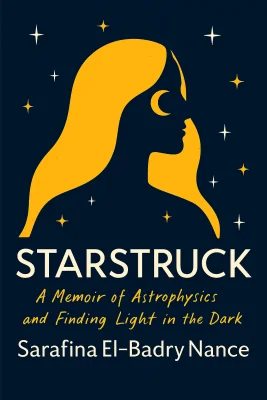
Starstruck
A Memoir of Astrophysics and Finding Light in the Dark
Categories
Nonfiction, Science, Biography, Memoir, Audiobook, Autobiography, Biography Memoir, Space, Book Club, Astronomy
Content Type
Book
Binding
Hardcover
Year
2023
Publisher
Dutton
Language
English
ASIN
0593186796
ISBN
0593186796
ISBN13
9780593186794
File Download
PDF | EPUB
Starstruck Plot Summary
Introduction
# From Stardust to Stars: A Journey of Resilience and Discovery In the vast expanse of the universe, where billions of stars shine against the cosmic darkness, one young woman's journey from childhood curiosity to scientific discovery illuminates the profound connection between personal struggle and cosmic wonder. Sarafina El-Badry Nance's story unfolds against the backdrop of suburban Texas, where family tensions, cultural identity, and academic pressures created their own gravitational forces, threatening to pull her away from her dreams of exploring the stars. From her earliest memories of listening to astronomy radio shows during long car rides to school, to her transformative encounters with telescopes and mentors who recognized her potential, Sarafina's path reveals how the universe itself can serve as both refuge and calling. Her story demonstrates that sometimes our greatest challenges become the very forces that propel us toward our destiny, much like how the collapse of massive stars creates the most brilliant explosions in the cosmos. Through her journey, readers will discover the power of persistence in the face of doubt, the importance of finding supportive communities, and the profound healing that can come from pursuing one's deepest passions, even when the path seems impossibly difficult.
Chapter 1: Childhood Wonder: Seeds of Scientific Curiosity
Sarafina's fascination with the cosmos began in the most ordinary of places: the backseat of her family's silver Volkswagen during daily commutes to St. Andrew's Episcopal School in Austin, Texas. Every morning at 6:57 and every afternoon at 4:57, she would negotiate with her parents to listen to StarDate, a two-minute astronomy radio show hosted by Sandy Wood. These brief moments became her daily escape, where she learned about Venus appearing as a bright star above the moon and discovered that planets don't twinkle like stars due to their proximity to Earth's atmosphere. The contrast between her home life and school environment created an early tension that would shape her relationship with learning and belonging. At St. Andrew's, surrounded by wealth and privilege that her family couldn't quite match, Sarafina felt the weight of being different. Her Egyptian heritage, evident in her mother's accent and the Arabic phrases that occasionally slipped into conversation, marked her as an outsider in a predominantly white, Christian environment. She learned to straighten her naturally curly hair with a CHI iron each morning, desperately trying to blend in with her classmates while hiding the beautiful Arabic script of her name written on the back of her desk nameplate. Her mother, Dr. Samia El-Badry, carried her own struggles as an Egyptian immigrant navigating American academia and suburban life. The family dynamics were complicated by her father's frequent business travels and her parents' increasingly volatile relationship. Young Sarafina found herself caught between worlds: the Egyptian culture her mother cherished but felt forced to suppress, and the American dream her parents pursued at great personal cost. These early experiences of feeling displaced and different would later resonate with her understanding of cosmic scales, where Earth itself is just a small, unique world floating in the vast expanse of space. The seeds of her scientific thinking were planted during a pivotal chapel service when the minister declared that God had created the universe in seven days, including making the Red Sea red with Egyptian blood. Having visited the Red Sea herself and seen its brilliant blue waters, six-year-old Sarafina experienced her first moment of questioning authority and trusting her own observations over received wisdom. This early lesson in the importance of direct observation over dogma would become fundamental to her scientific approach. Even as family tensions mounted and her parents' marriage showed signs of strain, the night sky remained a constant source of wonder and peace. When her father would join her in the backyard with binoculars, pointing out Venus hanging beside the crescent moon, Sarafina felt the first stirrings of what would become her life's passion. These moments of cosmic contemplation offered refuge from the chaos of her daily life and planted the seeds of questions that would drive her scientific career: How big is the universe? What lies beyond what we can see? And perhaps most importantly, what is our place in this vast cosmic dance?
Chapter 2: Academic Struggles: Finding Belonging in Physics
The transition to college physics presented Sarafina with her greatest academic challenge yet, testing not only her intellectual abilities but also her sense of belonging in the scientific community. The large lecture halls filled predominantly with male students, the professor's inappropriate comments and dismissive attitude toward women, and the competitive atmosphere created an environment where she often felt isolated and inadequate. Unlike the supportive, curiosity-driven approach she had experienced with her high school astronomy teacher Mikan, college physics seemed designed to weed out students rather than nurture their understanding. The mathematical intuition that physics required didn't come naturally to her, and she spent countless hours struggling through problem sets that seemed to make sense to her classmates but remained opaque to her. The professor's office hours proved unwelcoming, and study groups were dominated by confident male students who seemed to grasp concepts effortlessly. Her grades were adequate, but the joy she felt when contemplating the cosmos was entirely absent from these mechanical exercises in force diagrams and energy conservation. The turning point came when she connected with Zoe, another woman in the class who shared her struggles and frustrations. Together, they developed strategies for tackling physics problems and created a supportive partnership that made the material more manageable. This experience taught her the crucial importance of finding allies and building community, especially as a woman in a male-dominated field. Their friendship demonstrated that collaboration, rather than competition, could be the key to success in challenging academic environments. Her father's revelation that he too had struggled with and ultimately abandoned physics as an undergraduate provided important perspective. His reminder that she wasn't pursuing physics to become the world's best physicist, but rather to study the stars, helped her maintain focus on her ultimate goals. The trip to McDonald Observatory that he arranged served as a powerful reminder of why she had chosen this difficult path. Under the dark West Texas skies, looking through telescopes at Saturn's rings and Jupiter's moons, she reconnected with the sense of wonder that had first drawn her to astronomy. The experience of nearly failing her physics final, followed by earning a respectable grade through dedicated preparation with Zoe, taught her that persistence and community support could overcome initial struggles. She learned that intelligence wasn't just about grasping concepts quickly, but about maintaining curiosity and determination in the face of difficulty. This lesson would prove crucial as she faced even greater challenges ahead, including the realization that her struggles in physics were compounded by personal issues that she was only beginning to understand. The foundation of resilience she built during these college years, supported by mentors like Dr. Wheeler and friends like Zoe, would become essential as she navigated both academic and personal obstacles on her path to becoming an astrophysicist.
Chapter 3: Personal Crisis: Surviving Trauma and Transformation
The relationship with Ahmad began as a dream come true for Sarafina, who had never before met someone who shared her Middle Eastern heritage and seemed to understand the complexities of navigating between cultures. Their initial connection over their shared experiences as children of immigrants created an immediate bond, and his apparent kindness and intelligence made him seem like the perfect partner. However, what began as love quickly transformed into a nightmare of psychological and physical abuse that threatened to derail not only her academic career but her very sense of self. The cycle of abuse followed a predictable pattern that became increasingly destructive over time. Ahmad's jealousy and need for control manifested in restrictions on her interactions with classmates, demands to read her private communications, and explosive anger over perceived slights or signs of independence. The violence escalated from emotional manipulation to physical intimidation, including choking and threats of murder that culminated in police intervention. Throughout this ordeal, Sarafina found herself isolated from friends and family, her world shrinking to accommodate his demands while her academic performance and physical health deteriorated. The abuse was particularly insidious because it exploited her deepest insecurities and desire for love and acceptance. Ahmad's claims that his behavior stemmed from passion and cultural differences, combined with his tearful apologies and promises to change, created a confusing cycle that made it difficult for her to recognize the relationship as abusive. Her therapist's written expression of concern for her safety finally provided the external validation she needed to understand that her situation was genuinely dangerous and not something she could fix through better behavior or greater understanding. The process of leaving required tremendous courage and careful planning with her therapist. The moment of actually ending the relationship, despite Ahmad's pleas and threats, represented a crucial turning point where she chose her own safety and future over the familiar patterns of abuse. The support of her parents, who immediately took steps to protect her by changing her contact information and providing a safe place to recover, demonstrated the importance of having a support system when escaping dangerous situations. Recovery from the trauma involved rebuilding not only her physical health but also her sense of self-worth and ability to trust her own judgment. The experience had shattered her confidence and left her questioning her ability to make good decisions about relationships and her future. However, it also revealed reserves of strength she hadn't known she possessed and reinforced the importance of the supportive relationships in her life. The healing process was gradual and ongoing, but it ultimately contributed to a deeper understanding of herself and a renewed appreciation for the people and activities that brought genuine joy and meaning to her life. The contrast between the darkness of abuse and the light of astronomical discovery became a powerful metaphor for her journey toward wholeness and purpose.
Chapter 4: Genetic Reckoning: Confronting Cancer Risk with Courage
The discovery of her genetic predisposition to cancer arrived like an asteroid impact, fundamentally altering the landscape of Sarafina's future. When her father's aggressive prostate cancer led to genetic testing that revealed the BRCA-2 mutation, the implications rippled through the family with devastating clarity. The 50-50 chance of inheritance meant that Sarafina might carry the same genetic time bomb that had already begun destroying her father's body. The waiting period for her own test results was excruciating. Four weeks of uncertainty during which every moment was shadowed by the possibility that her future had already been written in her DNA. When the call finally came confirming her positive status for BRCA-2, the numbers were staggering: 87 percent lifetime risk of breast cancer, 30 percent risk of ovarian cancer, elevated risks for pancreatic and melanoma cancers. At twenty-three, she was suddenly a patient at a cancer center, her healthy young body reclassified as a collection of organs likely to betray her. The initial response from the medical community was frustrating and dismissive. Multiple surgeons questioned why someone so young without active cancer would consider preventative surgery. Their attitudes reflected a broader medical bias that prioritized treating disease over preventing it, particularly when the prevention involved removing healthy tissue from a young woman's body. The implicit message was clear: wait until you actually have cancer, then we'll help you. The emotional weight of the diagnosis was compounded by watching her father's deterioration through chemotherapy. His once-robust frame became frail, his thick hair fell out, and his characteristic vitality dimmed under the assault of toxic treatments. This preview of her potential future made the abstract statistics feel viscerally real. The knowledge that she might face the same battle, possibly while still young enough to want children, added urgency to her decision-making process. The diagnosis forced a fundamental reconsideration of life priorities and timelines. Career plans that had seemed to stretch endlessly into the future suddenly felt compressed by the specter of illness. The luxury of taking time to figure things out was replaced by the pressure to make major life decisions quickly, before cancer could make them for her. Yet in facing this genetic reality, Sarafina discovered that the same analytical skills she applied to understanding stellar evolution could be turned toward understanding her own biological destiny and making informed choices about how to confront it.
Chapter 5: Reconstructed: Reclaiming Body and Identity
The decision to undergo preventative double mastectomy represented the ultimate assertion of agency over genetic destiny. After months of research and consultations with dismissive surgeons, finding Dr. Anne Peled felt like discovering an oasis in a desert of medical indifference. Here was a surgeon who not only took her seriously but understood the profound courage required to remove healthy tissue in service of future health. The preparation for surgery became a ritual of empowerment. Months of physical training transformed her body into the strongest version of itself, ready to endure the trauma of reconstruction. The decision to document and share her journey on social media created a community of support and transformed her personal struggle into advocacy for others facing similar choices. The response was overwhelming: women thanking her for inspiring them to get genetic testing, to perform self-examinations, to take control of their health destinies. The surgery itself was both ending and beginning. Going under anesthesia with one body and waking with another could have felt like a violation, but instead it felt like liberation. The immediate sensation upon waking was not loss but relief. The constant anxiety about breast cancer that had plagued her since diagnosis simply evaporated. The physical pain of recovery was temporary; the psychological relief was permanent. The recovery process revealed new dimensions of strength and vulnerability. Simple tasks like lifting her arms or sleeping comfortably required relearning. The support of her partner Taylor and her father during this period deepened her understanding of love as action rather than sentiment. Their patient care during her most vulnerable moments created bonds that transcended the temporary nature of physical healing. Perhaps most surprisingly, inhabiting her reconstructed body felt more authentic than living in her original one. The scars became symbols of courage rather than loss. The reduced sensation was a small price for the enormous peace of mind. She had literally reshaped her body according to her own choices rather than genetic predisposition, transforming from passive recipient of inherited risk to active architect of her own health future. This physical transformation paralleled her emotional journey from victim of circumstances to empowered decision-maker, proving that sometimes the most radical act of self-love is the willingness to change what can be changed while accepting what cannot.
Chapter 6: Mars Bound: Testing Limits as Analog Astronaut
The transition from cancer patient to analog astronaut represented the ultimate synthesis of Sarafina's scientific ambitions and personal growth journey. The HI-SEAS Mars simulation on Mauna Loa volcano provided an opportunity to test not just her physical capabilities after surgery, but her psychological resilience in the face of isolation and uncertainty. Living in the habitat with four other crew members for extended periods recreated many of the challenges that would face actual Mars colonists. The daily routine of the simulation demanded both technical competence and emotional regulation. Conducting EVAs in full protective gear while managing scientific instruments required the kind of precise coordination that her reconstructed body had to relearn. The physical demands of traversing volcanic terrain in bulky suits tested the limits of her post-surgical strength and endurance. Each successful mission outside the habitat represented a victory over the limitations that cancer risk had once imposed on her future. The psychological challenges of the simulation proved equally demanding. Confined spaces, limited privacy, freeze-dried food, and restricted communication with the outside world created stresses that revealed character in ways that normal life rarely does. The anxiety that had been her constant companion since childhood found new triggers in the isolation and responsibility of the mission. Managing panic attacks while maintaining crew safety required applying every coping strategy she had learned through years of therapy. The night EVA under the star-filled sky of Mauna Loa provided a moment of profound connection to her childhood passion for astronomy. Standing on simulated Mars while gazing up at the same stars that had first captured her imagination created a perfect circle of experience. The little girl who had found peace in cosmic perspective had become a woman capable of surviving in space-like conditions while contributing to humanity's understanding of how to live among the stars. The simulation also revealed how her personal struggles had prepared her for extreme challenges. The resilience developed through surviving abuse, the courage cultivated through facing cancer risk, and the self-knowledge gained through therapy all proved essential for thriving in the harsh environment of simulated Mars. Her journey from anxious child to confident analog astronaut demonstrated that personal healing and professional achievement could be not just compatible but mutually reinforcing. The same qualities that had helped her survive trauma and make difficult medical decisions now enabled her to push the boundaries of human endurance in service of space exploration.
Chapter 7: Integration: Healing Anxiety While Reaching for Stars
The final phase of Sarafina's journey involved learning to harness rather than be controlled by the anxiety that had driven both her greatest achievements and deepest suffering. Through therapy, she began to understand that her relentless drive for perfection was not just personal neurosis but inherited trauma, passed down through generations of family members who had survived by achieving and excelling in hostile environments. The realization that her anxiety served evolutionary purposes provided both explanation and pathway to healing. Her mother's experiences as an Egyptian immigrant navigating post-9/11 America, her grandmother's pioneering career in male-dominated technology, and her own navigation of physics and medicine as a woman of color all required hypervigilance and exceptional performance for basic survival. Understanding this generational context allowed her to appreciate her anxiety as adaptation rather than pathology. The work of therapy involved learning to distinguish between productive anxiety that motivated preparation and growth, and destructive anxiety that created suffering without benefit. This required developing new relationships with rest, failure, and imperfection. The woman who had once equated productivity with worth had to learn that her value was inherent rather than earned through achievement. The process was neither linear nor complete, but it represented a fundamental shift in how she related to both success and struggle. The integration of her scientific and personal journeys reached its culmination in her recognition that exploring the universe and exploring herself were fundamentally the same endeavor. Carl Sagan's observation that "we are a way for the cosmos to know itself" took on deeply personal meaning as she understood that her drive to understand stellar evolution was inseparable from her need to understand her own transformation and growth. The perspective gained from studying supernovae and cosmic evolution provided a framework for understanding personal change as natural and necessary rather than threatening. Just as stars must die for new ones to be born, her old anxious self had to be transformed for her authentic self to emerge. The vastness of space that had once provided escape from earthly troubles now offered integration, a way of seeing personal struggles as part of the larger cosmic story of matter organizing itself into consciousness and reaching back toward the stars from which it came. In learning to heal while pursuing her dreams, she discovered that the journey to the stars begins not with rockets but with the courage to become fully human.
Summary
Sarafina El-Badry Nance's remarkable journey from anxious child to accomplished astrophysicist and analog astronaut illuminates a fundamental truth: that our greatest challenges often contain the seeds of our most profound transformations. Her story demonstrates that the same curiosity that drives scientific discovery can be turned inward to understand and heal the complex patterns of trauma, anxiety, and inherited survival strategies that shape our inner lives. Through confronting genetic predisposition, surviving abuse, and pushing the boundaries of human endurance in space simulation, she discovered that courage is not the absence of fear but the willingness to act in alignment with one's deepest values despite that fear. Her experience offers powerful lessons for anyone struggling to balance ambition with well-being, achievement with authenticity. The recognition that anxiety can be both obstacle and ally, that rest is not weakness but wisdom, and that personal healing enhances rather than diminishes professional capability provides a roadmap for sustainable success. For young women in science, people facing genetic health risks, survivors of trauma, or anyone seeking to understand their place in the cosmic story, Sarafina's journey offers both inspiration and practical wisdom about the ongoing work of becoming fully human while reaching for the stars.
Best Quote
“What makes the Earth remarkable is not its position in the universe—many Earth-size planets orbit their stars close enough for liquid water to exist—but what inhabits it. It is not just the Earth’s liquid blue oceans but its vast desert plains too; the oxygen-rich atmosphere and solid molten core; the millions of species and the complex, diverse ecological systems—all of which combine in an exquisite, unique dance to make the Earth special.” ― Sarafina El-Badry Nance, Starstruck: A Memoir of Astrophysics and Finding Light in the Dark
Review Summary
Strengths: The memoir is praised for its lyrical and intimate narrative, effectively blending personal experiences with astrophysical insights. The author's soothing narration and her role as a science communicator are highlighted positively. The book is described as cohesive, compelling, and inspiring, with vivid personal stories and a strong connection to space phenomena. Weaknesses: Some readers felt a lack of depth in exploring the author's astrophysicist career and noted a disjointed epilogue. The book's emotional restraint and specific references, such as those to Harry Potter, were also mentioned as drawbacks. Overall: The memoir is generally well-received, seen as a powerful and inspiring read, particularly for those interested in astrophysics and personal resilience. It is recommended for its engaging storytelling and insightful blend of memoir and science.
About Author

Sarafina El-Badry Nance
Nance interrogates the nexus of astrophysics and personal transformation, capturing her unique perspective as an Egyptian-American astrophysicist and author. Through her acclaimed book, "Starstruck: A Memoir of Astrophysics & Finding Light in the Dark," she vividly details her journey in the sciences while confronting anxiety, sexism, and a diagnosis with the BRCA mutation. This dual narrative of scientific passion and personal challenge invites readers to explore themes of resilience and discovery, as she grapples with the realities of being a woman in a male-dominated field.\n\nHer professional work extends beyond research; Nance engages in science communication and advocates for systemic change in STEM. Collaborating with policymakers and organizations, she strives to uplift underrepresented voices, thereby fostering a more inclusive scientific community. Meanwhile, her advocacy in women's health emphasizes genetic testing and healthcare equity, driven by her personal health experiences. These endeavors demonstrate her commitment to bridging the gap between personal experience and broader societal issues, offering a compelling bio for those interested in the intersection of science, advocacy, and personal growth.\n\nRecognized for her impactful contributions, Nance's memoir has been longlisted for the 2024 PEN/E.O. Wilson Literary Science Writing Award and featured as a 2024-2025 Penguin Random House Common Read. Her recognition by Forbes as one of the "30 Under 30" and other accolades highlight her influence and dedication. Readers benefit from her multifaceted approach, gaining insights into the challenges and triumphs of a scientist deeply engaged with both the cosmos and societal issues.
Read moreDownload PDF & EPUB
To save this Black List summary for later, download the free PDF and EPUB. You can print it out, or read offline at your convenience.
Starstruck
by Sarafina El-Badry Nance
