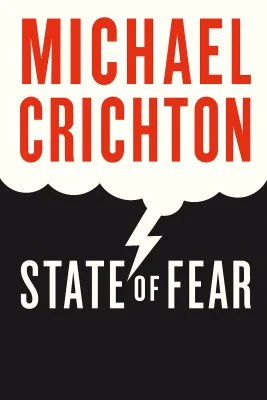
State of Fear
Categories
Fiction, Politics, Science Fiction, Audiobook, Mystery, Thriller, Novels, Adventure, Suspense, Mystery Thriller
Content Type
Book
Binding
Mass Market Paperback
Year
2005
Publisher
Avon
Language
English
ASIN
B0DSZY6K69
File Download
PDF | EPUB
State of Fear Plot Summary
Introduction
# State of Fear The body floated face-down in the Seine, paralyzed by an exotic toxin delivered through a lover's kiss. Jonathan Marshall had been investigating financial irregularities in environmental organizations when he stumbled upon something that made him a target. Half a world away in Los Angeles, billionaire philanthropist George Morton was asking uncomfortable questions about where his environmental donations actually went. The National Environmental Resource Fund, led by the skeletal Nicholas Drake, had been funneling millions through shell companies to unknown recipients for unknown purposes. What Morton discovered would shatter his faith in the movement he'd supported for decades. The organizations he'd funded weren't just fighting climate change—they were manufacturing it. Environmental extremists had evolved beyond tree-spiking and protests into something far more sinister: a sophisticated network capable of triggering earthquakes, tsunamis, and flash floods on command. As Morton's lawyer Peter Evans would soon learn, the greatest threat to the planet wasn't global warming, but those who would weaponize fear itself to control the masses. The line between environmental activism and terrorism had been crossed, and the stakes were measured not in degrees of temperature, but in the deliberate manipulation of nature to serve a darker agenda.
Chapter 1: Seeds of Suspicion: Morton's Fatal Discovery
The first crack in George Morton's faith appeared during a routine audit request. The billionaire philanthropist had spent decades writing checks to environmental causes, trusting that his millions were saving the planet. But when he asked Nicholas Drake for a simple financial review of the National Environmental Resource Fund, Drake's refusal sent alarm bells ringing through Morton's mind. The Vancouver bank manager's call confirmed Morton's worst fears. A quarter million dollars from his accounts had somehow wound through a maze of shell companies—from Costa Rica to the Cayman Islands—eventually funding the lease of a military-grade submarine. Morton had never authorized such a transaction, yet his money had paid for it through NERF's labyrinthine financial channels. Sitting in his Gulfstream jet returning from Iceland, Morton felt the weight of betrayal crushing down on him. For thirty years, he had been the environmental movement's golden goose, funding lawsuits and research with unwavering dedication. His Holmby Hills mansion displayed priceless Asian art, but his true passion had been saving Earth. Now he realized he'd been played for a fool by the very people who'd made him their "Concerned Citizen of the Year." The pieces fell into place with sickening clarity as the jet descended toward Los Angeles. NERF wasn't just sloppy with money—it was deliberately funneling donations to finance operations he'd never approved. The organization that had celebrated him was using his reputation and resources to fund something he couldn't yet comprehend. Morton made a decision that would cost him everything: he would expose NERF's deception, no matter the consequences. At the Mark Hopkins Hotel ballroom, Morton stumbled through what should have been a triumphant acceptance speech. Instead, vodka-fueled and bitter with truth, he systematically destroyed his own reputation and theirs. "NERF is a law firm run by lawyers," he declared to the horrified audience of environmental elite. "I am withdrawing my funding." The crowd sat in stunned silence as their honored guest sang Billy Joel and shambled off stage, leaving Nicholas Drake's carefully orchestrated event in ruins.
Chapter 2: The Hidden Network: Uncovering Environmental Terrorism
Hours after Morton's public humiliation, his Ferrari was found wrapped around a tree on a cliff road north of San Francisco. The official verdict was suicide—a depressed widower driven to despair by his own rambling speech. But Peter Evans, Morton's young lawyer who witnessed the crash scene, noticed details the police missed: wrong glass patterns, impossible timing, and a mysterious figure in a tuxedo who vanished into the night. The break-in at Morton's mansion was surgical in its precision. Every safe opened with correct combinations, every security camera wiped clean, yet nothing appeared stolen. Sarah Jones, Morton's assistant, found the same pattern at Evans' apartment—professional searches by people who knew exactly what they sought. The answer lay hidden beneath a fourteenth-century Burmese Buddha, where Morton's cryptic final words led them to coordinates and code names: Terror, Snake, Scorpion. John Kenner arrived like a ghost from Morton's secret world. The MIT professor carried himself with military precision, his eyes constantly scanning for threats. He revealed the scope of the conspiracy that had killed Morton: the Environmental Liberation Front wasn't just radical activists chaining themselves to trees. They were sophisticated terrorists using environmental causes as cover for coordinated attacks designed to manufacture the very disasters they claimed to prevent. The stolen coordinates represented four planned catastrophes, each timed to coincide with NERF's upcoming conference on Abrupt Climate Change. Mount Terror in Antarctica, where fake researchers had spent weeks planting precision explosives along a hundred-mile line. Their goal was to fracture the Ross Ice Shelf and create the largest iceberg in recorded history—spectacular visual proof that global warming was accelerating beyond all predictions. As Kenner decoded the military GPS coordinates, Evans felt his worldview cracking like ice under pressure. The environmental movement he'd dedicated his career to supporting was revealed as a complex web of genuine concern and calculated manipulation, where legitimate science was twisted to serve political agendas. The greatest pollution wasn't in the air or water, but in the corruption of truth itself.
Chapter 3: Manufactured Disasters: From Antarctic Ice to Desert Storms
The Antarctic wind cut through their parkas like knives as Evans and Sarah followed their guide across the Ross Ice Shelf toward Mount Terror. The landscape was a white hell of hidden crevasses and howling katabatic winds, but the real danger came from the man they trusted to lead them home. Jimmy Bolden seemed knowledgeable enough until they reached the research camp where Dr. James Brewster was supposedly studying ice flow patterns. What they found was something far more sinister than climate research: crates of military-grade explosives disguised as university equipment, each device designed to create precision-timed blasts that would generate standing waves in the ice. Brewster wasn't a scientist—he was a demolitions expert, and his "GPS sensors" were actually a hundred-mile chain of synchronized charges designed to fracture the ice shelf and create the largest iceberg in human history. The betrayal came swift and brutal. As they drove back across the ice field, Bolden led them away from the marked road onto thin ice above a hidden crevasse. Their snowtrack plunged through the surface into a blue-walled tomb forty feet below. Evans was thrown clear into the depths while Sarah found herself trapped in the overturned vehicle, suspended above an abyss with no food, no water, and no hope of rescue. The rescue came from an unexpected source—a NASA robot collecting meteorites detected their distress signal and summoned help from Weddell Station. As they recovered from severe frostbite, Kenner revealed the true scope of what they'd uncovered. The Antarctic operation was just the beginning. Three more targets around the globe, each designed to create a different type of environmental disaster, all timed to provide dramatic real-time evidence during NERF's climate conference. The technology was cutting-edge and expensive—cavitation generators that could fracture rock formations, hypersonic devices that could trigger avalanches, bacterial systems that could create toxic algae blooms. The sophistication was staggering, requiring years of planning, millions in funding, and technology that could literally move mountains. Morton's donations had financed the very disasters the environmental movement claimed to be fighting against.
Chapter 4: The Science of Deception: Corrupted Data and False Prophets
The flight back to Los Angeles carried an urgency that pressed against the cabin walls like a physical force. With the Antarctic operation disrupted, Kenner knew the terrorists would accelerate their remaining plans. The conference was days away, and three more catastrophes were still scheduled to unfold like a carefully choreographed symphony of destruction. Evans struggled to process the implications as he studied the decoded coordinates. Each target had been chosen for maximum visual impact and media coverage—locations where environmental disasters would seem plausible and generate the most public fear. The sophistication of the operation was breathtaking: a global network with access to military-grade technology, funded by the very organizations claiming to protect the environment. Sarah, still recovering from frostbite, worked with Sanjong to trace the financial networks that had made it all possible. The money trail led through dozens of shell companies and environmental organizations, many of them legitimate groups that had no idea their donations were being diverted to fund terrorism. The system provided plausible deniability—even if discovered, the mainstream environmental movement could claim ignorance. But Kenner's greatest concern wasn't the remaining targets—it was the conference itself. Nicholas Drake had invested too much in the event to let it proceed without some spectacular disaster to validate his message. With Morton dead and the Antarctic operation compromised, Drake would be desperate to salvage something from the wreckage. That desperation would make him even more dangerous than the extremists he was funding. The data was there for anyone willing to look—temperature records that showed cooling rather than warming in many regions, satellite measurements that contradicted surface readings, ice core samples that revealed natural climate variations far greater than anything attributed to human activity. But this information was buried beneath layers of interpretation, modeling, and political messaging designed to support predetermined conclusions about climate catastrophe.
Chapter 5: Resurrection and Revelation: The Truth Behind the Lies
The final confrontation came not in some remote wilderness, but in the warm waters of the Solomon Islands, where the terrorist network had positioned their most ambitious operation yet. Evans found himself aboard Morton's private jet with an unlikely group of companions: Sarah, still bearing scars from her lightning strike; Jennifer Haynes, whose legal expertise had proven invaluable; and Ted Bradley, the actor whose environmental activism masked shallow understanding of the issues he championed. The flight became a rolling debate about environmental policy, with Kenner systematically dismantling the conventional wisdom that Evans had accepted without question. Species extinction rates were exaggerated. Glacier melting was selective and often natural. Hurricane frequency showed no long-term increase. Sea level rise was proceeding at the same rate it had for thousands of years. Each cherished belief of the environmental movement crumbled under scrutiny. But the most shocking revelation came in the jungles of the Solomon Islands, where they encountered a figure Evans thought was dead: George Morton himself. Morton's death had been an elaborate fake, orchestrated with Kenner's help. Realizing his investigation had made him a target, Morton had staged his own death using a duplicate Ferrari and sophisticated special effects to continue working undercover. "I had to disappear," Morton explained as they sheltered in the jungle. "Drake and his people were planning to kill me, so I decided to die on my own terms." He had spent weeks gathering evidence of the ELF's operations while staying hidden from both terrorists and authorities. His apparent betrayal of the environmental movement had been part of his investigation, forcing extremists to reveal themselves. Morton's investigation had uncovered the ELF's final operation: a plan to trigger an underwater landslide that would create a massive tsunami aimed at the California coast. The wave would strike during the environmental conference, killing thousands and providing ultimate proof of climate catastrophe. The operation required military-grade sonar equipment capable of triggering underwater avalanches, positioned precisely on the ocean floor to maximize devastation.
Chapter 6: Racing Against the Tsunami: Final Confrontation in Paradise
The ELF's base was disguised as a marine research facility on a remote Solomon Islands atoll, complete with legitimate scientists working alongside terrorists. Most researchers were unaware of the true purpose of their work, believing they were studying ocean currents and geological formations. The equipment was state-of-the-art, capable of precisely targeting underwater formations to trigger massive landslides that would generate catastrophic waves. Kenner's team launched a coordinated assault through dense jungle and fortified positions. The battle was brutal, with ELF operatives fighting with the desperation of true believers. They genuinely thought they were saving the world, even as they prepared to murder thousands of innocent people. Their leader, a former climate scientist named Hoffman, delivered passionate speeches about necessary sacrifice while directing followers to kill anyone who threatened their mission. Evans found himself in the control room as the final countdown began. The underwater charges were already positioned, and the detonation sequence had been initiated. With minutes remaining, he and Sanjong worked frantically to disable the system while gunfire raged around them. The technology was sophisticated, with multiple backup systems and failsafes designed to prevent exactly this kind of interference. The tsunami was partially triggered before they could stop it completely. A smaller wave, still dangerous but not catastrophic, raced across the Pacific toward California. The disaster that reached the coast was significant enough to make headlines but not large enough to support the ELF's narrative of climate apocalypse. Their plan had been disrupted, but the cost was enormous—dozens were dead, and the conspiracy remained largely hidden from public view. As rescue helicopters arrived to evacuate survivors, Evans realized the battle was far from over. The ELF had been stopped, but the underlying system that created them remained intact. Environmental organizations would continue manufacturing fear, scientists would continue manipulating data, and politicians would continue exploiting public anxiety. The conspiracy was too large and profitable to be destroyed by exposing a single terrorist cell.
Chapter 7: Beyond Fear: Reclaiming Environmental Truth
In the aftermath of the Solomon Islands operation, Evans found himself questioning everything he had believed about environmental science and policy. The evidence was overwhelming that much of what he'd accepted as scientific fact was carefully constructed propaganda. Temperature records had been manipulated, computer models adjusted to produce alarming predictions, and dissenting voices systematically silenced. Morton, now publicly "resurrected" and facing intense media scrutiny, used his wealth and influence to establish a new kind of environmental organization. Instead of relying on fear and manufactured crises, this group would focus on rigorous scientific research and practical solutions. They would fund multiple teams to study the same problems, ensuring results could be verified independently. All data would be published, including results that contradicted their hypotheses. The new organization faced fierce opposition from the established environmental movement. Drake and his allies launched coordinated attacks, using media connections to portray Morton as a traitor to the environmental cause. They accused him of being funded by fossil fuel companies, of denying climate science, of caring more about profits than the planet. The campaign was vicious and personal, designed to destroy his credibility and silence his message. But Morton had learned from his experience with the ELF conspiracy. He understood that the environmental movement had become corrupted by the same forces it claimed to oppose: greed, power, and manipulation of public fear. Real environmental protection required honest science, open debate, and solutions based on facts rather than ideology. It meant acknowledging uncertainty rather than claiming false certainty, focusing on problems that could actually be solved. Evans joined Morton's organization, bringing his legal expertise to the fight for scientific integrity. Jennifer Haynes continued investigating environmental fraud, working to expose financial networks that supported manufactured fear. Kenner returned to his mysterious government work but remained available when the next crisis emerged. They all understood they were fighting powerful forces with enormous resources and political influence, but the battle for environmental truth had to be fought.
Summary
The conspiracy that nearly triggered a devastating tsunami revealed the dark heart of modern environmentalism: a movement so corrupted by politics and profit that it was willing to manufacture the very disasters it claimed to prevent. The Environmental Liberation Front represented the logical extreme of environmental extremism, but their actions were enabled by a broader system of manipulation that included respected scientists, prominent organizations, and influential media figures who had abandoned scientific integrity for political power. Evans's journey from naive environmental lawyer to skeptical investigator reflected a broader awakening about the relationship between science and politics in the modern world. The environmental movement had succeeded in creating a climate of fear that made rational discussion almost impossible, where questioning consensus was treated as heresy and dissenting voices were systematically silenced. The result was a system that served those who profited from environmental anxiety rather than the planet they claimed to protect. Morton's resurrection offered a path forward based on scientific integrity rather than manufactured fear, but the battle between fear-based environmentalism and science-based conservation would continue long after the last terrorist was captured and the final lie exposed.
Best Quote
“Do you know what we call opinion in the absence of evidence? We call it prejudice.” ― Michael Crichton, State of Fear
Review Summary
Strengths: The review highlights the book's expansive scope and thrilling narrative, describing it as a "never-ending nail-biting global rollercoaster." The blend of science and fiction is praised, showcasing the author's ability to craft a memorable story. The global setting and thought-provoking themes on global warming are also noted as strong points. Weaknesses: The protagonists are described as "barely memorable," suggesting a lack of character depth or development. This is the primary critique mentioned in the review. Overall: The reader expresses a positive sentiment, finding the book to be a fantastic and thrilling read, despite the forgettable characters. The reviewer rates it as "Almost Recommendable" with a score of 3.5, indicating a generally favorable impression with some reservations.
About Author

Michael Crichton
Crichton extends the boundaries of storytelling through meticulous scientific research and a fast-paced narrative style, drawing readers into worlds where science and suspense intertwine. His dedication to scientific accuracy and engaging plots is evident in his diverse body of work, including novels written under pseudonyms like John Lange and Michael Douglas. His early book, "A Case of Need", showcases this blend of medical expertise and thrilling plotlines, earning him the Edgar Award and setting the stage for a prolific career. Crichton's writing consistently challenges readers to explore complex themes of technology, ethics, and human nature.\n\nFor Crichton, the method of embedding factual scientific elements within his narratives not only heightened the realism but also educated his audience, making his novels both entertaining and informative. He leveraged his medical background, having graduated from Harvard Medical School, to craft stories that were both credible and compelling. Readers benefit from his ability to simplify intricate scientific concepts without diluting their complexity, fostering a deeper understanding of the possible implications of scientific advancements. Therefore, his work remains highly relevant to readers interested in science fiction and thriller genres.\n\nCrichton's impact on literature is undeniable, with over 200 million books sold globally and translations in thirty-eight languages. His narratives have transcended the written word, with thirteen of his books adapted into films, expanding his reach and influence. The author’s unique approach to weaving science into fiction has left a lasting legacy, appealing to a wide range of audiences who appreciate the fusion of factual science with imaginative storytelling. This short bio underscores Crichton's role in shaping the modern landscape of science fiction and thriller novels, illustrating why his works continue to captivate and inform readers worldwide.
Read moreDownload PDF & EPUB
To save this Black List summary for later, download the free PDF and EPUB. You can print it out, or read offline at your convenience.
State of Fear
by Michael Crichton
